


Alan has a handy list of garden jobs to do in the next few weeks (Image: Getty)
“April is a great time to be in the garden,” Alan Titchmarsh says. “The sun’s warming up the earth and the days are getting longer.” But there’s also a lot to do out there. With spring now very much under way, there are dozens of little jobs that every gardener needs to ensure a vibrant summer and fruitful autumn.
On his Gardening with Alan Titchmarsh YouTube channel, Alan has outlined the five most important jobs you really need to get done in the next couple of weeks.
Sort out the lawn
The first job, Alan says, is to take a critical look at the state of your lawn. Many people will already have started mowing but, especially after that very wet end we had to 2025, it’s likely that you’ve got some patches of moss getting in the way.
“Now’s the time to get a wire-tooth rake and pull the moss out,” Alan says. “Just tear at it. Once it’s gone, the grass will get the air and light it needs to thrive.”
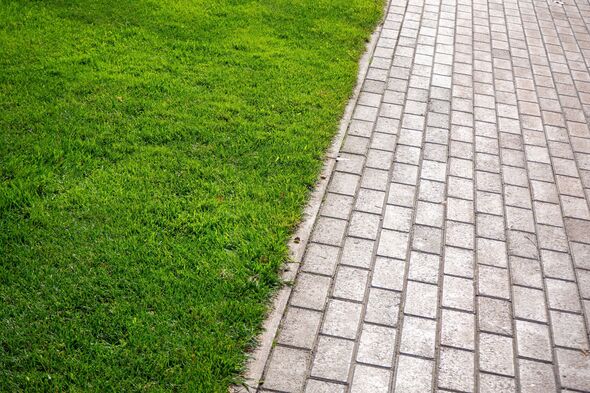
You can create a nice neat line for your lawn edge by using a hosepipe (Image: Getty)
Read more: Garden expert lists five seeds you must plant in April
Read more: Alan Titchmarsh urges gardeners to ditch weedkiller for ‘win-win’ alternative
He adds: “If you find bare patches in your lawn, you can replace them with turf, but I prefer to reseed the area. It’s much cheaper.” All you need to do is loosen up the compacted topsoil and remove some of the top layer, replacing it with fresh topsoil from the garden centre, then tamp it down gently with your foot.
“Different types of grass seed can be bought for different parts of the garden, and the boxes often come with an easy dispenser,” Alan advises. Use plenty of grass seed, he adds, because inevitably some of it will find its way into the beaks of the local bird population.
Then, Alan says, all you need to do is “tickle” the seeds in with a gardening fork before watering the area well to give them a good start.
If the edges of your lawn have lost their crispness, Alan recommends using a length of hosepipe as a “ruler” to help you stay in a straight line as you neaten up the edge. You should ideally use a half-moon edging tool, but if you don’t have one, a hoe will do the trick.
When you’re mowing, especially at this time of year, be sure not to set your mower height too low, and collect up all the clippings so the new lawn growth gets plenty of light and air.
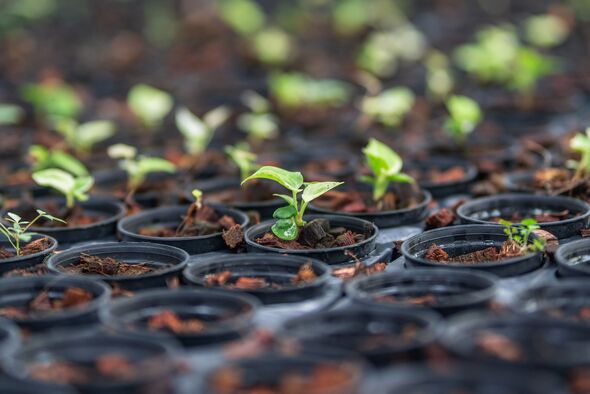
Now is the time to move your seedlings onto the next level (Image: Getty)Prick out your seedlings
“Once your seedlings have begun to grow, when they’re between half an inch and an inch high, that’s when you need to give them more space, more room to develop,” Alan says.
Carefully move them into a large tray filled with potting compost, making the surface of the planting medium as level as possible. Alan uses a dibber with a point at one end to loosen the seedlings out of their little pots, but you can use a pencil just as well — just slide it down the edge of the pot.
While you’re teasing apart the seedlings, with either your dibber or your pencil point, Alan says it’s vital that you hold the delicate seedlings by their leaves and not by the stem. “I like to plant the seedlings a couple of inches apart to give them room to grow,” Alan says. Just use that dibber again to make a hole for the plant, and then very gently push some loose compost back around the roots.
After that, it’s just a case of returning the tray to the greenhouse until the last frost has passed and the plants are sturdy enough to survive outside.
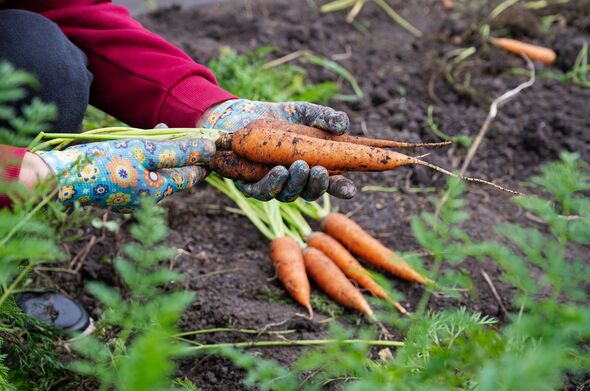
There’s nothing quite like growing your own veg (Image: Getty)Sow your vegetable patch
“If you have a veg garden, or you’re thinking of trying one, now is a great time for sowing seeds outside,” Alan says. “Whether you’re planting in the soil or in raised beds, always enrich the earth with an organic soil improver and add a sprinkling of blood, bone and fish meal.”
Just as you used your hose to create a straight line for the edge of your lawn, you should use some string and a couple of sticks to create a guide for the furrows you’re about to make.
“Make sure the line’s taut on the ground and then use a garden cane to create a shallow furrow. I then add water to the bottom of the furrow,” Alan says. If you’ve bought a packet of seeds, there will probably be guidance on how far apart to sow them.
Just sprinkle the seeds gently, keeping things as even as you can, lightly covering them over. “I then use a hosepipe with a sprinkler head to gently irrigate the row and settle the seeds in,” Alan says. Make sure they get a really good soaking. The last task is to add a label so you know what you’ve sown where.
Soon enough, he says, plants will start popping up and hey presto — you’re a vegetable farmer.
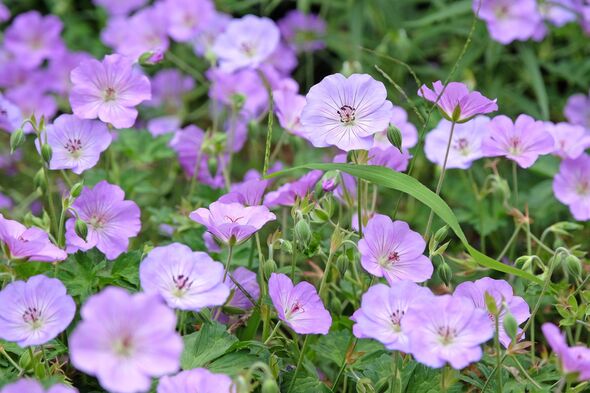
Alan’s a big fan of the hardy geranium (Image: Getty)Plant hardy perennials
April is the ideal time to introduce a few new faces to your garden, and hardy perennials should be top of your list.
Scabiosa, commonly known as pincushions, are a great choice, Alan says: “With their really good feathery foliage, they’re a great front-of-the-border perennial. Plant them in a sunny spot and watch as bees hum around them all summer.”
The fern Dryopteris is perfect for planting in shady areas. These ferns are easy to grow and many will cope with dry shade once established. “Look out for the new fronds that look like miniature shepherd’s crooks just before they unfurl,” Alan says.
English lavender is also very attractive to bees and butterflies, and makes a beautifully fragrant border for vegetable or herb plots. Alan says: “It not only smells divine, but it has blue, purple, white or pink flowers in the summer. It’s great for borders and it can be planted in well-drained soil and bright sunshine, where it’ll serve you well for several years.”
Last, and best as far as Alan is concerned, is the hardy geranium. They are long-lived, easy-to-grow plants. Alan favours ‘Wargrave Pink’ geraniums. They can be sited in well-drained soil in partial shade to full sun. Once settled, ‘Wargrave Pink’ becomes more drought-tolerant and requires lower maintenance.
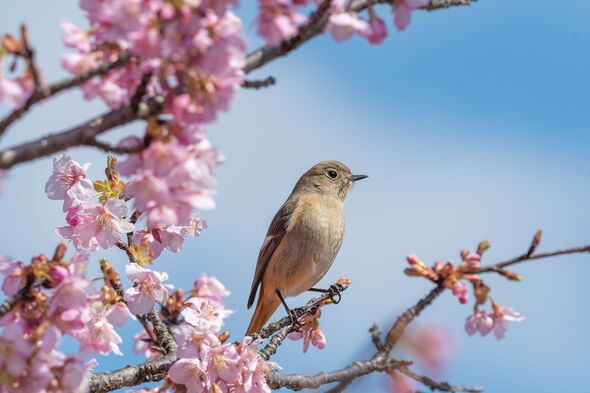
Cherry blossom season is short-lived, but picturesque (Image: Getty)Plant cherry trees
The finishing touch, if you have room for it, is a cherry tree. “April’s the time when new colours are bursting out all over the garden. Daffodils are growing and opening, tulips are coming into flower, and evergreens are looking their best. But the most spectacular show is the blossom on cherry trees,” Alan says.
You should choose a variety that suits the size of your garden. For larger gardens, for example, Alan recommends Prunus ‘Starlight’. It’s been specifically bred for its pretty, star-shaped, white, fragrant flowers. Most examples will reach around 4m high and 3m in width.
In smaller gardens, Alan says, you might be better off with a ‘Kiku-Shidare’ cherry tree. It’s hardy and comparatively low-maintenance. It only requires a little pruning — any pruning you do feel the need to carry out should be done in summer to avoid silver leaf disease.
Whichever variety you choose, you’ll get a brief but spectacular display. “The flowering season is relatively short, only a few weeks,” Alan says, “but it’s so spectacular and it’s so wonderful to look forward to. I wouldn’t be without a flowering cherry.”
Finally, Alan says you should try to find time to remind yourself why you have a garden in the first place: “Remember to find a moment to sit down, grab yourself a cup of tea, and enjoy those glorious rays of spring sunshine.”
Comments are closed.