
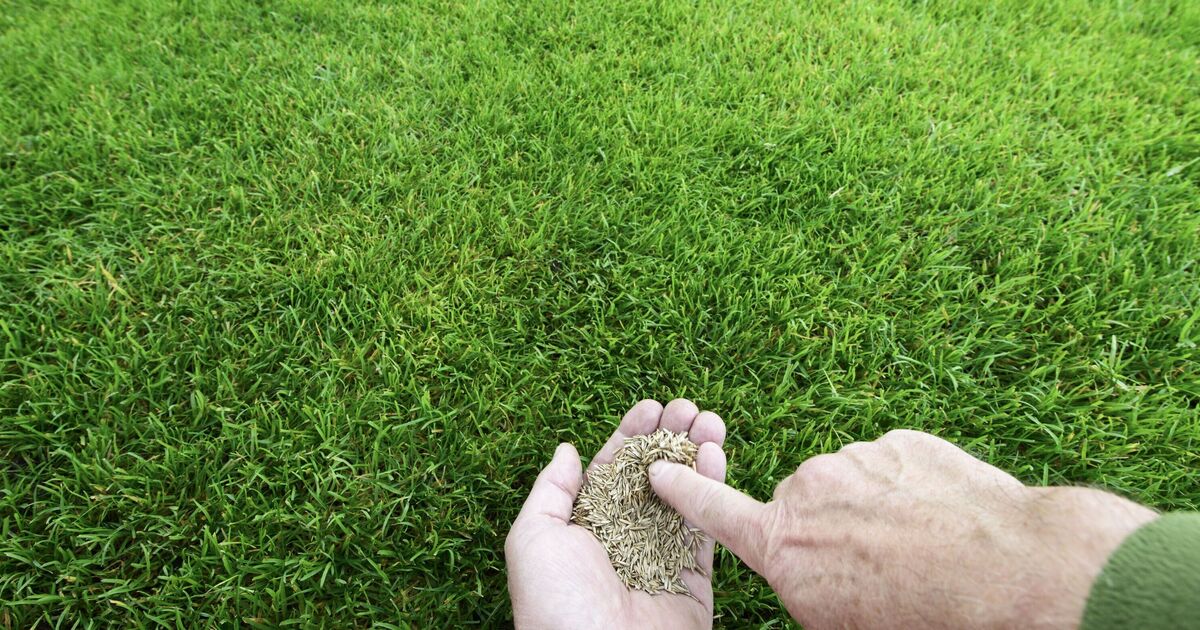
Overseeding is the process of sowing fresh grass seed directly into an existing lawn. According to the specialists at Rolawn, this task is “one of the most effective ways” to improve density, colour, and resilience without starting again. When carried out at the right time and with proper preparation, overseeding strengthens your lawn over the long term and helps it cope better with wear, weather, and seasonal stress.
The experts explained that over time lawns naturally thin due to foot traffic, drought, shade, soil compaction, and seasonal change, but overseeding helps to counter this natural decline.
The main benefits of overseeding are creating “thicker” grass blades, “improving lawn colour” and “reducing the opportunity for weeds and moss to establish”.
According to the pros at Fantastic Gardeners, “the best time to overseed in the UK” would be spring, specifically April.
During this month, the weather is not too hot or too cold, and there is a high chance of rain. This is good as seeds need moisture in order to germinate.
How to overseed your lawn in April
Start by mowing your lawn to approximately 25mm to allow the seed to reach the soil surface. Next, scarify your lawn using a garden rake or a powered scarifier to remove thatch and surface debris. This step is crucial for seed-to-soil contact.
After, aerate the lawn by spiking with a garden fork to a depth of around 150mm at roughly 300mm intervals. This improves drainage and root development.
Then feed the lawn if it has not been fertilised within the last four months. Sow the seed evenly across the lawn. Seed can be mixed with lawn topdressing to save time and help work it into the surface.
Keep the area moist. If there is no rainfall, lightly water after two or three days to prevent the seed from drying out.
Protect seeded areas from birds using netting or garden fleece if needed. Remove once shoots begin to appear. Minimise foot traffic for at least seven to 21 days while seedlings establish.
Raise the mowing height to around 50mm for the first few cuts, then gradually reduce back to 25mm. Never remove more than a third of the grass blade length at any one time.
Comments are closed.