
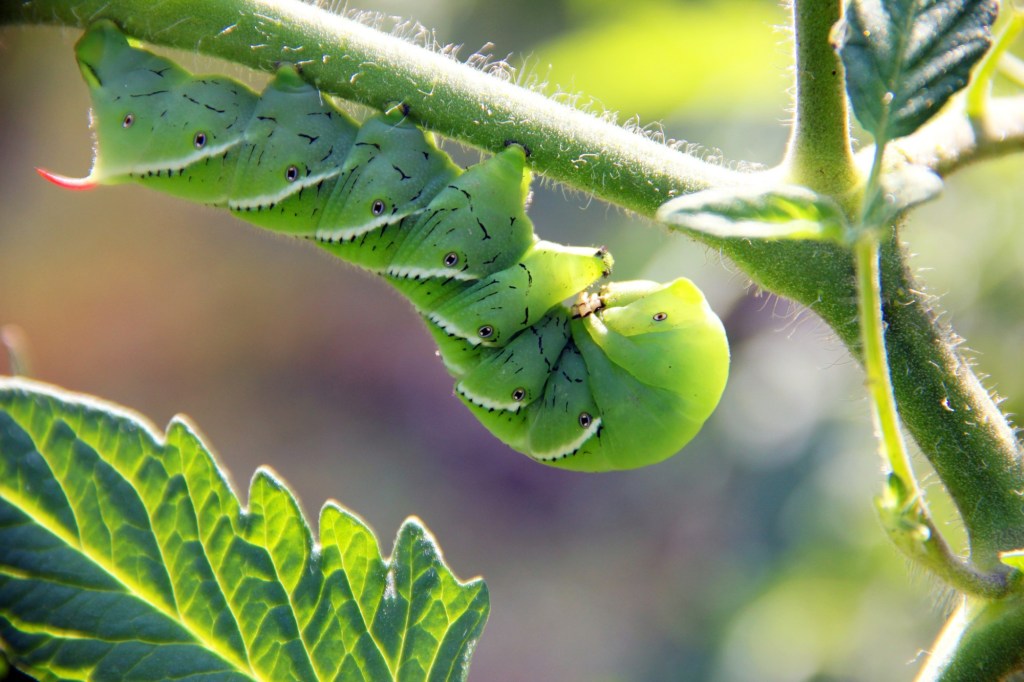
Q: Last summer, I had problems with those huge caterpillars that eat tomato leaves. Is there a way to keep them away? I really don’t want to spray toxic chemicals all over my garden.
Tomato hornworms can be extremely destructive to tomatoes, eggplants, and pepper plants, especially when the plants are young and small. Luckily, there is an environmentally friendly way to keep them in check. The hawkmoth lays her eggs on the tomato plant, and when the caterpillars emerge, they immediately start munching on your plants. The caterpillars have a voracious appetite and will grow quickly to finger size. Due to their very effective camouflage and their tendency to hang out on the underside of branches, they can be difficult to spot until half of your tomato plant’s leaves are gone.
Bacillus thuringiensis (also known as B.T.), marketed as caterpillar killer, is a safe biological pesticide that is very effective at keeping hornworms from reaching a horrifyingly destructive size. I recommend purchasing the small bottle of concentrate as the per-application cost is significantly lower. Start applying it as soon as you plant outside, and reapply every week. It will only affect the caterpillars that eat the leaves that have been sprayed. You may still see very small hornworms (an inch or less), but they will not grow past this stage.
If you have already seen hornworms (or forgot to spray), you can still save your tomatoes if they haven’t been completely eaten. First, clip away any damaged branches. While doing this, you will probably find the culprit lurking under one of those stems. I’ll squish them or snip them in half, but if you have chickens, they will gladly eat them. Provide support for your plants to keep them off the ground. This makes caterpillar-spotting and spraying easier.
Q: The local birds have been eating my little seedlings out of my garden. I don’t want to hurt them, but how do I get them to leave my seedlings alone?
This depends on the size of your garden and the number of seedlings you have. Row covers can protect those seedlings from birds, intense sun, and light frost. Unless the covers are completely sealed around the edges, they may not protect against mice.
We have had luck using plastic bottles that have had the bottoms cut off. They can be pressed into the ground so they aren’t easily dislodged. Remember to remove the cap so the plant can breathe and the inside doesn’t overheat. This works for our relatively small garden, but may be too much work for larger numbers of seedlings.
Los Angeles County
mglosangeleshelpline@ucdavis.edu; 626-586-1988; http://celosangeles.ucanr.edu/UC_Master_Gardener_Program/
Orange County
ucceocmghotline@ucanr.edu; http://mgorange.ucanr.edu/
Riverside County
anrmgriverside@ucanr.edu; 951-955-0170; https://ucanr.edu/sites/RiversideMG/
San Bernardino County
mgsanbern@ucanr.edu; 909-387-2182; http://mgsb.ucanr.edu
Comments are closed.