
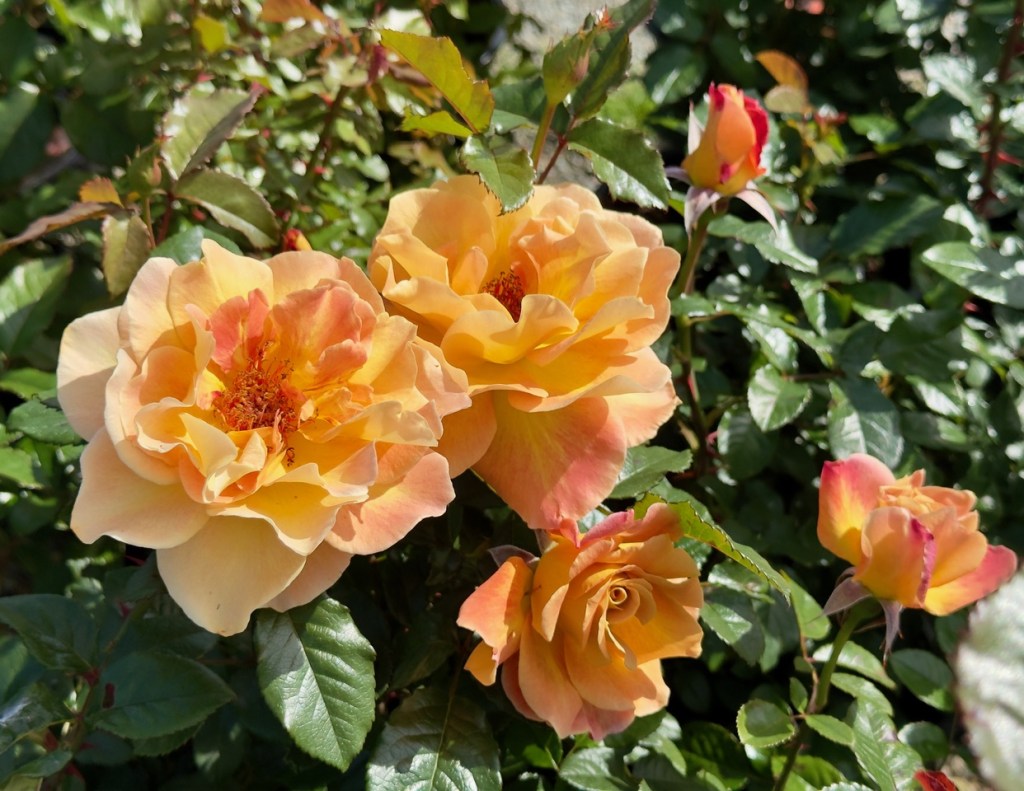
For The Union-Tribune
“The same thing happened to me” — a line from a John Prine song — resonates with me, not just for its catchy melody, but for its reminder that we are not alone in facing life’s everyday challenges and joys. There is comfort in knowing that others walk the same path, in both our struggles and our moments of happiness.
This sense of solidarity extends into the rose garden, where a dozen or so common pests show up year after year — some in spring, some in summer, and some persist and bug our roses (and us) throughout the year. It’s human nature to find reassurance in knowing that that we are not alone and that other rosarians face the same challenging issues.
Yet the “sameness” we share also includes our joys. Delighting in beautiful rose blooms, and the highlight of spotting lady beetles, birds and other beneficials in the garden who help us with pest management reminds us that all might still be right with the world.
Sharing these discoveries with fellow gardeners deepens our sense of connection and joy. These are the absolute best bonds. How can we ensure that we continue to witness, celebrate and protect these happy shared experiences? Here’s how to approach it.
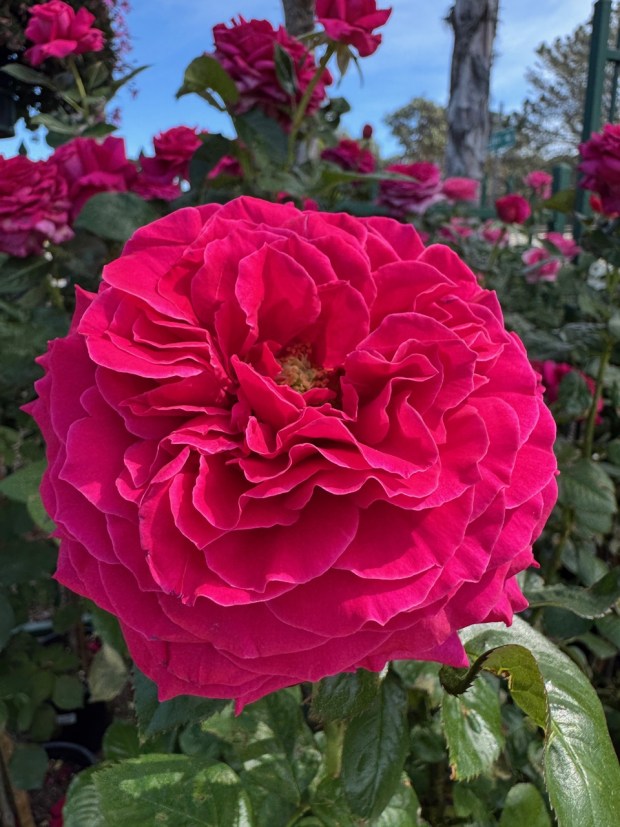 ‘Nothing But Class’ is a lovely hybrid tea rose with large carmine-pink blooms that have a moderate raspberry fragrance and glossy, dark green foliage. (Rita Perwich)
Practical advice for managing rose garden pests
This season, rose gardeners in San Diego are encountering both sucking and chewing pests. In April and May, the sucking pests are primarily aphids, and the chewing pests are rose slugs, caterpillars and hoplia beetles.
Successful pest management in the rose garden always begins with attentive, hands-on care. The following strategies can help you maintain healthy roses while protecting beneficial insects and the broader garden ecosystem:
Earth-friendly pest management
• Anticipate this season’s pests and monitor your roses closely and regularly to prevent hard-to-handle infestations. When you spot pests, remove them promptly to interrupt pest life cycles and damage.
• Clumps of aphids on new foliage and buds can be annihilated by the hundreds with just a few quick squishes between your thumb and forefinger, or a jet of water from the hose.
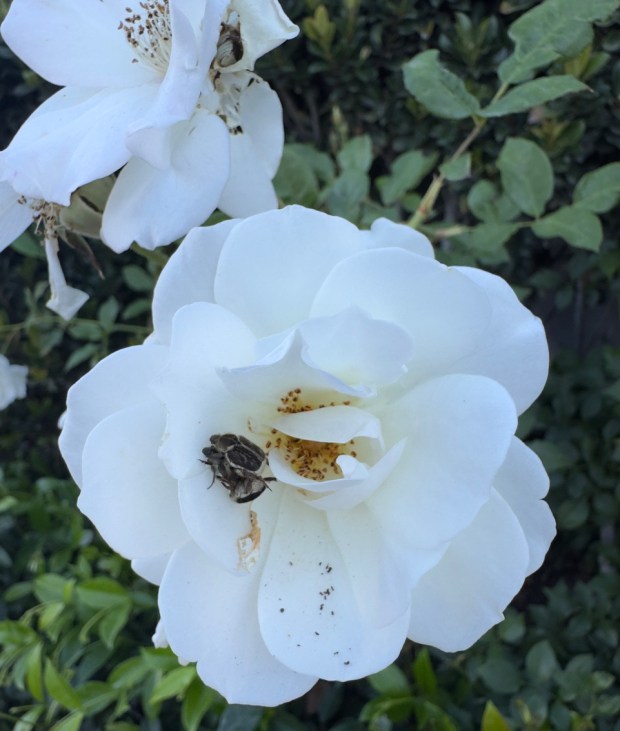 Hoplia beetles are the challenges we face in the rose garden in the months of March, April and May. They especially favor lighter-colored blooms. Pesticides are not required, as they are easy to pick off the blooms. (Rita Perwich)
• Lacy leaves tell you that there are rose slugs on the underside of the leaves. The rose slugs are the larvae of the sawfly. They are not caterpillars, but they resemble them. These pests are easy to squish, and this is time well spent, since there are up to five generations of these pests a year and elimination in the spring interrupts their life cycle and minimizes our rose slug angst for the remainder of the year.
• Hoplia beetles typically target lighter blooms from mid-March March until early May. They chew petals and stamens, but they are easy to spot because they are brownish-gray in color and stand out among the white and lighter blooms they favor. Catch them and drop them in a bucket of soapy water.
• Chewed leaves and blooms and rolled up or silked leaves often indicate the presence of caterpillars. Caterpillars can be cut in half with your pruners, and the small ones are easy to squish. When we cut off silked and rolled leaves and open them up over a bucket, caterpillars are easily captured.
• We are not the only workers in the earth-friendly garden. Lady beetles, lacewings, earthworms, syrphid flies, butterflies and birds inhabit earth-friendly gardens and play a vital role in natural pest management. When we plant pollen- and nectar-rich plants and install water features, we attract these allies and take full advantage of nature’s pest management army to reduce pest pressure.
Responsible, conscientious use of pesticides as a last resort
Pesticide use may seem like a straightforward solution to manage pests, but the reality is far more complex. Pesticides have many drawbacks and must be used extremely judiciously and in very limited situations, such as when the health of the plant is in jeopardy. This is because their use can open a Pandora’s box of unexpected hurdles and new challenges in the garden.
Conscientious gardeners know that pesticides carry serious risks to beneficial insects. To protect the natural balance of the garden, they use the least toxic pesticide only as a last resort and apply it only after correctly identifying the pest and confirming the product targets that specific pest. When buying pesticides at a nursery, you’ll encounter many choices.
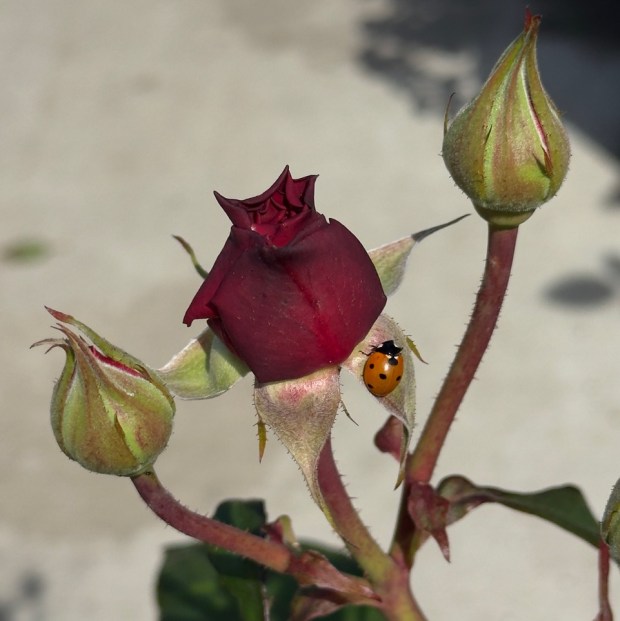 Lady beetles and their larvae are one of our major helpers in the rose garden and scout around to consume a huge variety of pests, including aphids. (Rita Perwich)
The following steps and points are crucial to minimize harm to beneficial insects in the garden.
• Pesticides are labeled as “Caution,” “Warning” or “Danger.” Buy only the least toxic, that are marked “Caution.”
• Contact pesticides: Some products kill pests on contact and require frequent reapplication (every seven to 10 days). These pesticides are labor-intensive and time-consuming, but they are preferable to systemic pesticides. Be aware that contact pesticides will kill all insects they contact, including beneficial insects.
• Systemic pesticides are absorbed through foliage or roots, spreading toxins throughout the plant — including the nectar, which poses a threat to beneficial insects and pollinators.
• Broad-spectrum pesticides indiscriminately kill a wide range of insects, both harmful and beneficial. These pesticides are safe only when left on the shelf at the nursery.
• Selective pesticides that target only the specific pest you have identified are preferable to broad-spectrum pesticides. Do your homework and identify the pest accurately.
• Limit pesticide use to “softer spray products” such as horticultural oils, insecticidal soaps and microbial pesticides.
• To protect pollinators and beneficial insects, avoid spraying open blooms.
• Always follow label instructions and safety precautions.
• Organic pesticides are generally better than synthetic ones but must still be used with caution. For instance, Spinosad, an active ingredient found in some organic pesticides, is effective against insects that rasp and chew plant material, but it can harm honeybees when wet; use it only after bees have returned to their hive for the night.
• Bacillus thuringiensis subspecies kurstaki (Btk) is an organic microbial insecticide that controls caterpillars, but it is effective only if caterpillars feed on treated leaves; it works best on small, newly hatched caterpillars and not on those inside rosebuds or fully grown. If you grow milkweed for monarch caterpillars, be aware that Btk spray drift can harm them.
• Unlike insecticidal soaps and horticultural oils, most pesticides must be rotated between products with different modes of action to prevent resistance. This is because using the same pesticide repeatedly allows some pests to survive and pass on their resistance to their offspring. This makes the chemical less effective and increases the risk of resistance. Soon you need new products — which only increases the risk of resistance to even more chemicals.
• Gardeners who use pesticides run the risk of inadvertently wiping out helpful insects that naturally keep pest populations in check. This can trigger secondary infestations and a resurgence of the original pests, as pests rebound quickly while beneficial insects take longer to return and restore balance in the garden.
In the garden, let’s take care of more than just our roses. Let’s also look after our helpers — the lady beetles, earthworms, birds, bees, syrphid flies and lacewings that busily help our gardens thrive. When we do, “the same thing happened to me” will be heard less often as a lament or a story of frustration and more as a shared reflection on our joys and successes — a bounty of blooms and the simple, enduring pleasure that rose gardening brings.
Perwich is a member of the San Diego Rose Society, a Consulting Rosarian and a Master Gardener with UC Cooperative Extension. For more information and advice, visit rose-harmony.com.
Comments are closed.