
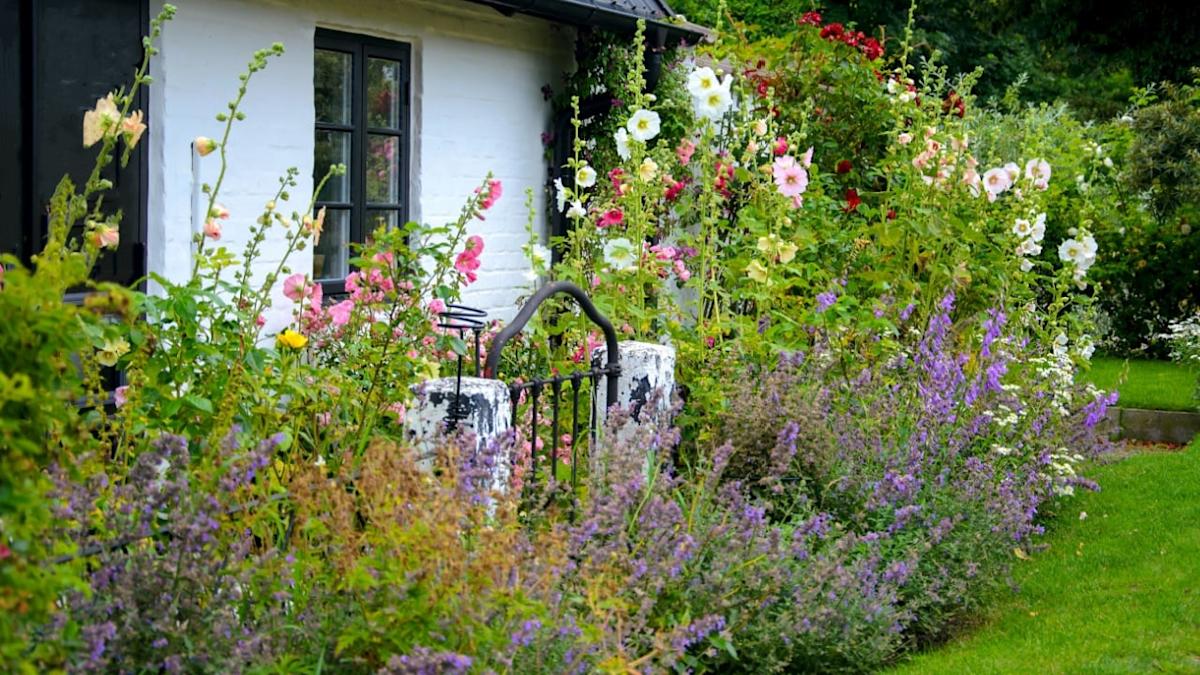
The most romantic garden in the world is also one of the most forgiving, and if you start this month, you could be cutting armloads of roses and foxgloves by summer. Cottage gardens have enchanted homeowners for centuries, not because they are complicated, but because they follow one irresistible rule: more is always more.
If you have been putting off creating a cottage garden because you think you need a bigger yard, a greener thumb, or some innate sense of British charm, stop waiting. This is the garden style built for the rest of us.
Why April is the Window You Cannot Afford to Miss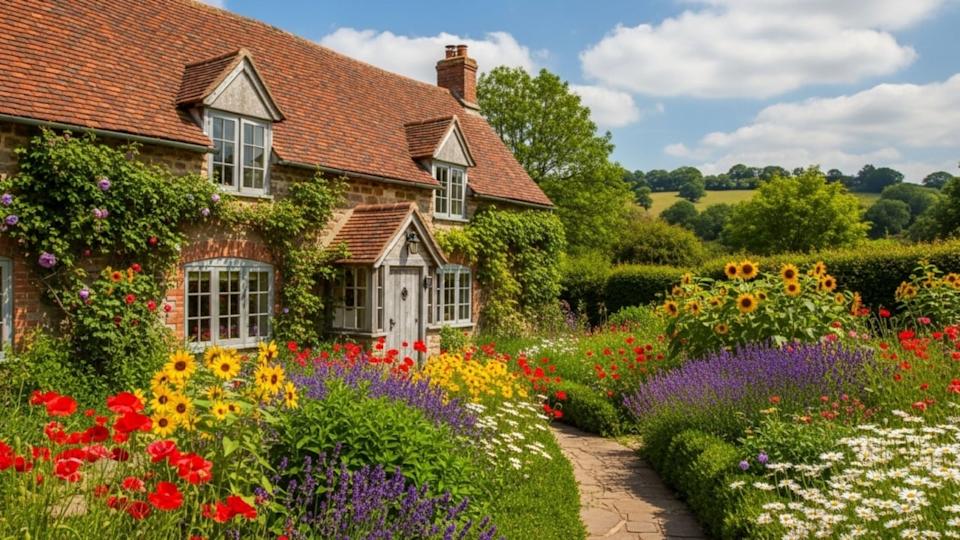
Image Credit: Shutterstock.
Early spring is prime time for cottage garden planning because bare-root roses, shrubs, and perennials are available at their best quality and lowest prices, the soil is soft enough to amend and reshape, and plants established now will reward you with genuine blooms by midsummer. Wait until May or June, and you are already a full season behind.
Here are 12 steps to create a cottage garden this April, while the soil is workable and the planting season is wide open.
1. Adopt the Cottage Garden Philosophy First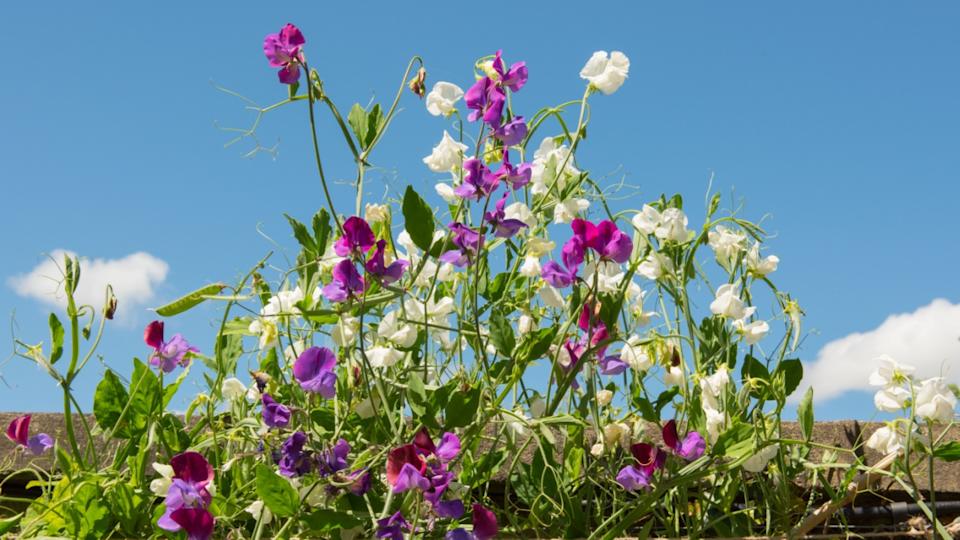
Image Credit: Shutterstock.
Before you buy a single plant, adjust your expectations in the best possible way. A cottage garden is not meant to look manicured, symmetrical, or controlled.
As Darrell Trout, a cottage garden writer and lecturer, explains on Better Homes & Gardens, a cottage garden has “perhaps less regard for rules than for doing what you really love.” The goal is an apparently haphazard abundance that is, in reality, carefully layered. Imperfection is not a failure here. It is the entire aesthetic.
2. Learn the Rule That Will Save You Years of Frustration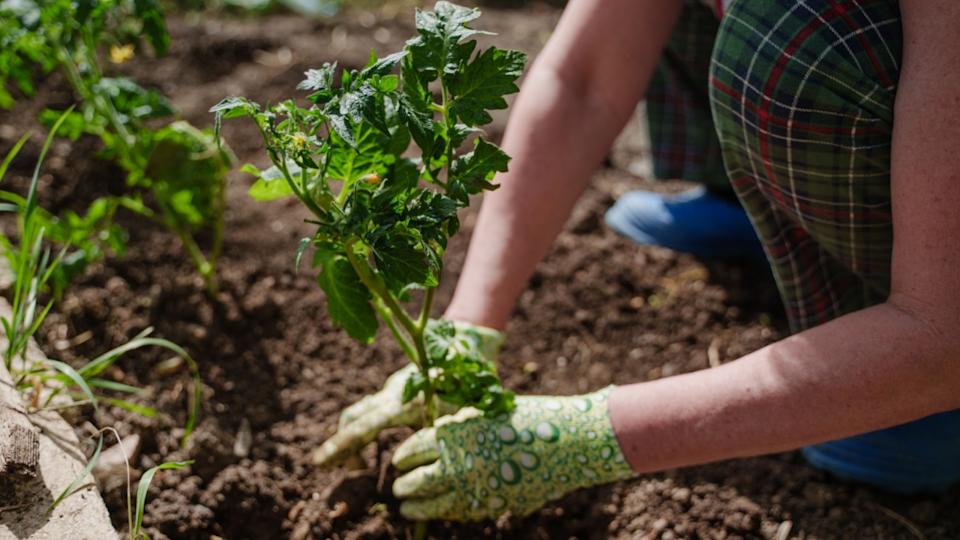
Image Credit: Shutterstock.
The first year, it sleeps. The second year, it creeps. The third year, it leaps. Your cottage garden will not look like a magazine spread in its first season. As Camilla Jørvad, the self-taught gardener behind the celebrated Sigridsminde garden in Denmark, explains in The Sage Journal, she always knew she was “creating a garden that wouldn’t truly come to fruition until a few decades later.” Start now, plant patiently, and trust what you cannot yet see.
3. Invest in Your Soil Before Anything Else
Image Credit: Shutterstock.
The single highest-return investment in any cottage garden is the soil beneath it. “Starting with good, rich, organic soil where plants will thrive with a minimum of watering and fertilizing cuts the work from the start,” says Trout on Better Homes & Gardens.
Conduct a soil test, then amend generously with compost before planting. Layer two to three inches of organic mulch once plants are in: it retains moisture, suppresses weeds, and improves the soil as it breaks down. Healthy soil is the difference between a cottage garden that demands daily attention and one that largely looks after itself.
4. Map Your Paths and Hardscape Before the First Plant Goes In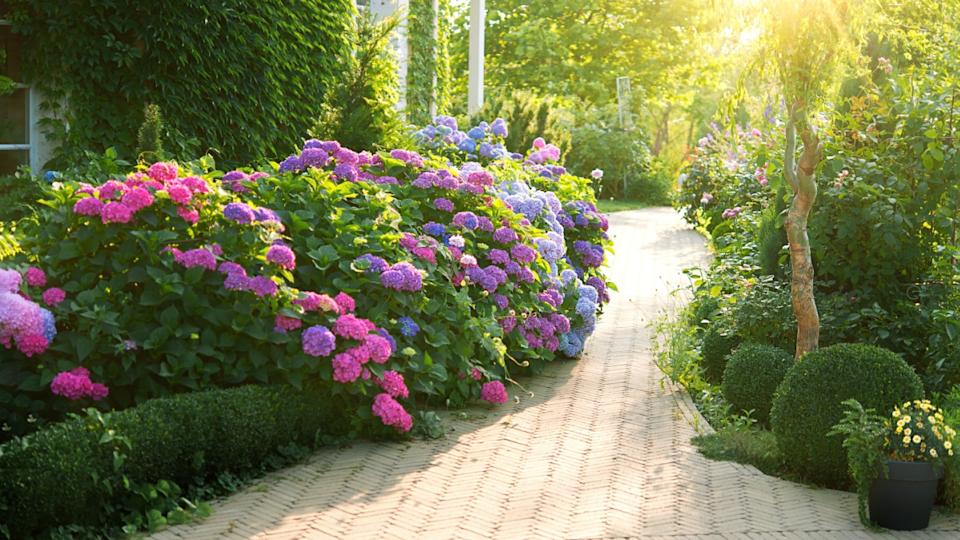
Image Credit: Shutterstock.
This is the step most beginners skip and the one they most regret. Paths, arbors, fences, and obelisks must be decided before plants go in the ground, because restructuring hardscape through an established garden is brutal work. RHS horticulturalist Catherine Fairhall Lewis recommends in Homes and Gardens that “a cottage garden should ideally have winding paths, which in midsummer are only just visible between beds bursting with plants.”
Use gravel, old brick, or natural stone; never straight lines. Plan paths wider than seems necessary; what looks generous on paper becomes a squeeze once peonies and salvias are flopping over both edges.
5. Establish Your Structural Backbone First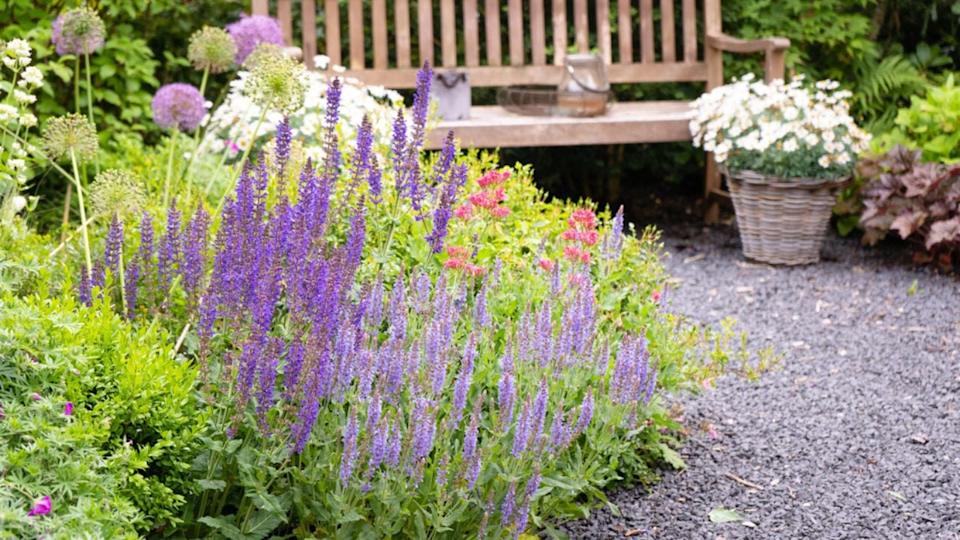
Think of your cottage garden in layers, and always plant the largest and slowest-growing layer first. Trees, large shrubs, climbing roses, and hedges are the backbone: they provide height, permanence, and the sense that a garden has been there forever.
The team at Monrovia puts it directly: “Before you put a single plant into the ground, start thinking about the backdrops. You’ll depend on these to make your garden really shine.” Roses, lilac, hydrangeas, and dwarf fruit trees are classic backbone choices. Plant them in March while still dormant, so their root systems have the full growing season to establish.
6. Add Your Perennial Workhorses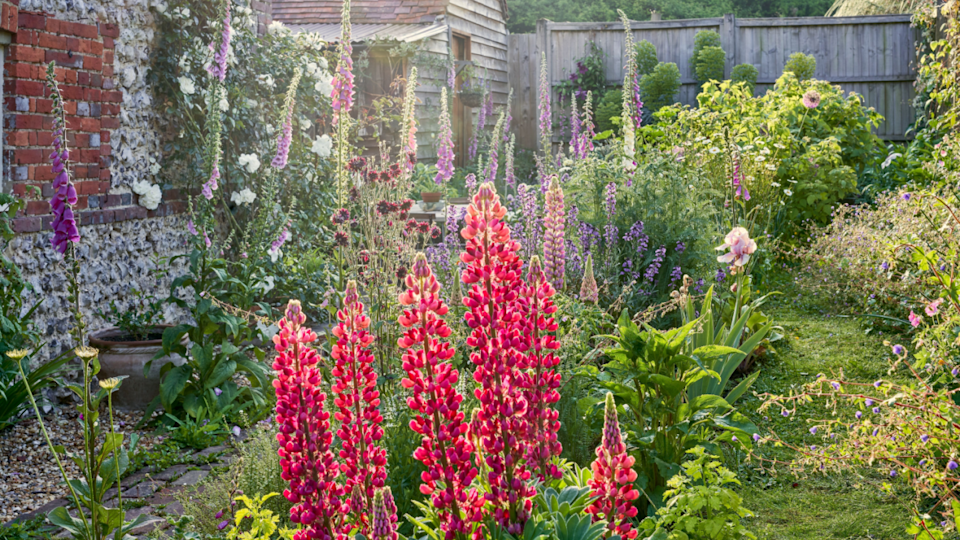
Image Credit: Shutterstock.
Once the structural layer is in, fill the beds with perennials; the plants that return and expand year after year without asking much in return. The Royal Horticultural Society, as cited by Homes and Gardens, identifies foxgloves, lavender, delphiniums, scented philadelphus, and roses as the top five cottage garden plants for “voluptuous planting and haphazard self-seeding.”
Add echinacea, peonies, hardy geraniums, salvias, and ornamental grasses to carry color and texture across all three seasons. Plan bloom succession deliberately now: stagger early, mid, and late bloomers so your garden never goes quiet.
7. Fill Every Gap with Annuals and Self-Seeders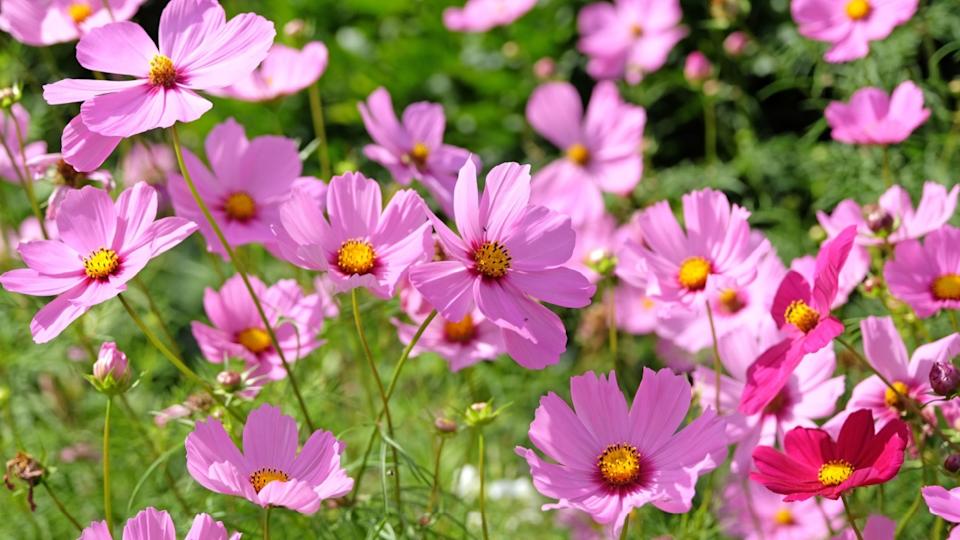
Image Credit: Shutterstock.
The spaces between young perennials and shrubs will look bare in year one. Annuals are the solution, and self-seeding annuals are the gift that keeps giving. Cosmos, love-in-a-mist, sweet peas, poppies, and calendula are the cottage garden classics; plant them this March and shake the spent seedheads back over the bed in autumn.
The best cottage gardens never truly end; one generation of self-seeded poppies leads naturally to the next, each one choosing its own spot with the casual confidence only nature has.
8. Go Vertical on Every Available Surface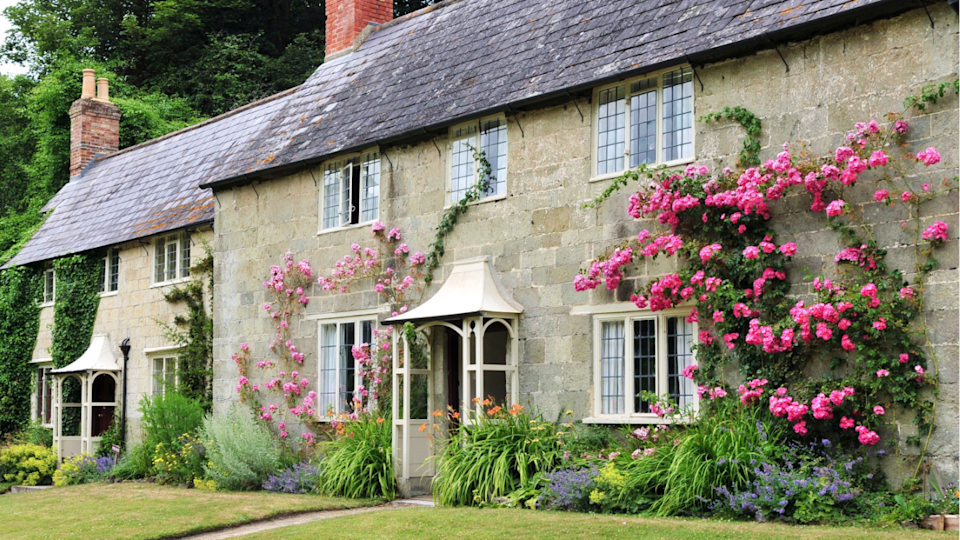
Image Credit: Shutterstock.
Every fence, wall, trellis, arbor, and obelisk in your garden is an opportunity. Climbing plants multiply your growing space without requiring a single additional square foot of ground. Laura Hooper, an expert gardener at Foxhill Garden, recommends in Real Simple to include “garden roses, soft-cupped roses with many petals, growing as shrubs or climbing” as foundational cottage plants.
Clematis, honeysuckle, and jasmine are equally classic companions. Train a climbing rose over an arbor, let clematis weave through a picket fence, and allow jasmine to drape over a garden gate. Vertical planting is what transforms a flat bed into a layered, immersive world.
9. Pack Plants In; Dense Planting Is the Whole Point
Image Credit: Shutterstock.
There is no social distancing in a cottage garden. Homes and Gardens describes the goal as “informal crowding, packing in as many plants and flowers as possible.”
Dense planting does more than look beautiful; it crowds out weeds, retains soil moisture, and creates the lush overflow that makes passers-by stop mid-stride. If you can see bare soil between plants at the end of spring planting, add more plants. The cottage garden rewards generosity.
10. Choose Plants That Welcome Wildlife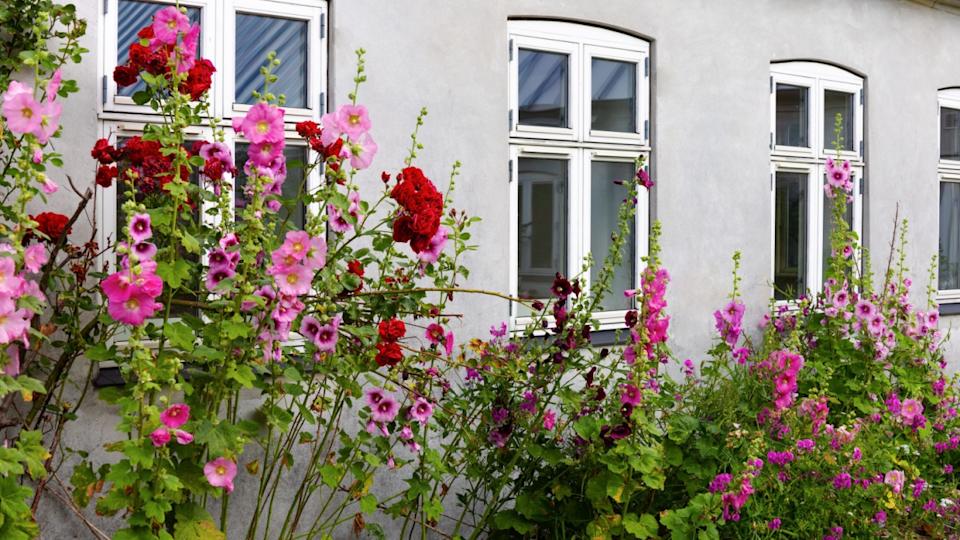
Image Credit: Shutterstock.
A truly alive cottage garden hums with bees, flickers with butterflies, and draws birds to its seedheads and water. Design for pollinators deliberately: choose open-centered, non-hybridized flowers that insects can actually reach. According to The Growing Place Garden Center, diverse cottage-style planting “supports a range of wildlife, including bees, butterflies, and birds by offering habitats and food sources.”
Foxgloves and hollyhocks draw bumblebees; echinacea and rudbeckia sustain butterflies through late summer; seedheads left standing through winter feed birds when little else does. Add a birdbath or small fountain, and you have built not just a garden but an ecosystem.
11. Tuck Edibles Among the Flowers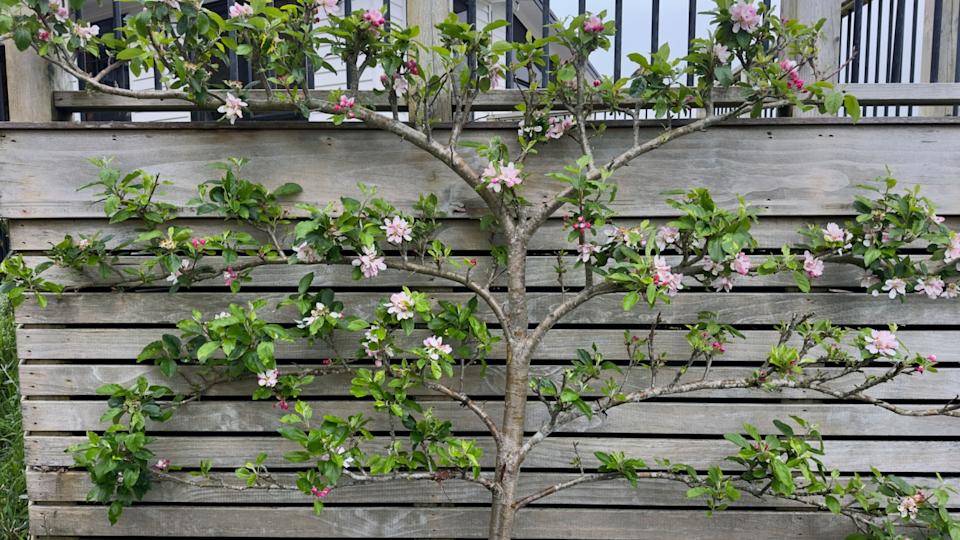
Image Credit: Shutterstock.
The original cottage garden was a kitchen garden dressed in flowers, and the most satisfying modern versions honor that tradition. Tuck herbs between perennials, train climbing beans up an obelisk, let a dwarf apple tree anchor a corner. Camilla Jørvad notes in The Sage Journal that squash, strawberries, tomatoes, and mint are among the most productive edibles for minimum effort in a cottage-style planting.
Mixing food plants with ornamentals is historically authentic, deeply practical, and it makes harvest feel like a treasure hunt.
12. Finish with Personal Touches That Make It Unforgettable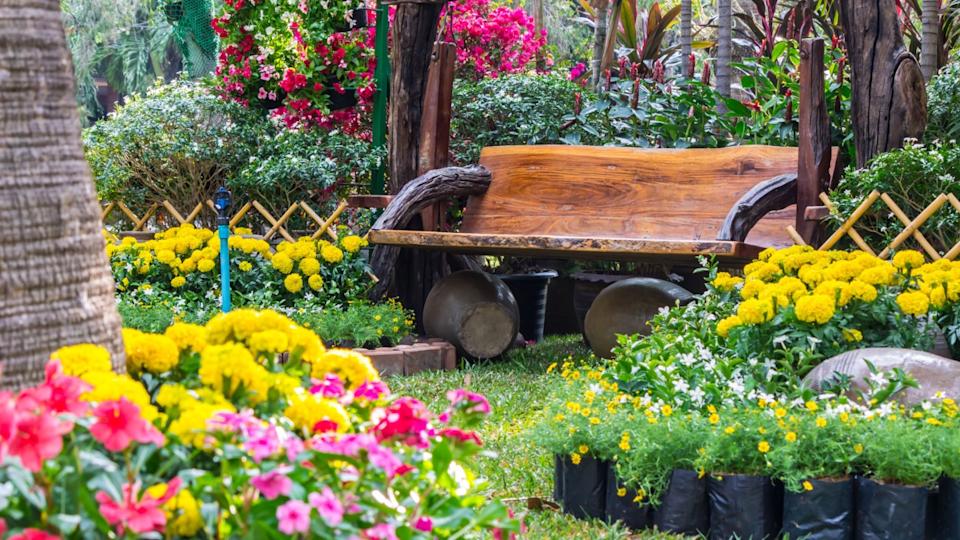
Image Credit: Shutterstock.
No cottage garden is complete without the accumulated personality of the person who tends it. A mossy birdbath, a reclaimed brick path, a sundial half-swallowed by geraniums, or an old wheelbarrow overflowing with cosmos are the details that give a garden a soul.
Use vintage and reclaimed materials wherever possible; they age into the aesthetic rather than fighting it. Tuck a container or two into the beds to give the eye a resting point. Then step back, resist every urge to tidy, and let the garden become itself.
Your Cottage Garden Is Already There, Waiting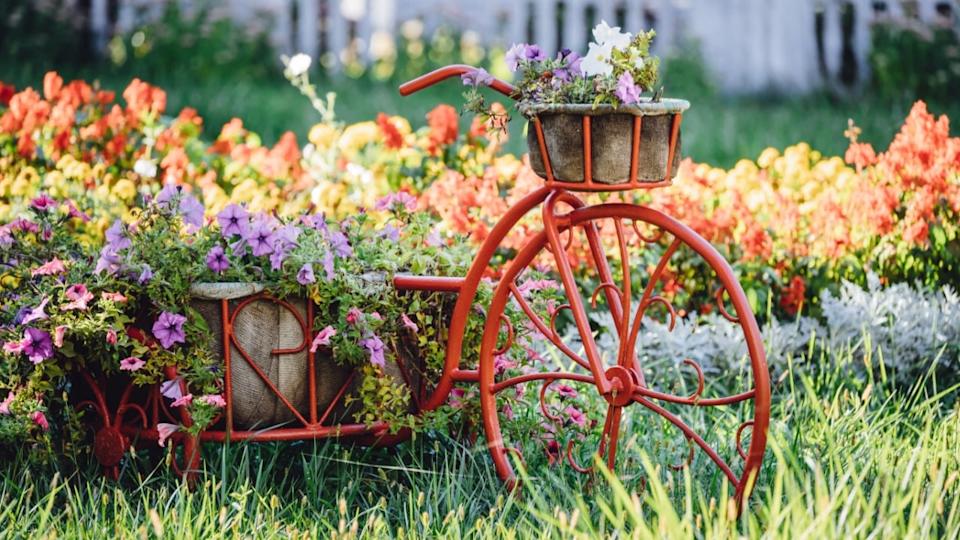
Image Credit: Shutterstock.
The garden you have always pictured, overflowing with roses and foxgloves, warm with the smell of lavender, humming with bees on a slow afternoon, is not out of reach. It just needs a beginning, and April is the perfect one. Start one bed this month. Plant the backbone. Add the layers. By your third season, you will have the garden your grandmother had, which you have always missed.
Read More
Plant these 10 companion plants with your tomatoes — and stop planting these 4
13 Plants That Grow Better (and Faster) Hydroponically — and Why March Is the Perfect Time to Start
Comments are closed.