
Instead of just buying them at the store, I want to start tomatoes and some annual flowers by seed at home. Can you offer general guidance on how to go about this project?
— Leila Morris, Chicago
We have had great success starting tomatoes at home. While garden centers offer many flowers and tomatoes, there are more choices if you are willing to grow your own. Different types of plants require different production times before being ready to plant outside. This may require starting seeds up to 14 weeks ahead of time to have them ready for outside planting. Follow directions on individual packets as to which seeds require bottom heat, light, or darkness to germinate. Some seeds might require a short period of chilling before being sown. Cool-season annuals (including larkspur, snapdragon, English daisy, ranunculus, pansy, annual poppy, forget-me-not, and edging lobelia) can be planted outside in the garden by the second week in April after the small plants are hardened off. Ranunculus and annual poppies are sensitive to cold weather, so wait an extra week to plant them if there may be a cold snap. By the end of March in Chicago, it’s too late to start early spring annuals for 2026. Cold-sensitive plants like marigolds can be planted outside after the danger of frost has passed. Marigolds and zinnias are also easy to direct sow in the garden. Tomatoes do not like cold temperatures, so we plant them in late May most years at the Garden.
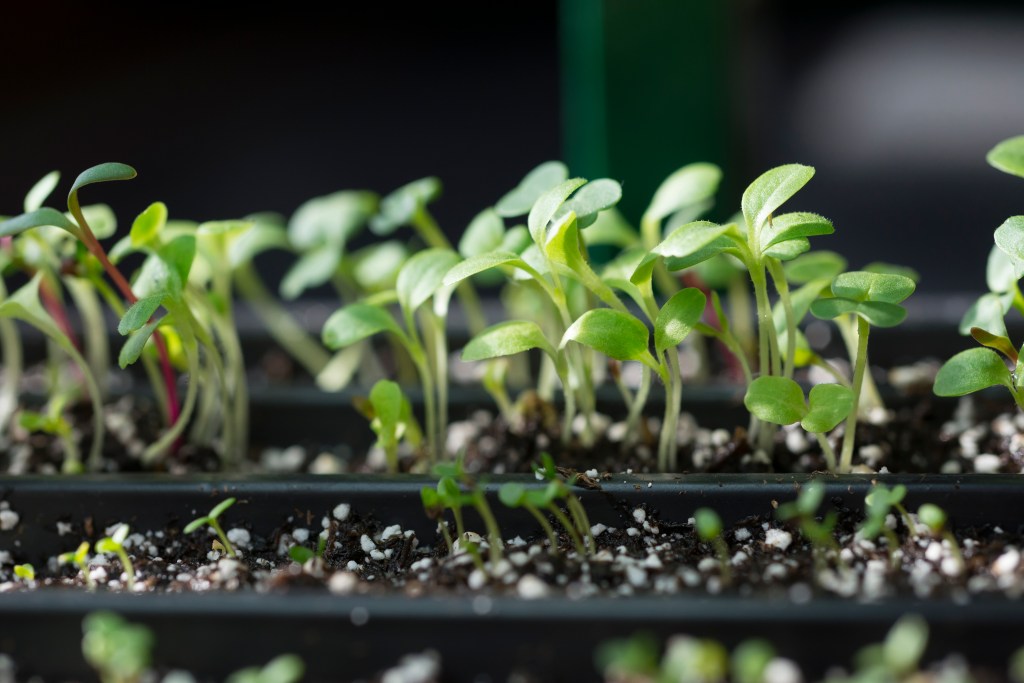
Sow seeds in fiber pots or trays, using a pre-moistened, soilless, or seed-starting mix. Your local garden center should have an appropriate mix available. Sow large seeds in slightly indented rows and cover lightly with a thin layer of the mix. Finer seeds may be spread directly on top of the growing medium. Seed packets should have sowing instructions specific to that plant. Some types of seeds require a glass or plastic cover to provide supplemental humidity. Water seeds from the bottom or use a fine mister to keep the soil moist. Most seeds require a warm, bright location out of direct sun to germinate. Ventilate covered seeds daily, especially in bright conditions. We start our seeds under grow lights in a room that also has bright light coming in from windows.
A lighting fixture hung on a chain works best as a grow light, as you can adjust the level to keep the light at the optimum 8 to 12 inches above the seedlings. Lower intensity fluorescent lights need to be positioned closer to the seedlings at two to four inches. Providing bottom heat for the seedlings can improve results. Heat mats or cables may be purchased at your local garden center.
When two sets of true leaves develop, transplant small seedlings to a larger fiber pot that contains a slightly coarser, growing-on mix. Begin fertilizing with quarter-strength 10-10-10 solution. As the plant grows larger, switch to a half-strength solution once a week.
Harden plants off approximately seven to ten days before planting them in your beds. Take them to a shady outdoor location for a few hours a day and bring them back in again at night. Gradually increase the time the plants spend outside and in the sun, until they are ready to be planted in containers, window boxes, or garden beds.
For more plant advice, contact the Plant Information Service at the Chicago Botanic Garden at plantinfo@chicagobotanic.org. Tim Johnson is senior director of horticulture at the Chicago Botanic Garden.
Comments are closed.