
Q. What are some early native wildflowers I might see growing in the woods? — A.
A. This is the time of year when I start getting antsy to get outside and explore. Since I have converted most of my wooded area around my house into native shade gardens, that’s where the earliest blooms will appear. I’m a woman on a mission-one who gets excited about seeing the first blooms of the year. Spring ephemerals take advantage of the sun shining through the leafless trees, and emerge as the soil warms up. They will flower while there is enough sunlight to allow photosynthesis to occur. Plants will store energy in their underground roots, but will continue to get nutrients from the soil throughout the summer. Even when we can’t see them, the plants are hard at work.
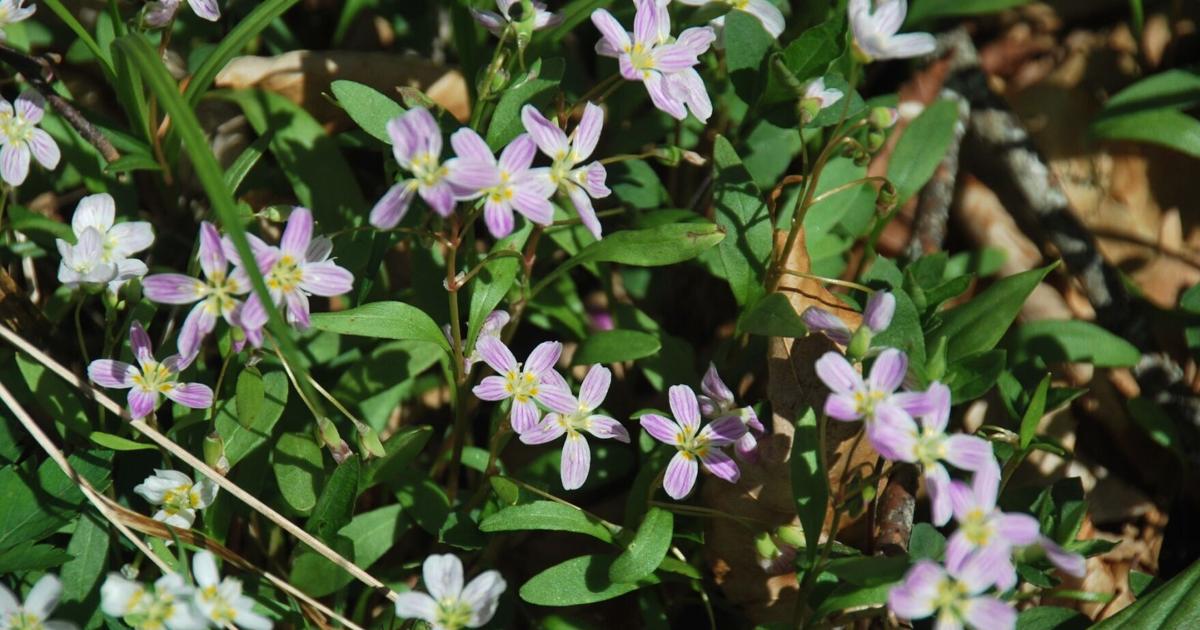
Finding some of these early flowers, called spring ephemerals because they are fleeting and only around for a short time, could mean you have become a stalker. I go out with camera and hand lens in hand every morning, even on rainy days, to look for those first blooms. In early February I was rewarded with the hardiest and daintiest of the spring ephemerals, the Spring Beauty (Claytonia virginica). You wouldn’t expect these little flowers to be able to withstand the harsh temperatures and winds of late January and early February. But here it is, the first week of March and they are still going strong. The Spring Beauty is pollinated by bees. One in particular, the Spring Beauty Bee, gets most of its nutrition from the Spring Beauty plant in a phenomena known as oligolecty, a trait referring to bees who show a special preference for pollen of a single pollen source or genus of flowering plants. It’s amazing how this co-dependency developed.
Soon after the Spring Beauties flowered, I started seeing the first signs of Trilliums emerging from the ground. These have buds and a very few already have some blooms. Later, I will have large colonies of these throughout the wooded areas. I’ll dig a few to start new colonies in other areas, but for the most part, I just leave them alone. The trilliums will produce rows of white seeds that will turn brown as they ripen. I can harvest them and cast them where I want them to grow, or better yet, I’ll leave them for the ants to harvest. They will take them to their nests where their babies will eat the nutritious coating from the seeds. Mama ant will clean out the nest and toss out the seeds, scattering them for me. Since it can take up to seven years for a trillium to go from seed to its first flowers, it is critical that the flowers are not picked in the wild.
Right on the heels of the trilliums will come the Bloodroot. I first noticed signs of the bloodroot in mid-February. Within two weeks the leaves were up but curled around the flower bud to protect the blooms by trapping heat. After a few warm days, the leaves unfurled and the pinkish buds opened into stunning pure white flowers with very noticeable yellow anthers and pollen. These plants are critical sources of pollen for our spring pollinators such as early bees and ants.
And here as we enter April, I see pips of the Mayapples all around the yard. These will provide food for box turtles and squirrels who will spread the seeds, as well as being a pollen source for various bumblebees, long tongued bees, butterflies and moths. These insects are essential pollinators of the Mayapples. The Variegated Fritillary Butterfly and several moth species lay eggs on the mayapple, depending on it for survival of offsprings.
Just yesterday, I saw the first leaves of the Toothwort which will put forth dainty white to pinkish blooms. Bees will visit for pollen, beetles will feed on the foliage and it is a host plant for some butterfly species. The leaves are a food source for animals, including humans, who may enjoy the peppery taste of the leaves eaten raw or cooked.
Additional spring ephemerals will continue to show up until the oaks leaf out and the plants are no longer getting enough sunlight to allow them to make and store food. But that doesn’t mean the hunt ends right now. I’ll continue to stalk the spring ephemerals for at least another month, watching for Dutchman’s Britches, Shooting Stars, Trout Lilies, Bleeding Hearts and Hepatica.
But there’s always another flower season right on the heels of the spring ephemerals. I wonder when I’ll see the first native Columbines blooming just in time for the hummingbird migration, and then there’s the phlox and the Golden Alexanders that the bumblebees adore. Oh, and don’t forget about the Foamflowers and Virginia Bluebells. And, oh my, we can’t ignore the sunshine yellow of the Celandine Poppies.
It’s a never-ending splendor of colors, shapes and sizes of native plants, so be on the prowl for them whenever you are enjoying the outdoors. Take some pictures, but please do not harvest plants from the wild without property owners’ permission.
On April 18, the West Georgia Chapter of the Native Plant Society will hold its annual spring native plant sale at the Carroll County Ag Center from 9am — 12pm. Come browse with our numerous vendors offering native plants-native azaleas, sun and shade perennials, trees and shrubs. This year we have added Linda Fraser, a renowned native plant artist who will be offering her paintings for the first time at one of our plant sales.
At the April meeting on April 21 at the Carroll County Ag Center in Carrollton at 6:30pm. Kelly Morris will present a program about adding water features for your yard. If you miss our plant sale on April 18, catch us at the Wild Earth Backyard Bash at the Bear Creek Nature Center-Environmental Education Spring Festival. To learn more about Georgia Native Plant Society visit their Facebook page or the web site at gnps.org. West Georgia Chapter also has a Facebook page where you can learn about programs, workdays, upcoming events and plant sales or visit our website at wgawildflowers.org.
If you have gardening questions, contact a Master Gardener Extension Volunteer at the UGA Cooperative Extension Carroll County office, located at the Carroll County Ag Center at 900 Newnan Road in Carrollton at 770-836-8546 or via email at ccmg@uga.edu.
Comments are closed.