
Begin by removing weeds, roots and all, and carefully digging up any existing plants in the chosen bed. Trees, of course, cannot be easily removed, so leave them be.
Enrich the soil by spreading 2 inches of compost or well-rotted manure throughout the bed, then use a garden fork to gently turn it in.
Define the bed with metal, brick, stone or paver edging that’s tall enough to keep the gravel in place.
Next, lay 4 inches of your chosen aggregate over the soil and, if trees are present, push the material several inches away from the bottoms of their trunks.
Do not use landscape fabric beneath the gravel; it won’t perform as you hope it will. Instead of preventing weeds, it will create heat pockets, restrict the flow of water and oxygen to the soil, trap carbon, and kill microbes, earthworms and beneficial insects.
Then it will slap you in the face and watch for your reaction as the weeds you tried to block grow right through it. They’ll be near-impossible to remove, as their roots become intertwined with the fabric’s weave. Then, the weathered material will tear into shreds and mock you as its edges poke through your once-lovely gravel garden.
Choose drought-tolerant, native plants

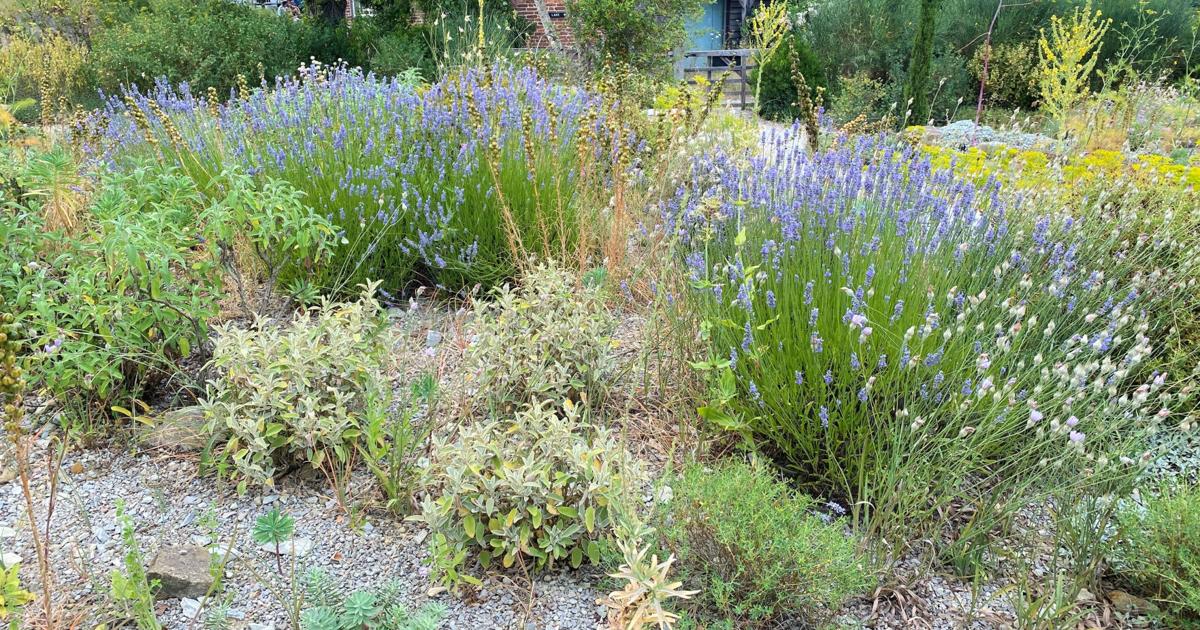
This July 2022 image provided by Hamzah-Adam Desai, of Tone & Manner garden design, shows a gravel garden he created for the 2022 RHS Hampton Court Palace Garden Festival in East Molesey, Surrey, England.
Hamzah-Adam Desai
Select drought-tolerant, sun-loving perennials, ideally species native to your region. These plants also tend to thrive in nutrient-poor soil. Just ensure they are suited to your horticultural zone.
Buy plants in 3½-4½-inch pots, as their roots will be the perfect size for the application. Before bringing them to the planting area, scrape off the top layer of soil from each plant to lower the risk of any present weed seeds sprouting, then water each pot well.
Comments are closed.