
[brightcove]https://players.brightcove.net/6093072280001/default_default/index.html?videoId=6386626163112
If you’re walking around Avalon in Lower Hutt, you might not realise you are walking past trees planted in the 1800s.
Today’s suburban streets such as Avalon Crescent and Tennyson Avenue once upon a time ago were part of the famous five-hectare Mason’s Garden.
What remains of Mason’s Garden today?
RNZ went with garden historian Clare Gleeson to Avalon Crescent in Lower Hutt where several protected trees from Mason’s garden remain.
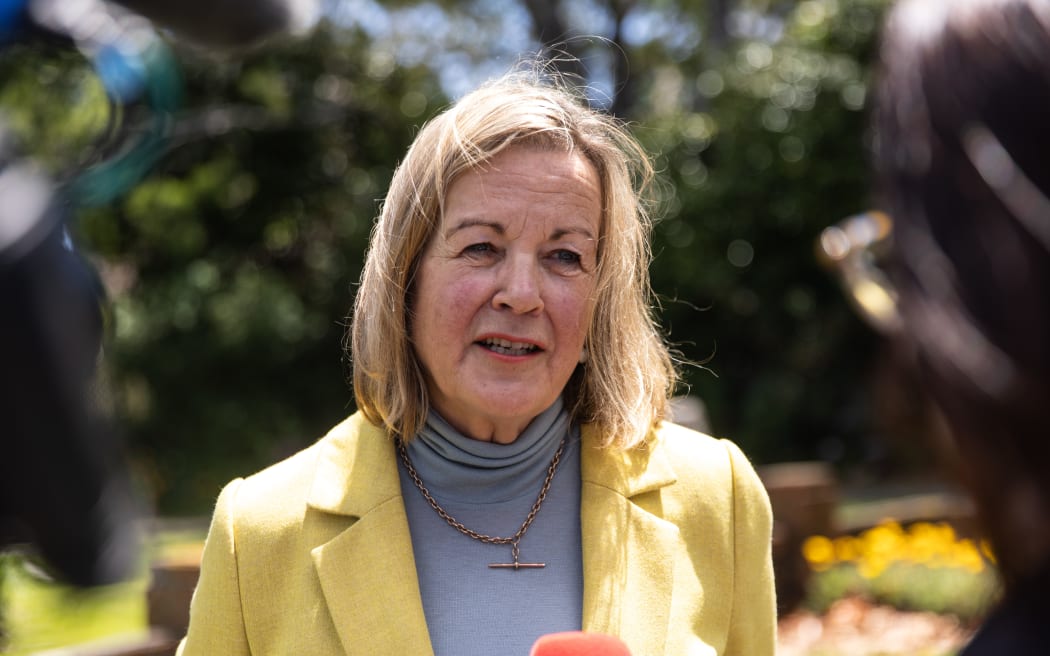
Garden historian Dr Clare Gleeson.
Photo: RNZ / Samuel Rillstone
She said the street was right at the heart of what was Mason’s Garden until the land was subdivided for housing in 1922.
For a person walking down the street today, they’d be forgiven for not knowing they were standing on the site of a once notable garden, with houses now the main feature of the area.
The historic trees blend in with the many others planted since (although a keen eyed passer-by may notice little plaques on some of the trees noting their significance).
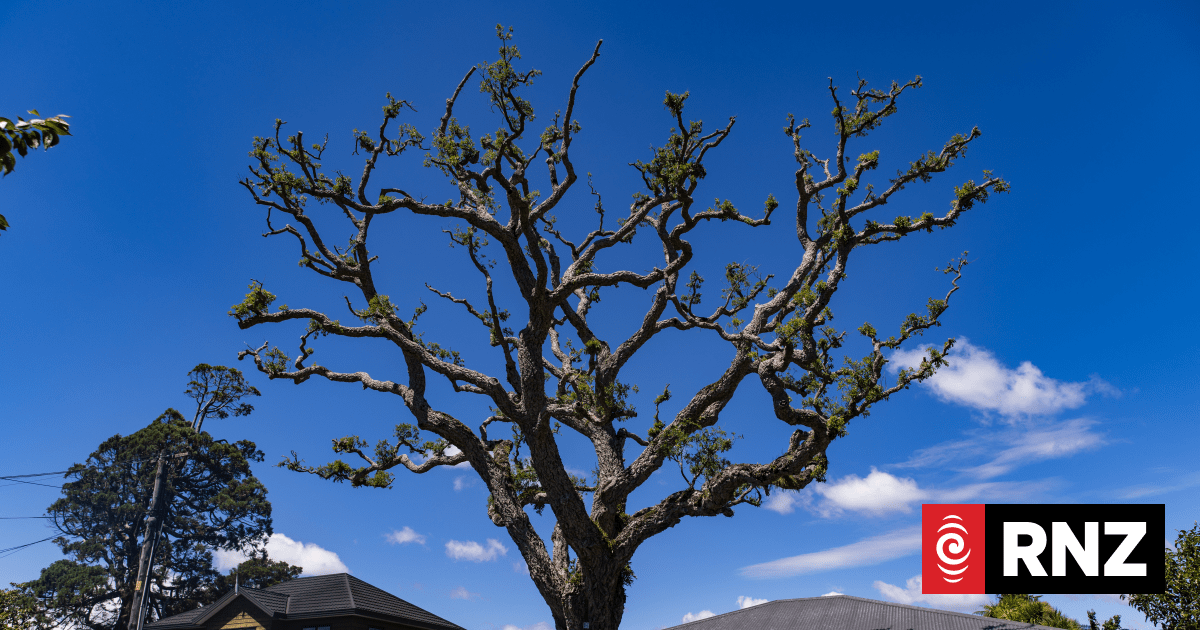
There is a weeping pagoda tree, a cork oak, an english oak and a gold-leaved chestnut. Most of the trees were planted circa 1850 or 1860.
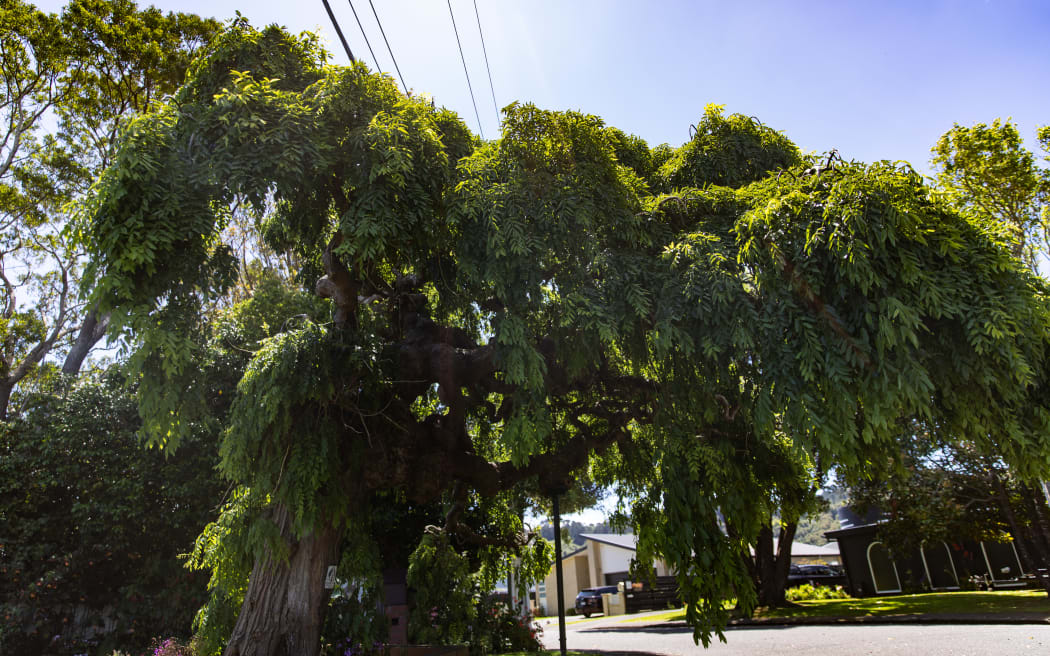
Photo: RNZ / Samuel Rillstone
For Gleeson the weeping pagoda tree was one of her favourites.
“I think it’s just stunning.”
Gleeson said some others had survived but were on private properties, many of which were concealed from view.
The garden at its peak drew in visitors from around the world.
Gleeson said a visiting Harvard Professor once remarked that a magnolia tree, that still stands today, was the finest example of the tree he’d seen in the world.
Meanwhile a cork oak tree she said had a continued legacy, with one of the owners of the property growing cork oak trees in Waikanae with acorns from the Mason’s Garden tree.
How it all began
In 1841 Thomas Mason, who was also known as ‘Quaker Mason’, and his wife Jane arrived in Wellington from England on the New Zealand Company ship Olympus.
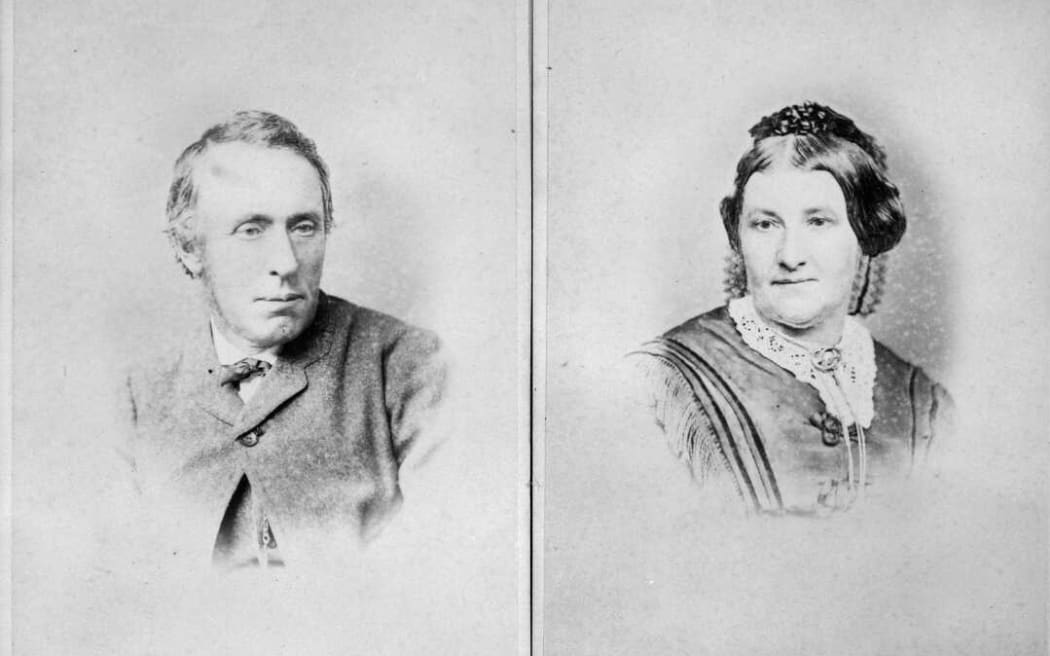
Thomas and Jane Mason.
Photo: Supplied / Alexander Turnbull Library, Wellington, New Zealand, MS-Papers-2597-33/3/09-01
Mason bought a section in Taita, much of which was covered in heavy tōtara forest.
In Wellington Heritage: Plants, Gardens and Landscape author Winsome Shepherd said six weeks after his arrival he wrote to his uncle in England asking him to send asparagus, Siberian crab apple, onion, red cabbage and other good vegetable and hardy flower seeds as well as dianthus, rose tree and hawthorn seeds.
Soon after he also requested potatoes and vegetables as well as oak and ash trees to brighten up the sombre green landscape.
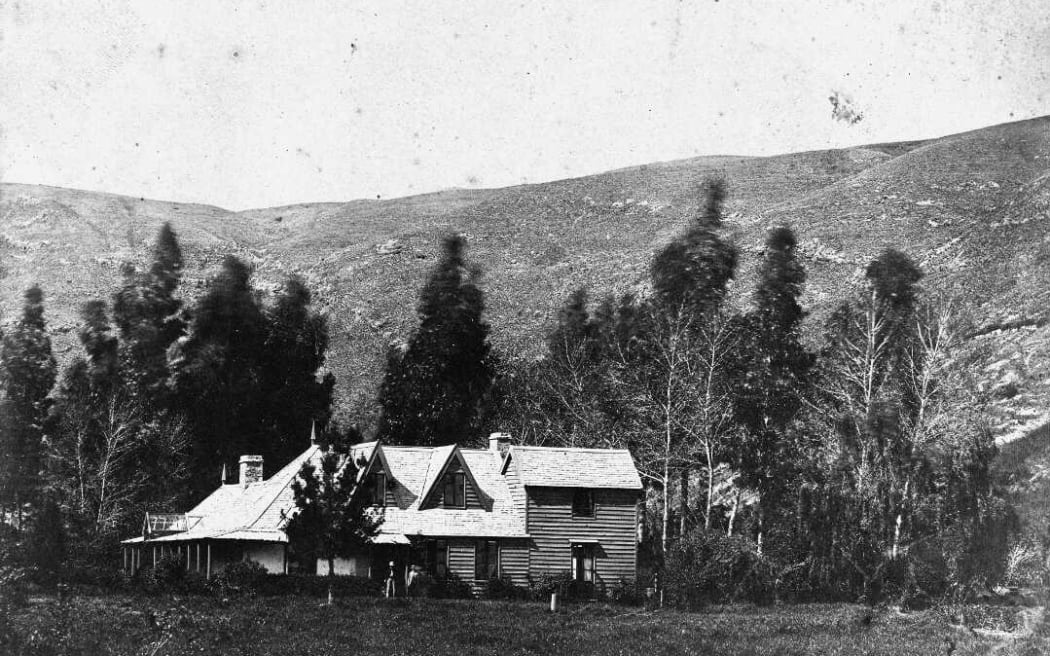
A view of the house owned by Thomas Mason in Taita, Lower Hutt, circa 1890s. The house is situated at the foot of a hill and is surrounded by tall trees. An unidentified man and woman (possibly the Thomas and Jane Mason) stand in front of the house.
Photo: Supplied / Alexander Turnbull Library, Wellington, New Zealand, 1/2-036239-F
The property becomes known as The Gums
The family moved to Australia for a brief time, but returned to Taita in the early 1850s. Mason brought with him eucalyptus seeds and apple trees that would establish the nucleus of his orchard and the property became known as The Gums.
Over the next several years Mason continued to grow the number of plants and fruit trees he grew.
Gleeson said Mason’s garden spanned around five hectares with a “massive” amount of different plants.
“I think in 1896 he produced a list and it said there were […] 15,000 different varieties of plants, which is just phenomenal.”
“Then a few years later, he added another 230. So it was a very, very large and a very diverse garden.”
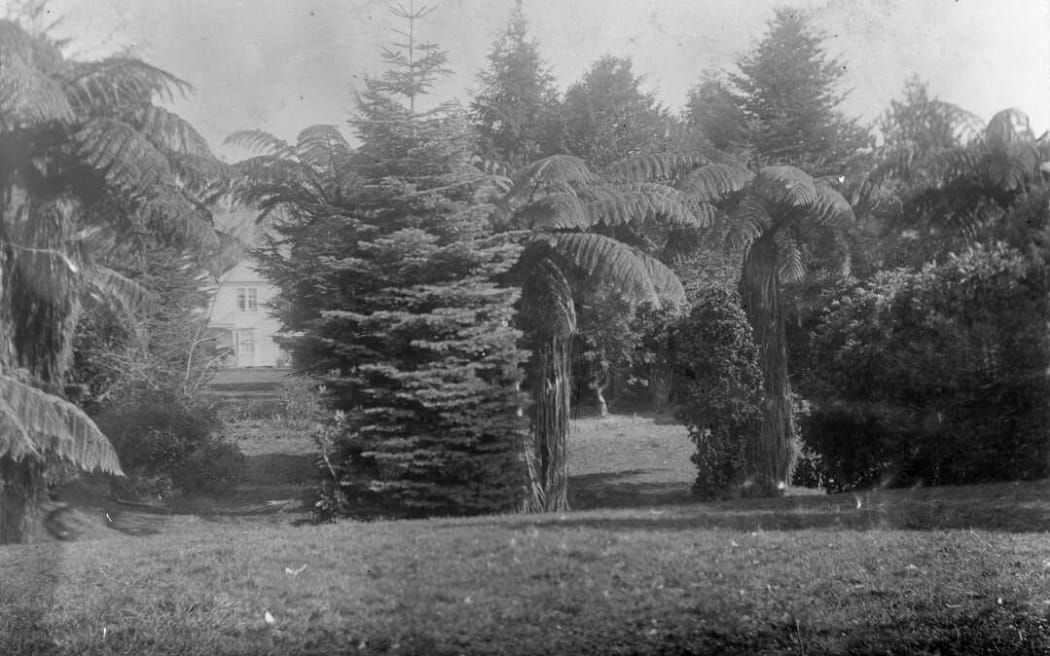
The house and garden of Thomas Mason, Taita, Lower Hutt in 1899.
Photo: Supplied / Alexander Turnbull Library, Wellington, New Zealand, 1/2-082447-F
Gleeson said it was a pleasure garden with vegetation such as rhododendrons, azaleas and magnolias.
But she said the garden was also a productive one.
“It grew lots of fruit and vegetables, rhubarb particularly, and potatoes and tomatoes for the Wellington market,” she said.
“In fact, it’s said that he was the first to grow tomatoes in Wellington, if not New Zealand, and that his gardeners were very wary about eating them until they saw the birds pecking at them and then realised that they were safe.”
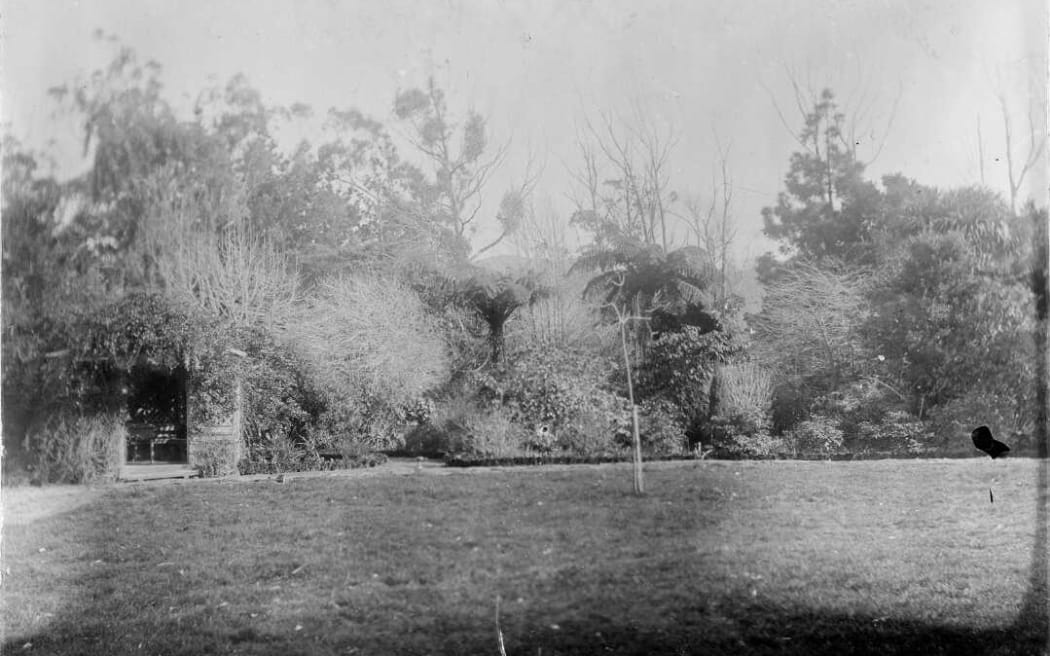
A view of Mason’s garden, Taita, 12 September 1899.
Photo: Supplied / Alexander Turnbull Library, Wellington, New Zealand, 1/2-082446-F
Estate eventually auctioned
According to Shepherd, Mason’s property was passed along to his eldest daughter and through to her son Thomas Wilford.
Wilford is reported to have desperately tried to keep The Gums going, but the upkeep proved too expensive.
The property was bought privately and for a while became known as Mason’s Tea Gardens. But in 1922 the property was sold and developed into housing.
“The boundary trees were felled and burnt, and photographs taken from the western hills show the smoke that filled the valley for weeks,” Shepherd said in her book.
Of the trees that remain from Mason’s Garden today, several are considered notable trees and are protected.
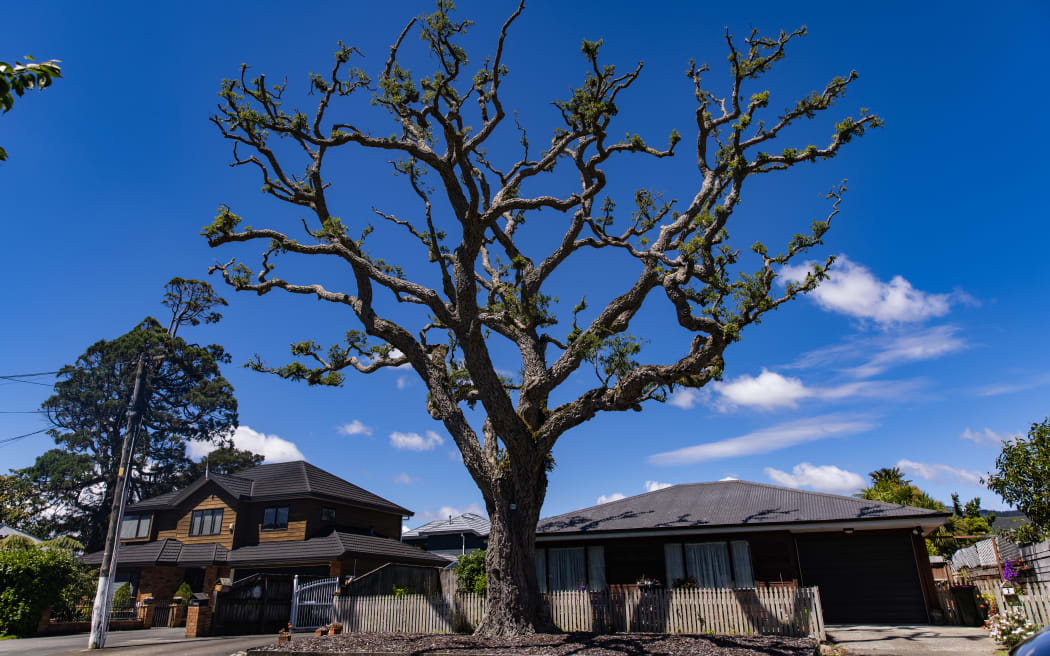
Photo: RNZ / Samuel Rillstone
Sign up for Ngā Pitopito Kōrero, a daily newsletter curated by our editors and delivered straight to your inbox every weekday.
Comments are closed.