
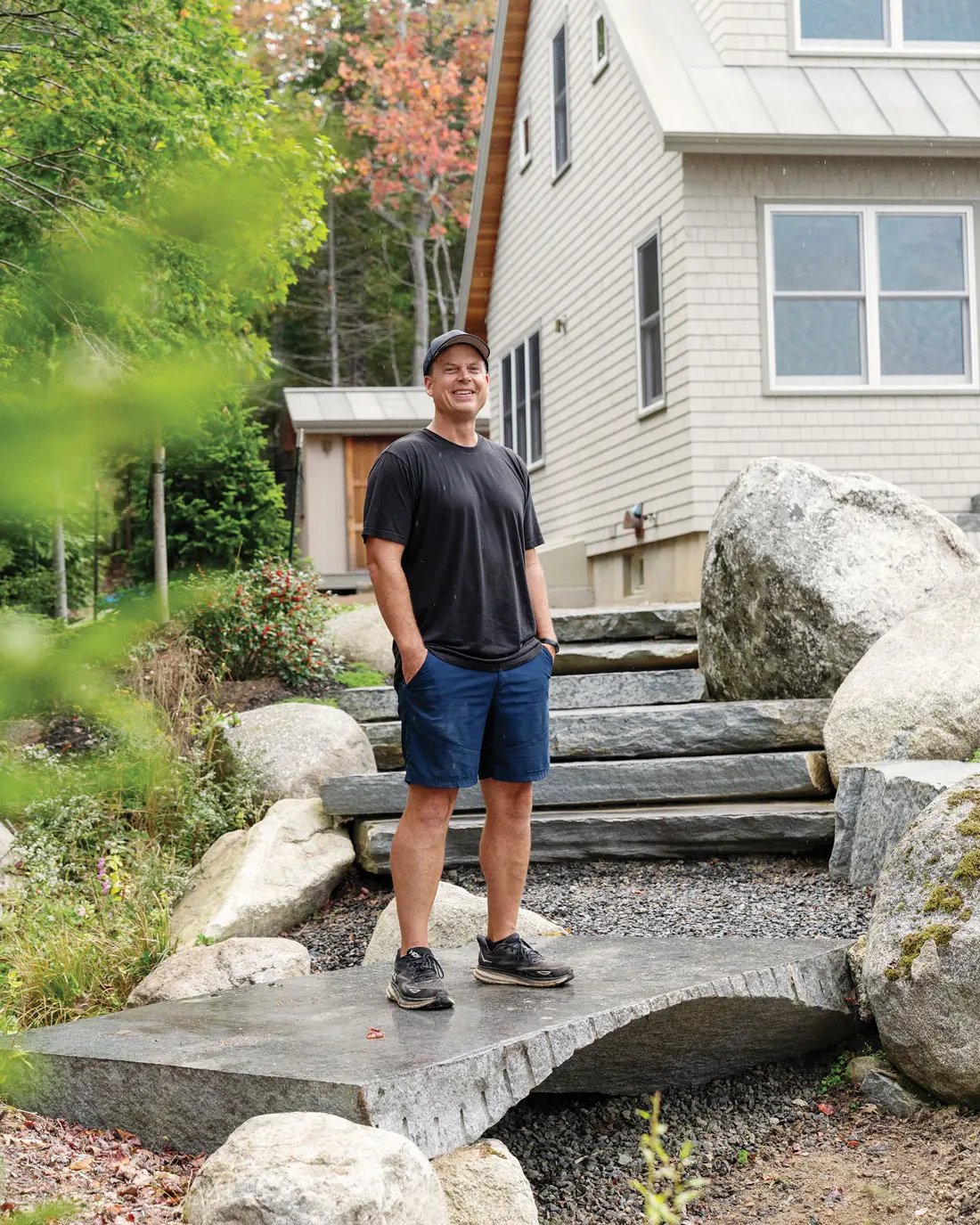
By Ethan Daly
From our April 2026 Home & Garden Issue
One day last fall, Joe Norton ambled along a springy forest floor until he came to a clearing. There, early-morning rays lit up an otherworldly scene: a knee-high stone wall with small shelves and indents holding pockets of moss and stone coins, small boulders interspersed with tall blocks of granite to form an occult-looking circle, a pile of rocks spilling from a pine tree, lithic pillars engraved with enigmatic glyphs. Prehistoric ruins from the misty plains of northern Europe might well come to mind. Norton, though, built this assemblage, called the Fairy House Village, in 2013 at the Coastal Maine Botanical Gardens, in Boothbay. He envisioned a play space where children’s imaginations could take hold, and, he says, his own imagination ran wild as he designed the little woodland kingdom.
Norton, a stoneworker who lives in Brunswick, grew up only about a mile from the botanical gardens. While his dad lobstered, his mom made jewelry and painted furniture and murals. From a young age, he felt that labor and creativity were inextricable from each other. As a college summer job, Norton worked for Dave McFarland, an East Boothbay mason who specialized in chimneys and fireplaces. Under McFarland, he learned hard work and discipline and how to lay bricks and cinder blocks, but not stones. That was more complex. “He only let me set one stone,” Norton remembers.
He graduated from the now-defunct Audubon Expedition Institute, a traveling college program, with a degree in environmental studies (the experience, he says, was “hippie”). Then, he set off for California and found work as a ranger with the National Park Service. He roamed the Marin Headlands, just across from the Golden Gate Bridge, checking trails and delivering interpretive programs. When he got tired of spending time in a visitor center, he quit and moved to Hawaii with some friends. It was there, floating in the ocean off Maui one day, beneath a bright blue sky, that Norton found himself fitting stones together in his head, picturing what he could build. It was, he decided, a sort of epiphany.
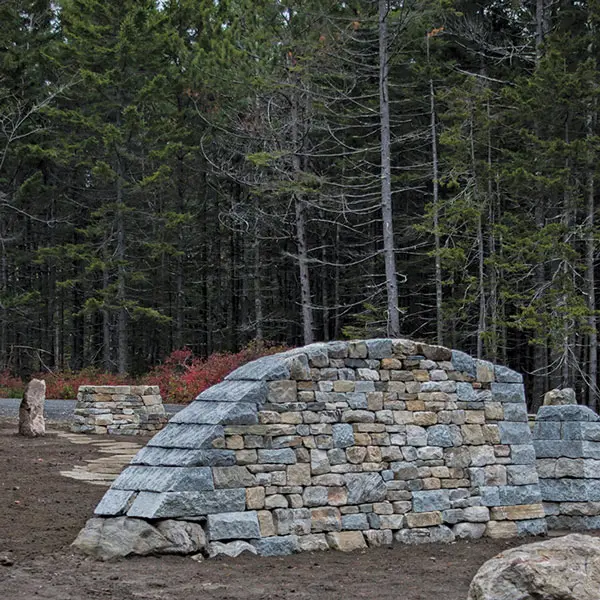
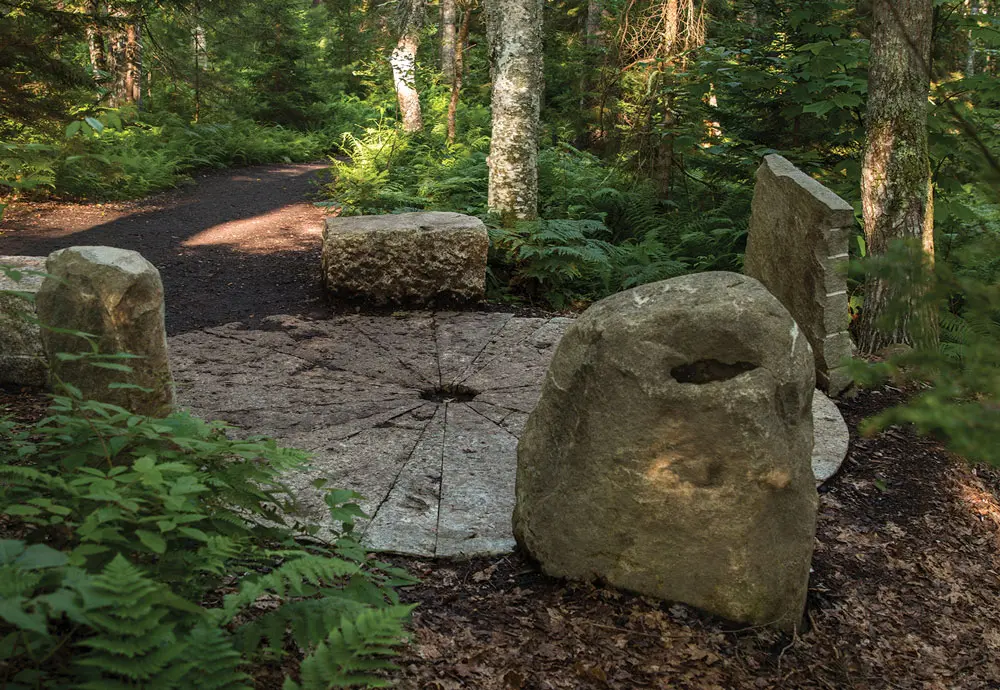
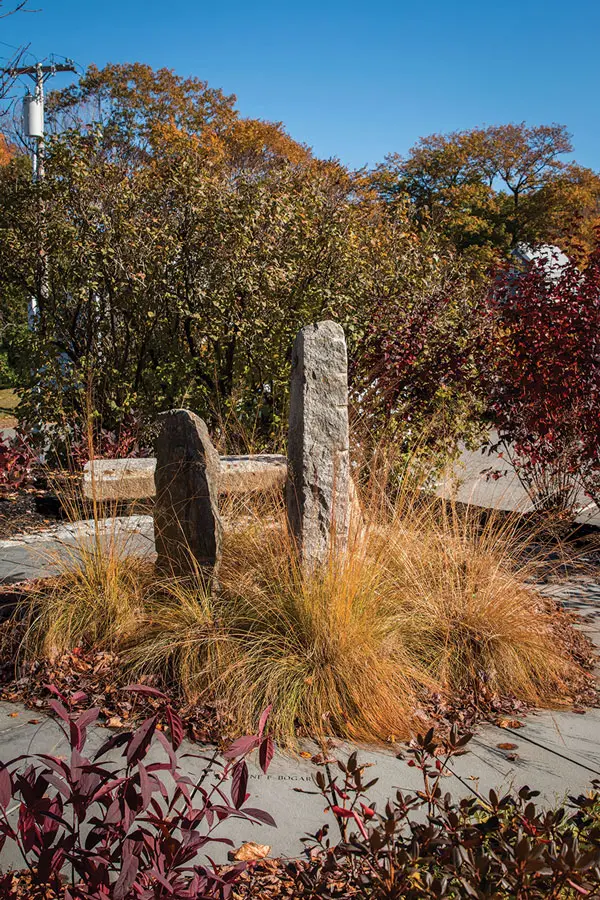
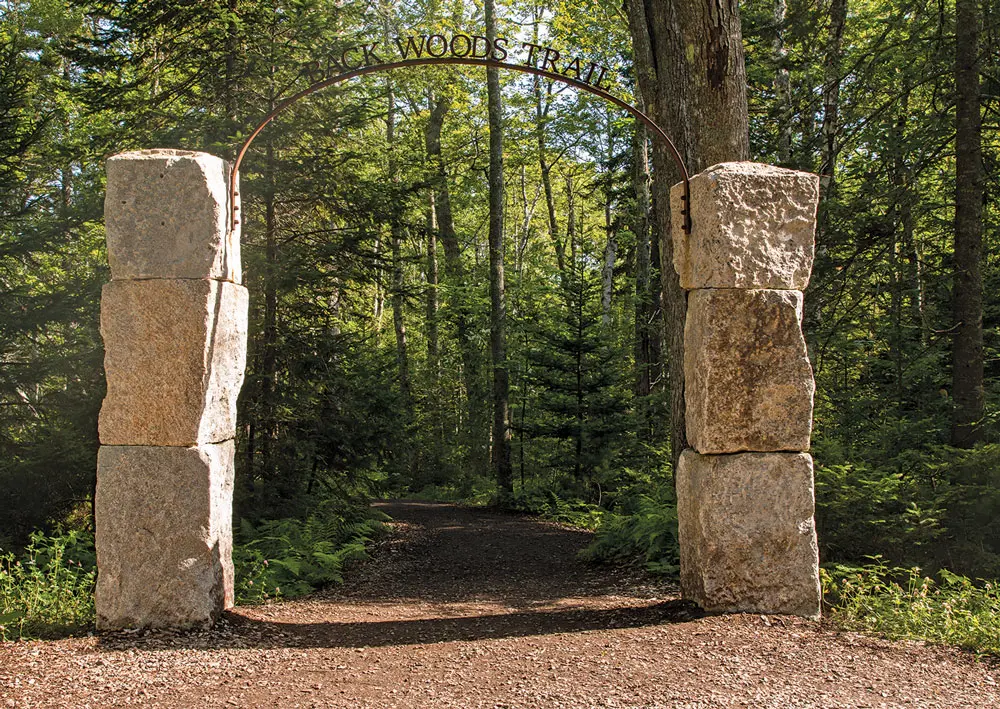
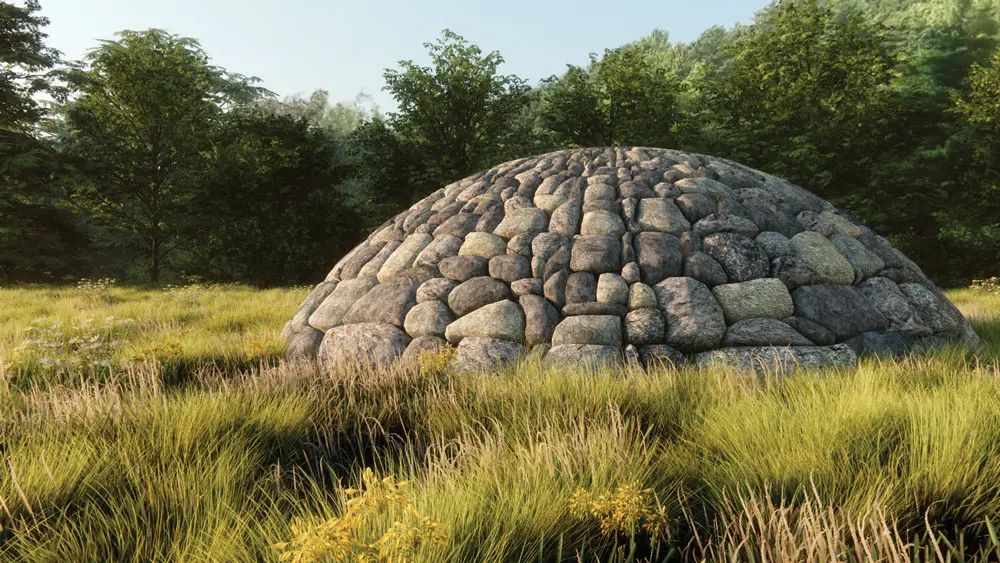
Norton’s mortarless stonework is a fixture of public spaces, private homes, and his imagination, as was the case with a dome he dreamed up (but hasn’t built yet), located at bottom right (rendering by Carmen Ford). Photos by Jennifer Battis
He moved back to Maine and started Norton Stoneworks, laying the foundation for a career that has now spanned more than a quarter century, rooted in the ancient technique of dry stone construction—that is, working without mortar, relying on friction and gravity between stones to hold them together. It is, Norton notes, one of the oldest building methods in the world. In 2024, UNESCO named the timeless technique part of the “intangible cultural heritage of humanity.”
At Coastal Maine Botanical Gardens, apart from the Fairy House Village, Norton has carved half spheres of rock for trail markers, arranged stones to create woodsy sitting areas, stacked granite blocks the size of mini-fridges to form archways, and assembled mounds of shells and stones according to designs by indigenous artist Anna Tsouhlarakis. At the Congregational Church of Boothbay Harbor, he put together granite benches as places of quiet contemplation on the grounds of a memorial garden.
Public projects are not Norton’s only focus. Residential work, including stone walls, steps, patios, firepits, and walking paths, is most of what keeps him busy. They aren’t art in the same sense as, say, his fairy village, but they are undeniably artistic. “Joe’s best asset for stonework is his patience and ability to go with the flow and do whatever the stone is dictating him to do,” said Steve Sclar, founder of the Portland-based Fir Folk Stonework. He and Norton met while leading classes for the Stone Trust, a nonprofit in Vermont that teaches dry stone construction. Even though both of them are inclined toward introversion, they became, in Sclar’s words, “stone bros,” and they have since collaborated on several projects.
Sclar remembers a moment when they were using blowtorches to defrost stones frozen together. He had taken his flannel off and thrown it on the wall. Norton approached Sclar and stated matter-of-factly, “Your shirt is on fire.”
“I thought he was joking and deadpanning me,” Sclar says. “He said it nonchalantly a few more times before I saw my ratty shirt in flames. But that’s how Joe rolls. There are no emergencies for him.”
Photos by Tara Rice
Leaving the botanical gardens that morning last fall, Norton drove a scenic route along the shore to a residential project in nearby Southport. He showed off a long, low wall, like those found where woods have reclaimed farmland throughout New England. This one, however, was intact and solidly so—it wouldn’t budge under my weight. Norton then pointed out the front yard, where a whaleback arch of stone rose high above the ground, a gap through the middle allowing a pathway to the door. Walking back to his car, he paused a moment, seeming to collect his thoughts. “I legit just like rocks,” he said.
Norton has some half-baked ideas for future public projects, like a commemorative piece for a demolished dam in Naples and installations at land-trust preserves. He is constantly finding inspiration in nature and in other stonework, whether from ancient Egypt or modern Maine. While he admitted that, some days, nothing will go where he wants and he starts to hate the process, he forgets it all when he begins a new wall. “I just started this project on a lake, and I saw the big pile of stones to pull from for the first time,” he said. “I don’t know if it’s the potential of what the wall could be, or the wonderment of it all, but there’s something that just gets me going.”
Help Us Celebrate Maine
If you enjoyed this story, I hope you’ll consider supporting Down East. For more than 70 years, Down East has been a leading ambassador and advocate for Maine — spreading stories across the country about its talented characters, chefs, organizations, and towns and places that make it so special.
When you subscribe to Down East, you help ensure we can continue reporting on the people and places that make this state extraordinary. Additionally, when you join our community of readers throughout the country, you also support small businesses across the state, including all the artists and craftsmakers that help define the culture of Maine.
In exchange for your support, you get a year of stories, stunning photography, insider guides, and that unmistakable emotional connection to Maine. You can also sign up for our newsletters for weekly updates, or give a gift subscription to share Maine with someone special.
Maine is home to all our writers, editors, and photographers, and your support will help us continue to do what we do best. Together, we can ensure local Maine journalism stays strong.

Lawrence Hollins
Publisher, Down East magazine

Comments are closed.