
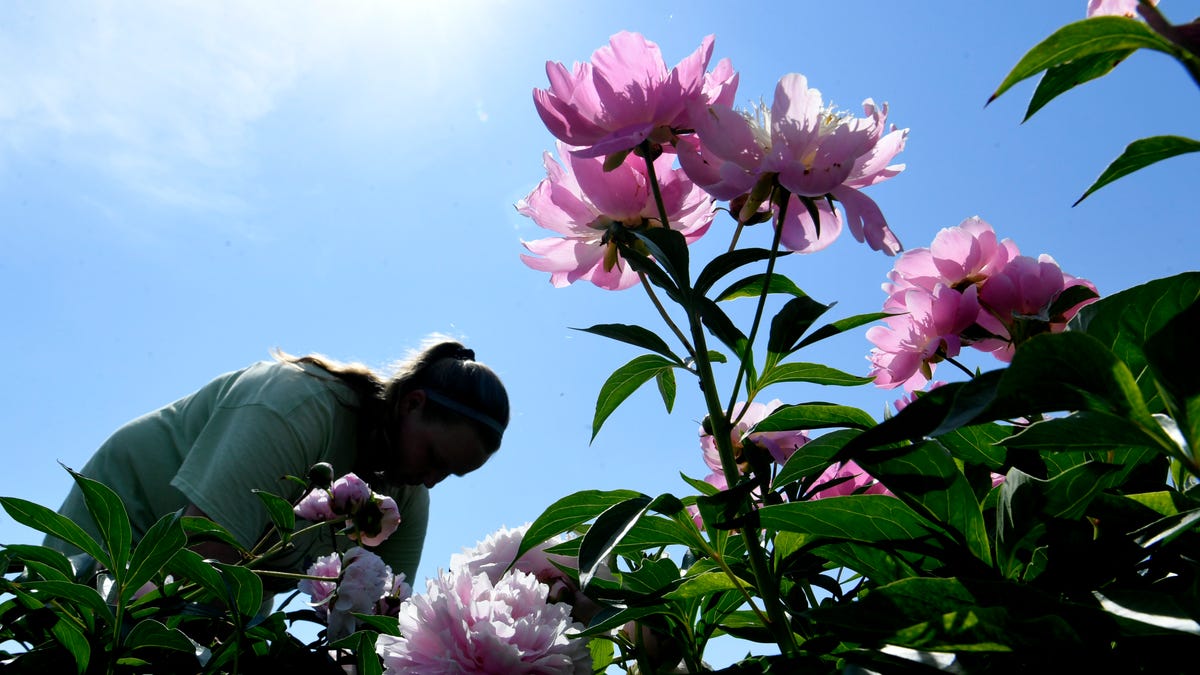
From Eden to our own backyards, the garden reveals how renewal, responsibility and hope take root each spring.
George Ball
| Guest Columnist


How countries around the world celebrate Easter
Easter is marked very differently around the globe.
unbranded – Lifestyle Vertical
The article suggests that spring represents a transition from scarcity and darkness to vibrancy and new beginnings.Religion’s roots are deeply connected to agriculture, with the garden serving as a primary metaphor in many faiths.
At this time of year, just as my thoughts turn to Easter, I think of gardening. And as soon as I think of gardening, I’m reminded of Easter, and then I’m back to gardening, and then back to Easter. If my toing and froing sounds like spring fever, well, it is.
After all, let’s remember that Easter, spring and the garden are linked, forming a tapestry interwoven with ancient historical, symbolic and religious meanings.
Spring is the season of salvation. The dead of winter is, metaphorically, the death of our souls; the time when plants die and animals go into hibernation. Life is on its knees. Even our thoughts change from active to reflective. Sometimes, when our light-deprived selves have exhausted our psychic pantry of serotonin, our deaths can seem actual. By winter’s end, we haven’t just taken stock of our situation, we’ve used most of it up.
From winter’s scarcity to spring’s promise
Thus, Easter, spring and the garden represent thresholds: moving from a suspended state to new beginnings. In Easter, we enter a future of salvation; with spring, we emerge from a slumbering, gray season of scarcity to a season of vibrancy and fullness. With the garden, we experience the shift from poverty to plenty.
Now is the time we turn our focus to the future. Easter lets us look forward to salvation, spring to summer, to the garden that sustains us. In a passage from Philippians, St. Paul speaks of “Forgetting what is behind and straining toward what is ahead.”
Whether gardeners or not, religionists or not, at this time of year, we all feel the renewal of life: new hope, illumination, the uplifted spirit. We revel in longer days, marvels awaiting us outdoors, the pageants of colors, cantatas of birdsongs, and elixirs of fragrance in the air.
When faith was an agricultural act
Easter is not the only link between religion and the garden. The roots of religion are universally agricultural. Mankind’s earliest writings were, in one sense, agricultural manuals. In another, books of religious instruction. So entwined were the two concerns.
The garden is not a great metaphor – it is the first metaphor. From a biblical perspective, we all began in the garden. You might recall Adam, Eve and the matter of the apple of temptation, humankind’s original and greatest sin. Disobeying their Creator’s strict instructions, Adam and Eve partook of the apple offered by their serpentine interlocutor.
Sentenced to the garden
God promptly exiled the couple from the paradisiacal Garden of Eden, and sentenced the pair, their descendants, and all mankind – to what? Gardening! Yes, the never-ending punishment for our greatest sin is to become a gardener.
By casting out Adam and Eve, the Creator gave his children the responsibility to create their own lives. Rather than lolling about the one heavenly garden, we’ve been working in our own earthly gardens ever since.
Where reason becomes care
Though our worldly realm may have its cares and woes, diseases and pests, lives and deaths, we get to do it ourselves. And when reason fails us, or fate strikes a stunning blow, we don’t so much pray to God as we do talk to God. This is because it is God who asks the questions, challenging us every year in the spring.
Original sin was the beginning of reason. The point of reason is that mortals are, in effect, never saved. One has to save oneself with God looking on, which is how he helps. And after saving yourself, just like in the airline oxygen mask instruction, you turn to help the weak and defenseless, aka your fellow human beings. Nowhere is this spirit more eloquently expressed than in the garden – home, community or public.
Brother helping brother; neighbor helping neighbor. What a miracle!
Faith in a seed
As Henry David Thoreau, that American original, once observed, “Though I do not believe that a plant will spring up where no seed has been, I have great faith in a seed. Convince me that you have a seed there, and I am prepared to expect wonders.”
Happy Easter.
George Ball is executive chairman of the W. Atlee Burpee Company and past president of the American Horticultural Society; Mr. Ball is available to discuss any portion of the article should you wish to.
Comments are closed.