
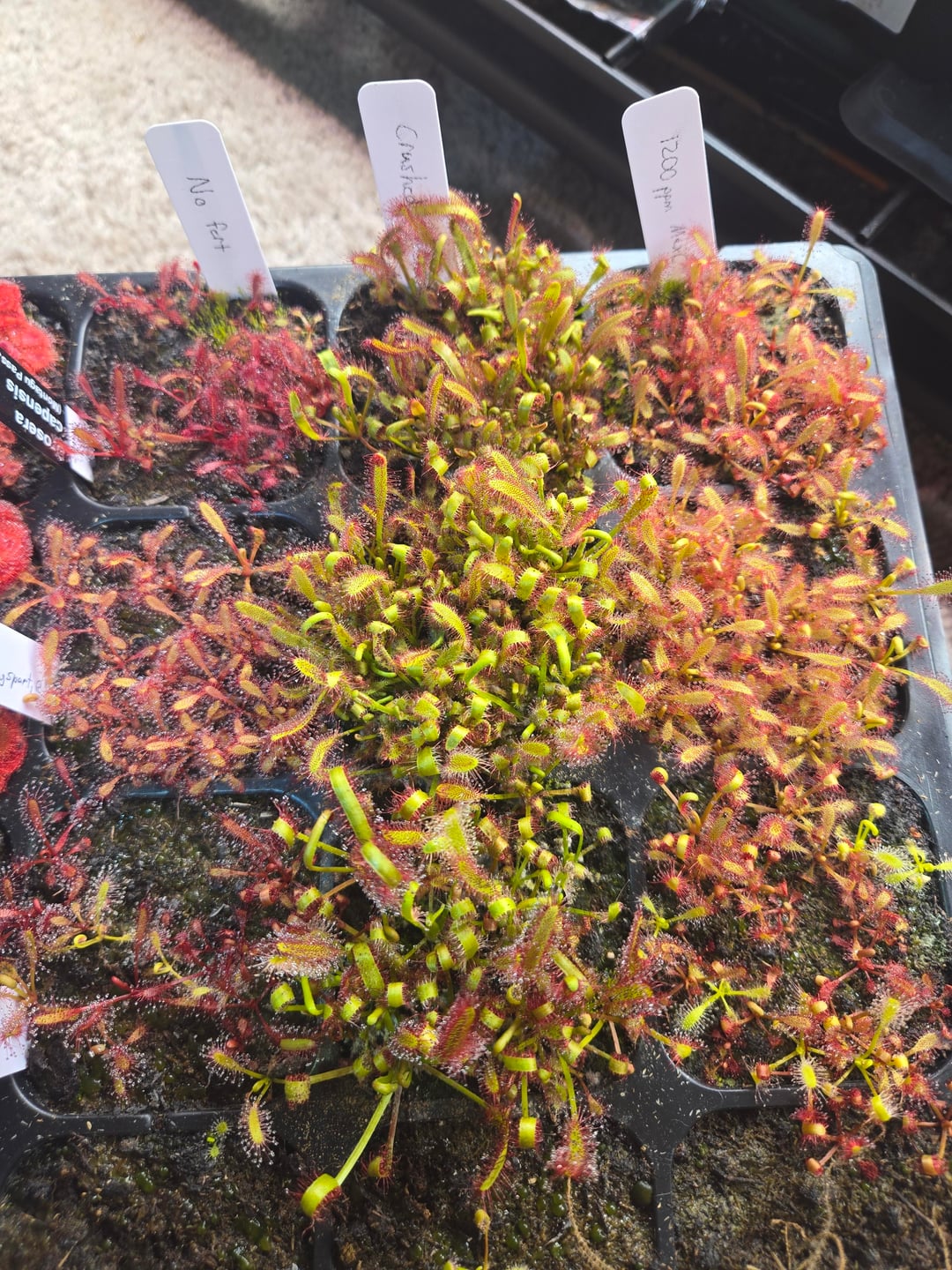
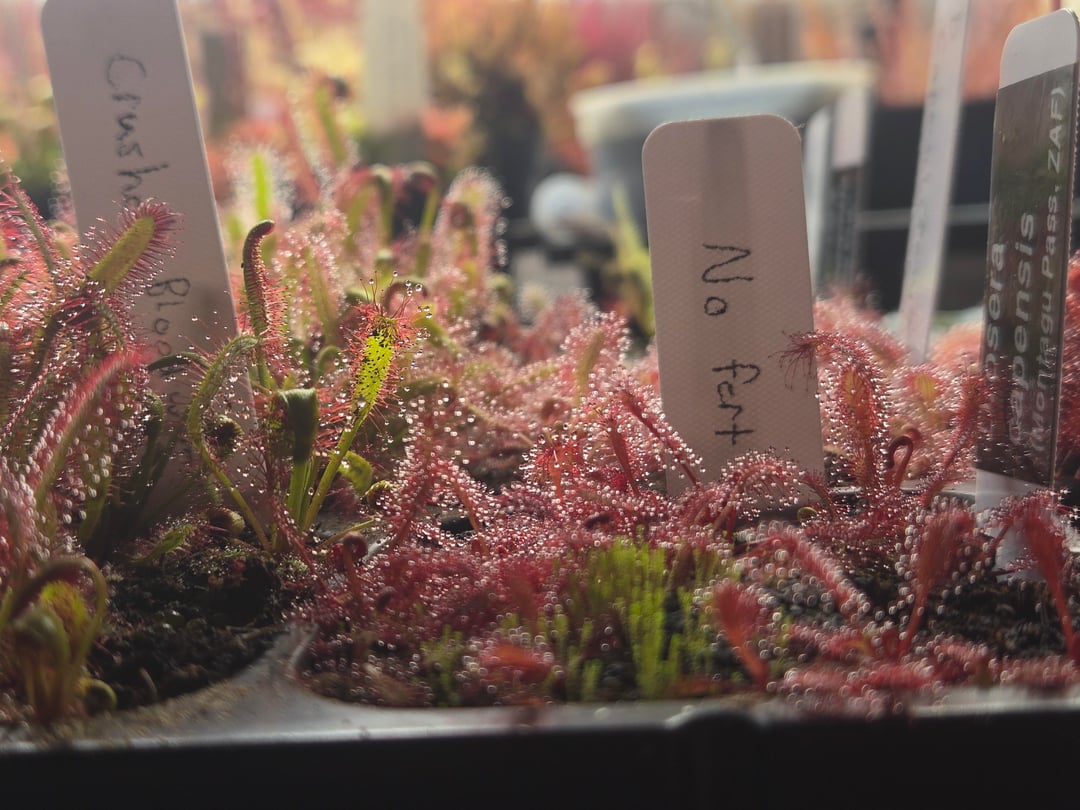
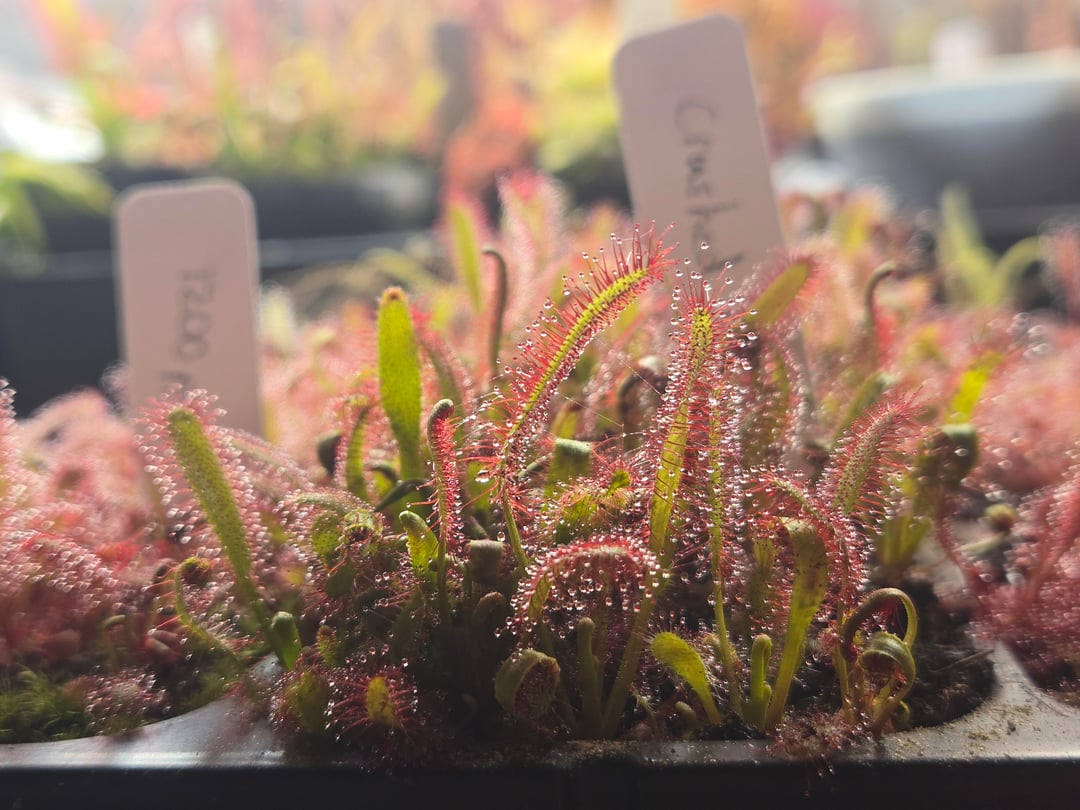
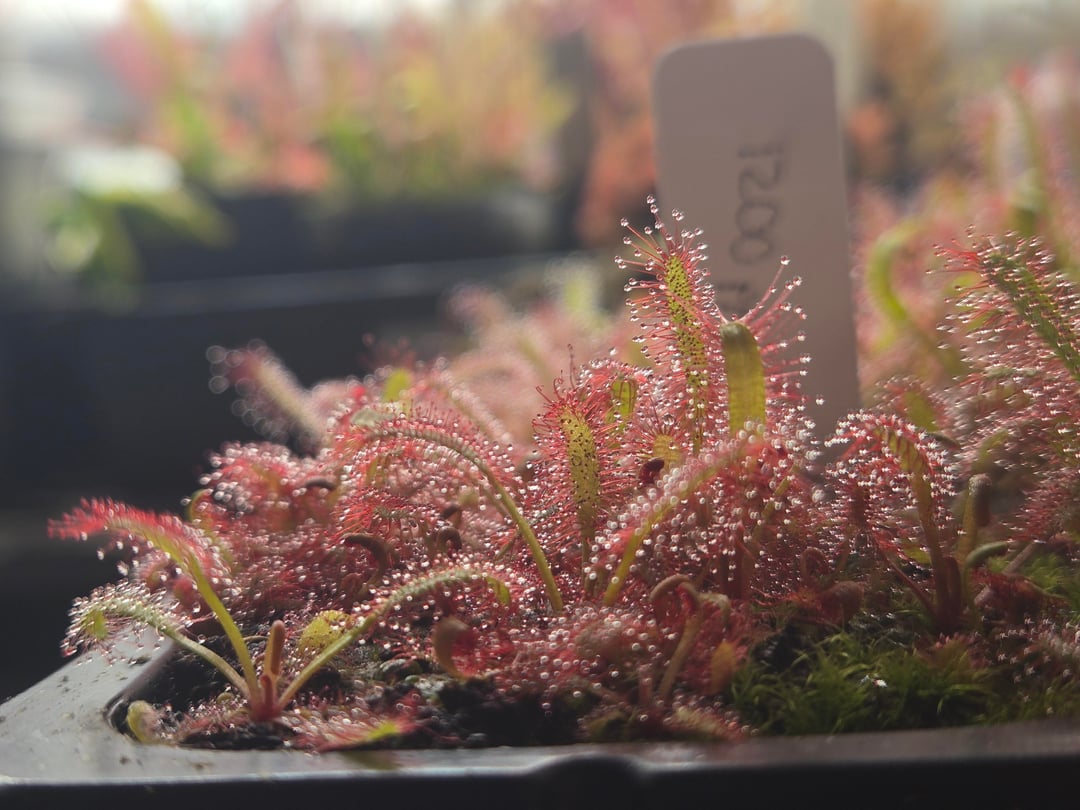
I decided to see what lamina fertilization method was most productive.
I used no manual fertilization as a control(the left column), crush bloodworm(middle column), and 1200 ppm maxsea(right column).
Started with seeds on January 5. I fed them once I saw the first carnivorous leaves appear about two to 3 weeks later. This is about 8 weeks of growth under the experimental conditions and I feed both experimental groups at the same time with enough fertilizer to cause a feeding response and used an index card to avoid cross contamination.
They are three different types of capensis i got from crabcorescarnivores.
The picture with all 9 cells has big pink on the bottom, meiringsport in the middle and montagu pass on the top.
The bloodworm feeding was the clear winner at nearly double the size as the 1200 ppm maxsea and triple that of no fertilizer. I assume the difference will only widen with time.
Something most people dont know is drosera use anthocyanins to protect their chloroplasts from intense light but if they are fed well then the abundant nitrogen for chloroplasts production will overcome the need for this protection to a degree and they will focus on growth instead. similiar findings to my root fertilization experiment and lines up with what I know about aquarium plants.
Also, I am highly allergic to bloodworm now so thats fun and I have no clue what I will do with like 90% of these plants lol.
by falcon_311
2 Comments
I love seeing experiments like this as I always learn something useful. Thanks for sharing!
this is great, thanks for taking the time to find this out! I’ve always used super diluted seaweed fertiliser but this has inspired me to try some bloodworms next time.
Did you mix the crushed bloodworms with water and then add it or did you apply the crushed bloodworms directly to the leaves?