
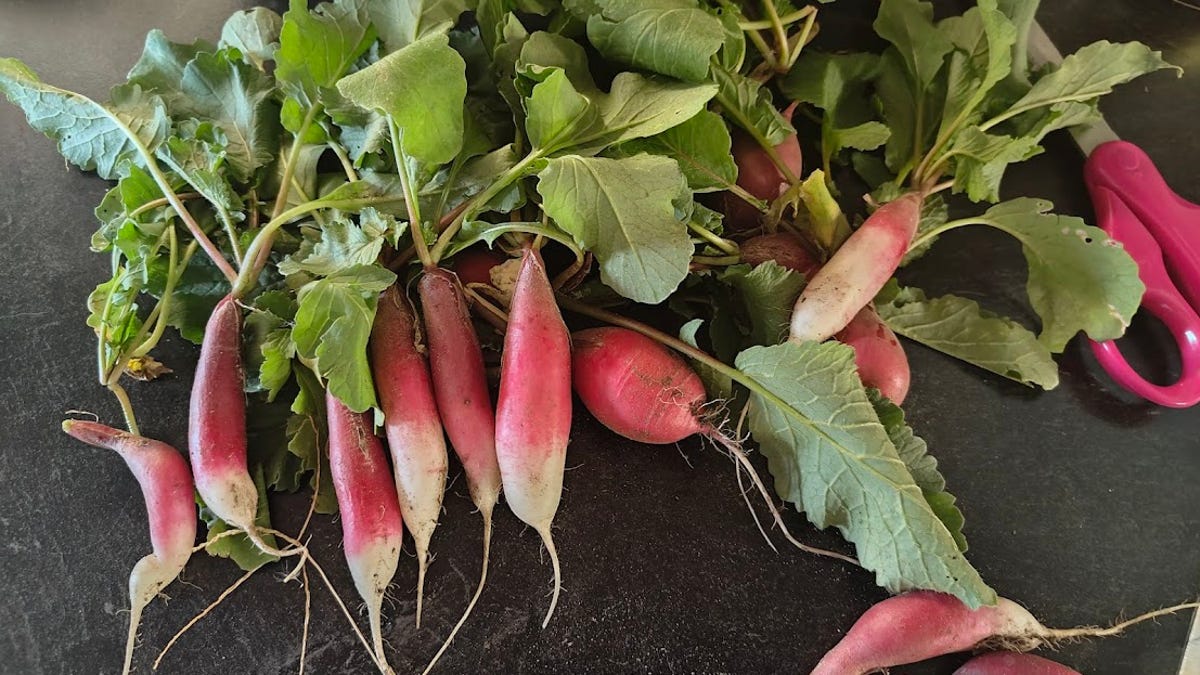
Radishes are the eagerly awaited first crop harvested in the spring from our gardens. If grown with care, radishes have mild flavor, crisp texture and attractive shape and color. But since radishes can survive in all kinds of conditions, gardeners sometimes end up with a less-than-desirable crop with a pithy texture and hot taste.
For growing in early spring, choose seeds that are labeled as early radishes that thrive under cool weather conditions. Once temperatures reach 80 degrees F, spring radishes will not grow well. The round red heirloom varieties champion and cherry belle have been favorites for generations. Champion stays good longer in the ground, and cherry belle is pithy resistant. The variety French breakfast, also an heirloom, has been grown in gardens since 1879. Those are elongated and mostly red with white ends.
Radish plants have small roots that feed at the surface, so hoeing can easily damage them.
As soon as your soil is dry enough to work, choose a sunny spot and dig your garden soil to about 6 inches deep to help with root development. Work in 1 to 2 inches of compost or thoroughly composted manure to slowly release minerals into the soil. Seaweed or kelp fertilizer is also good for radishes.
Since radishes do not transplant well, sow radish seeds directly into a furrow a half an inch deep and half an inch apart. They can also be planted in bands 2 to 3 inches wide. Cover, then tamp the soil down and carefully water.
A common gardening error is letting them grow too close together. So thin them to about 1 to 2 inches apart when they reach 2 inches tall. Use the leaves and tiny roots in your salad.
Early spring rains will usually provide enough water to grow a good crop. But if it doesn’t rain, soak once a week to allow them to form tender, good-flavored attractive radishes. Never let the soil get dry, which slows growth causing pithy and pungent radishes. Carefully hand weed if necessary.
In about 20-30 days harvest spring radishes as soon as they are an edible size, about 1 inch across, or just under the diameter of a quarter. Optimum harvest time only lasts for a few days, so don’t leave them in the ground waiting for them to grow bigger. Cut the tops off right away to keep the tops from drawing moisture and nutrients out of the root. Then place them in a plastic bag in the fridge. They will maintain their quality for three or four weeks. Try adding lightly sauteed radish leaves to your morning eggs.
Because of the short turnaround time for radishes, you’ll need to plant more in succession every 10 days or so if you want a sustained crop. That takes a little careful planning, but if one crop fails, due to weather or root maggot infestation, you’ll still have other crops coming along to replace it and enjoy your spring crop of radishes longer.
Contact Bob Dluzen at bdluzen@detroitnews.com.
Comments are closed.