
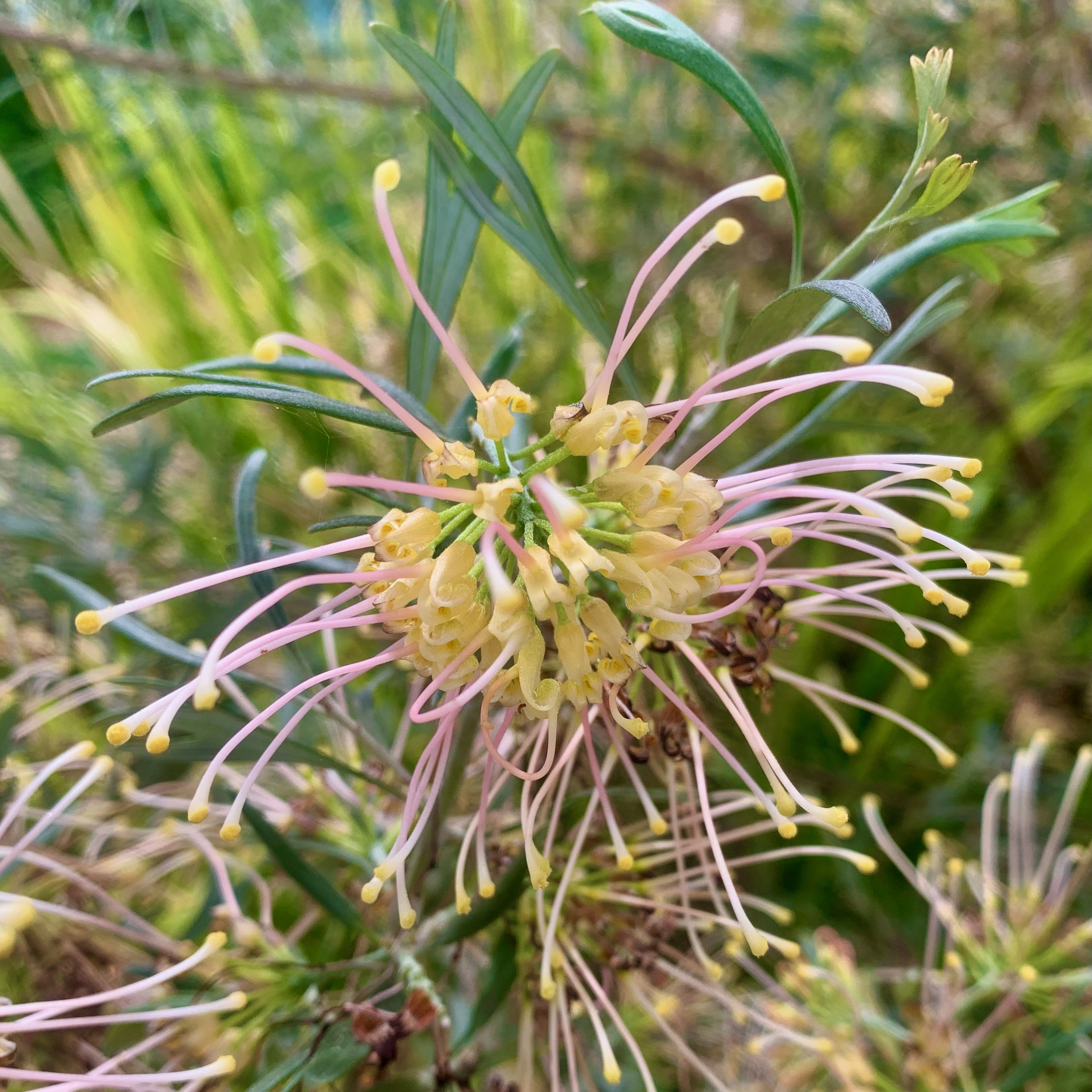
Banks grevillea (Grevillea banksia). This upright, multi-stemmed shrub grows to 7 feet tall
and can be much taller. It has divided leaves with four to 12 narrow lobes and produces clusters (racemes) of curved, wiry flowers. While typical varieties have creamy white to bright scarlet and yellow flowers, my garden’s specimen has yellow flowers with unusually light pink
“wires.” This is one of 83 genera in the proteaceae family, named for the Greek god Proteus,
who could change into many forms. This Grevillea banksia name honors Joseph Banks, who collected a specimen in 1770 from Australia’s Botany Bay during Capt. James Cook’s first circumnavigation. (Courtesy Tom Karwin)
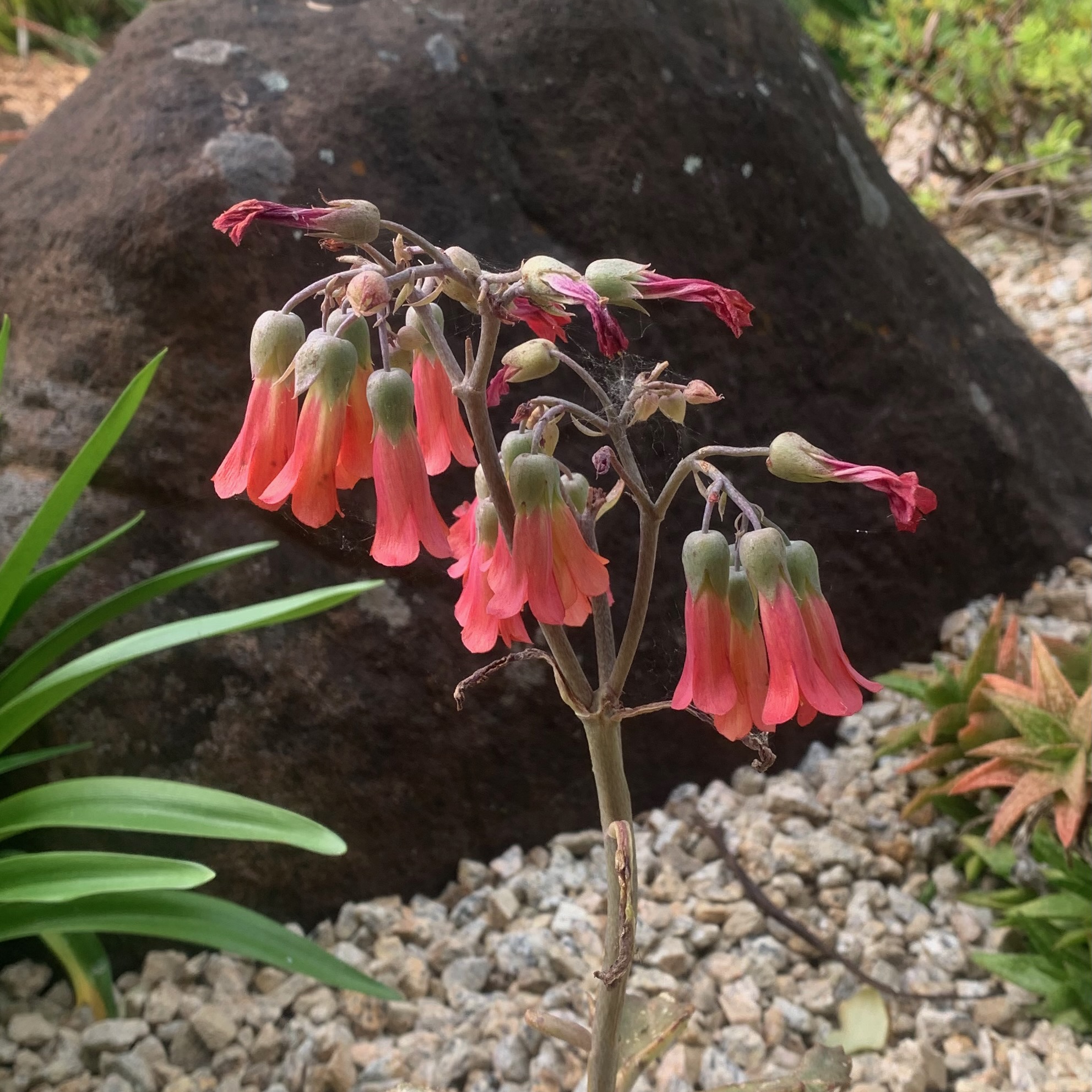
Chandelier plant (Kalanchoe delagoensis). This succulent plant, which is young in my garden, grows upright, unbranched stems up to 3 feet tall. Its orange-to-scarlet, trumpet-shaped, 1-inch flowers dangle in clusters at the tops of the stems. The plant forms small plantlets on the margins of its leaves. When dislodged, the plantlets take root and begin growing in any available soil. This vegetative propagation method earns the plant’s common name, “Mother of Millions.” Removing unwanted plantlets is integral to caring for this potentially invasive plant. This is a member of the stonecrop family (crassulaceae). My garden lacks a bed for Madagascar natives,
so I placed this specimen in my bed for South African succulents. (Courtesy Tom Karwin)
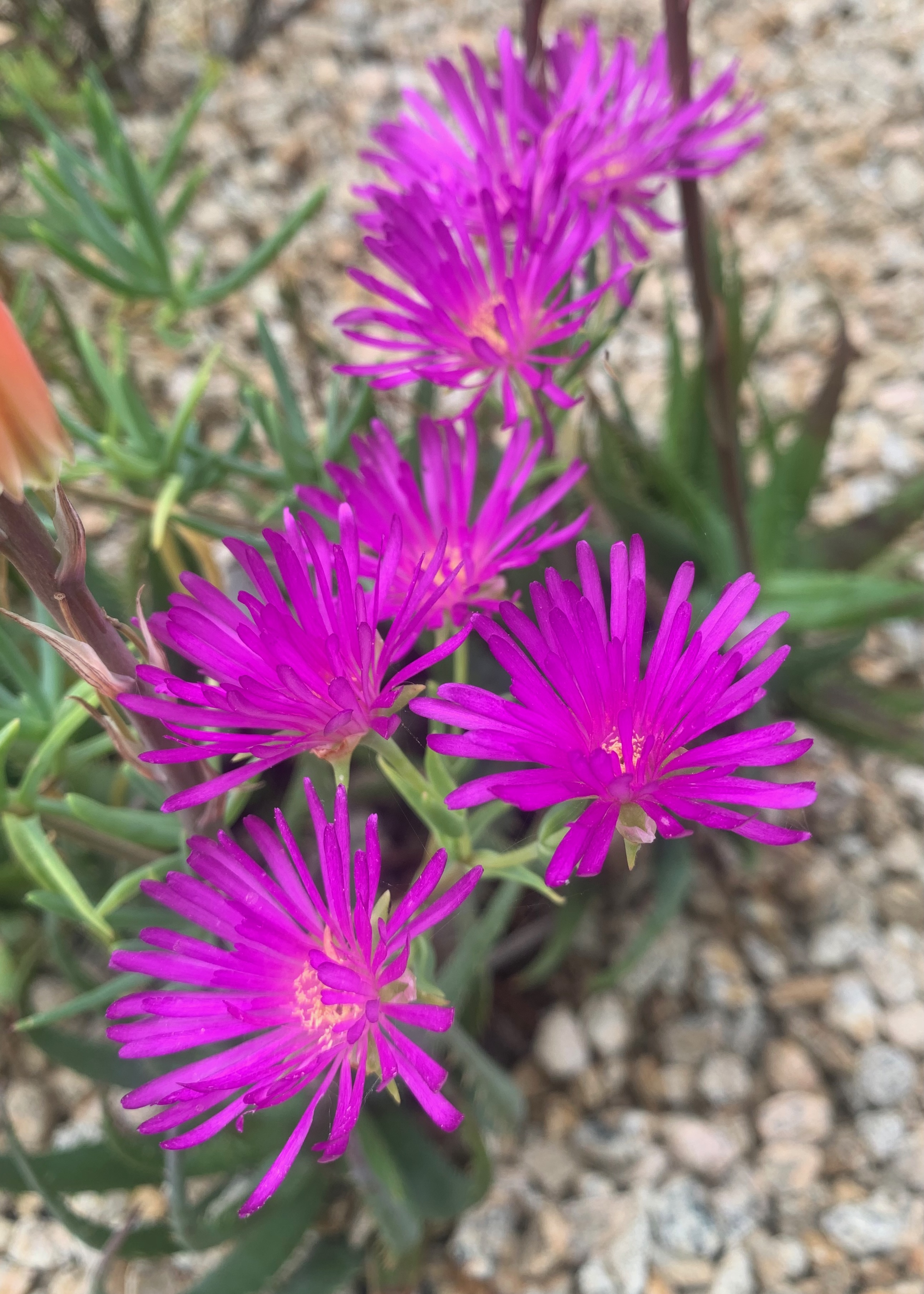
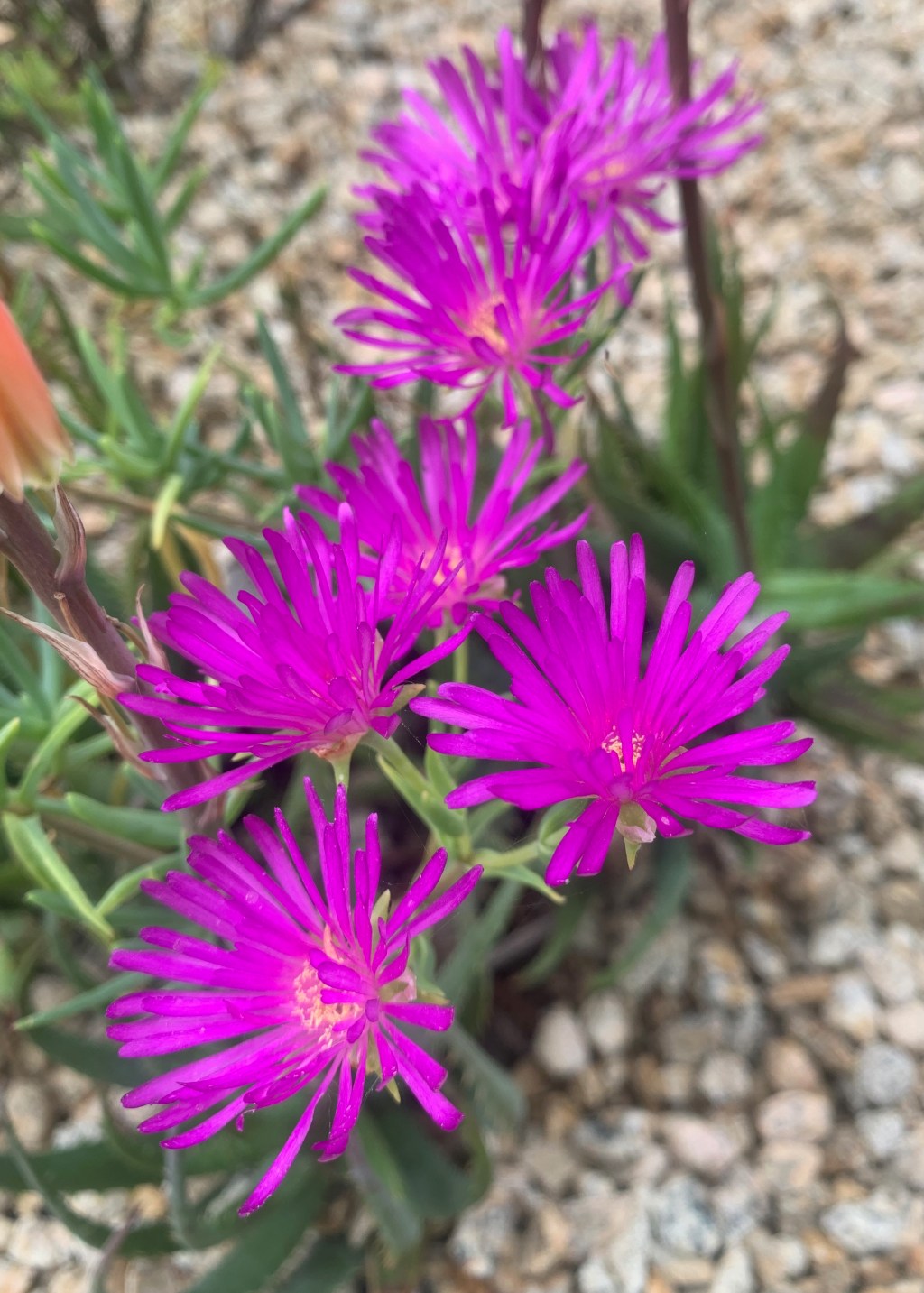
Darling vygie (Lampranthus amoenus sp. ‘Pink Kaboom’). This upright, rounded succulent shrub grows to 2 feet tall and 3 feet wide and bears large, bright maroon flowers. The generic name is Greek for “shining flowers,” and the specific name is Latin for “charming, pleasant,
agreeable.” The Afrikaans term “vygie” means “small fig,” referring to the plant’s fruiting capsule, which resembles the true fig. This South African native perennial plant is a member of the fig-marigold family (aizoaceae). (Courtesy Tom Karwin)
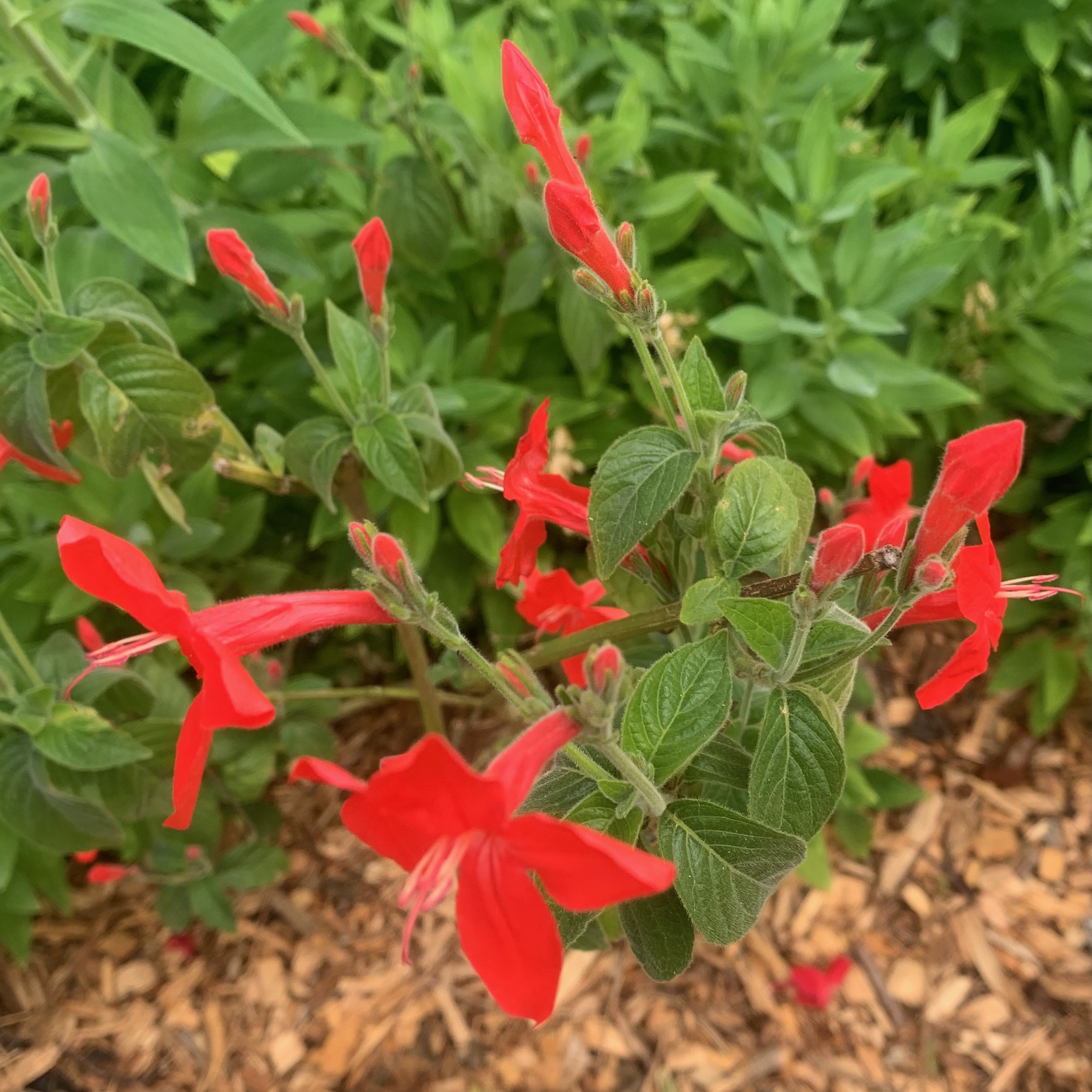
Brazilian petunia (Ruellia elegans). This compact perennial grows 2 feet tall and 3 feet wide, and for a long bloom period, produces bright red trumpet-shaped flowers on wand-like stems. I want to propagate this plant, but all its stems are now in bloom, which isn’t ideal for making cuttings. It’s a native of Chile and Brazil and a member of the acanthus family (acanthaceae). (Courtesy Tom Karwin)
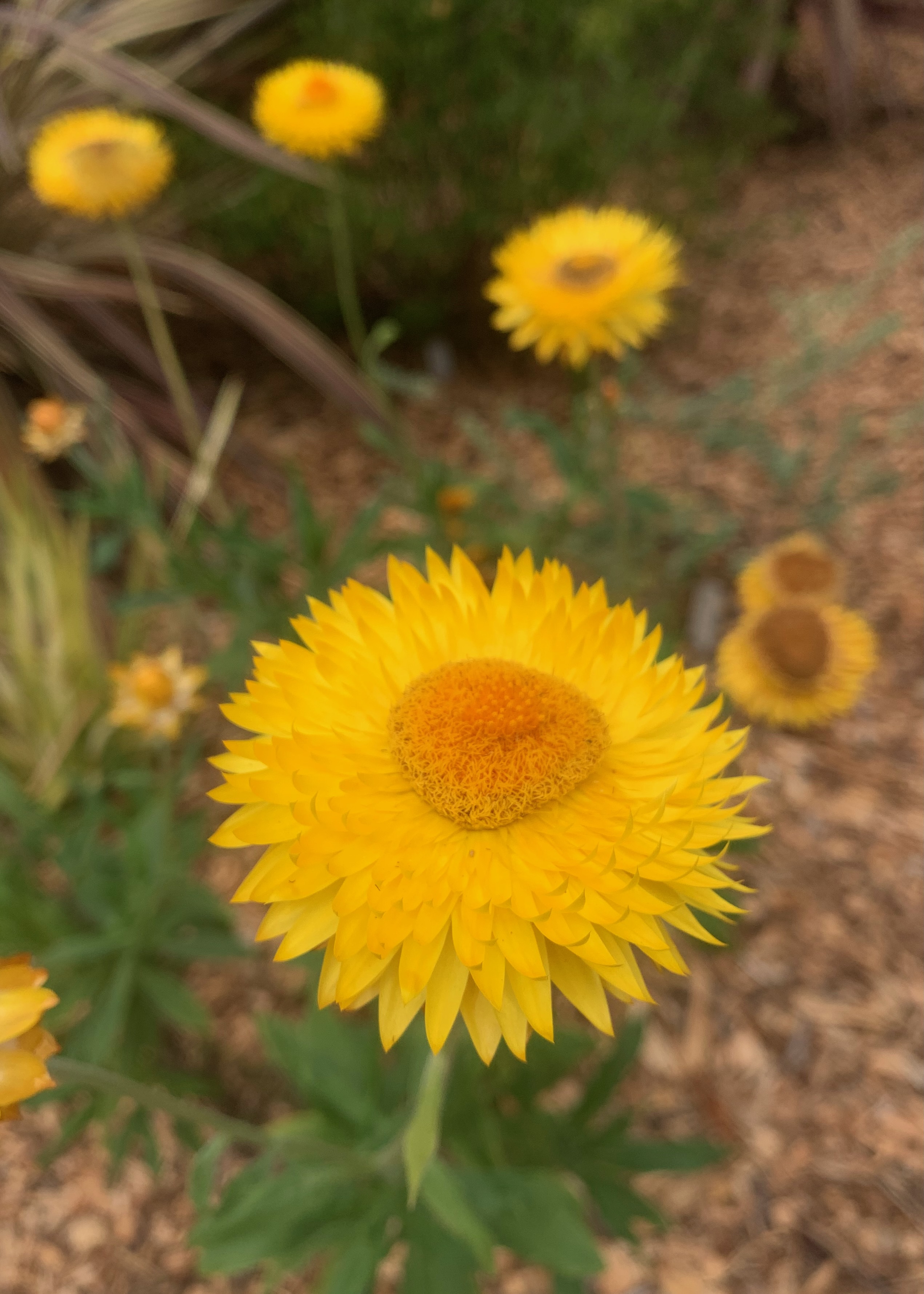
Golden everlasting daisy or strawflower (Xerochrysum bracteatum). The plant has gray-green leaves, grows over 3 feet high and wide, and produces long-lasting golden yellow flower heads from spring to autumn. This variety has yellow, papery bracts that resemble petals
and enclose the true flowers; other varieties have orange, red, pink or white bracts. The genus is from Greek words for “dry” and “golden,” and the species name is from Latin for “having bracts.”
This Australian native is a member of the daisy family (asteraceae). (Courtesy Tom Karwin)
Show Caption
1 of 5
Banks grevillea (Grevillea banksia). This upright, multi-stemmed shrub grows to 7 feet tall
and can be much taller. It has divided leaves with four to 12 narrow lobes and produces clusters (racemes) of curved, wiry flowers. While typical varieties have creamy white to bright scarlet and yellow flowers, my garden’s specimen has yellow flowers with unusually light pink
“wires.” This is one of 83 genera in the proteaceae family, named for the Greek god Proteus,
who could change into many forms. This Grevillea banksia name honors Joseph Banks, who collected a specimen in 1770 from Australia’s Botany Bay during Capt. James Cook’s first circumnavigation. (Courtesy Tom Karwin)
Expand
When a gardener considers improving the garden, a design strategy can guide them toward new, achievable plans to advance toward satisfaction.
Designing one’s own garden is a highly subjective process, shaped by the gardener’s unique experiences, priorities, resources and available time for implementation. Our column explores approaches for our garden readers to develop their own garden improvement plans.
Today’s image gallery
The accompanying images focus on plants currently in bloom in my garden. These images do not represent designs to consider for your own garden, while they do reflect my interest in uncommon plants. That’s one perspective on garden design, but many gardeners prefer options with nostalgic value and cultivation familiarity.
Sources of design ideas
We have explored various approaches to garden design.
One approach focuses on design principles for residential gardens. A good example of this approach is available from Garden Design magazine. Check it out by browsing gardendesign.com and searching for “Landscape design principles.” This search yields abstract concepts as the basis of garden design.
Another approach involves choosing among classic garden designs that envision the entire landscape. Such designs can be labeled as formal, informal, cottage, Japanese, edible, desert, wildlife or permaculture — broad concepts with endless potential variations. These academic studies could help the gardener think in a particular direction, but do not provide concrete steps for garden development, such as defining spaces and selecting plants.
Here’s yet another approach: digging into emerging trends in residential garden design. For the past 23 years, the Garden Media Group has generated annual garden trend reports. The group compiles these reports from “trusted media sources and garden experts worldwide,” and offers them primarily to businesses in the green industry, including garden nurseries and retail centers, to help them “develop effective strategies to meet the evolving needs of their customers.” To see this analysis of your evolving needs, browse gardenmediagroup.com/trends.
The challenge of these three approaches is considering the entire garden. Large properties with extensive current or potential garden area could overwhelm the planning process. Even smaller garden areas might have several spaces with differing exposures, soil qualities, slopes and other features, complicating the planning process.
Focusing on garden beds
A more concrete way for gardeners to gain ideas for developing or improving their gardens is to visit established gardens and discover attractive ideas to adapt to their own. Many gardens can be visited, including visits with gardening friends, tours of local private gardens and explorations of large public gardens. Direct viewing of actual gardens can inspire practical design plans with solid examples to build upon.
Focusing on one garden bed at a time is a manageable approach to garden planning, resource development and installation time.
Begin by regarding the overall garden as a series of separate beds, each described for sunlight and wind exposure, soil composition and drainage quality, slope, proximity to recreational activities and other garden-relevant characteristics.
Then list your priorities for bed development and focus on one bed at a time for planning, resources and installation.
The relationships among the beds and the overall garden perspective will emerge as the development process advances. The result could be a colorful, coherent mosaic of the gardener’s horticultural visions. That result would be more interesting than a monotonous design for the entire property.
Individual garden bed designs
Meadow: A selected area can be designed as a garden meadow, with emphasis on grasses and wildflowers. This design concept can be an interesting, low-maintenance replacement for a traditional grass lawn.
Wildlife support: A garden meadow design can create a wildlife-friendly environment by selecting pollinator plants for bees, butterflies and hummingbirds, providing shrubs as wildlife habitats and creating ponds for fish and other water-loving wildlife. Plants that support wildlife can also be appealing to gardeners!
Companion planting: Grouping plants that grow together in nature can create a coherent design that looks and feels natural and is likely to succeed.
Vignette: Combining plants to form attractive displays invites the gardener’s artistic skills and preferences, and provides visitors with opportunities to enjoy the garden. Design vignettes are particularly appropriate for street-side views of the property.
Swathes: Grouping several specimens of a favored genus provides a mass effect that adds coherence to the garden bed and avoids the potentially messy effect of combining disparate plants. A common design rule is to group three or more odd quantities of a favored plant.
Layers: Arranging compatible plants of different sizes can produce a balanced design. One example would include a canopy tree, an understory shrub layer and a surrounding groundcover. Other examples would include a large shrub as a highlight, surrounded by smaller shrubs, perennials or grasses, and smaller border plants or groundcovers.
This week in the garden
Plan to attend the Santa Cruz Chapter of the California Native Plant Society’s Plant Sale April 11, at Cabrillo College’s Horticulture Center. The college’s horticultural department will have a concurrent sale on the same occasion.
Our next column will include more on these sales and focus on planning for gardening with California native plants, which will be available at the upcoming CNPS sale. Attend early for access to the largest array of plants.
Enjoy your garden!
Tom Karwin is a past president of Friends of the UC Santa Cruz Arboretum and the Monterey Bay Iris Society, a past president and Lifetime Member of the Monterey Bay Area Cactus & Succulent Society, a Lifetime UC Master Gardener (certified 1999-2009), past board member of the Santa Cruz Hostel Society and a current member of the Pacific Horticultural Society and other garden-related societies. To review the archive of recent On Gardening columns, visit santacruzsentinel.com and search “Karwin.” Visit ongardening.com to review columns from 2012-2020 (and eventually) from the following years. Please send comments or questions to gardening@karwin.com via email.
Comments are closed.