
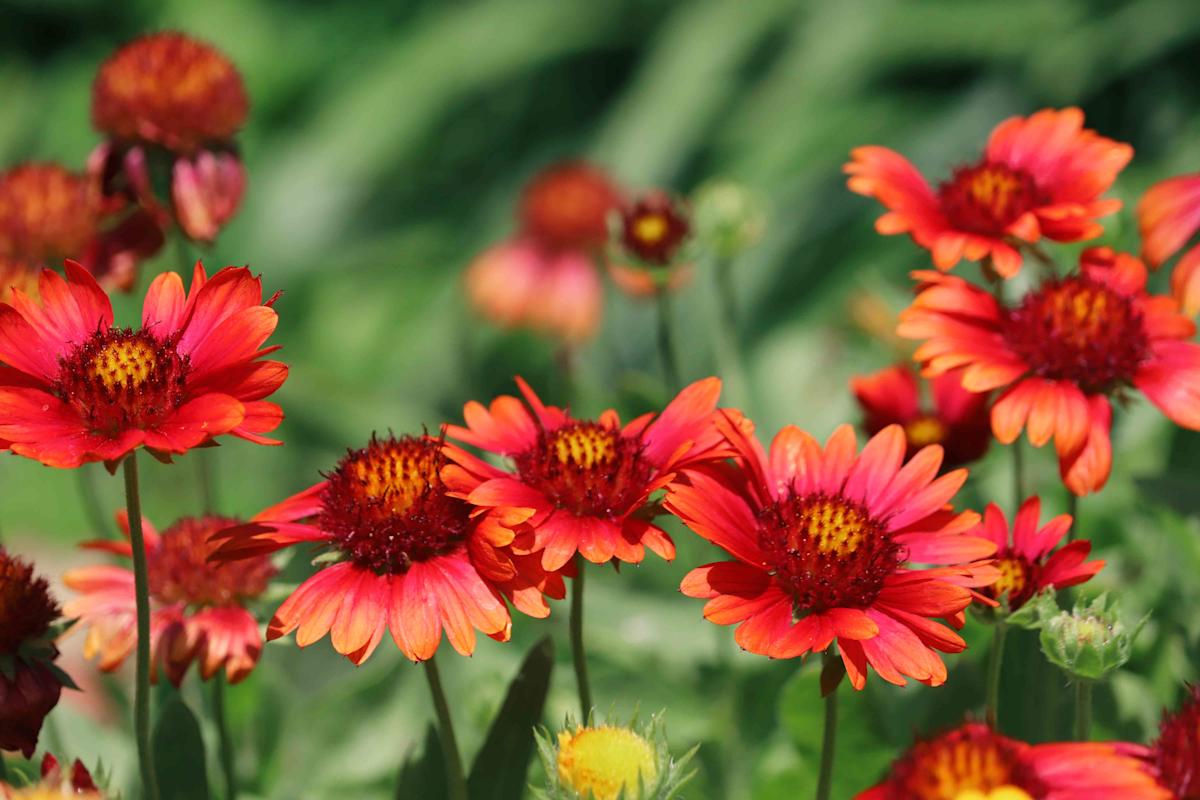
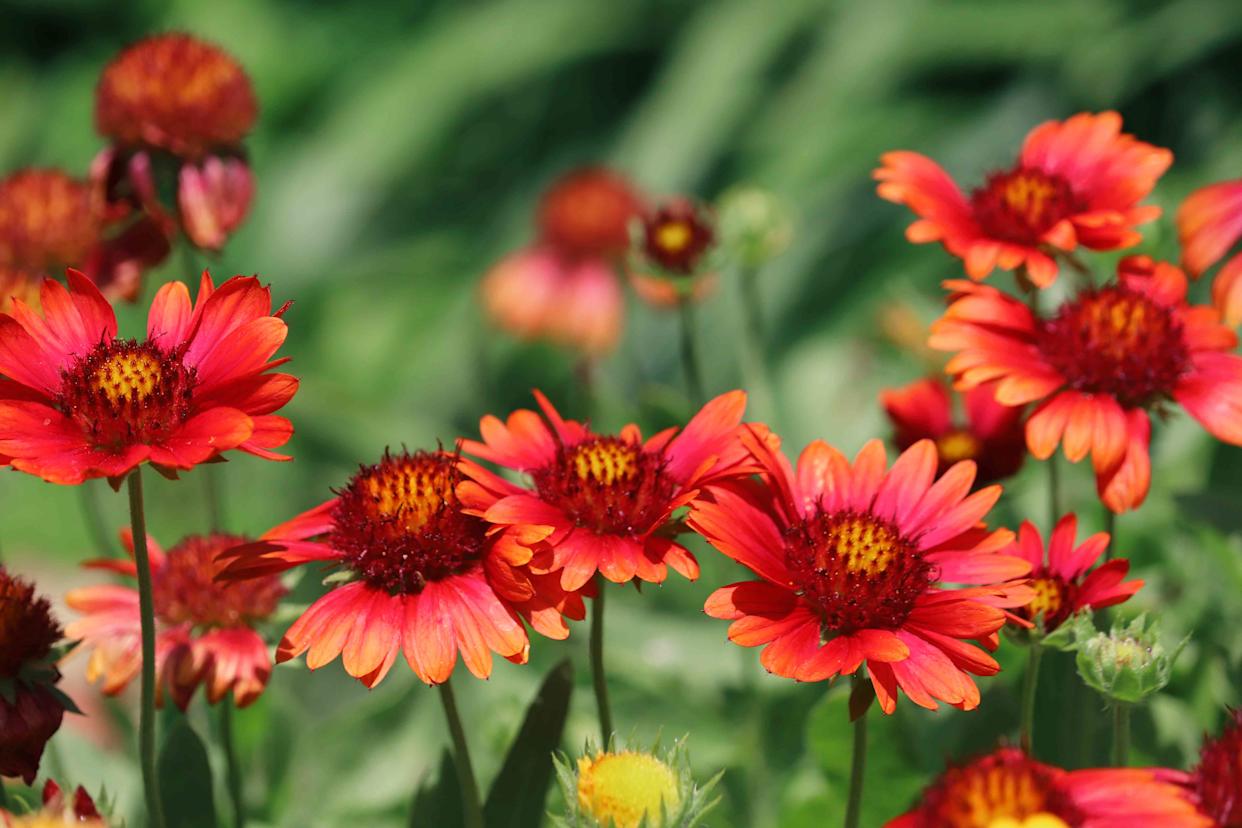
Every garden needs both annuals for instant impact and perennials for color that returns for many years. Because perennials are long-lived, they’re a great investment in your garden. Besides adding beauty, texture, and structure to your garden, perennials also provide food for beneficial insects and pollinators.
But you do need to be a wee bit patient with many perennials that can take their time getting established. In fact, there’s a saying among gardeners that perennials sleep, creep, leap. That means they tend to grow fairly slowly the first year while they’re setting down their roots, then they grow a little faster the second year. By the third growing season, they finally take off and begin to spread around your garden.
Selecting Perennials That Will Spread In Your Garden
When shopping, make sure to choose a variety that will survive winters in your USDA Plant Hardiness Zone. Also, read the plant tag or description so you’ll know what kind of light it needs: Full sun is considered six or more hours of direct sunlight per day, while part sun is about half that.
Finally, remember that the tiny 3-inch pots are going to take far longer to fill in your garden than gallon-sized or larger. So, when possible, opt for the larger size for quicker results. And don’t forget to keep your plants watered during the first season so they can set down strong roots.
Ahead, these are our favorite low-maintenance, fast-growing perennials that will spread and fill in your garden in a flash.
Agastache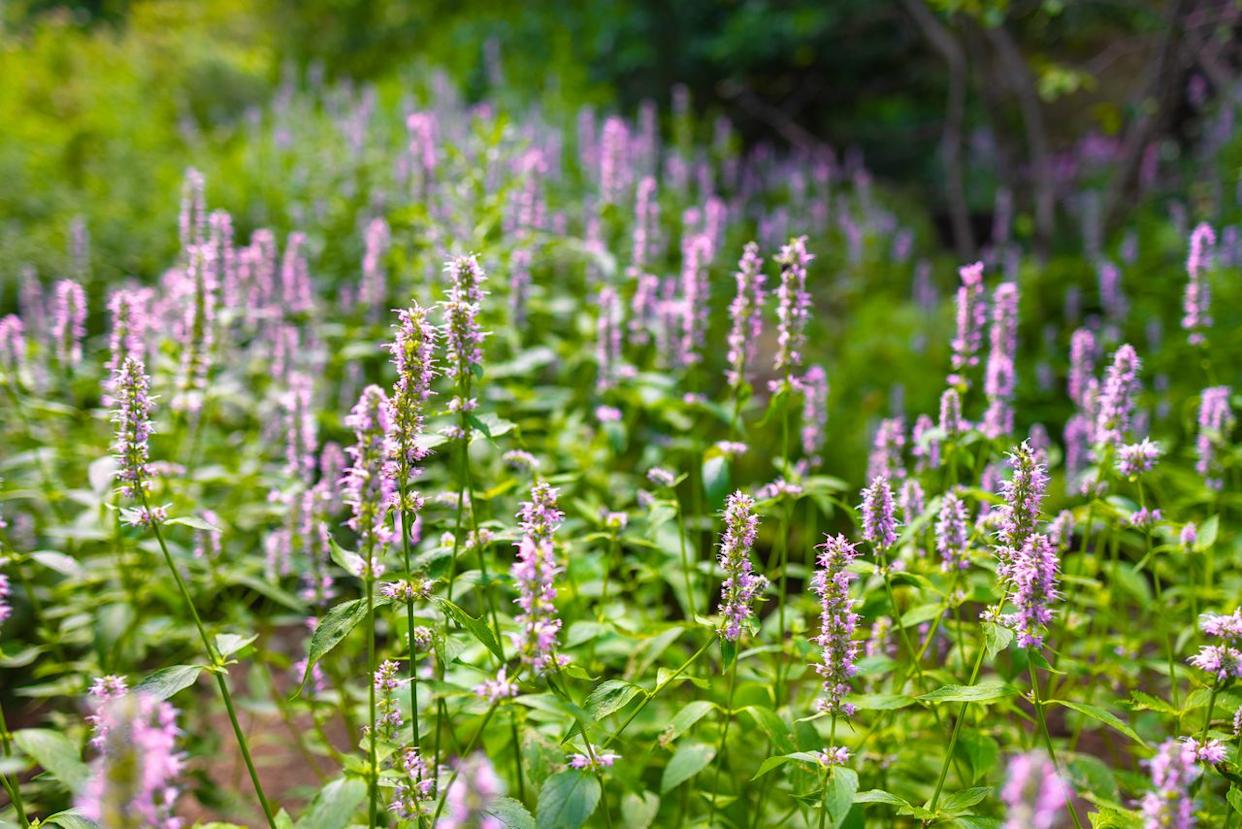
Credit: Getty Images / Catherine McQueen
Botanical Name: Agastache spp.
Soil Type: Average, well-draining
Also known as hummingbird mint, this upright, clumping perennial has pretty spikes of flowers in shades of red, pink, coral, yellow, white, purple or hot pink from summer to early fall. It’s a favorite of pollinators such as bees, butterflies, and hummingbirds and is heat and drought-tolerant once established. As a member of the mint family, the scented foliage is not particularly appealing to rabbits and deer.
Varieties for the South: ‘Royal Raspberry’, ‘Summerlong’
Coreopsis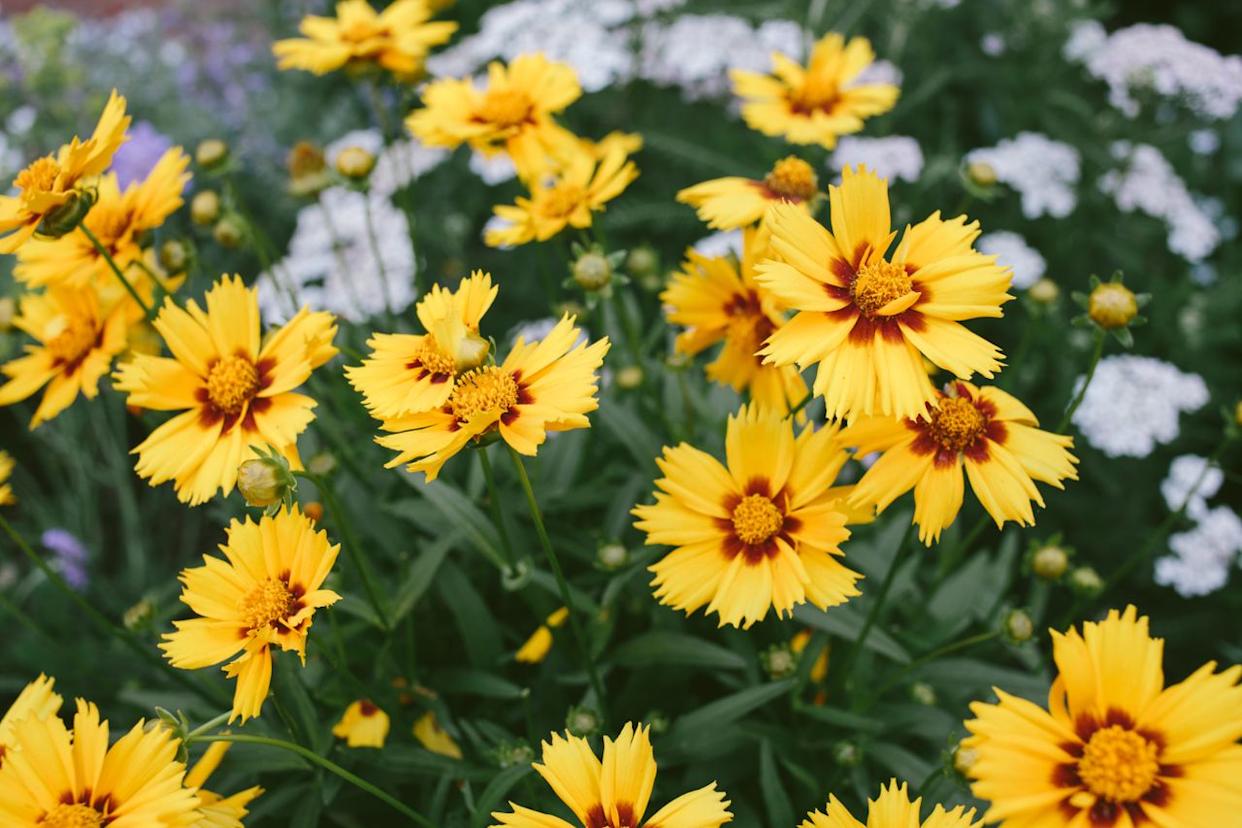
Credit: Getty Images / Grace Cary
Botanical Name: Coreopsis spp.
Soil Type: Average to poor, well-draining
This sturdy deer-resistant perennial has bright, cheery daisy-like flowers in various shades of gold and yellow or bicolor with red centers. It loves hot, dry conditions and blooms early to late summer, attracting butterflies and bees. Its common name of “tickseed” comes from the fact that the seeds resemble ticks. Don’t worry—tickseed won’t attract ticks, but the birds do like their seeds.
Varieties for the South: ‘Uptick’, ‘Double the Sun’, ‘Golden Stardust’
Catmint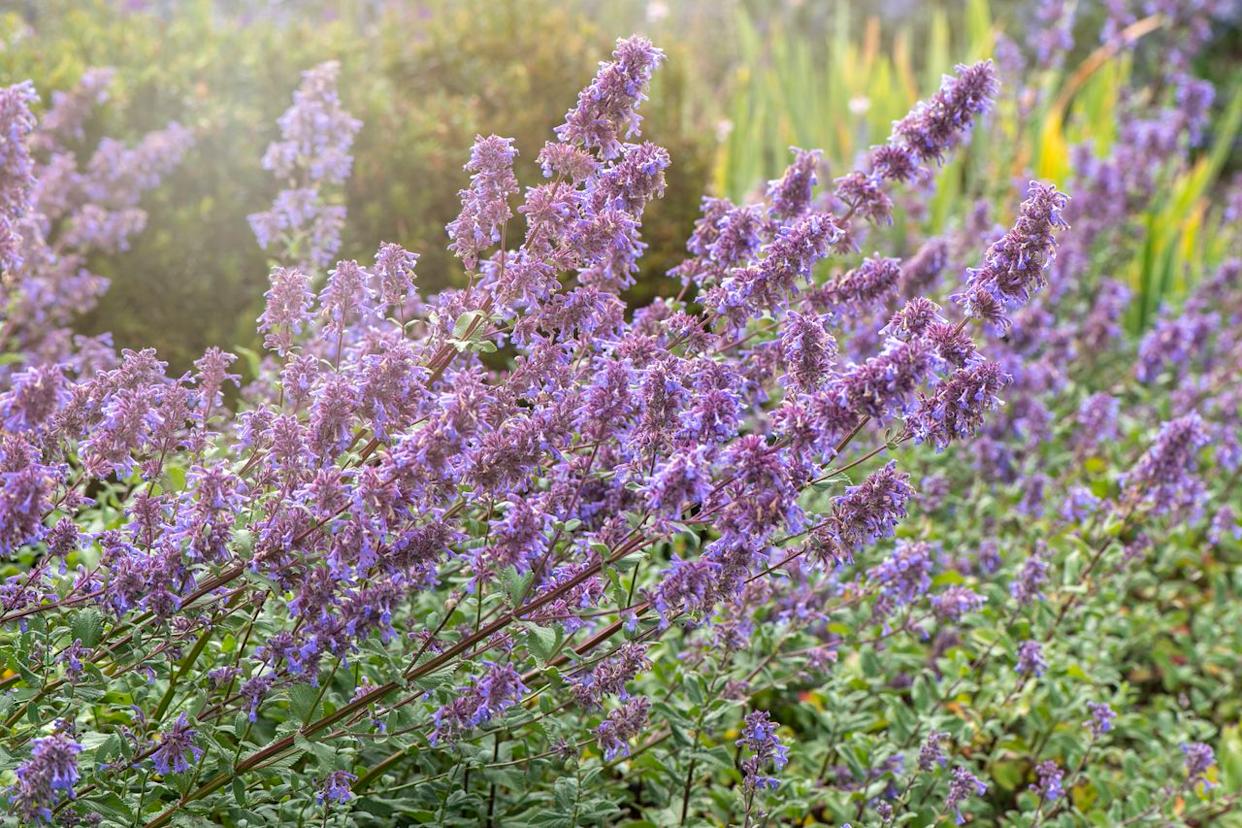
Credit: Getty Images / Jacky Parker Photography
Botanical Name: Nepeta spp.
Soil Type: Average to poor, well-draining
Catmint is one of the least fussy perennials you can grow, readily adapting to different conditions and soil types. Its fuzzy, gray-green foliage is lightly scented, so it’s not particularly attractive to deer and rabbits. New types stay in a tidy mound, and the lavender, blue, or pink flowers last for weeks from spring to late summer, depending on the variety.
Varieties for the South: ‘Jr. Walker’, ‘Whispurr’
Learn More
Salvia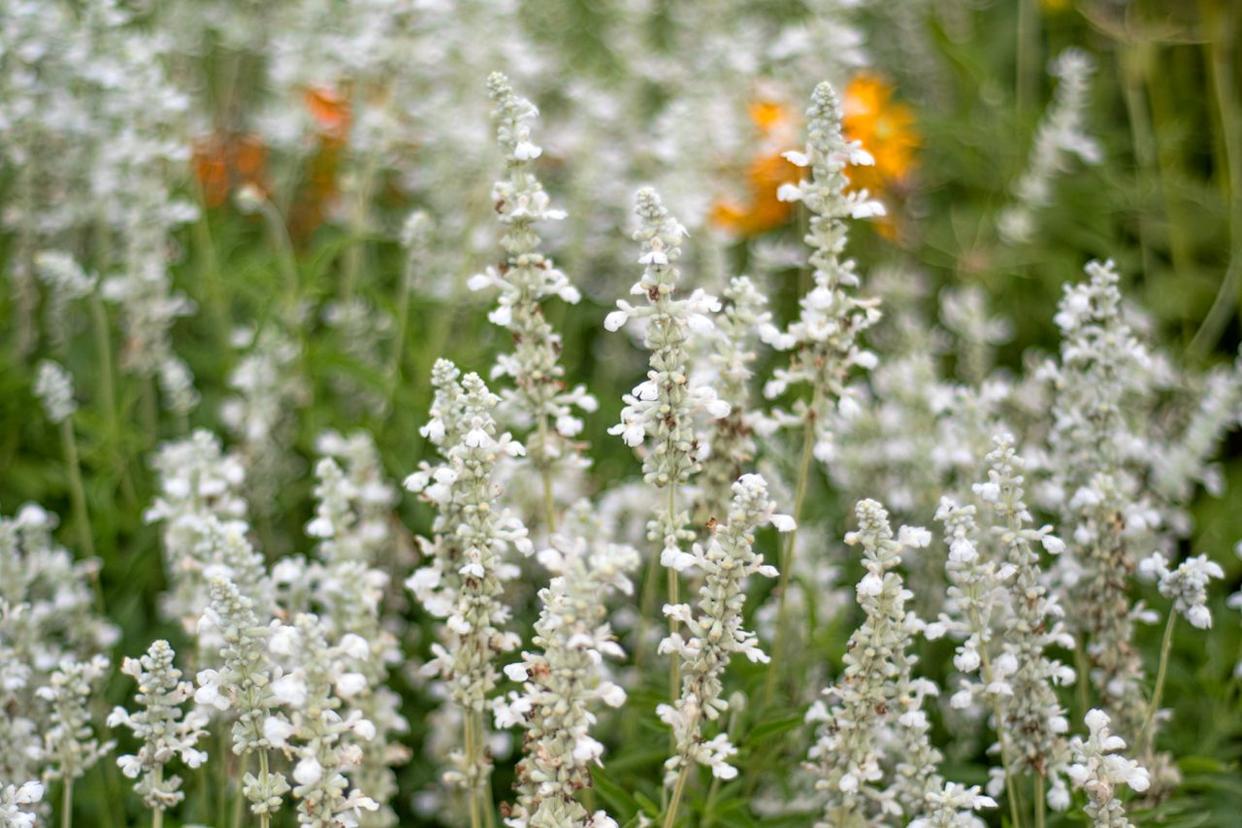
Credit: Getty Images / By Eve Livesey
Botanical Name: Salvia spp.
Sun Exposure: Full sun to part shade
Soil Type: Average to poor, well-draining
Salvia, also known as sage, has pretty purple, white, or pink flowers which attract pollinators. Hummingbirds especially love the tubular-shaped blooms. These deer-resistant perennials are an excellent low-maintenance addition to the garden for blooms from late spring to early fall, depending on the variety. Make sure to read the tag because there also are annual types.
Varieties for the South: ‘Blue by You’, ‘Mirage’
Learn More
Kniphofia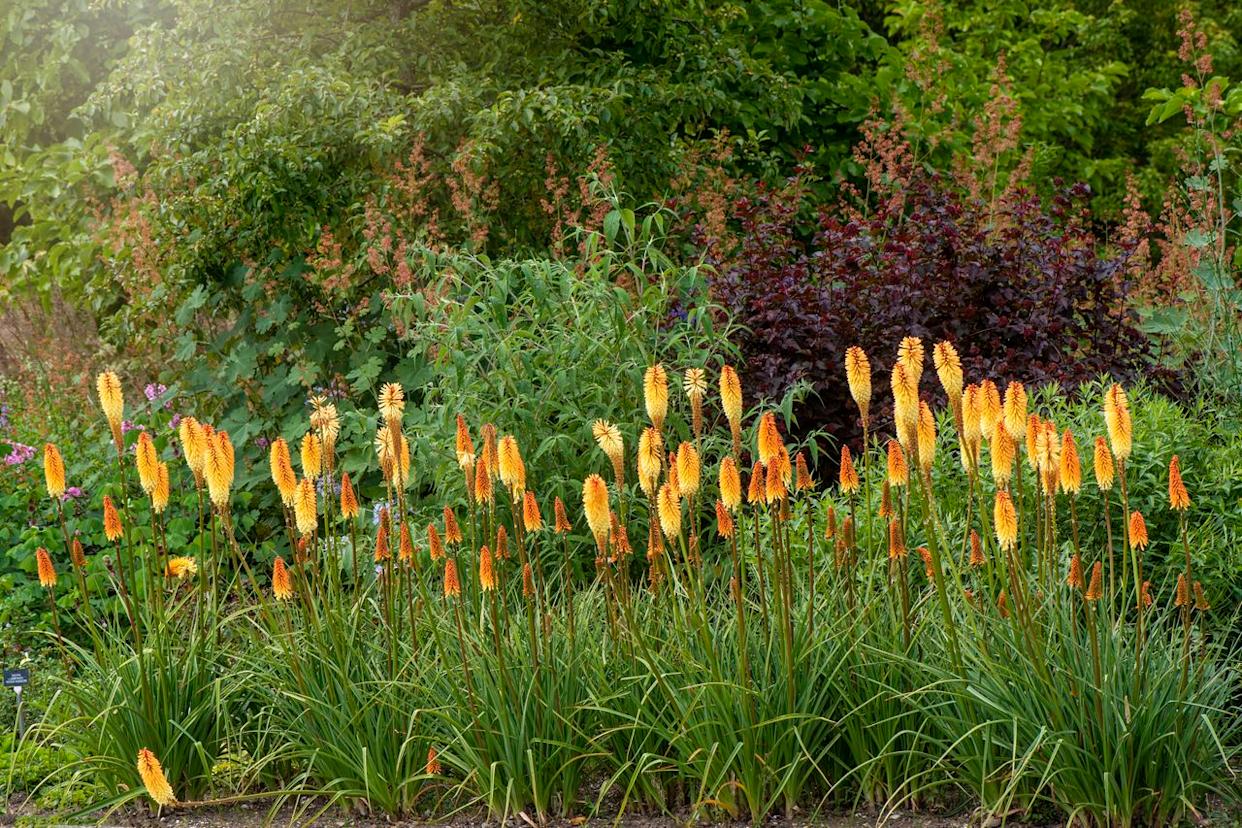
Credit: Getty Images / Jacky Parker Photography
Botanical Name: Kniphofia
Soil Type: Average, well-draining
Also known as red hot poker, this fun perennial with spiky, exotic-looking flowers brings plenty of drama to the garden. The continuous blooms from summer to fall attract tons of pollinators, especially hummingbirds. Flowers are red, bicolor, orange, peach, or gold.
Varieties for the South: ‘Backdraft’, ‘Solar Flare’
Perennial Geranium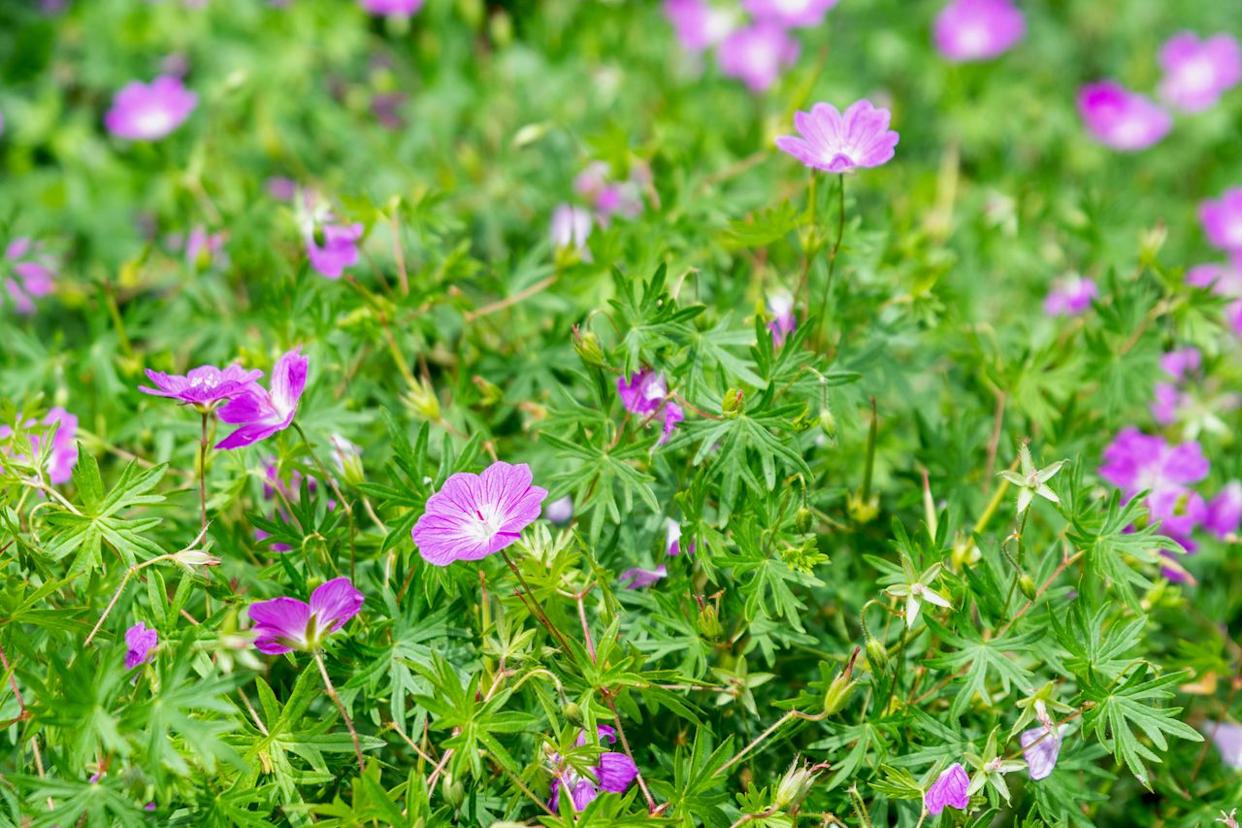
Credit: Southern Living/Adrienne Legault
Botanical Name: Geranium spp.
Sun Exposure: Full sun to part shade
Soil Type: Average to poor, well-draining
Perennial geraniums, also known as cranesbill geranium due to the shape of the flowers, are a type of hardy groundcover that spreads rapidly. The have butterfly-like blooms that float over the foliage from late spring to early summer; some types rebloom. Give them some afternoon shade in very hot areas. Deer and rabbits typically don’t like the spicy-scented foliage.
Varieties for the South: ‘Biokovo’, ‘Boom Chocolatta’
Learn More
Daylily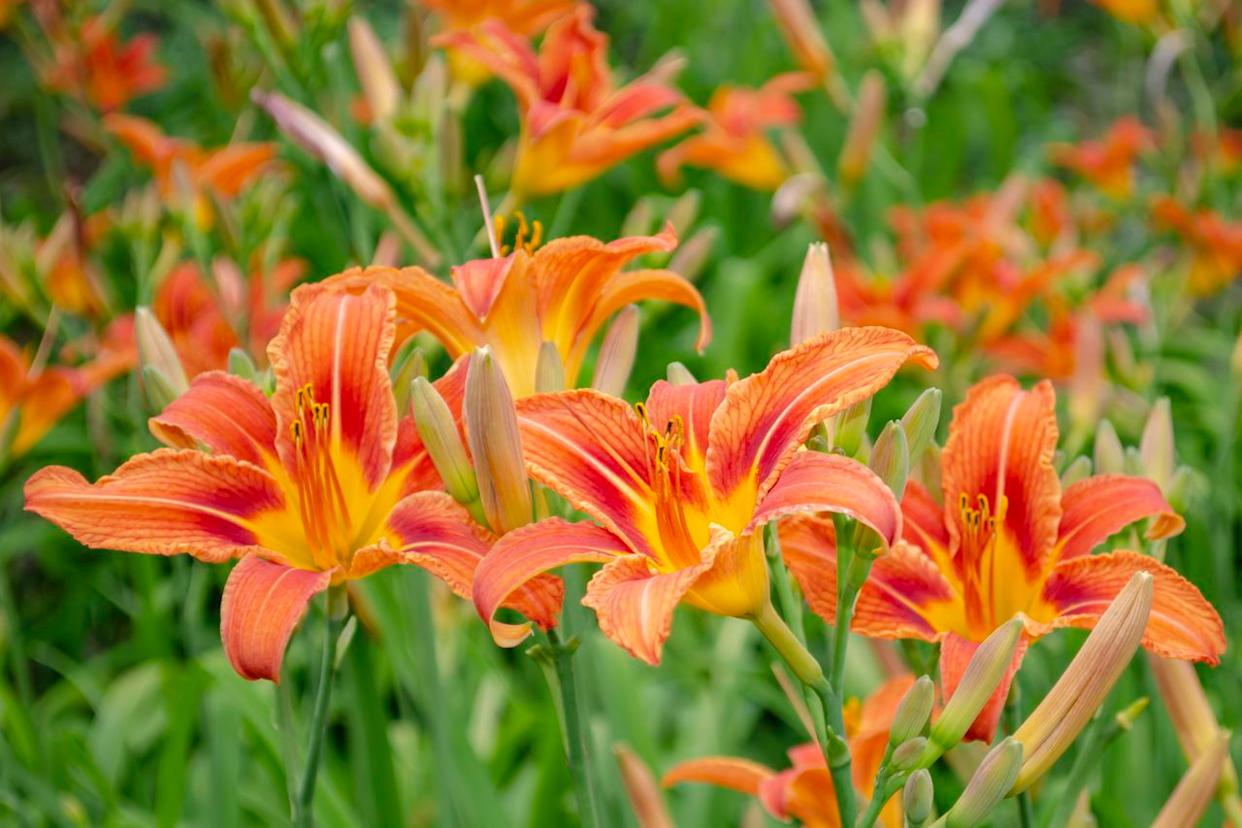
Credit: Getty Images / Oksana Akhtanina
Botanical Name: Hemerocallis spp.
Soil Type: Average to poor, well-draining
Daylilies have big, bold blooms that appear for just one day, as you may have guessed. But each plant is loaded with blooms, so you’ll have weeks of gorgeous flowers. There are flowers in nearly every color of the rainbow. Daylilies bloom in early, mid and late summer, depending on the variety. But be aware that deer love these plants, so avoid planting them if Bambi is a frequent garden visitor.
Varieties for the South: ‘Frankly Scarlet’, ‘Lavender Eyes’
Learn More
Gaura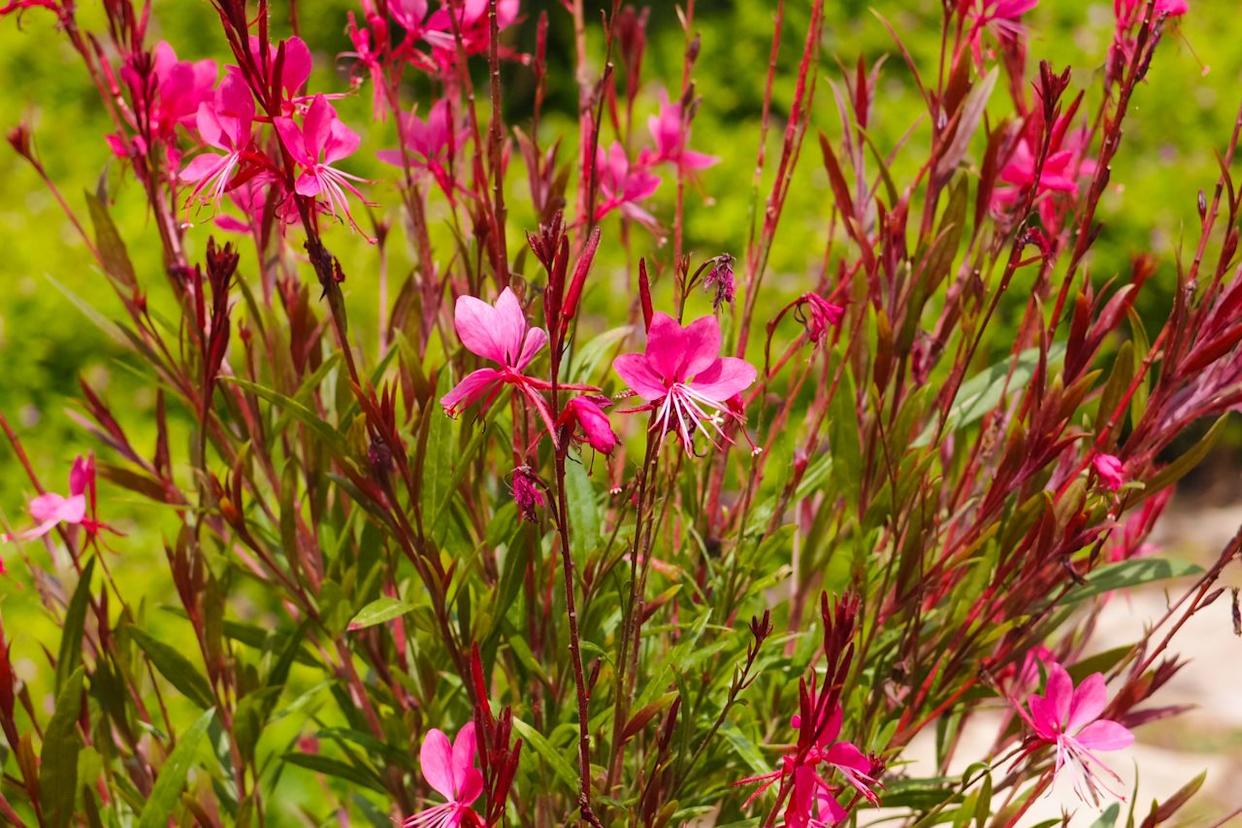
Credit: Getty Images / ANGHI
Botanical Name: Oenothera lindheimeri
Sun Exposure: Full sun to part shade, especially in the afternoon
Soil Type: Average to sandy, well-draining
These airy blooms look like butterflies dancing in the breeze, which gives them their common name of butterfly flower. This perennial is drought tolerant and has a very long bloom time, flowering all summer long.
Varieties for the South: ‘Whiskers Deep Rose’
Bee Balm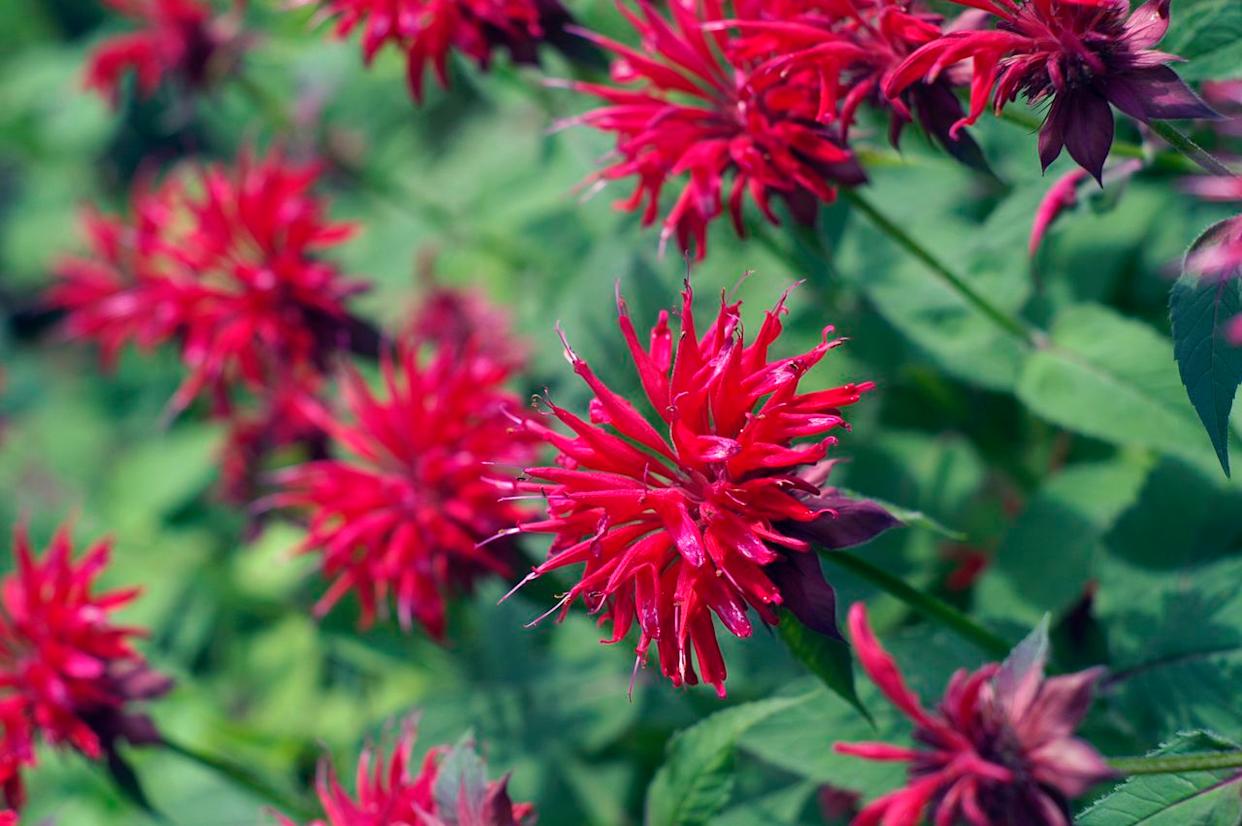
Credit: bgwalker/Getty Images
Botanical Name: Monarda didyma
Soil Type: Moist but well-draining
Bee balm is a member of the mint family, which tells you this one of those plants almost certain to spread in your garden. The scarlet blossoms will be visited by many bees, butterflies, and hummingbirds, so we’re not complaining. Bee balm loves moisture but is susceptible to powdery mildew, so choose a variety that is resistant. Divide your patch every couple of years in early spring and share some with friends and neighbors.
Varieties for the South: ‘Raspberry Wine’, ‘Grand Marshal’
Blanket Flower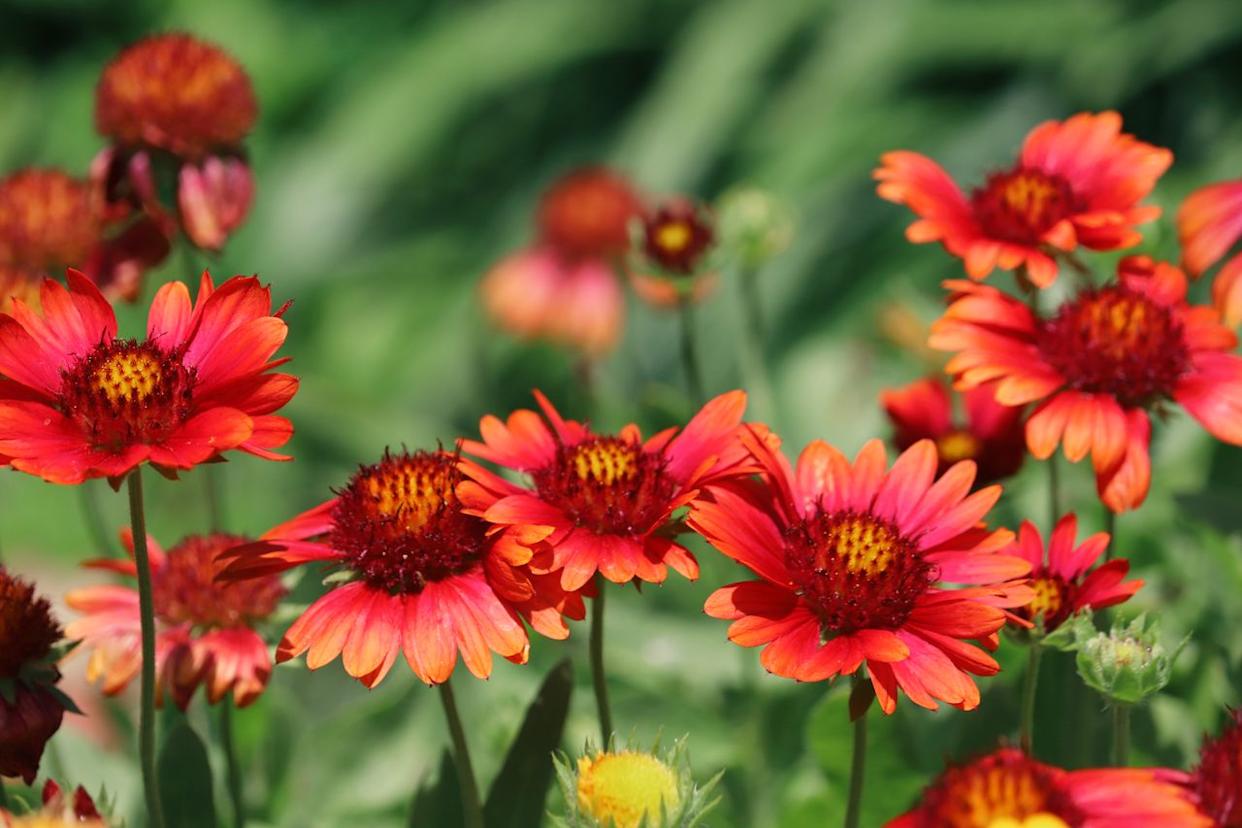
Credit: Getty Images / Katrin Ray Shumakov
Botanical Name: Gaillardia spp.
Soil Type: Average to sandy, well-draining
Bright, daisy-like flowers in brilliant shades of red, orange, and yellow make blanket flower a must-have in mixed borders. These drought-tolerant perennials attract birds and butterflies and bloom from spring to fall. Clip off the seedheads to keep them blooming.
Varieties for the South: ‘Sunset Celebration’, ‘Mesa Red’, ‘Mesa Peach’, ‘Mesa Yellow’, ‘Mesa Bright Bicolor’
Learn More
Read the original article on Southern Living
Comments are closed.