

Connie Smith, Special to the Eagle-Gazette
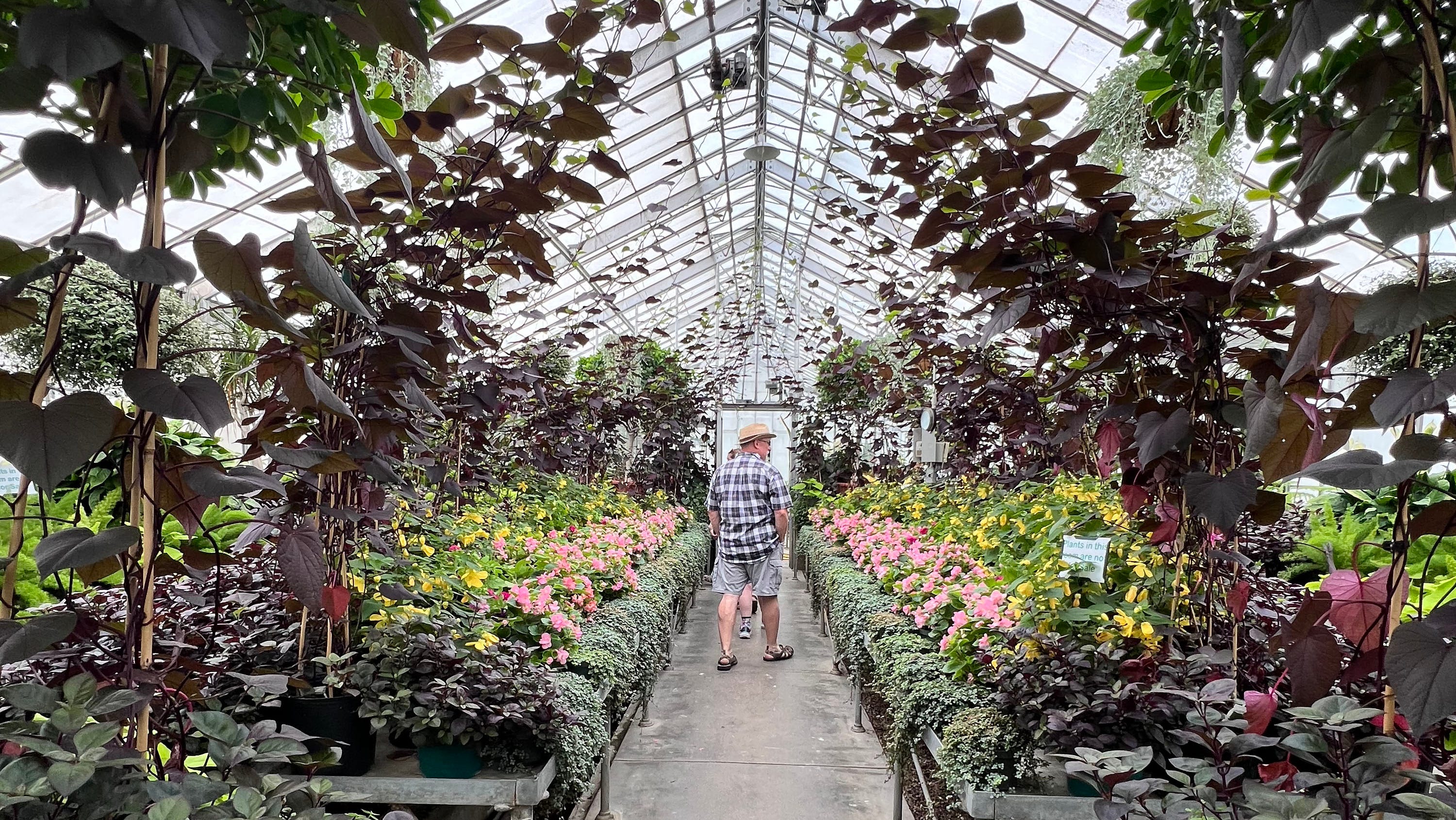

Springtime at Kingwood Center Gardens
Kingwood Center Gardens is open 10 a.m. to 5 p.m. daily at 50 N. Trimble Rd. in Mansfield.
Fairfield County Master Gardener Volunteers are out and about in their gardens, digging up and potting up some of their favorite plants, all for the Master Gardener Plant Sale to be held in the Ed Sands/Farm Bureau Building at the Fairfield County Fairgrounds on May 30.
This year, we are anticipating more plants and more fun! As always, there will be over 100 tomato plants from MGV Tomato growing expert, Lise Ricketts and herbs grown by MGV Carrie Farquhar. We will have lots of perennials, annuals, vegetables, ground covers and garden art for sale. If you are in a new home or just want to refresh your gardens, this sale is the place for you. Plants will be moderately priced, and you can chat with Master Gardeners about the right growing conditions for your purchase.
This sale has become an annual event that is not only a plant sale but an educational outreach for those in the community to learn more about growing plants and have success in the gardens. The event is slated for May 30, at the Fairfield County Fairgrounds, beginning at 9 a.m. until sold out. Please be aware that the only payment method that can be accepted is cash. And for your sweet tooth, The Rolling Dutchman Donut Truck will be on-site for donuts and coffee beginning at 7:30 am.
Dividing perennials … making more plants….the time is now!!
Spring is a great time to divide many of our favorite herbaceous garden perennials. The plants are small, easy to handle and they have the entire growing season to get re-established in your garden. But how do you know how often to divide perennials.
The term “perennial” literally means to last or exist for a long time and to be enduring or continually recurring. A perennial plant re-grows year after year from the same root. Some perennial plants are very long-lived like an oak tree which others are short-lived like some of the newer coneflower cultivars.
Dividing perennials or “division” is a form of propagation: you are creating multiple plants from a single plant. Some plants like Heuchera, coral bells, are very easy to divide. The plant crowns are right at the surface of the soil and small plants, called ‘offsets’, develop from the larger main plant. Other plants like Hosta and ornamental grasses have dense roots that require a sharp knife, garden fork, or even an axe to cut apart.
Division also promotes plant health and can rejuvenate a plant. A perennial should be divided when it dies out in the middle (the oldest part) of the plant, produces smaller flowers or leaves, and blooms less.
Dividing perennials is also a good idea if plants have become crowded as it increases air and light around plants which can increase blooming as well as reduce disease and insect pests.
A Few Tips to remember on Pruning Those Hydrangeas
Hydrangeas that bloom on old wood from last year’s growth are the earliest to flower – before July. Those that bloom later in the season – after July – are flowering from blossom buds on new wood that is growing during the current year.
If you feel uncertain about which variety you have, a safe rule for all types of hydrangeas is that no pruning is better than the wrong type of pruning.
A simplified approach, suitable for all types of hydrangeas, is to limit pruning to:
Winter-killed wood — Remove all dead branches in the spring before or as the buds are opening. Test the stem for life by scraping the bark with a knife. If it’s not green underneath, it’s dead and should be removed.
Rejuvenation — Old wood dies back on even the healthiest hydrangeas. In the early spring remove dead or very old stems by cutting them at the base of the plant. This will stimulate new growth and produce a more vigorous bloom set later in the summer.
Dead flowers —Removal of old dried flowers, known as dead-heading, is the safest pruning and can’t be done incorrectly (however you don’t even HAVE to do this!).Source: University of Minnesota Garden Newsletter
Comments are closed.