
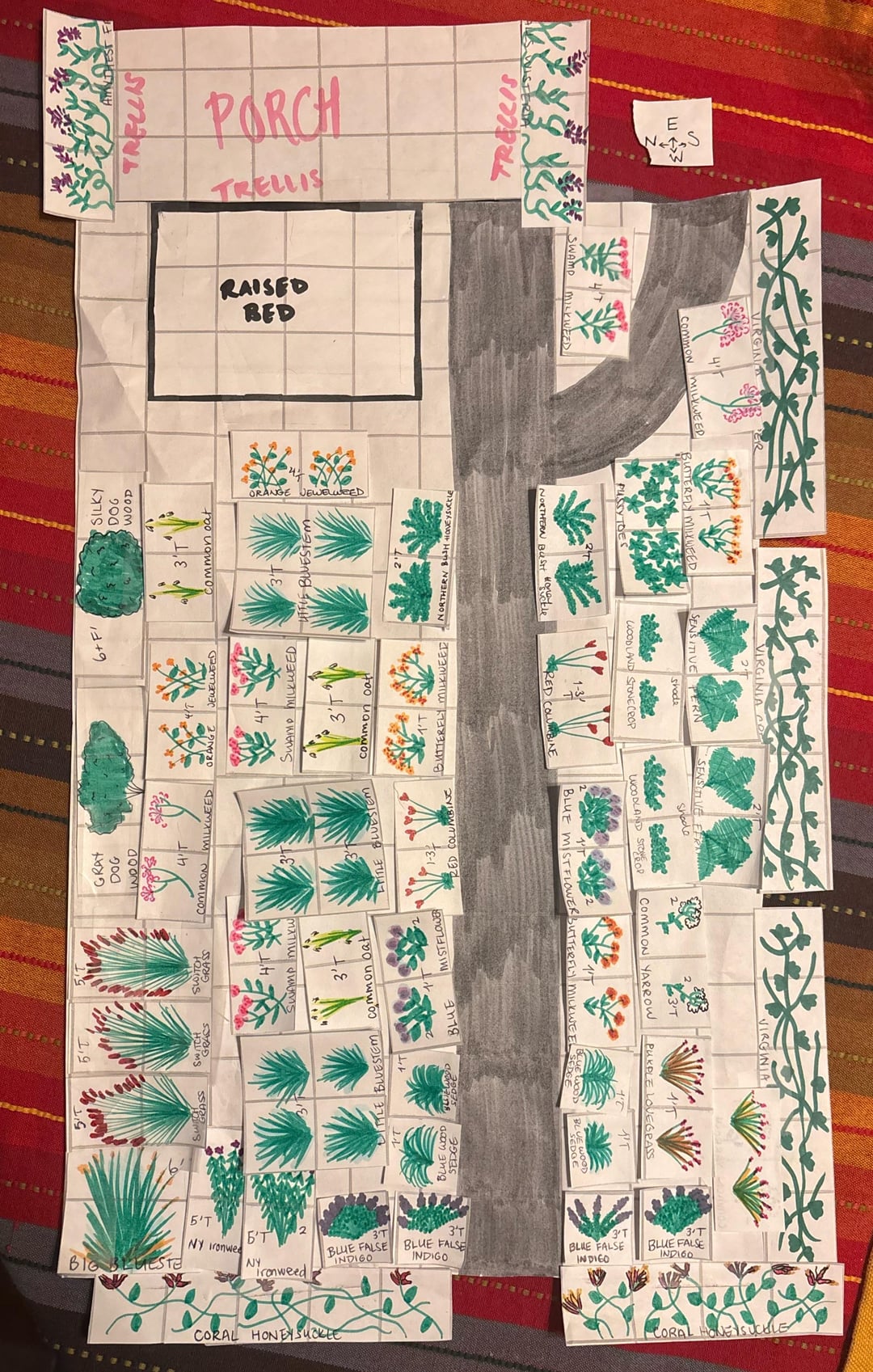
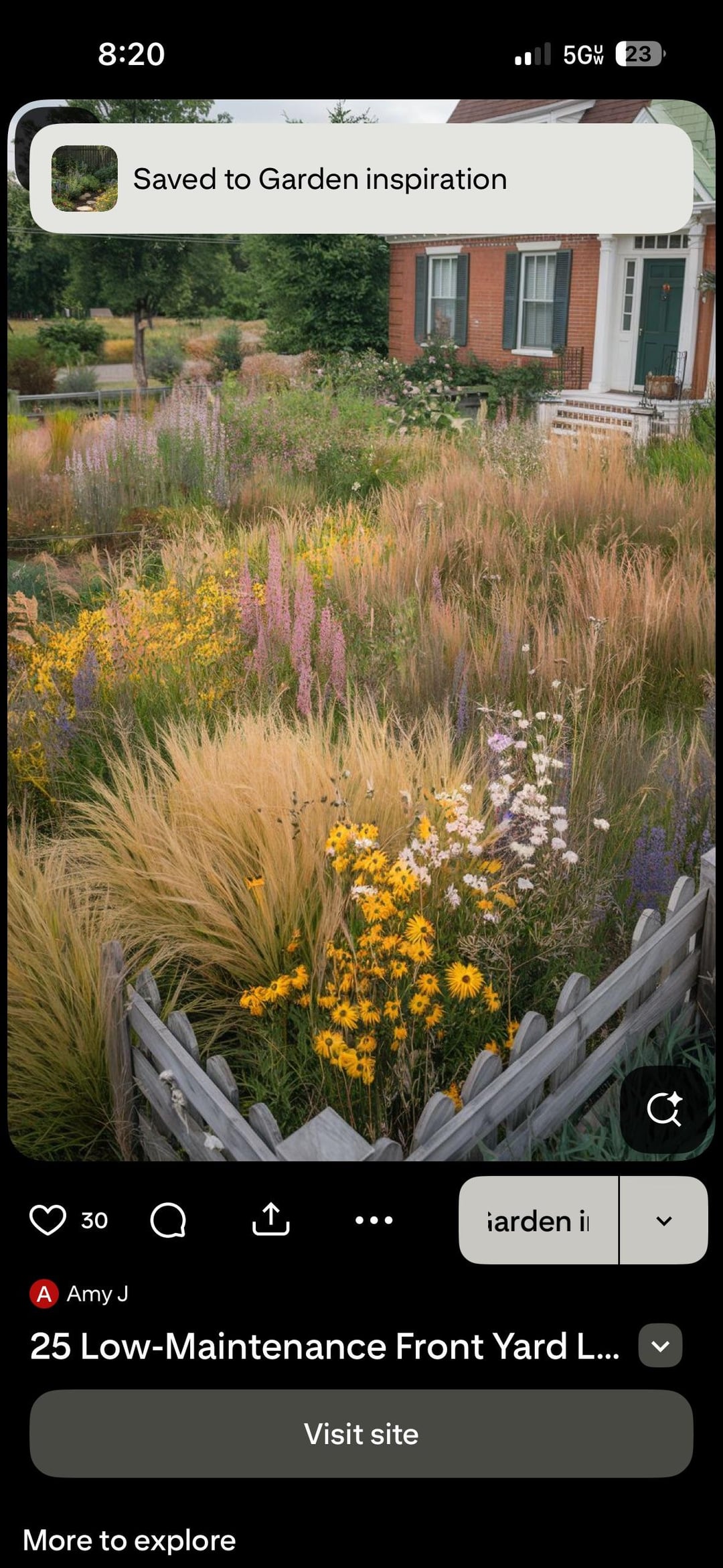
Hey everyone! My partner and I are planning our native pollinator garden. We live in Baltimore MD in the 7B Piedmont region. Our yard gets full sun, but due to its orientation the north side gets more sun. It’s currently lawn which we are digging up. We are sprouting a lot of native seeds we got at a native seed fair and we are also going to purchase about half the plants in gallons. We are also trying to plant a native thicket for privacy from our neighbor on the north side, and combing English Ivy on the southside fence.
How does our plan look? We would love any feedback. We put our inspiration photo second.
by Vegetable-Garden-462
3 Comments
My only advice is to make sure you know what moisture levels the plants like, I’ve made the mistake of putting plants that like sandy/drier soils with plants that prefer more moist rich soil and had issues with overwatering.
https://preview.redd.it/lb9fnp80xosg1.jpeg?width=3024&format=pjpg&auto=webp&s=4ac9242d2e9896f5b8a32072e63f492273d9d707
Coral honey suckle is one of my favorite natives (I’m in South MS/US) so don’t have much for you in terms of knowing what plants do best in your region but keeping an eye on things until they establish is always helpful especially in the warmer/more dry times. Such a rewarding hobby, and really love how you’ve incorporated the grasses. Densely planting the grasses really shows off their movement with the wind, and blue stem has such a nice bunch shape and beautiful year round color. I have had our bushy blue stem get up to 5ft when mature so do keep that in mind as far as planting in and around. Edited to add: I do realize you are planning little blue stem but keeping height and soil/water preferences at the fore front of your mind helps with placing the plants.
I have to come in to say that I love your idea to draw individual tiles of each plant. What a neat way to easily move plants around until you find a design that pleases you! Very modular.
This is a great idea! You also can clearly draw, so i recommend drawing these compositions from different angles so you get a sense for how the plants look from eye level.
Another thing to consider is how much space each plat takes up. A blue false indigo will have a 3’x3’footprint rather quickly, while a butterfly milkweed will take many years to take that footprint.