
Learn how to avoid common mistakes when planting and caring for fruit trees. From proper watering techniques to avoiding planting errors, this video will help you keep your fruit trees healthy and thriving.
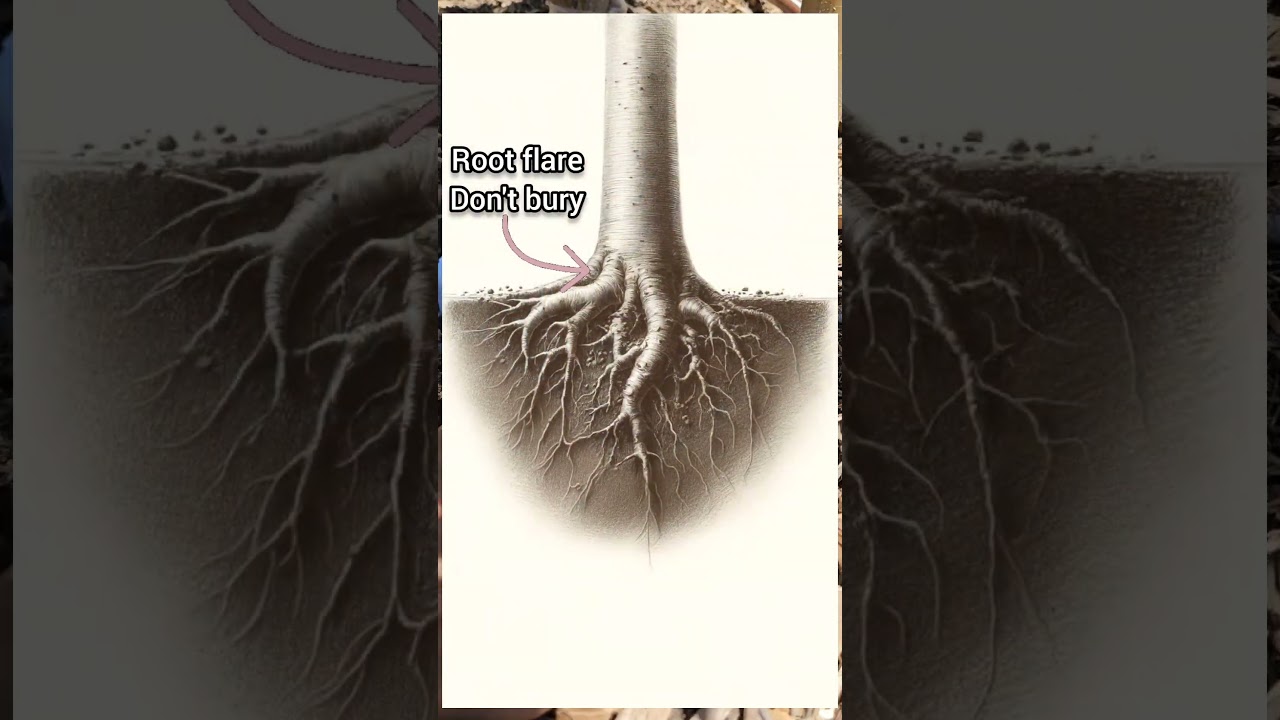
You can see how stressed this citrus tree is, it hasn’t been getting the water that it needs. Whether you are planting lemon trees, orange trees, or other deciduous fruit trees like apples, peaches, pears, plums, and apricots, you are going to want to treat them all the same. Make sure to water at least to, the drip line or beyond if it is a growing tree. It’s also crucial that you don’t cover up the root flair which is the upper part of the root system. Lastly, leaving tags and ties to planting stakes can strangle the tree, so those should be removed at planting.
Here’s the kit I use to water my trees. https://www.thriveandgrowgardens.com/product-page/thrivering-tree-irrigation-kit
If you are going to plant trees yourself, or hire a professional and want to know how to plant a fruit tree, having a guide to follow to make sure the person who plants your trees does it correctly can make a huge difference on the health of the tree. So, I created a guide that can help you identify the most common mistakes and avoid them. You will also learn how to properly fertilize and water your trees which will be the other long-term key to their health and growth.
You can gain free access to this guide by visiting the link below!
https://www.skool.com/greenthumb/about
I’ve spent the past 13 years figuring out how to help my clients grow food in the desert. You can learn how to reliably help your garden thrive and grow by joining me on my educational platform through Skool.com. My community is called Green Thumb Academy. I hope to see you there!
You can find Michael’s raised garden bed creations, plant protection systems, and irrigation products at www.thriveandgrowgardens.com
40 Comments
I live in New England 😔 No fruit trees for me, unless I build a greenhouse
I planted my blueberry bush kind of sideways because it was growing crooked. I hope this doesn’t mess up the root system.
Wow I learned a lot from this short video, thank you!! 🙌🏻
Yo I used to work recycling the material to make those exact hoses bro!
Why is the root flare rarely exposed in potted trees that are sold? I thought they were grown from seeds so the tree decides where the flare will be. OR is it that as a wild tree grows, soil is washed away until you get to the flare which is where the roots begin?
People have definitely over complicated growing plants.
Good points. Up here in the frozen north we have a different process for planting depth. Many of the fruit trees we grow here are grafted, and the graft union is fragile. So we purposely plant trees "too deep" so that graft union is just slightly underground. If we get a hard winter we want that union protected and if the tree does die back we want some material from above the graft union left alive. Not ideal, but the best choice from a set of poor options.
Yikes, I have to go dig out my root flares!
Say, many netafim drip lines are meant to be slightly buried…not sure about yours
Great explanation. Good to see real knowledge on this here APP.
👍 …
i planted an apple tree
You need a master sprinkler?
Also mound up soil.. 😊
👍 😊 👍
About that "Ties strangling trees" part.
I can vouch for that, however I'm not only talking about trees, I'm talking about most plants, but especially tomato and pepper plants.
I grew a tomato plant for my mother once, and it slowly died from a tie mess up, the lower stem got strangled and due to that caused some weird ailments in the upper part of the plant, the sap in the top of the plant pooled and made "blisters", and it had issues making fruit, the fruit would get massive dry holes in them and would grow very slowly.
It used to be the healthiest tomato plant in my previous garden, and it was the maker of the dozens of other plants I grew, all the others turned out perfectly fine, and were rather strong against pests and physical damages. (Mostly from dogs.)
Affectation can't be listened to.
This is great info I have 1000s of fruit trees
I plant citrus in a mound in clay soil to get more oxygen to roots.
why do my pomegranites keep dying
Poor trees
You’d be surprised how many people make the mistake of burying the root flare! So detrimental to the trees health! I didn’t know this when I bought a planted my first fruit tree til I used Chat GPT and found out that a lot of stuff that people assume are ‘okay’, really isn’t. Chat GPT let me know about not burying the root flare. About keeping the compost and mulch 2-3 inches away from the trunk. About planting different types of fruits trees differently(namely the peach tree). My peach tree was to be planted ‘on a mound so that the water would run off’. Yeah Chat GPT and watching hours of videos suggested helped me out ALOT!
WHERE IS THE "FULL" VIDEO?
Strangeling the tree😰😭
What if the root flare is covered with cement? They redid the drive way and did the side dirt area where a pomegranate tree is and literally encased it in cement .. the trunk was even covered with some cement. This was a week ago ., what do i do?
I plant all my fruit trees with the a giant nursery pot, with the bottom of the pot cut off, easy to water, and train the root go downward, not on the surface.
you also want to put your stake at a hard diagonal connected low down so the trunk can bend in the wind a bit
I had to keep the straps on my tree. Iowa wind would break my tree
I just realized they waited too to take the straps off
For a young peach tree (5 feet? Should the mulching to over-winter cover the root flare? Zone 5a
I have just ond drip irrigation per tree is it.bad? I should have several drips for each tree?
I covered the root flare on purpose on a blue oak 5 years later its doing great
Potatoe potatto
Plant your drip line. Less weeds less water
All this makes sense .. thank you I've made all three of these mistakes and wondered why the curled leaves ….good info
It's not just fruit trees. ANY tree. And it's not suffering from lack of water; the tree is strangulating itself because the roots are wrapped around itself.
Don't forget to bury your whole root stock if you have a medlar ❤
I have 5 month calamansi seedlings and there are so many different root flares from the bottom to the top. If I don't bury the bottom root flares, the top root doesn't even touch the soil.
Thank you. I have a small lemon tree thatdoesnt grow.
All the trees in my state in Australia seem to be planted improperly
Like every single one
👍👍👍
The root line needs to be further than the tree so the roots can grow outward why chasing water … As it grows the other trees will try to invade the trees root space and strangle them out