
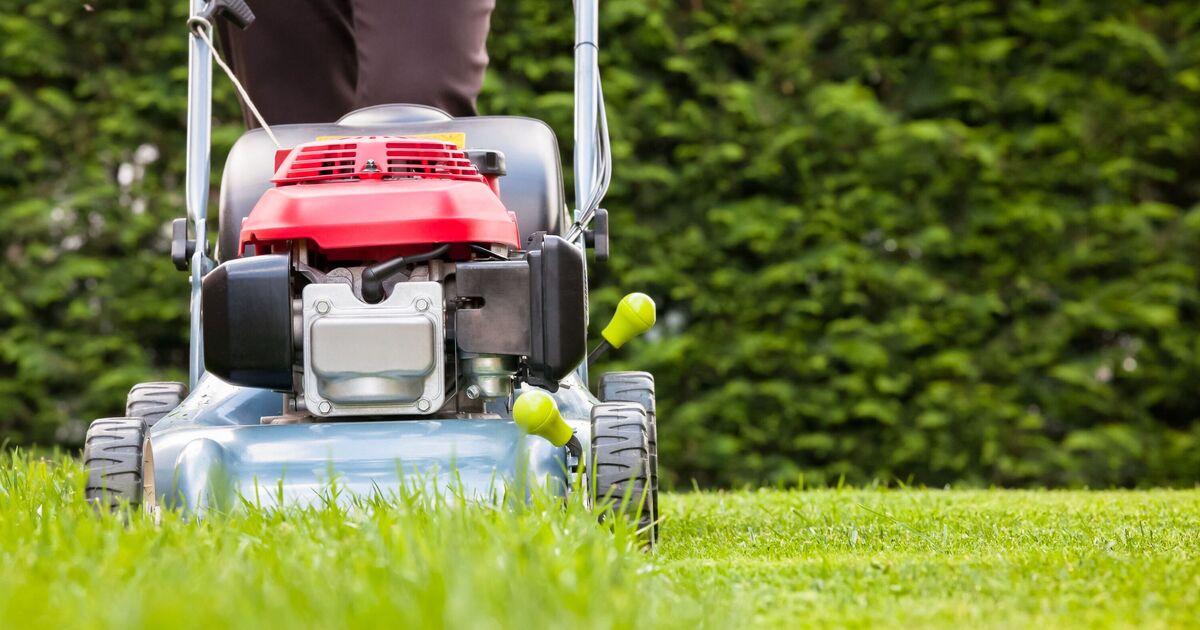
The weather is warming up and the days are getting longer in the UK, making it the perfect time to get back outside to complete jobs in our gardens. One of the first tasks for most gardeners will be to mow their lawn in order to make sure it’s as green and lush as possible.
A landscaping expert has revealed one simple tip to make sure your grass is in the best possible shape ahead of the summer. The tip is particularly important for any gardeners who are mowing their lawn for the first time this spring. It will help ensure the grass does not get damaged, encouraging healthy growth in the months to come.
Andy Simms, a home landscaping expert from MyBuilder.com, said: “If you’ve yet to do your first mow of the year, you’ll need to pace yourself and gradually reduce the height over several cuts to avoid ‘shocking’ it and causing damage. To encourage healthy growth throughout the year, you should never remove more than a third of your grass’ height in one go.”
By cutting your grass too low in the spring, the turf below can also become weakened which will lead to shallow roots. It’s essential to keep blades between 2.5 and 3 inches to promote healthier growth.
As well as this crucial step, Mr Simms also recommends mowing your grass when it’s dry and scarifying. He also advises gardeners to water their grass to prevent it from going yellow or brown when the weather heats up.
He explained: “The best time to mow is when the lawn is dry, after any dew or rain has dried. Cutting a damp lawn can make it vulnerable to fungus.
“Scaryifing is the next essential step for a perfect green lawn, as it removes all the thatch that chokes your lawn and makes it appear brown. You can do this with a rake, or an electric scarifier, for a more thorough, and easier, job. This should then be followed by spiking holes in your soil – known as aerating – to relieve compacted soil, followed by overseeding, which will fill in bare patches and stop weeds from taking root.”
He continued: “To prevent your lawn from going yellow or brown down the line, make sure to water it deeply and infrequently during drier and warmer periods. This encourages deeper root growth and resilience to drought.”
Comments are closed.