
So I’ve written before about how I don’t think dormancy is physiologically required in Dionaea. You can read more at phamcliff.com/dormancy.html.
I’ve been doing an experiment with one plant, starting three years ago, keeping it under rapid growth.
TL;DR, it’s still booming, no signs of exhaustion.
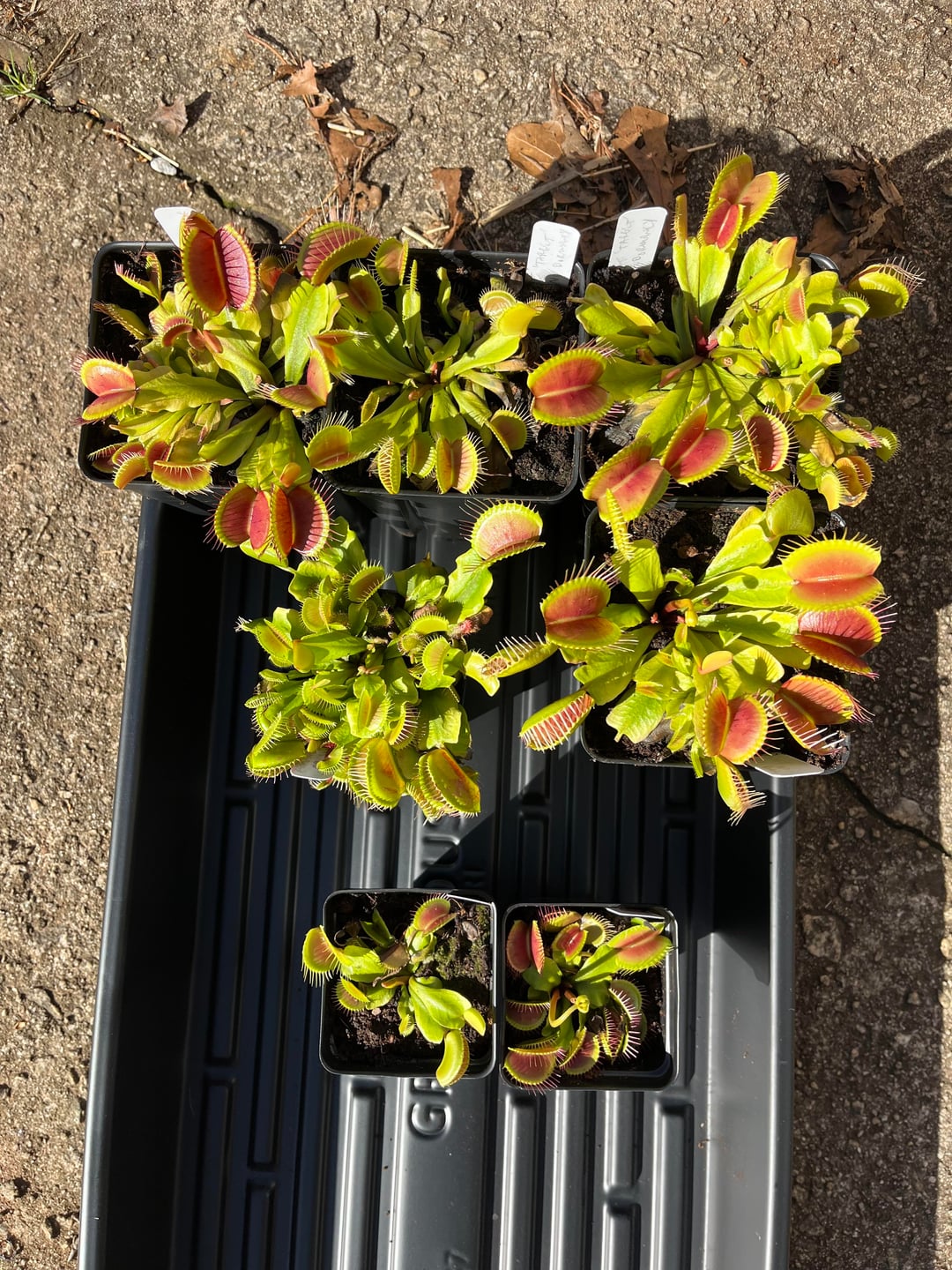
The 6 pots above came from 7 small divisions from a single plant last September. This mother plant was, in turn, just one of a few dozen pots that arose from the founder typical over the three years I’ve had it.
Of these 6 divisions, the top 5 were kept under summer conditions (16h, 250-350 PPFD, 80f, shitloads of fertilizer), while the bottom two had a 3 month dormancy (9h lights, 50-60f, no fertilizer).
The only impact of dormancy seems to have been slowing them down, at least so far.
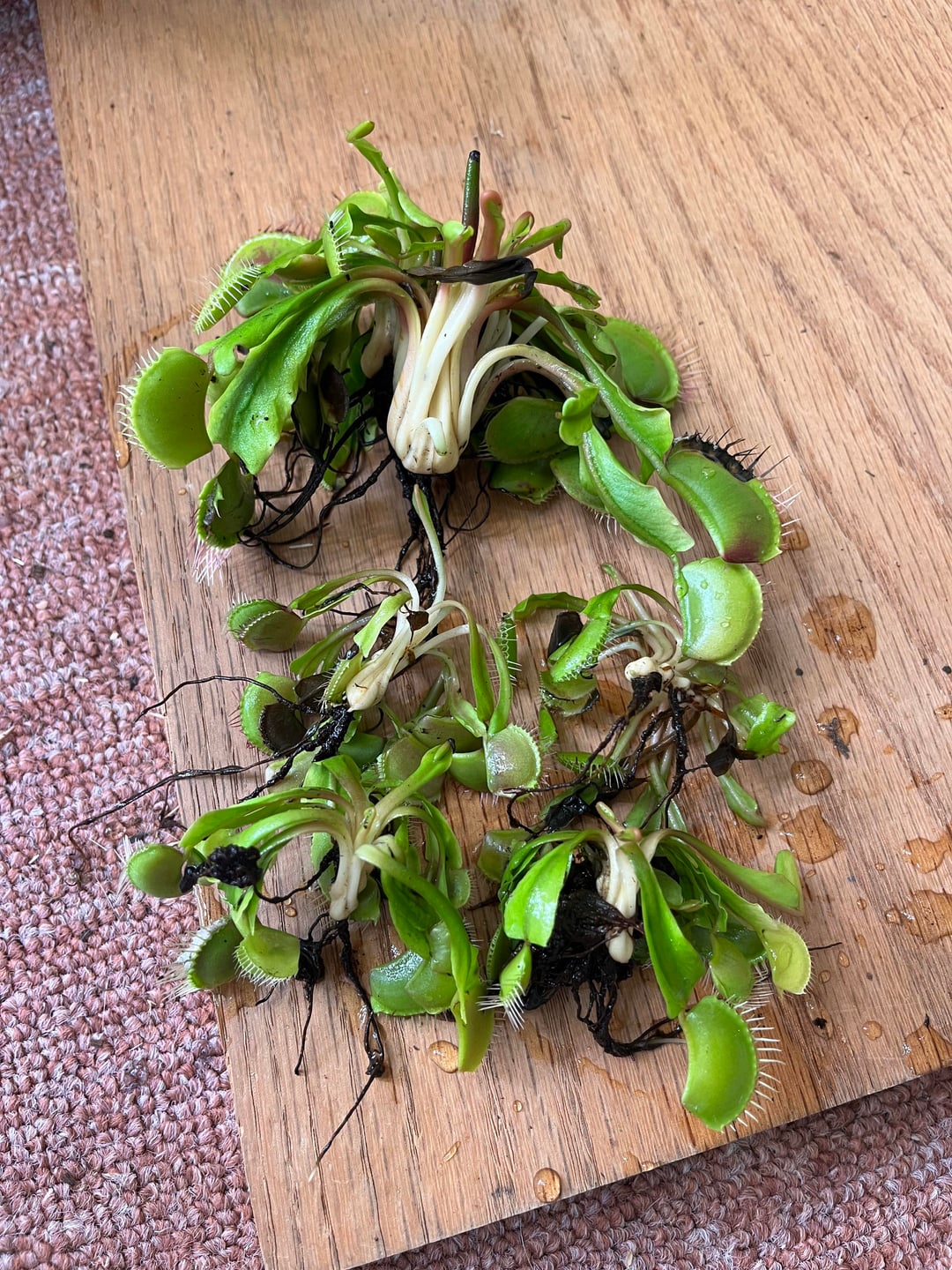
Today, I had to split the dense pot in the middle row, it was starting to distort the plastic of the pot.
It’s hard doing experiments like this with exponential growth because of the sheer volume of plants produced. This single typical (bought by my kids at Target as a present for me, no less, so who knows how many hundreds of dormancy free generations this lineage underwent in a TC lab before landing in my hands) now fills over 60 pots, and most have 4-5 divisions- not sure I can handle another round of exponential increase. I’ll probably just plant em all out in a bit bog bed, save a few I’ll keep running at full tilt indoors for fun.
Anyway, I can say for sure that even after 3 years of full out balls to the wall growth, this lineage of plants is not slowing down at all for lack of dormancy. In fact, it’s quite the opposite. Dormancy comes with a steep opportunity cost — roughly one cycle of exponential growth from one to five plants.
by Berberis
Comments are closed.