
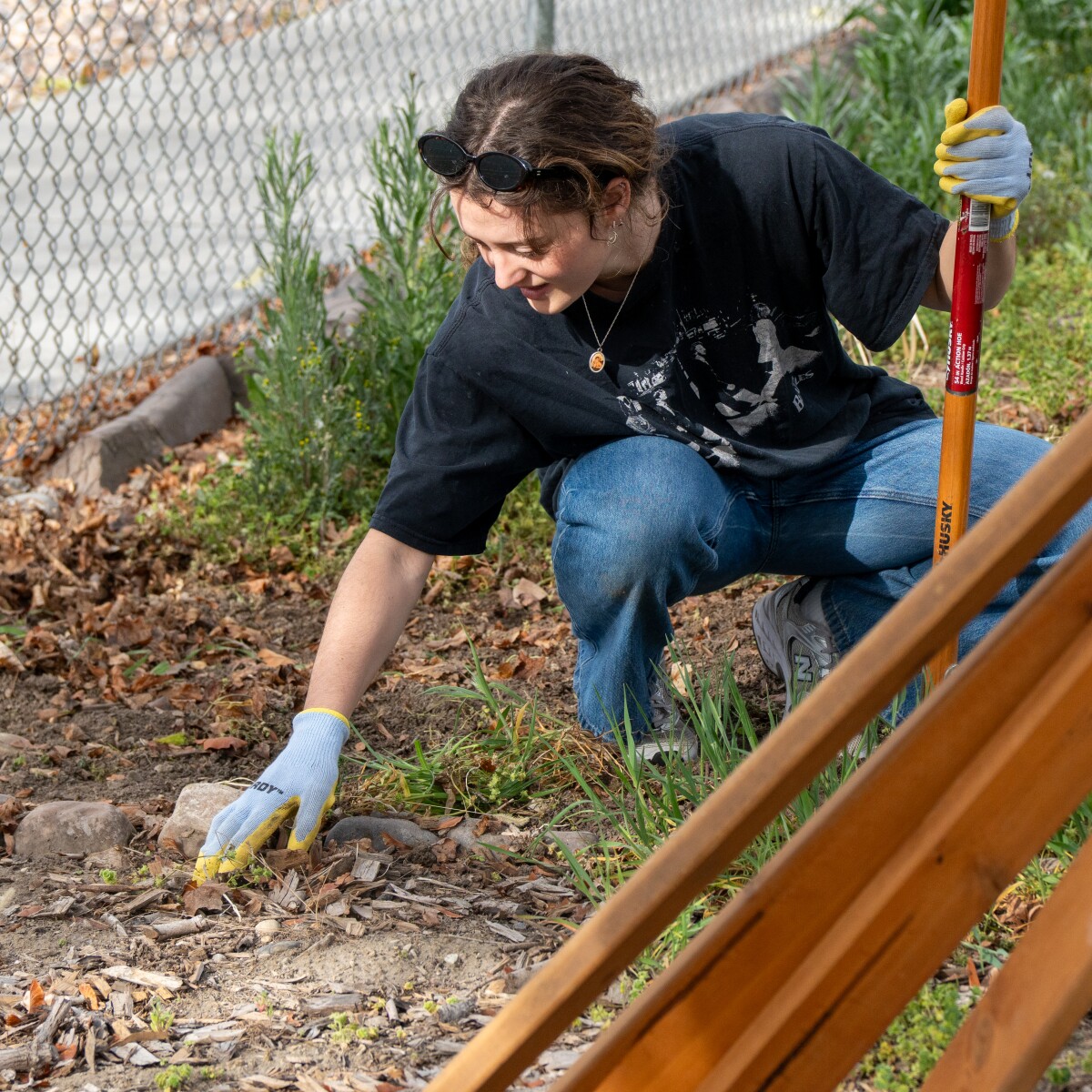
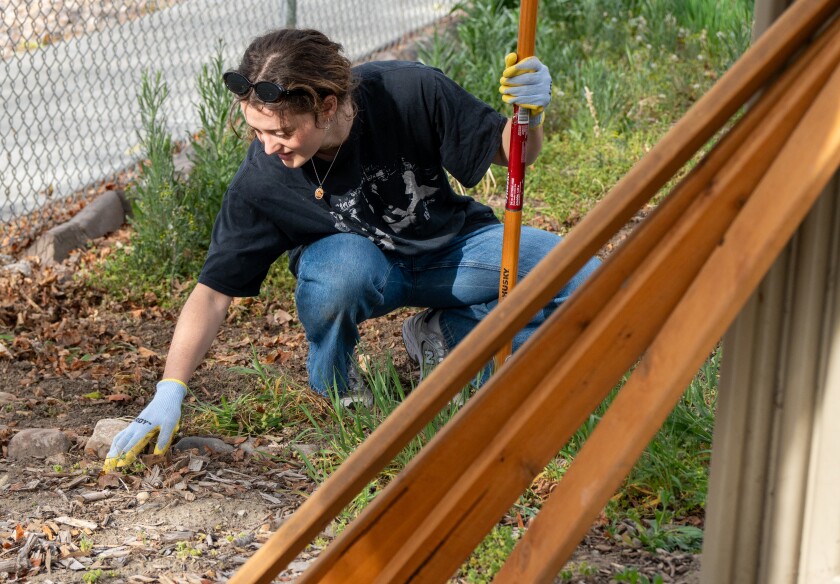
A volunteer helps with garden landscaping by removing debris and shaping the soil. She contributed to maintaining the overall appearance and functionality of the garden. (Frizz Flake)
Brigham Young University’s Office of Civic Engagement partnered with Community Action Services and Food Bank on Saturday, March 28, to help prepare garden spaces across Provo for the spring season.
Volunteers at the event ranged from BYU students to local families and senior residents. They spent the sunny spring morning clearing pathways, weeding garden boxes and harvesting plants that survived the winter.
The community gardens serve Provo residents who don’t have access to land to grow their own food. They offer a space for locals to invest in their community while enjoying fresh produce, and any unused harvest is donated to local food banks.
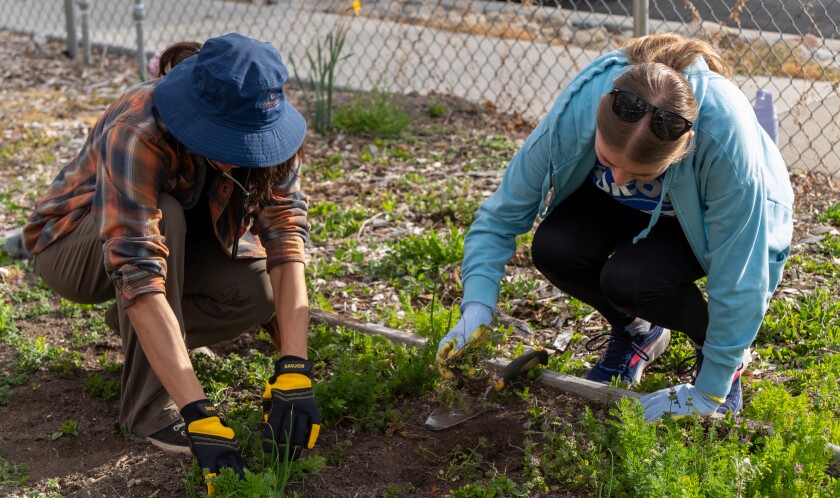
Community garden manager Hillary Whitaker (left) helps a volunteer clear weeds from a garden box. She worked alongside volunteers to prepare the soil for new growth and planting. (Frizz Flake)
“The whole reason we started doing this was to help with hunger,” said Tricia Schuetzler, office specialist at the BYU Office of Civic Engagement. “People are able to make fresh food for their family, and often grow flowers and other plants as well. Gardens like this really connect us to the earth and to each other.”
In 2025, the community gardens produced a surplus of fruits and vegetables, with an estimated 1,900 pounds donated to local food banks in addition to what families kept for themselves.
Hillary Whittaker, the community garden manager, began working with the gardens in 2020 as a volunteer and has seen firsthand the impact the gardens have on local families beyond providing fresh produce.
“There’s something so powerful about planting a seed and watching it grow,” Whittaker said. “The moment that you see that first sprout, and eventually your first fruit, is the best feeling in the world.”
Community gardens like those in Provo have been shown to support mental health and foster a sense of connection among participants.
On Saturday, BYU students worked alongside young families and senior residents, chatting as they prepared the gardens for spring.
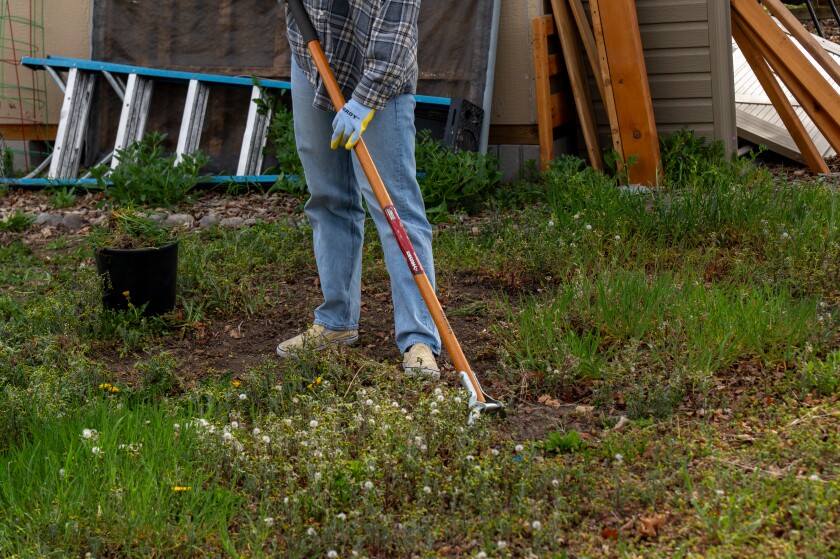
A volunteer uses a hoe to break up soil and remove weeds in a garden plot. They focused on loosening compacted dirt to improve planting conditions. (Frizz Flake)
“These gardens really help build a community here and create a place where people feel like they can come together and hang out,” Whittaker said. “We live in a world that is full of beautiful and very different people. The unique thing about a garden is everybody is growing something together, and that’s what makes it so beautiful.”
The BYU Office of Civic Engagement aims to help students connect with the local community and become more engaged in Provo.
With a large college population in the city, many students can feel detached from the place they live, even after living in Provo for four years.
“One of the goals of our office is to help students feel like they are a part of Provo,” Schuetzler said. “The Provo community benefits from our students serving, and students benefit from feeling the sense of community around them.”
Jaden Boyer, a BYU student and communications and event specialist for the Office of Civic Engagement, helps plan and coordinate community events and looks forward to the annual community garden clean up each year.
“It’s fun to get all my friends together and get our hands dirty instead of just sit at a desk and type,” Boyer said. “The garden clean-up is more hands-on, and I really look forward to it.”
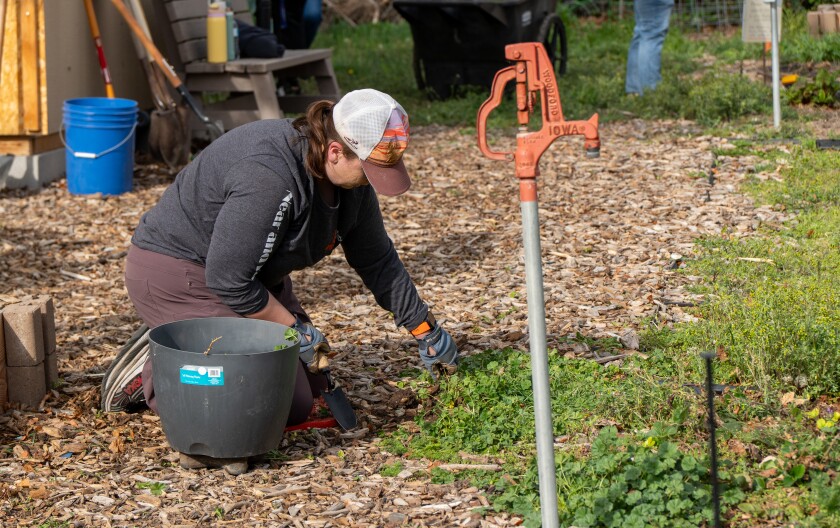
A volunteer clears a pathway between garden boxes. The work helped create accessible walkways for community members. (Frizz Flake)
By stepping outside of campus life and working alongside local residents, students are able to build relationships, gain a deeper appreciation for the place they live and contribute to something that has a lasting impact beyond a single morning of service.
“Students that are actively engaged in the community feel at one with the people around them and build Christlike relationships,” Boyer said. “Jesus Christ went about doing good, and we want our students to be examples of Christ wherever they go.”
Comments are closed.