
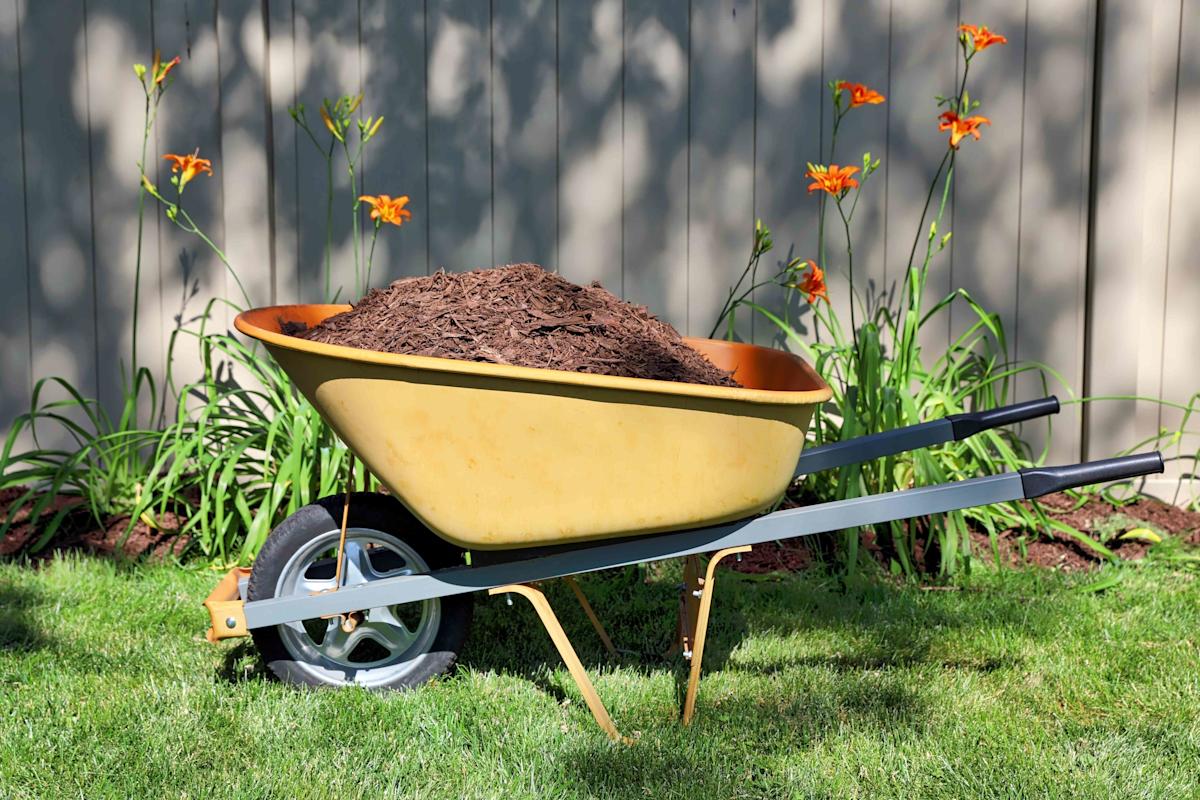
Buds on trees and plants aren’t the only things blooming in spring. Weeds start to emerge as soon as the soil warms. Mulch isn’t just for looks. Despite its neat appearance, it also controls weeds from sprouting in flower beds, and you don’t want to layer it too soon. While mulching in winter can help insulate plants from the cold and retain moisture, spreading mulch in the spring while the ground is still frozen can trap cold air and keep the soil from warming up. This can keep seeds from germinating and set back new plant growth. Learn how to time mulching just right to keep your garden weed-free and healthy.
When Is The Best Time To Mulch?
Spring and fall are the best times to mulch to keep weeds away. Mulch blocks sunlight from reaching and germinating their seeds.
Spring
The best time to add a fresh layer of mulch to your flower and garden beds to prevent weeds is in mid- to late spring, around late March to early May. At this time, the ground is no longer frozen and is warming up, and bulbs and perennials won’t struggle to emerge from a thick layer of new mulch.
Fall
Adding mulch in the fall helps control winter weeds as well as protect plants from winter weather. It also helps suppress any weeds that pop up in early spring before you’re able to add new mulch. Wait to mulch after one or two hard frosts, in October or November depending on where you live, when the soil is cool. You don’t want to trap warmth because weeds will keep growing and dormancy will be delayed. Wood chips, pine needles, and even shredded leaves are good for this.
Winter And Summer
Mulching isn’t typical in winter and summer, but there are times when your garden may need extra protection. Winter mulching can prevent heaving caused by the freeze-thaw cycle and protect cold-sensitive plants with added insulation, but it isn’t necessary for all plants. If weeds are persistent in summer or if dry spells are particularly long, extra mulch can aid in the fight.
When Is It Too Early To Mulch?
Timing when you mulch your garden can ensure success. Don’t mulch before a large rainstorm or a windy day because it can cause the mulch to shift and wash away. You also may want to hold off on adding mulch to your beds if you have a lot of trees that drop spring litter like maple helicopters, flower petals, and the stringy pollen clusters that fall from birch, willow, and oak trees.
Mulching too early in the spring keeps the soil cool and potentially wet longer, and plants that are trying to break dormancy may struggle to thrive. Wait for warmer soil before mulching your beds.
Types Of Mulch
Mulch prevents weeds by blocking the sunlight they need to grow. While landscape fabric works well at preventing weeds and holding moisture in, it can also raise the temperature of the soil, which may cause problems in some gardens during hot summers. Organic mulches suppress weeds, prevent erosion, and maintain soil temperatures during hot spells. For weed suppression, choose wood chips, shredded bark, or pine straw, which benefit the soil as they break down. Instead of smothering weeds with mulch, removing them first is more effective. In the fall, shredded leaves can insulate and protect plants and add nutrients as they decompose.
How To Prep The Soil Before You Mulch
Before mulching, you need to address any existing weeds. A week or two before you plan to mulch, spray weeds with herbicide or pull them by hand. This gives you time to make sure the weeds die before you spread new mulch. You can also apply a pre-emergent to the soil before adding mulch to keep new weeds from popping up. Some gardeners lay down cardboard or newspaper before mulching to keep light and rain from reaching potential weeds.
How To Mulch
You’ll probably need to refresh the mulch in your flower and garden beds at least once a year. You can add new mulch over an existing layer if it’s in good shape, but you’ll need to remove some of the old mulch, as well as moldy or pest-infested mulch, if the layer will be thicker than 3 inches when new mulch is spread.
Before you spread new mulch, use a rake to break up what’s already there since it has a tendency to get matted over time. Loose mulch will help air to circulate and water to reach the roots.
Clear the area of sticks, stones, leaves, and other garden litter.
Layer mulch over moist soil, so water lightly or wait for a light rain to spread mulch. Avoid spreading mulch before or after a heavy rain since it can wash away or trap too much moisture.
Spread the mulch to a thickness of 3 inches or less, making sure not to pile up mulch near the base of trees and shrubs like a volcano, over the crowns of plants, or against your house. This practice can lead to pests and diseases.
Read the original article on Southern Living
Comments are closed.