
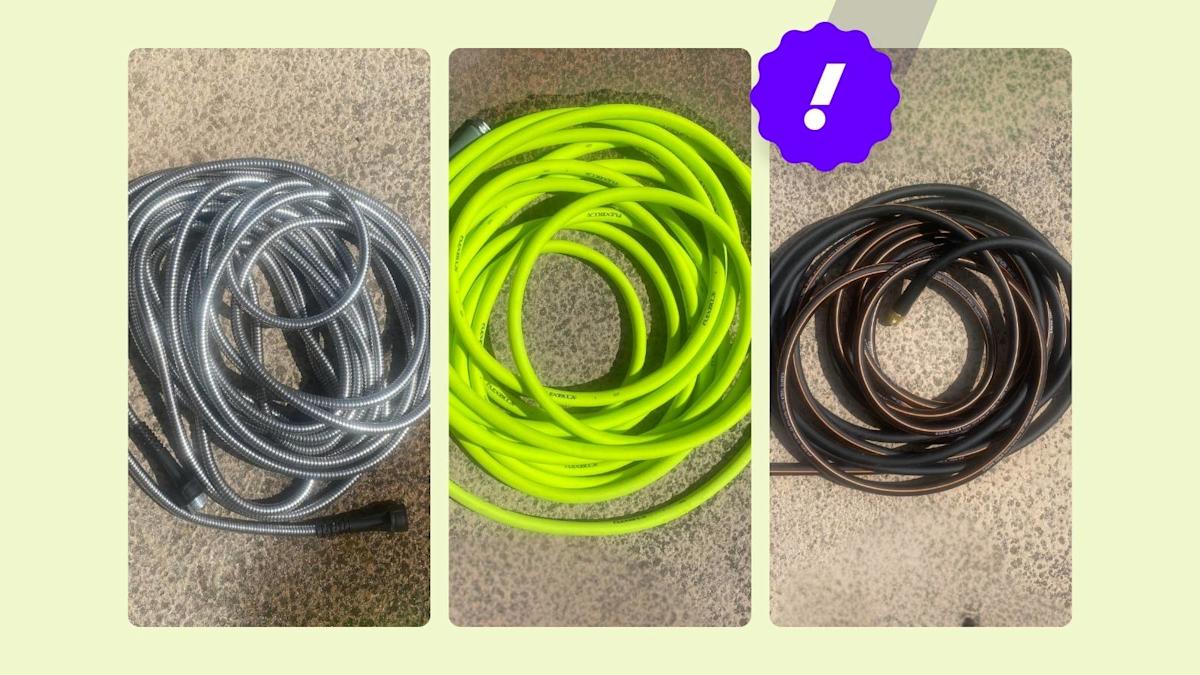
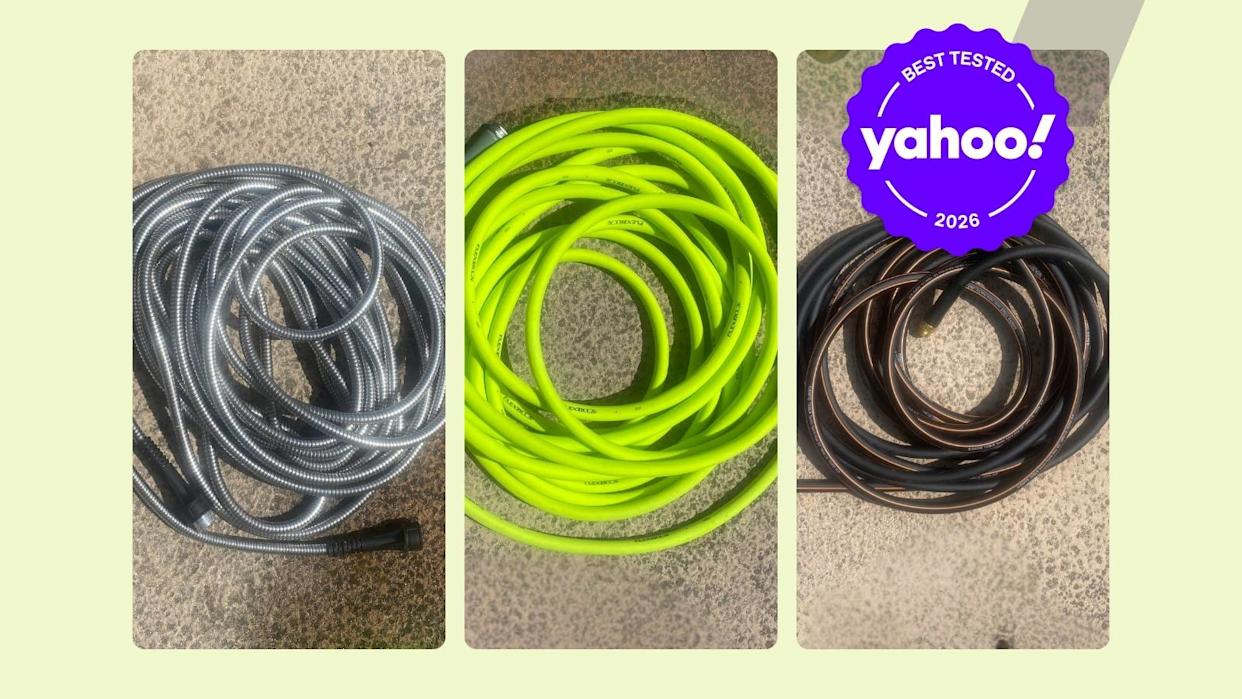
Our resident gardening expert tested 10 options to find the best garden hose of 2026 for any size yard. (Daryl Beyers/Yahoo)
The best garden hose effectively delivers water from its source, the spigot, to wherever you want it, such as flower beds or patios. While every homeowner needs at least one hose, those with larger or more elaborate gardens may need several. Now, not all hoses are created equal, and new materials and designs have made buying the right hose more complicated. Today, you can still find traditional flexible hoses made from rubber/polymer, but there are also latex/fabric hoses — some that expand and others that don’t — to consider. There are even stainless-steel hoses that twist and flex like snakes.
I’ve been dragging garden hoses across lawns for 50 years. In fact, one summer I hand-watered a 2-acre garden with just strategically placed hoses. What I found, as with everything I do as a professional gardener, is that the right tool for the job — whether it’s a big-ticket item like a lawn mower or something as small as gardening gloves — makes the task easier, and even enjoyable. To find the best hoses for 2026, I pushed these models to their limit. I kinked and knotted them, yanked them through dirt and even tried to puncture them. These product recommendations will help you make the right decision when it’s time to buy a new garden hose.
Best garden hoses of 2026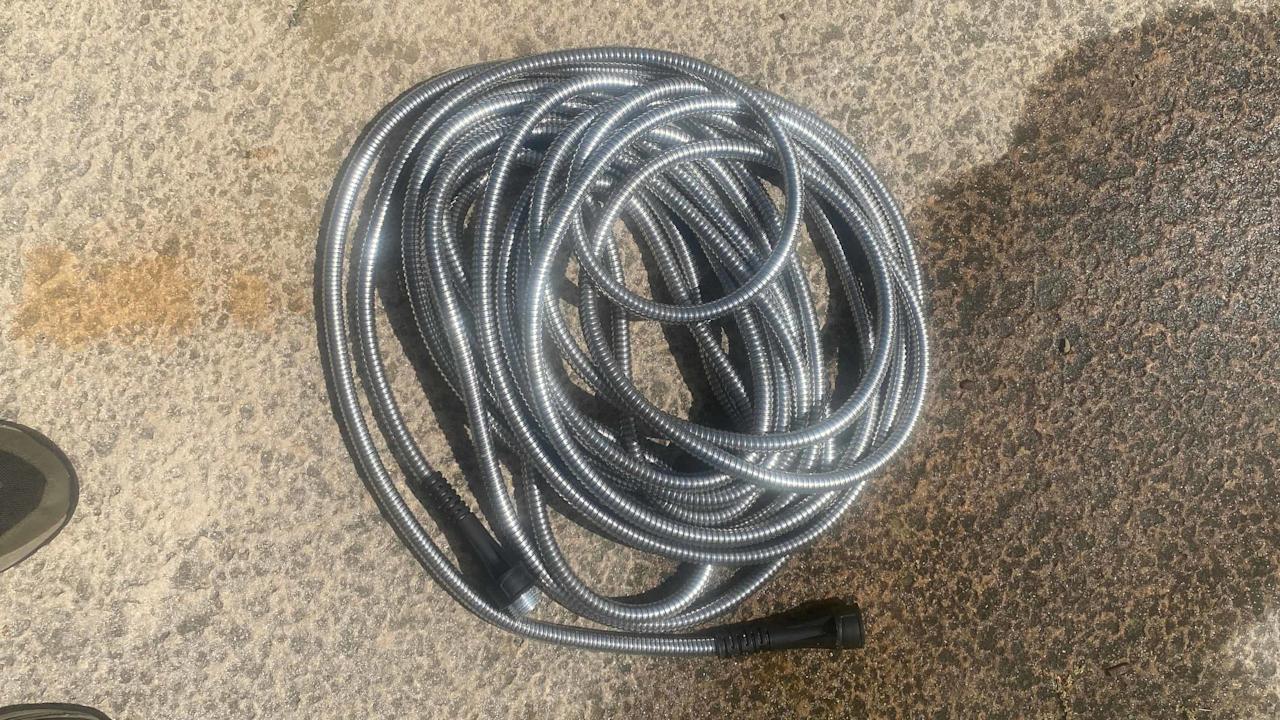
Daryl Beyers/Yahoo
Lengths available: 3, 10, 25, 50, 75, 100 and 150 ft. | Material: Stainless steel | Weight: 3 lbs. (50 ft.) | Non-kinking: Yes
The name says it all with this burst-proof, kink-proof and knot-proof hose from a company that claims its products are “virtually indestructible.” Gardening and home chores don’t typically call for commercial-grade products, but this hose provides more than enough toughness and ease of use for any home or garden task.
The snakelike stainless-steel scales help this hose coil much more smoothly than other options. While the diameter is relatively small, that’s because the stainless steel doesn’t need to be as thick as typical polymer hoses. As for durability, it was impossible to puncture this “bionic” beast in my testing. That combination of toughness and ease of use makes it the obvious winner.
I found that you can use this hose for hot water applications, but keep it out of the sun on a hot summer’s day, as the steel heats up quickly. That said, I don’t imagine anyone will leave it lying around because it’s so easy to coil and stow. Putting it away is a snap.
ProsExtremely durableEasy to coil and stowAffordableDoes not kink or knotConsSteel can get hot in the sun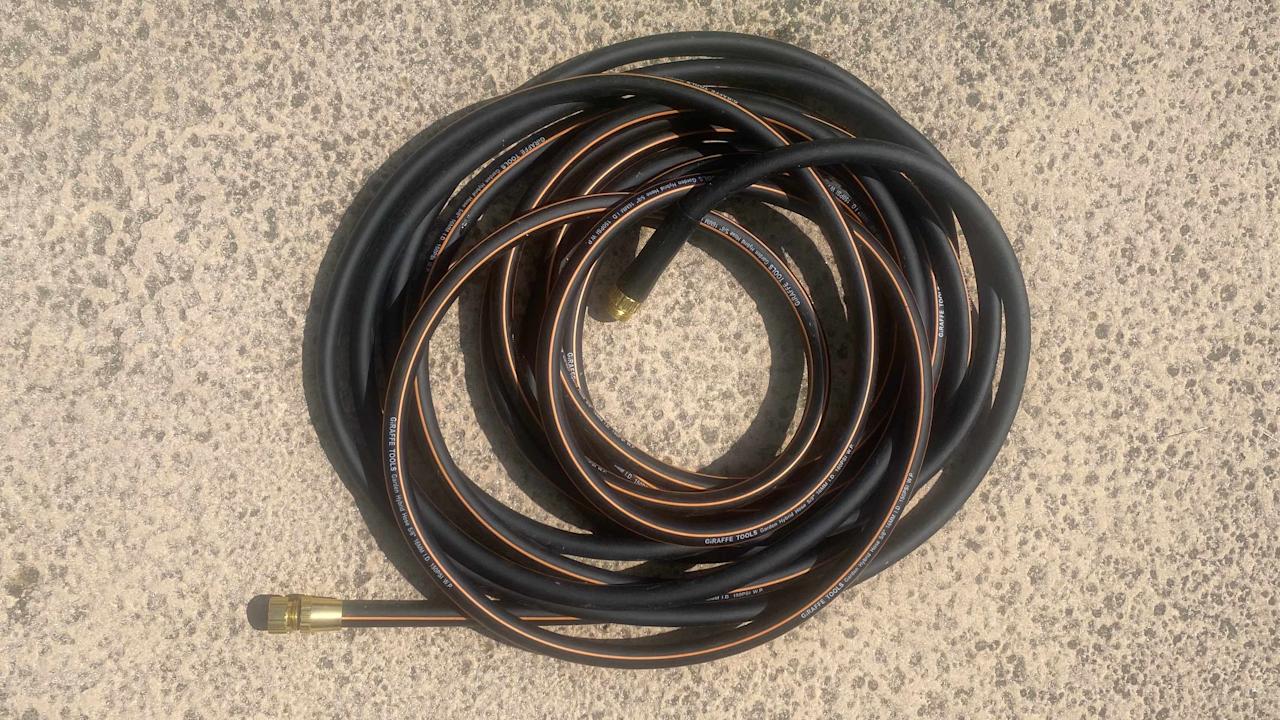
Daryl Beyers/Yahoo
Lengths available: 2.5, 3, 5, 10, 15, 50, 75 and 100 ft. | Material: Polymer | Weight: 7 lbs. (50 ft.) | Non-kinking: No
Coming in a close second to my top pick, this hose is easily the best among the flexible hoses I tested. It looks, feels, and functions like a traditional polymer hose, making it the perfect choice for any garden or garage hose reel. A medium weight, coupled with exceptional flexibility, makes it easy to wield, but it tends to kink when not under pressure. When pressurized, it did better, uncoiling without hassle.
I was most impressed by the sturdy, easy-to-grip and -twist brass fittings. It comes with a 2-year limited warranty but is sure to perform for years if properly cared for. The only drawback is that I found it to have fairly low pressure. But unless you are mixing concrete or regularly drive a truck over your hoses (and I hope that’s not the case!), this one will get the job done.
ProsQuality brass fittings, available with both male-to-female and female-to-female connectionsEasy to hold and useAffordableConsTends to kinkLow pressure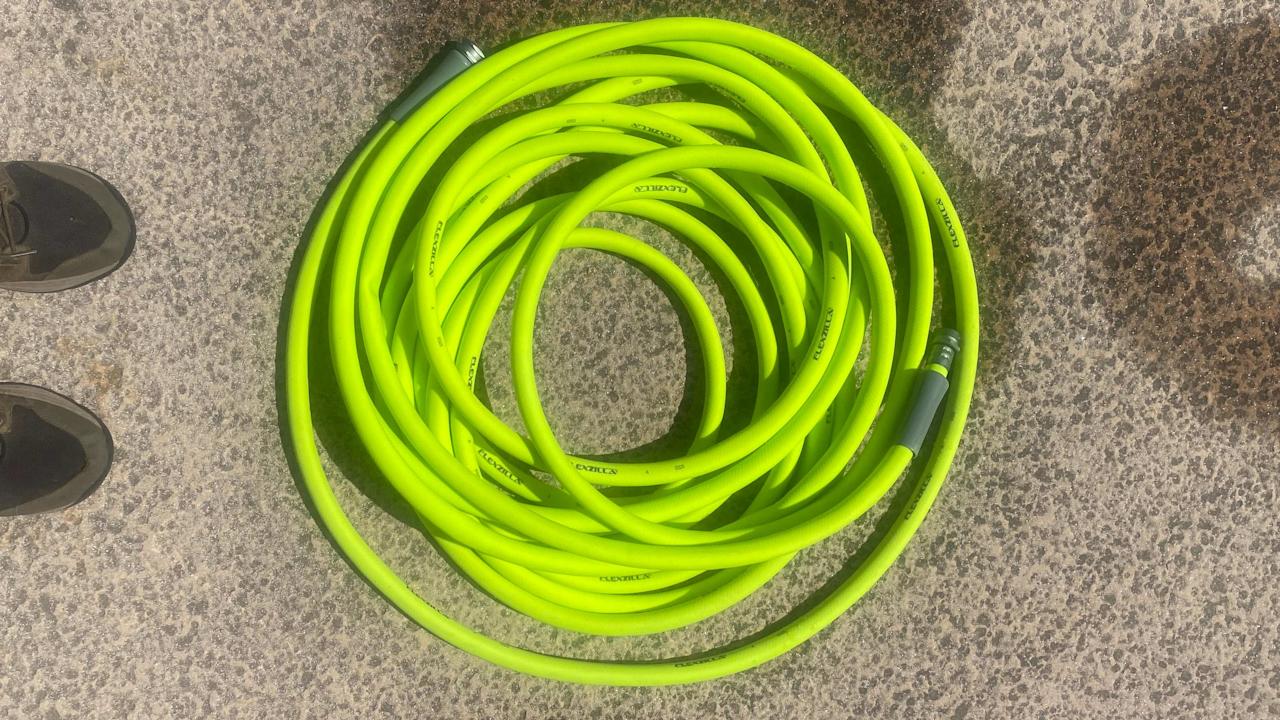
Daryl Beyers/Yahoo
Lengths available: 3, 5, 10, 15, 25, 50, 75 and 100 ft. | Material: Hybrid polymer | Weight: Unlisted | Non-kinking: Yes
Selling for $10 to $15 less than similar hoses, the Flexzilla is the perfect choice for homeowners on a budget. The “kink-free” claim is legit, as the hybrid polymer flexes but does not fold — though it can knot when uncoiling.
I found it easy to maneuver despite the deceptive heft. The squishy hybrid polymer is soft to the touch and is probably why this hose can handle only 150 psi of pressure, making it best for light chores around your yard. (I would not use it for pressure washing.)
I enjoyed the fluorescent green look, a trademark for Flexzilla. The vibrant color made the hose easy to spot in shrubbery or the lawn, but it gets dirty after a few uses. Lower-quality fittings of plastic and aluminum keep costs down, but make this hose less durable than others. It does, however, come with a limited lifetime warranty.
ProsComes in a wide range of sizesBright color makes it easy to spot in the lawn (but available in other hues too)Easy to hold and useAffordable, especially compared to hoses made of similar materialsAmazon No. 1 bestsellerConsLow pressureLower-quality fittings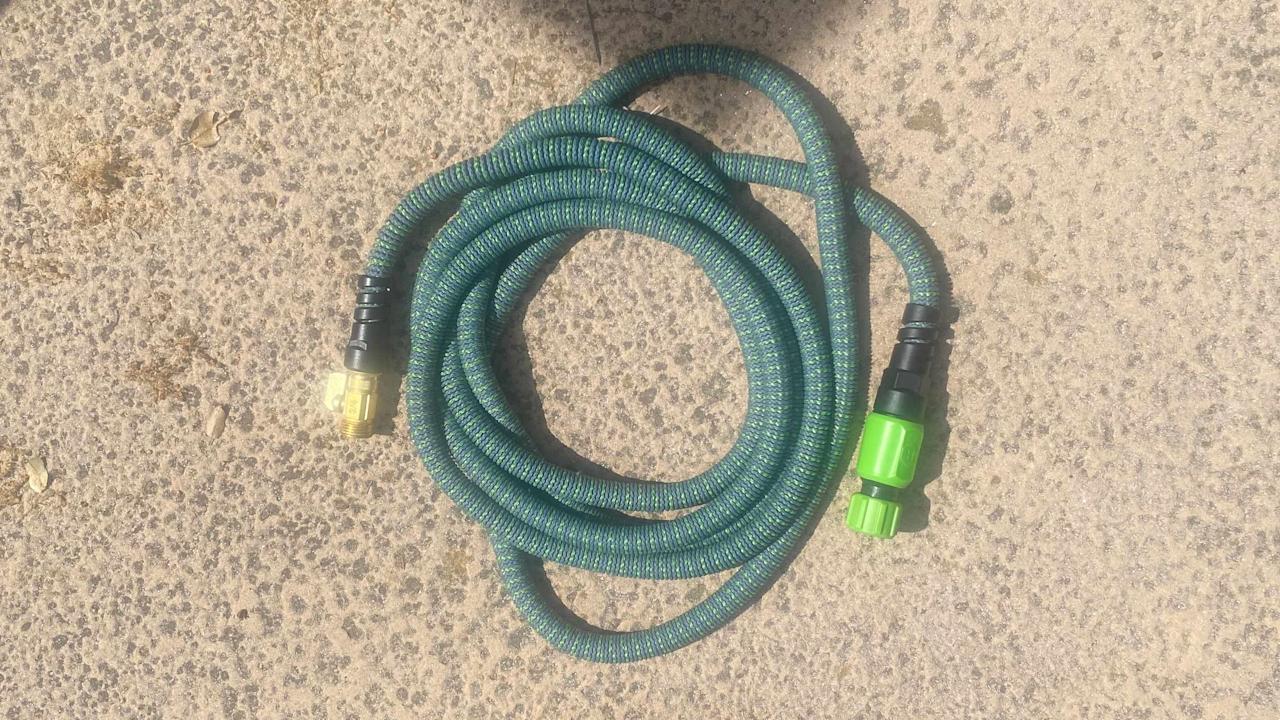
Daryl Beyers/Yahoo
Lengths available: 25, 50, 75, 100 and 200 ft. | Material: Latex, nylon | Weight: Under 3 lbs. (50 ft.) | Non-kinking: Yes
The first time I used an expandable hose, I was amazed as I watched it expand from a 12-foot-long limp coil to a 50-foot fully functioning hose. Ease of use and storage are the hallmarks of expandable hoses, and this one tops the charts. I appreciated the added value of the brass shutoff valve included on the business end, though the fitting at the water source is made mostly of plastic. Both fittings, however, are ergonomically designed for comfort.
Punctures can be a problem with expandable hoses, as they are typically made with a latex inner hose surrounded by knitted cloth. But this one’s kink-free performance when pressurized — it can fall into loose knots when not under pressure — makes up for it. I simply tossed the Hydrotech into a bucket or bag after draining the water out, and it was ready to go when and wherever I needed it next.
ProsLightweightShrinks down for easy storageBrass shutoff valveExtremely easy to use and haulConsFabric cover traps dirtCan become knottedFactors to consider when choosing a garden hose
Here’s what to look for when shopping for a hose, whether it’s a replacement or upgrade:
Length: Most hoses come in lengths between 25 and 100 feet, though you can find outliers depending on the brand. To figure out the best size hose for your yard, all you have to do is measure the distance from your spigot to the farthest point where you’ll want water.
Hose weight and strength: These are some of the most important factors to weigh when making a hose purchase. The stronger the hose material the heavier it will be, so there is a balance to be struck between the two.
Material: Fabric and latex hoses (usually labeled as “expandable”) are lightweight, but may puncture easily. Durable polymers are less likely to spout leaks, but weigh more and may be harder to coil up and stow. No matter what material you choose, look for options that are kink- and knot-free. There is nothing more frustrating than a hose that continually gets twisted up.
Fittings: Finally, pay attenion to the quality of the fittings. Cheap, plasticky fittings may lead to leaks down the road. Brass is preferred. Keep in mind that pricing doesn’t necessarily correspond to how a hose performs. For example, an expensive hose may be strong but unwieldy, and a less expensive hose may be light and kink-free.
How we tested garden hoses
After researching nearly 100 hoses, Yahoo home editors narrowed down the testing pool to 10 options, focusing on high shopper ratings and reputable tool brands. Then they sent the hoses (all in 50-foot lengths for easy comparison) to me, to use in my own yard. I assessed each hose on design and quality, general performance and maintenance needs. When testing for ease of use, I noted hose flexibility and how well fittings worked when connecting the hose to the spigot and nozzle. Performance was ranked based on the following tests:
“Drip, drip” test: After using each hose, I tried to puncture a hole in it to test for durability and potential leaking. Those that could not be punctured received the highest rating.
“Knot for me” test: While the hoses were under pressure, I tried to tie each one into knots and kink it. I repeated this test once there was no pressure inside the hose
“Twister” test: I coiled and uncoiled each hose before and after use. I noted if it rolled back easily or maintained its coiled shape, making it hard to use.
Finally, I considered long-term care such as regular maintenance concerns. And I noted how easily the hose got dirty, and if it stayed dirty.
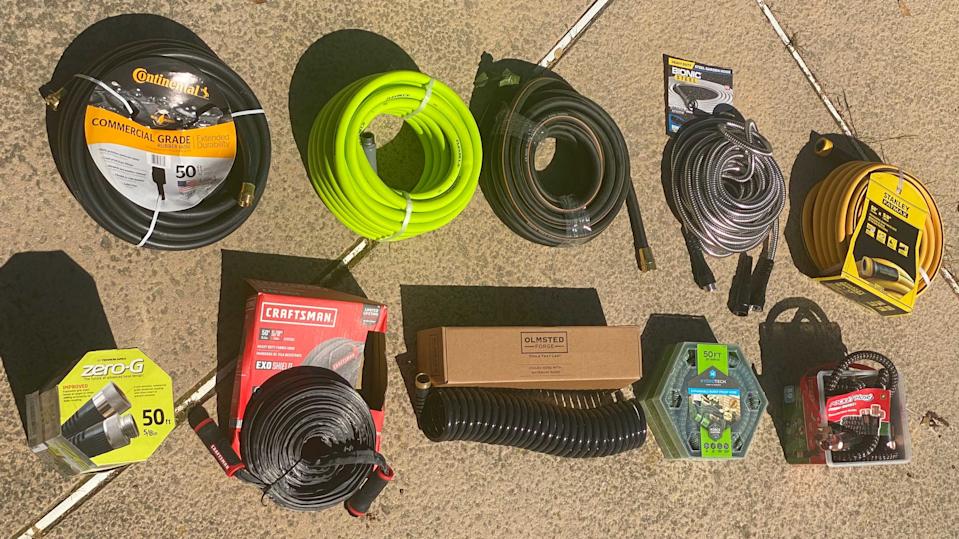
Once I got the hoses in my yard, I was on a roll. (Daryl Beyers/Yahoo)
Other garden hoses we tested
Continental Commercial Grade Hose: This is heaviest hose I tested, and as such, it scored low on ease of use. Performance was good, but a heavy hose is hard to coil, and this one was no different. The fittings are brass, so I had no worries about leaks, but in the end, I’d install this hose on only a retractable wheel near the driveway.
Stanley Fatmax Garden Hose: This option from the well-known tool company is heavy, but more flexible than it appears. The fittings are plastic around aluminum making them comfortable to twist, but less durable than brass. It scored low on performance because it experienced lots of kinking and knotting while I wrestled it into a loose coil for storage.
Craftsman ExoShield Heavy Duty Fabric Hose: Fabric hoses are lighter than rubber/polymer hoses, but can easily kink and knot. Such was the case with this hose. The design of the fittings is also an issue — they were a weak link and leaked from the start. The plastic that covered the metal slipped off on the first use and wouldn’t stay on again.
Teknor Apex Zero-G Fabric Hose: This hose is made with heavier fabric, which helps it reach a 600-psi rating. However, it suffers the same problems of kinking and knotting similar fabric hoses exhibited during use. It was also difficult to drain completely, as the hose collapses when pressure is released.
Pocket Hose Expandable Hose with Copper Bullet Nozzle: This hose comes with a nozzle, which is nice but makes the price higher. It performed well in my testing because it’s light and will not kink, but I had trouble with knotting even under pressure. It’s a decent hose, but you’ll want to buy a better nozzle.
Olmsted Forge Coiled Hose with Water Wand: This is a lightweight polymer hose best for watering plants on a deck. It too comes with a nozzle, plus a short water wand, which raises the price. The quality is good, but it is not as versatile as the other hoses tested.
Garden hose FAQsHow do you repair a garden hose?
It may be difficult to fix a damaged fabric hose, but don’t throw away a punctured polymer hose! You can repair it with an inexpensive garden hose mender (I like this one from Gilmour). First, cut out the damaged section with a hand pruner or box cutter, making two clean ends. Next, loosen the screws on the clamps with a Phillips head screwdriver, then push each hose end into the barbed fitting in the middle. Tighten the screws on the clamps, and your hose is back in business.
Are Flexzilla garden hoses worth it?
According to my testing, yes, these hoses are worth the money. Although the fittings are lower-quality than some competitors, the price tag for this brand is also less. In my testing, I appreciated how easy the hose was to hold and its resistance to kinking. I consider it solid quality for the price, which is why I named it our top value garden hose.
We received complimentary samples of some products and purchased others ourselves, but we reviewed all products using the same objective criteria.
Comments are closed.