
 4 min read
“A cottage, a house, a castle doesn’t mean peanuts, to me, unless it has a garden,” the photographer Cecil Beaton told his old friend Patrick O’Higgins in a story for House Beautiful in 1979. And it’s sometimes the buildings nestled among all the greenery that we find the most transporting: vine-draped pergolas, sun-dappled poolhouses, glass greenhouses, plant-filled conservatories, and more. All you need is a place to perch, take in a spot of sunshine, and admire everything flowering and leafing out around you.
The archives of House Beautiful are a treasure trove of garden buildings. Read on to see the most spectacular—and maybe find some inspiration for your own outdoor paradise.
Lath House (1967)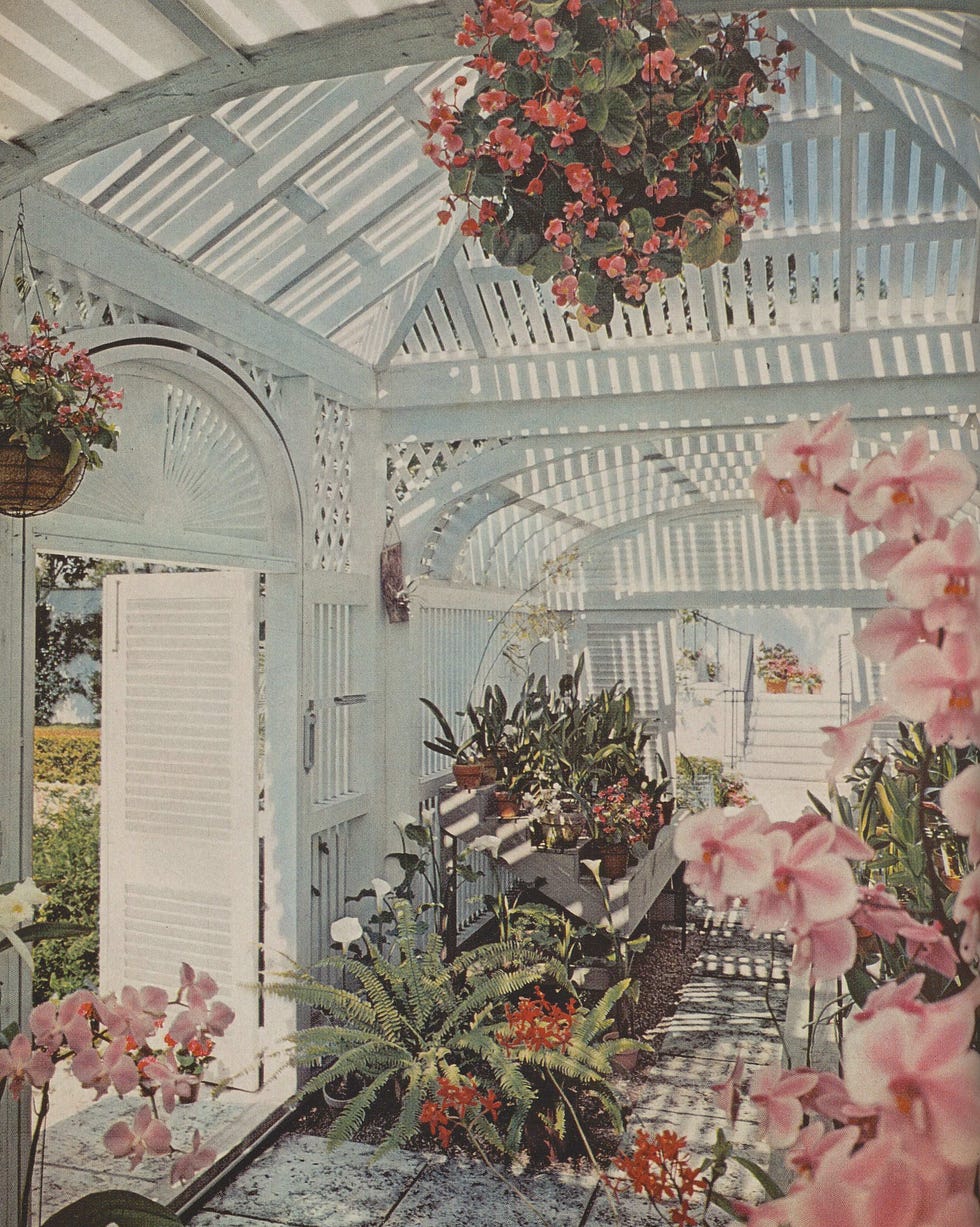 Ezra Stoller
“Orchids, begonias, ferns, and lilies thrive in the light shade of lath,” wrote Calkins. “Exceptional beautifies, such as the orchid Phalaenopsis schilleriana in foreground, are displayed in the main house at their peak of bloom. During the windy season, the inside of the lath house is lined with polyethylene film to shelter the plants.”
 Ezra Stoller
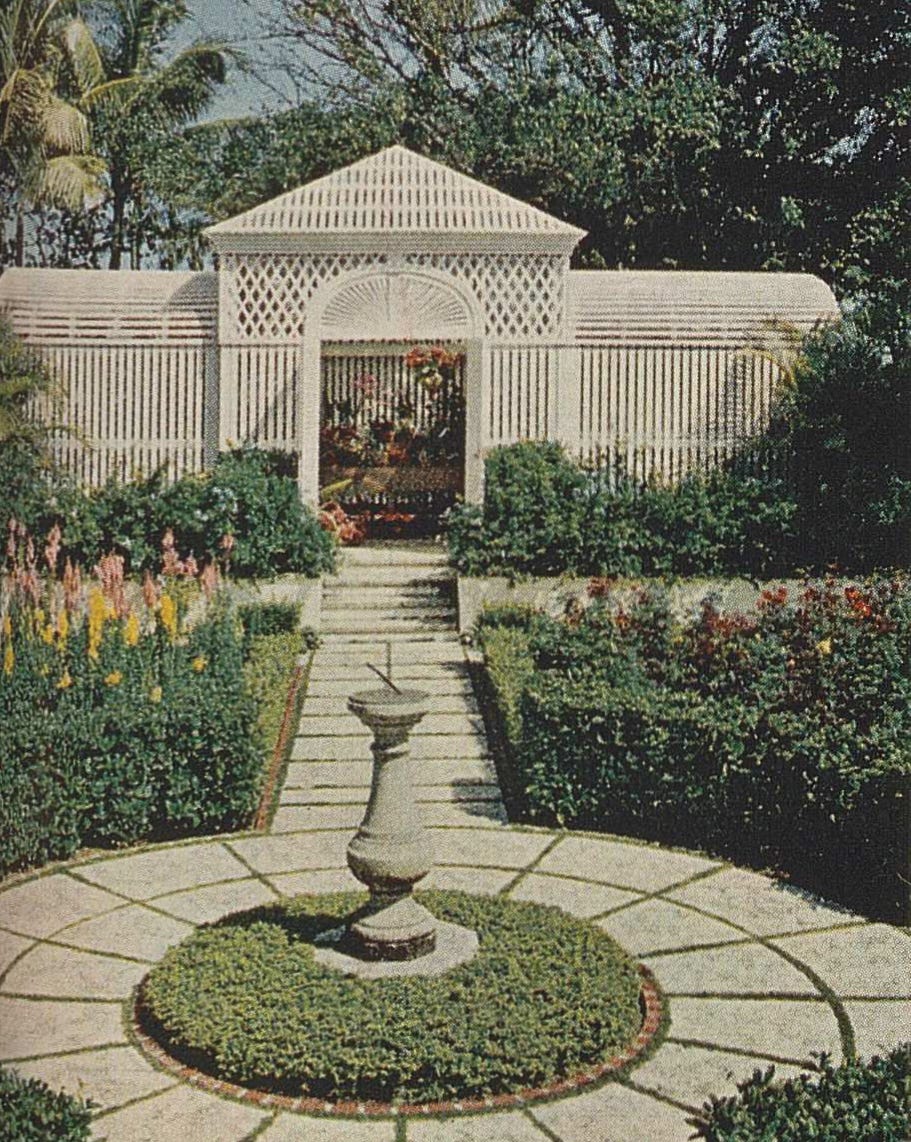
Calkins described the landscape surrounding the lath house: “Formal beds are outlined with clipped hedges of box and orange jessamine to give the sense and form of a garden even when the flowers are gone. Under the sundial is a planting of Malpighia.”
Tucked into the back of a cutting garden at the home of Houghton P. Metcalf in Hobe Sound, Florida, this plant-filled slatted structure was featured in the January 1967 issue of House Beautiful.
“The lath house is a haven for plants that call for lots of light and air, but also need protection from the sun,” wrote Carroll Calkins in the accompanying piece.
Flowering Pergola (1989)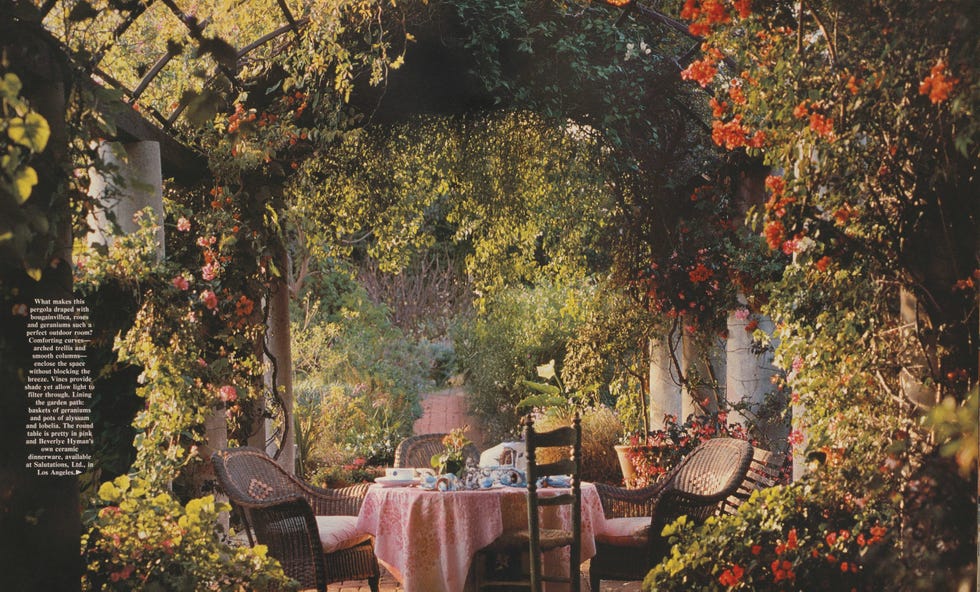
Elyse Lewn
Draped in bougainvillea, roses, and geraniums, this incredible pergola in the Montecito, California, home of artist Beverlye Hyman was featured in House Beautiful’s June 1989 issue.
“I moved from L.A. for this peaceful country feeling,” she told our editors. “Comforting gives—arched trellis and smooth columns—enclose the space without blocking the breeze. Vines provide shade yet allow light to filter through. Lining the garden path: baskets of geraniums and pots of alyssum and lobelia.”
Urban Rooftop (1868)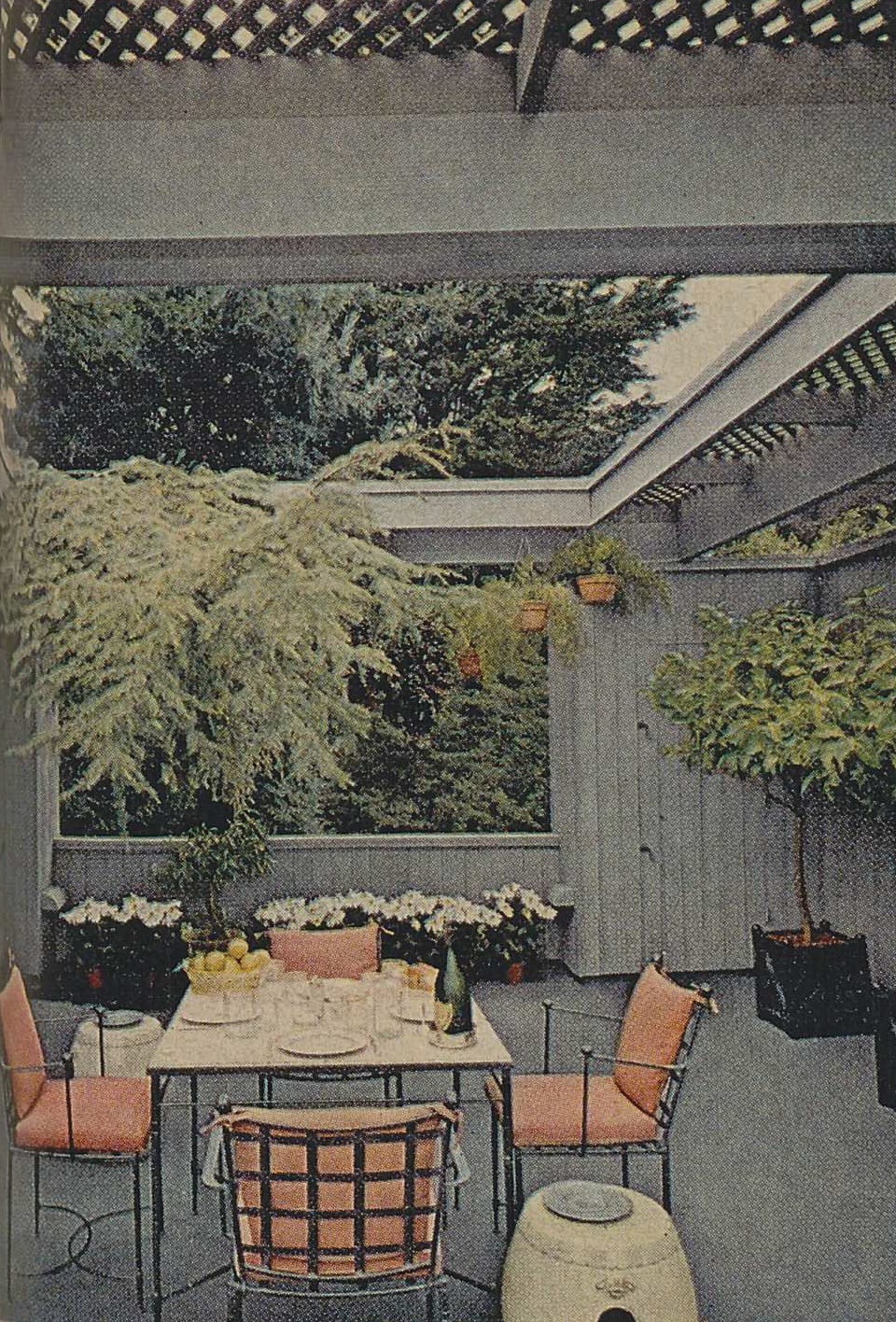
House Beautiful Archives
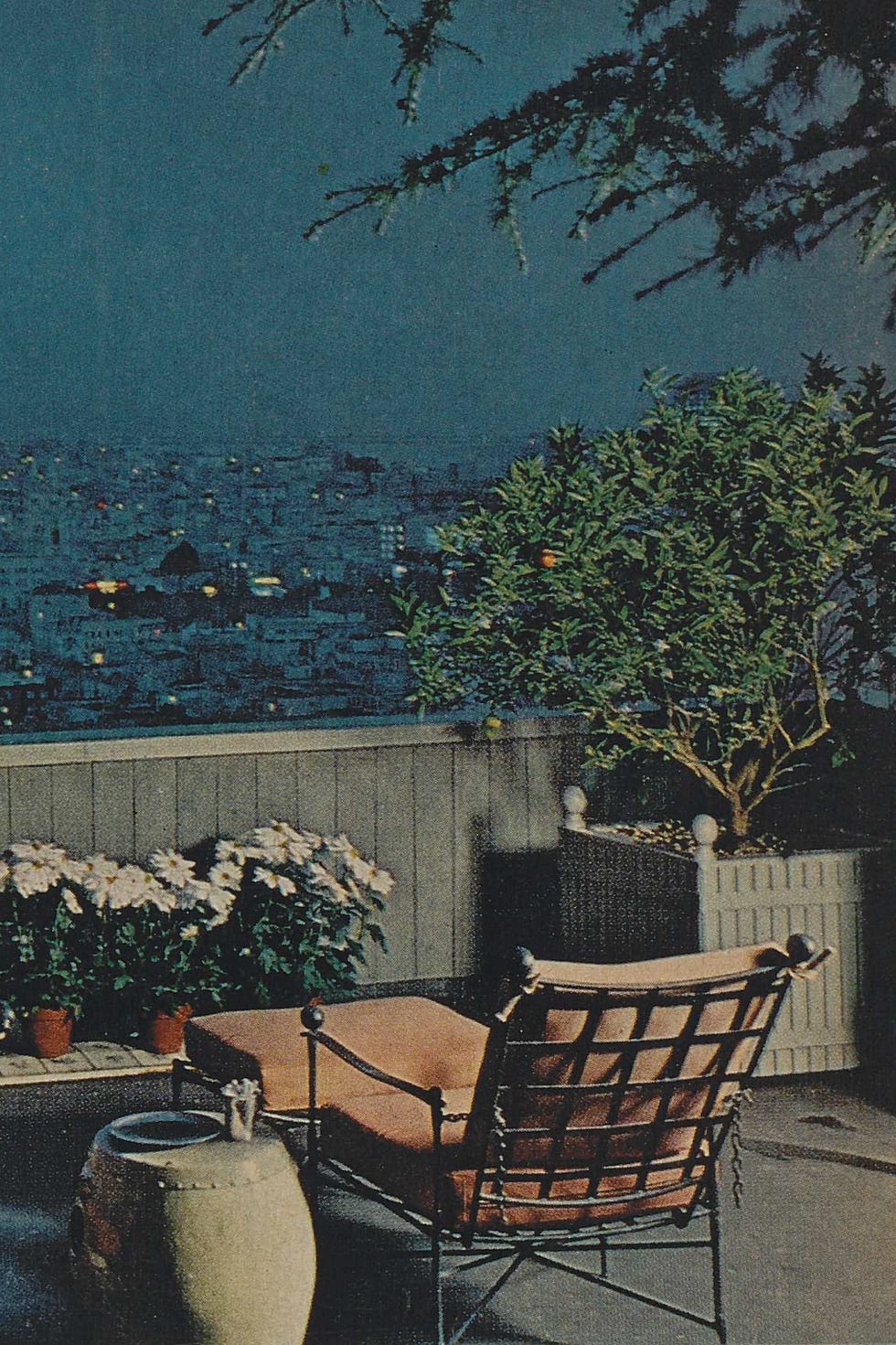 House Beautiful Archives
On the front side of the terrace, a city view.
Designer Anthony Hail transformed the entire rooftop of his five-story townhouse in San Francisco, featured in our August 1968 issue, into a usable terrace.
“Embowering redwood trees in the background gives terrace loungers a sense of closeness to the forest, even while the busy city is a mere glance away,” wrote an editor. “Deck, woodwork, and treillage are painted an unobtrusive gray-green, a color that blends with the terrace greenery and surrounding woods and does not distract from the city view.”
Pavilion-Guesthouse (1970)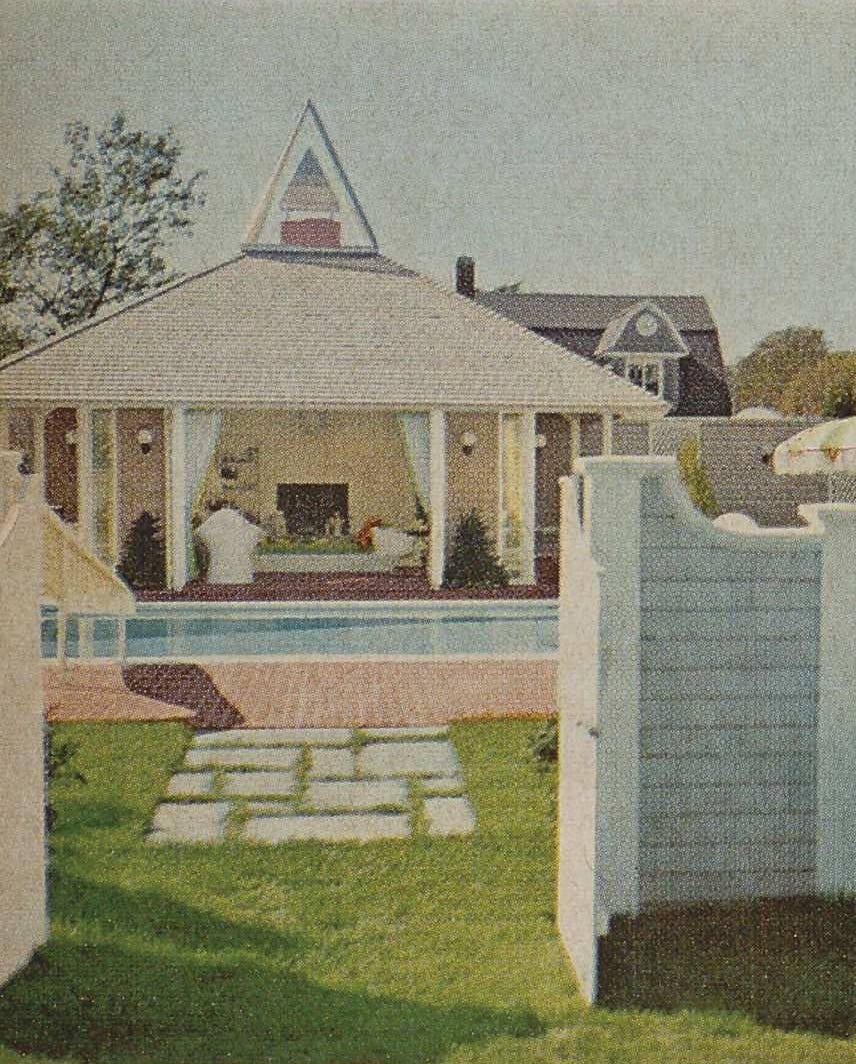 Tom Wier
The brick floor, an extension of the poolside terrace, provides rustic texture underfoot, while a Plexiglass cupola lets in light.
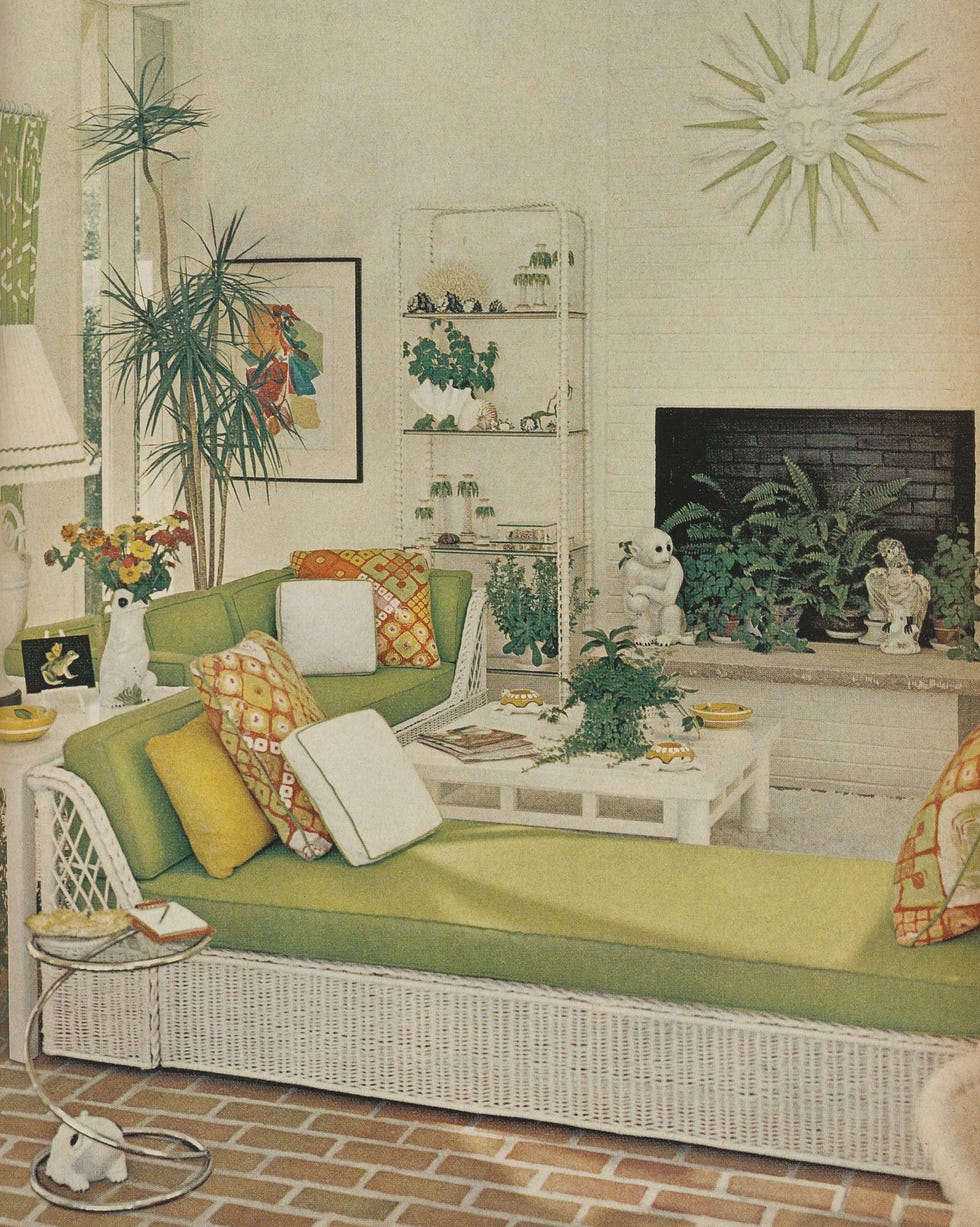 Tom Wier
Ben Cook of Trade Winds designed the loggia in lime green and white, a favorite color palette of the homeowner.
Working with local architect Ed Bullerjahn, the Wellman family in Marion, Massachusetts, decided to go all in with a 40-foot pool and accompanying pavilion that they could use all year. A long, covered hallway with changing rooms connects the main house to the pavilion, decorated with comfortable seating.
Countryside Conservatory (1990)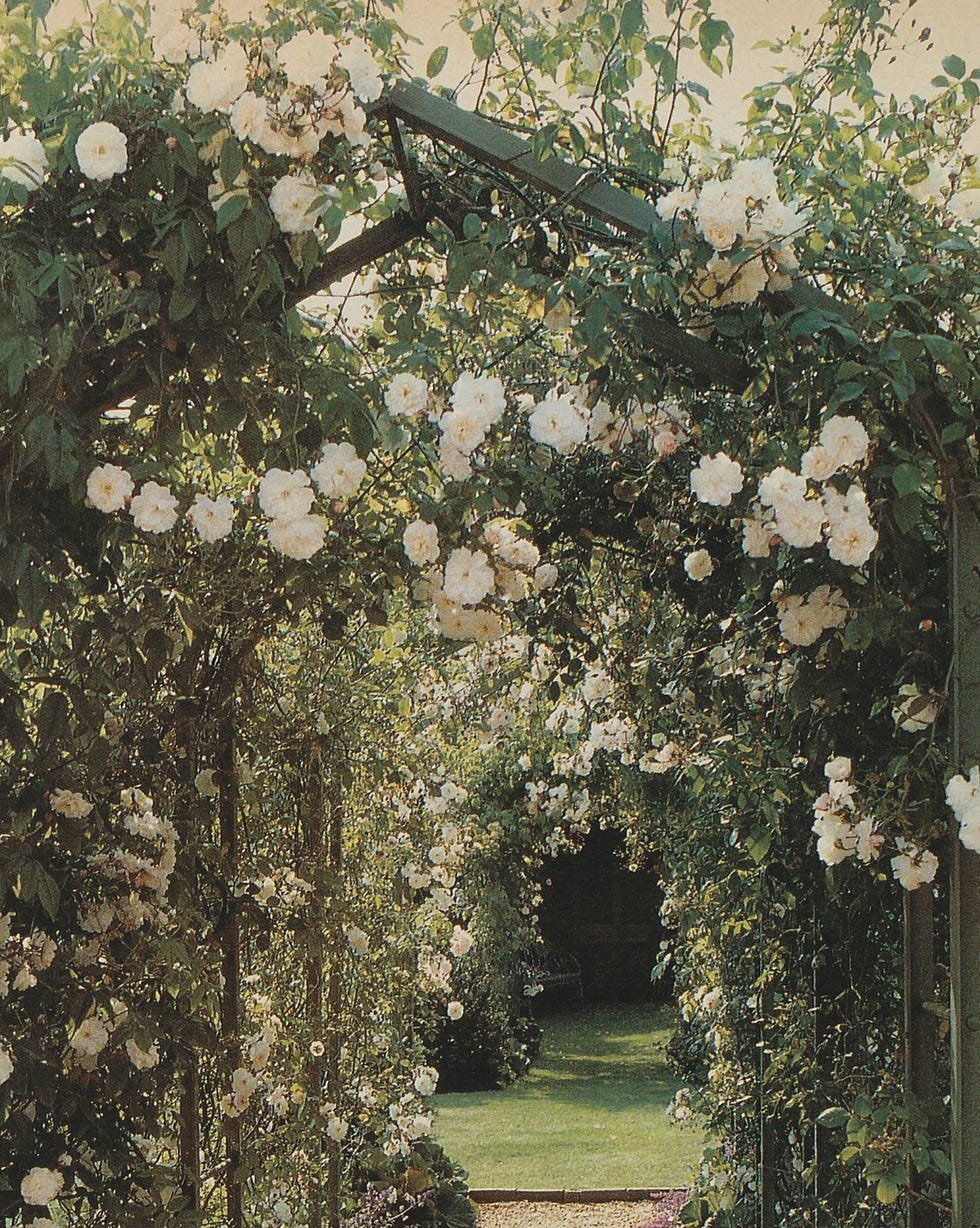 Michael Dunne
A pathway through the garden is draped in roses.
 Michael Dunne
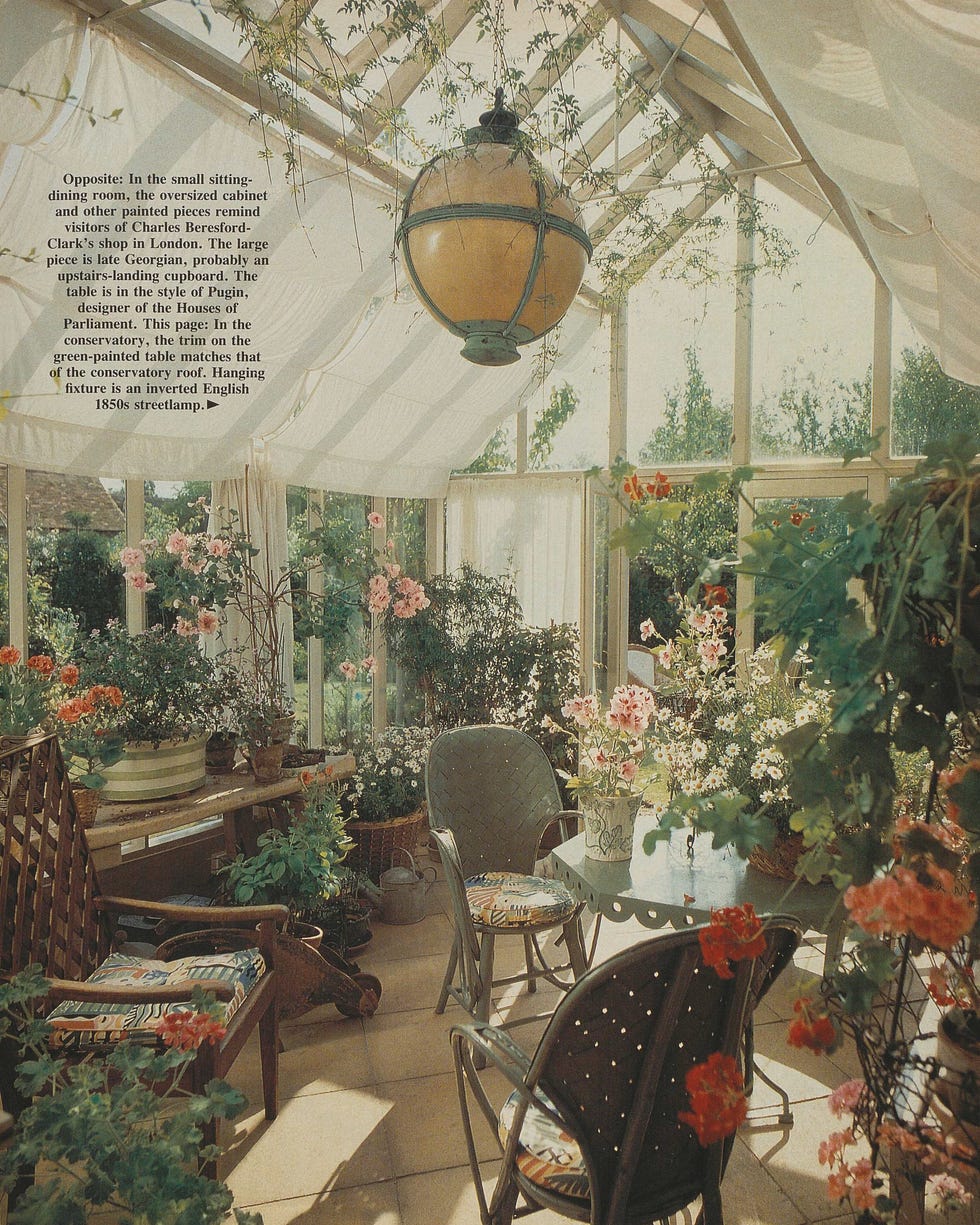
A metal table was painted green to match the roof.
When a London antiques dealer went looking for a pre-fabricated conservatory to adorn his cottage in Arundel, he found the results “too elaborate—overly Gothic.” Featured in the July 1990 issue of House Beautiful is the one he designed and had built by a local craftsman.
Canopied Courtyard (1967)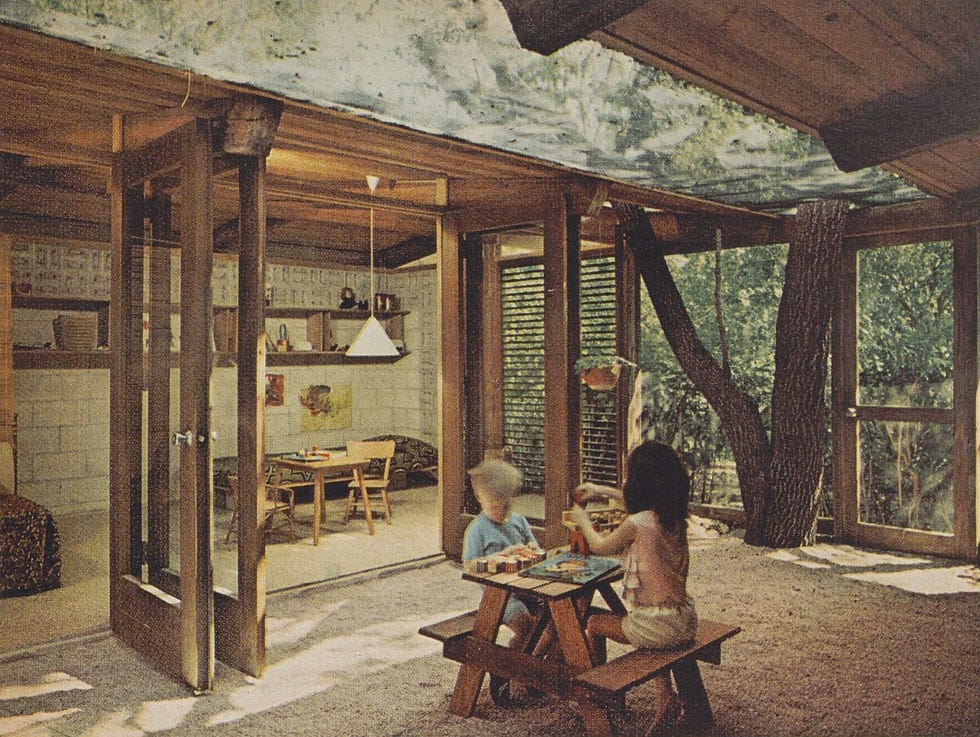 Ezra Stoller
“The screen-enclosed play court more than doubles the space of the children’s pavilion,” Delong wrote. “The roof structure and screening were built around an existing oak tree.”
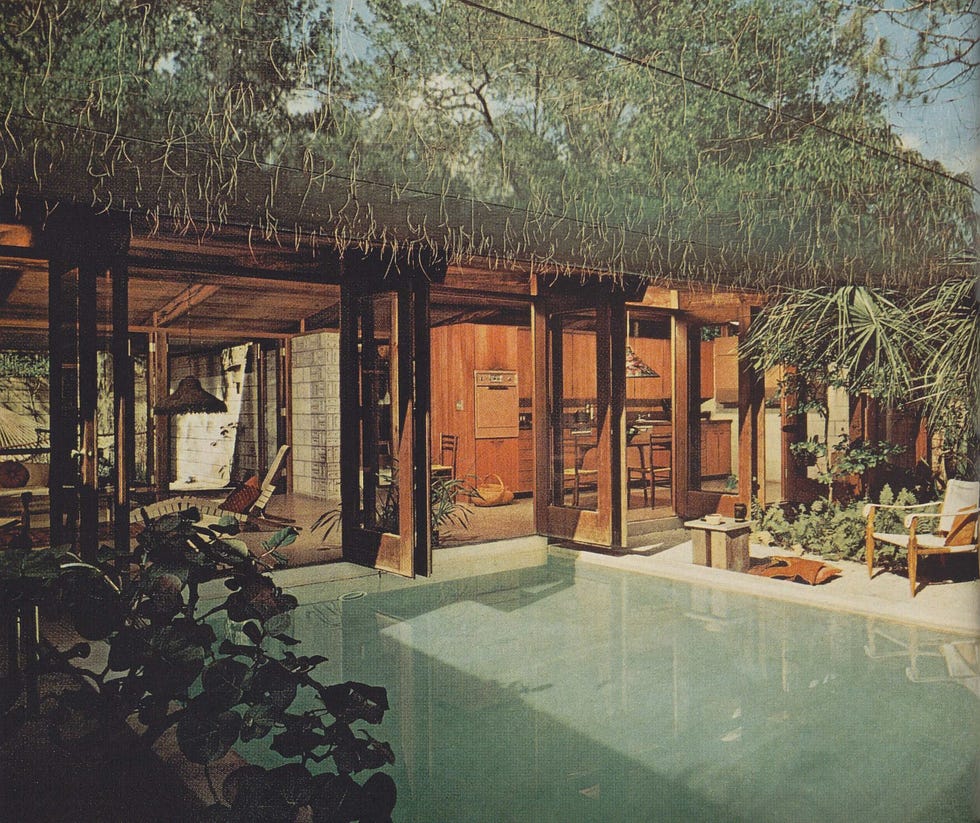
On a 50-foot plot in Coconut Grove, Florida, architect George F. Reed created a home that was open to—and sheltered by—a thick canopy of oak, pine, palmetto, and cabbage palms, featured in our July 1967 issue.
 Ezra Stoller
Glass doors along one wall of the living room open directly over the plunge pool, which Delong describes as a “miniature tropical lagoon.” The owners could literally step from the house into the water.
James Delong described the open courtyards between pavilions, intended as usable rooms: “The airy, graveled courts are covered with canopies of fiber-glass screening to thwart insects and falling leaves. These shimmery, outdoor ceilings create a soft filtering of aqueous light throughout the compound, and even allow the gentlest breezes to wash the interior spaces with balms of cooling air. The continuous glass doors, protected by wide overhangs, need be closed only during wind-driven rainstorms.”
Japanese Conservatory (1979)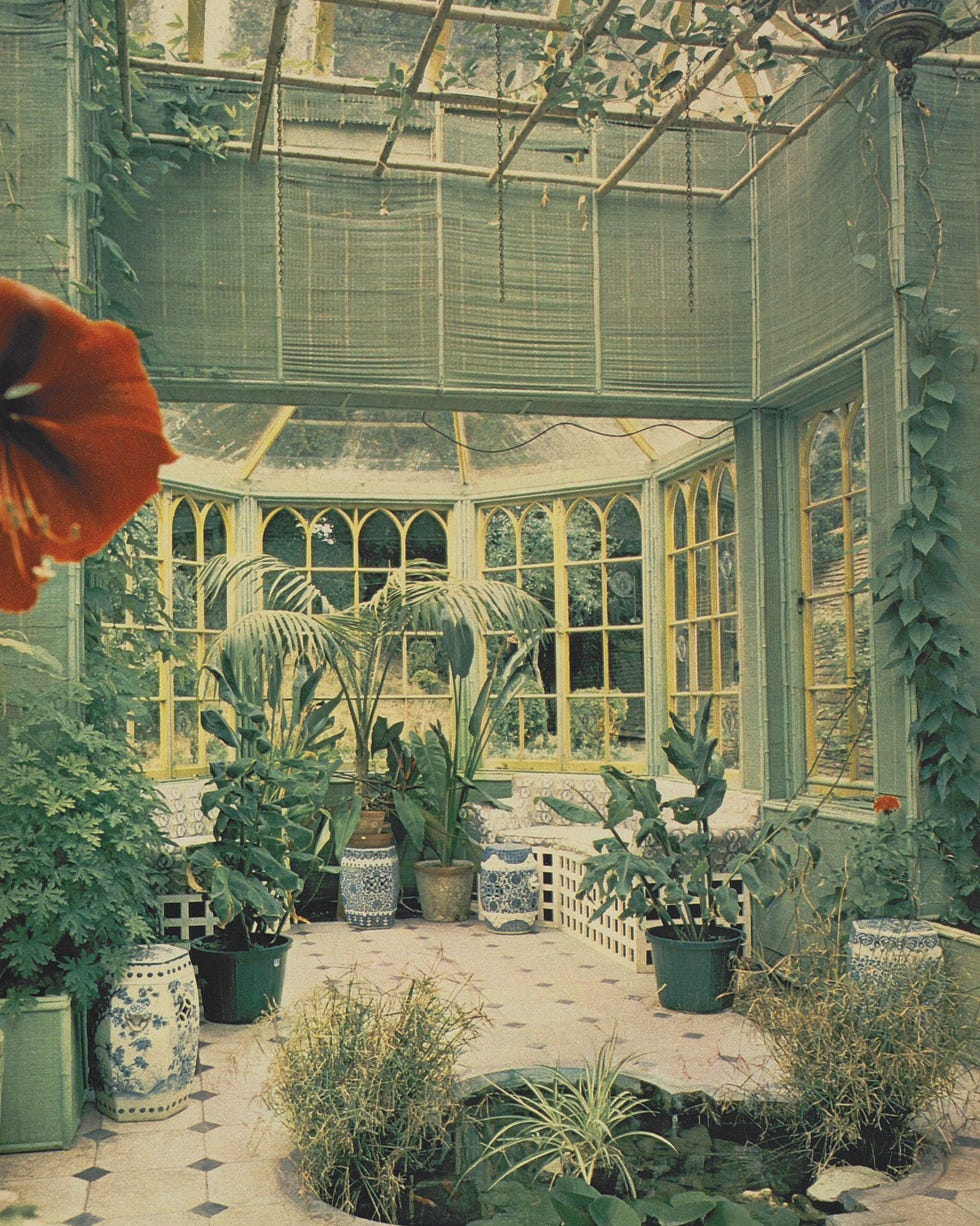 Michael Dunne
The Japanese conservatory at Reddish House in Salisbury UK.
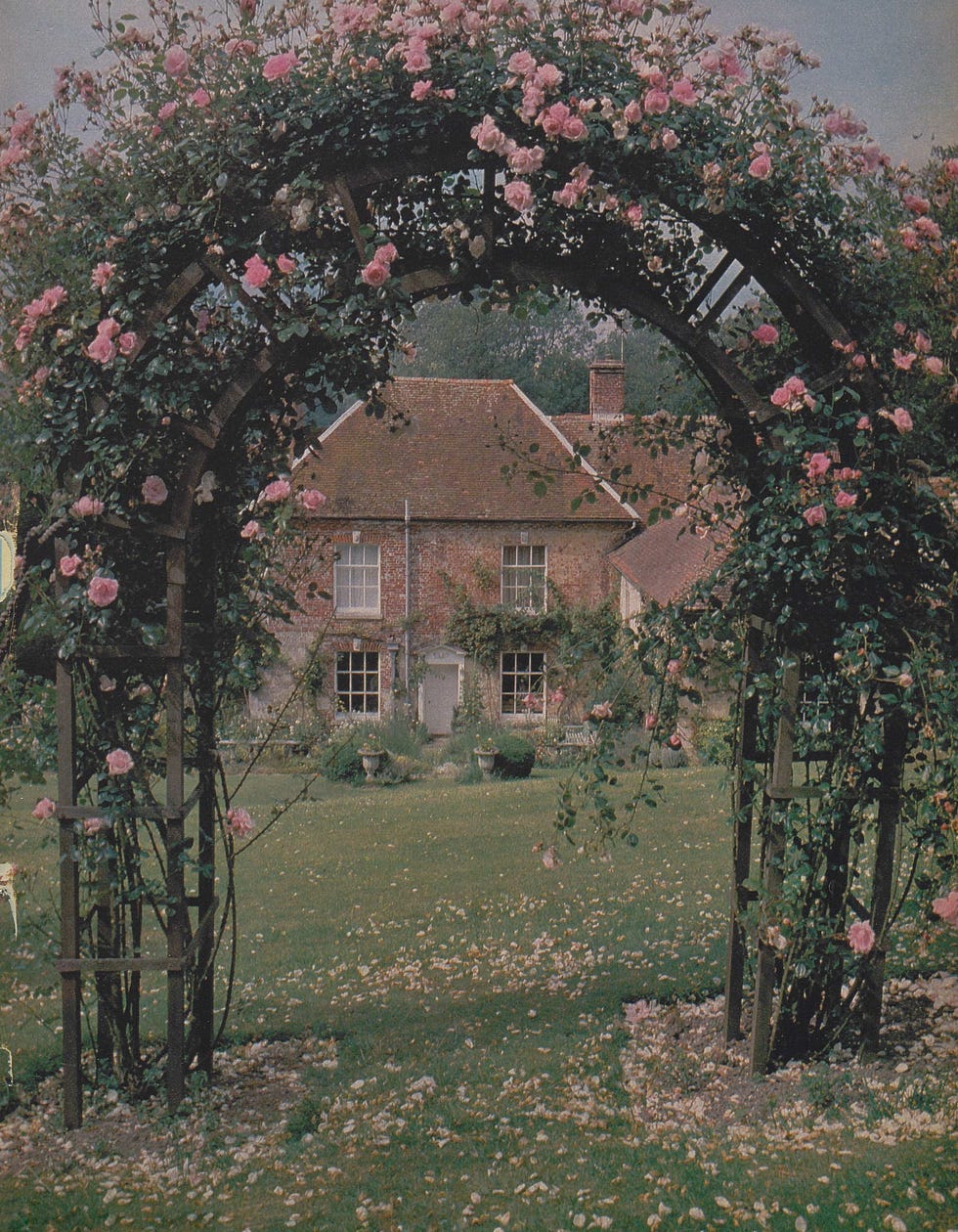 Michael Dunne
An arched trellis, adorned with roses, frames a view of the main house and a terrace garden.
It was for his mother that the famed designer and photographer Cecil Beaton built this lavish Japanese conservatory. Connected to her bedroom at Reddish House, the family home in Salisbury, UK, the room was described by Patrick O’Higgins in the June 1979 issue of House Beautiful as “a folly of bamboo, rattan, and gothic arched windows.”
The home was known for its myriad gardens, which Beaton tended to and adored, telling Higgins, “My garden is the greatest joy of my life, after my friends. Both are worth living for!” The home’s most recent owner, Lucy Yeomans, gushed about how one garden frames the view of another, in a 2021 feature for HB: “My brother, who is an arborist, said, ‘I feel like it is a photographer’s garden…’ It’s almost a series of vignettes.”
Indoor Pool (1968)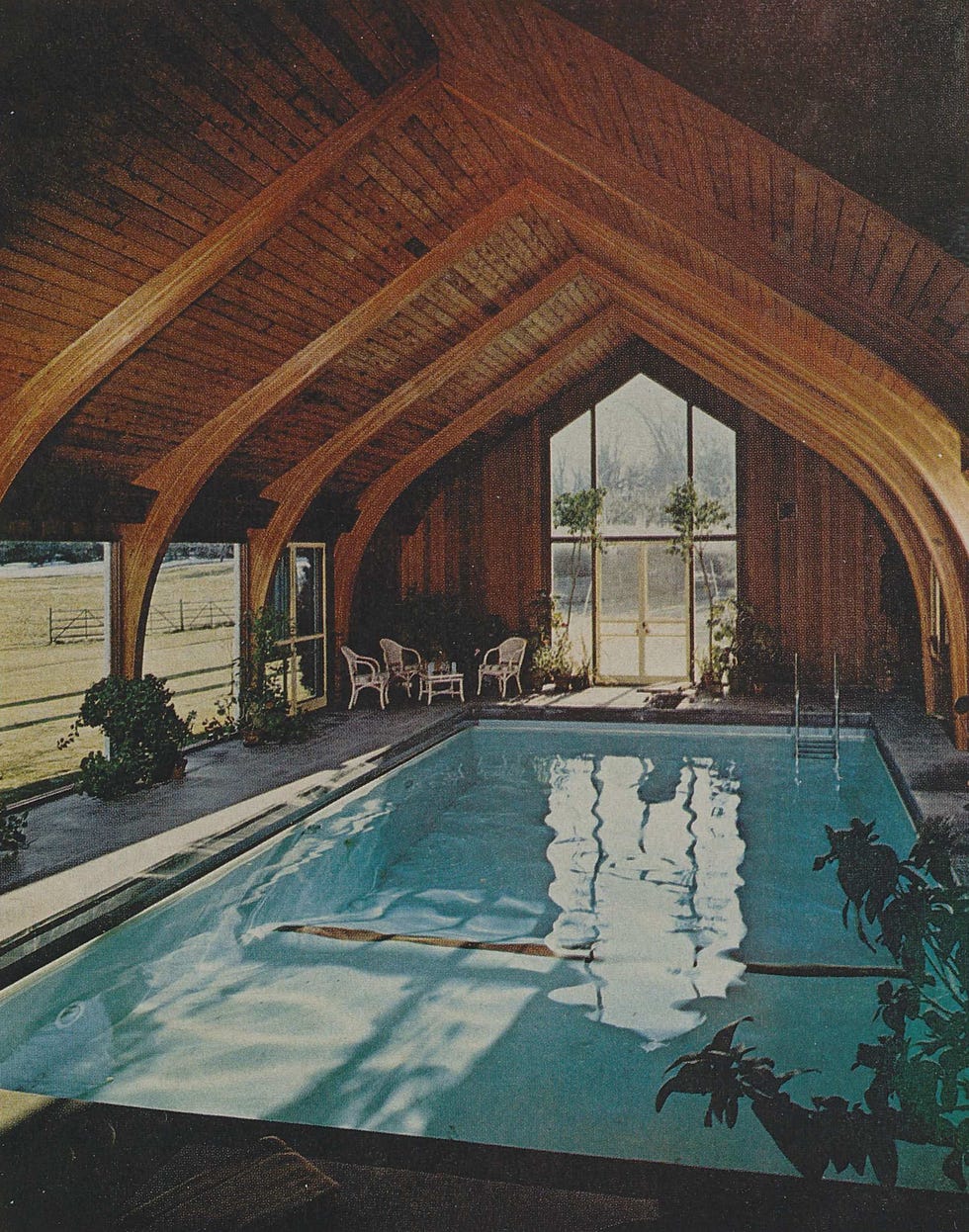 Bill Hedrich, Hedrich-Blessing
Plenty of large windows and glass doors, as well as skylights, gave this domed wood poolhouse views of the farmland outdoors.
With its spade-shaped roof, this 40-foot poolhouse in Peoria, Illinois, designed by Bob Dagerfield of Lankton-Ziegle-Terry was the star opening image in a House Beautiful feature on “the newest splurge” indoor pools. The inside was treated like an indoor room and decorated by Cohen Design Galleries.
Greenhouse Hot Tub (1984)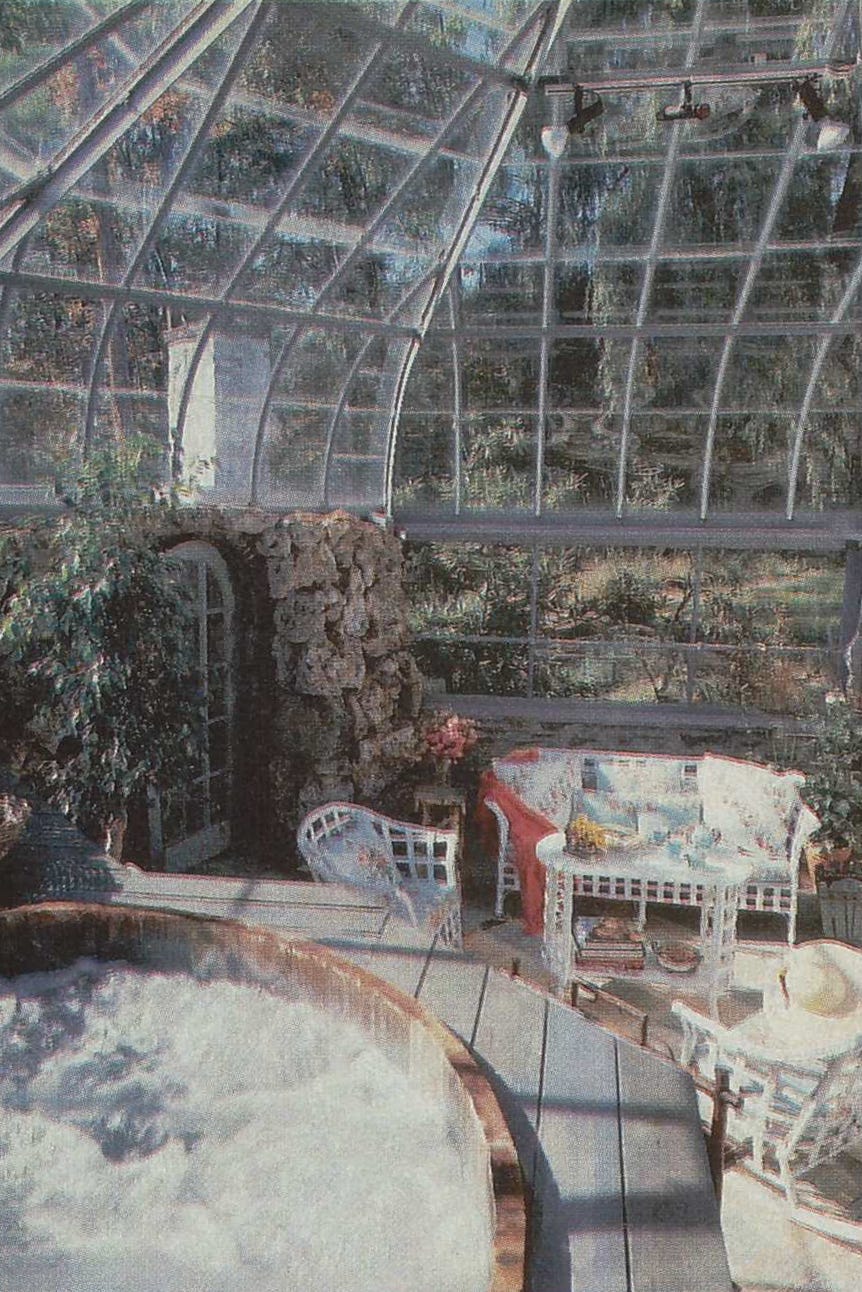 Tom Yee
Wicker furniture (and a wood stove, out of view) make the greenhouse a cozy place to visit even when a soak is not on the books.
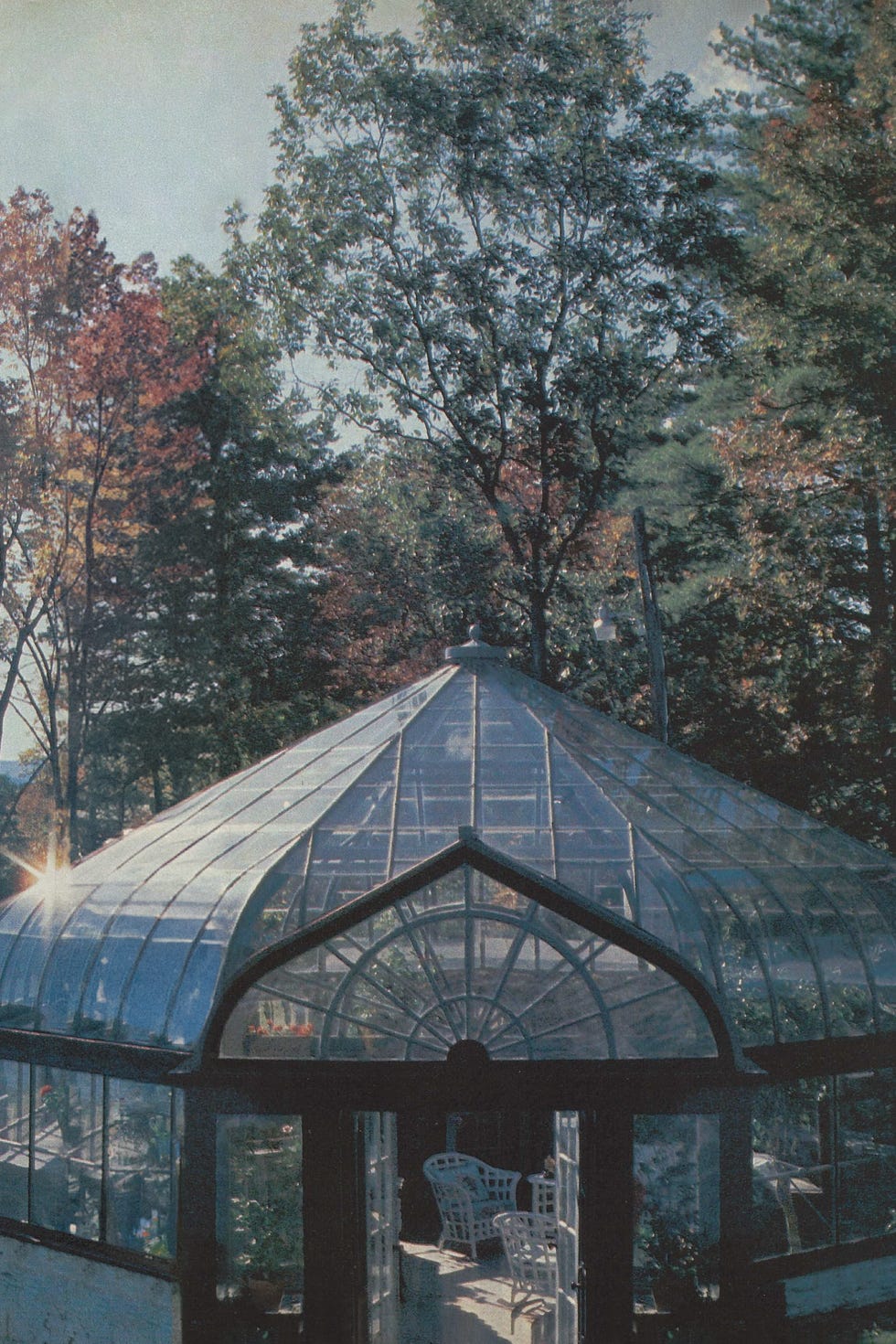 Tom Yee
“Wrapped in towels, they love to tiptoe through a starlit night from house to greenhouse for an invigorating soak,” wrote Kontos.
“It was a stroke of serendipity,” wrote House Beautiful editor Jason Kontos in our July 1984 issue. “A run-down greenhouse built in the 1920s by an eccentric artist to accompany his castle-like stone residence, rediscovered 60 years later by a young New York family. They repaired its glass, pointed its stone, removed its rusted-out potting areas, painted its steel frame, and spruced it all up.” It was only then that their interior designer, Susan Zises Green, realized how fun it would be to put a hot tub inside.
Poolside Pavilion (1968)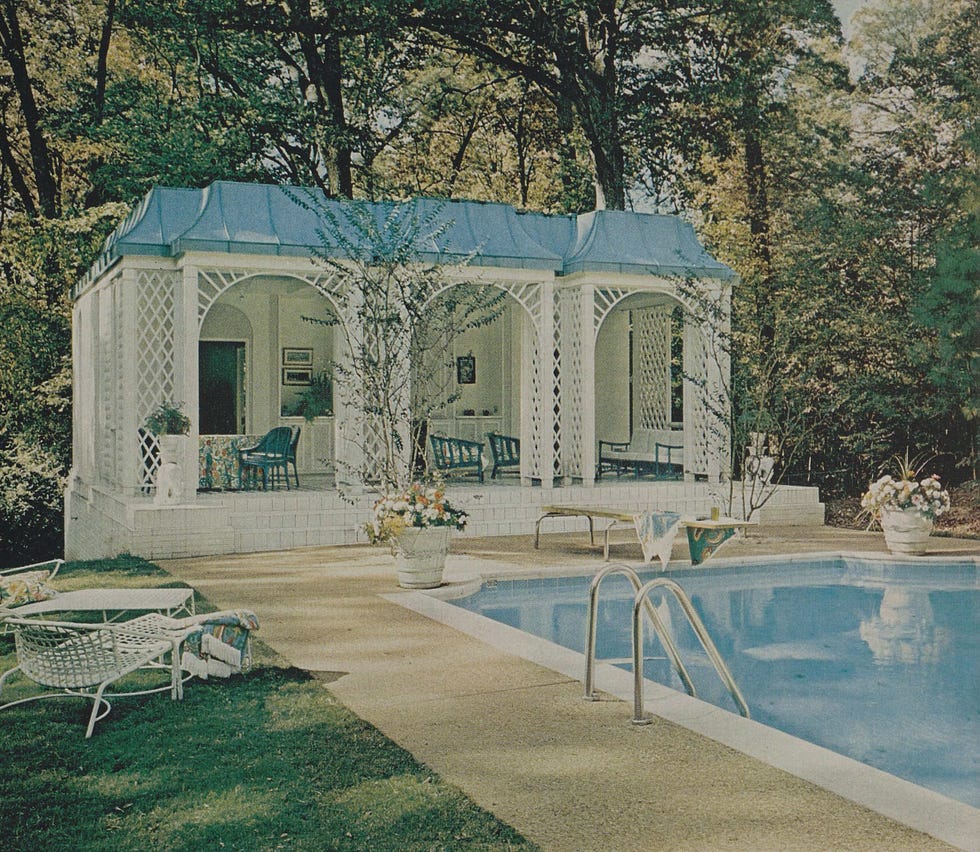 Clyde May
Painting the brick and wood lattice white helped to cool off guests who took a break inside the pavilion.
Set in the Chambers family garden in Atlanta, Georgia, this latticed poolhouse by Jova, Daniels, and Busby was intended for entertaining. An open loggia at the front welcomes guests out of the sun, while dressing rooms behind provide space for changing.
Follow House Beautiful on Instagram and TikTok.
Comments are closed.