
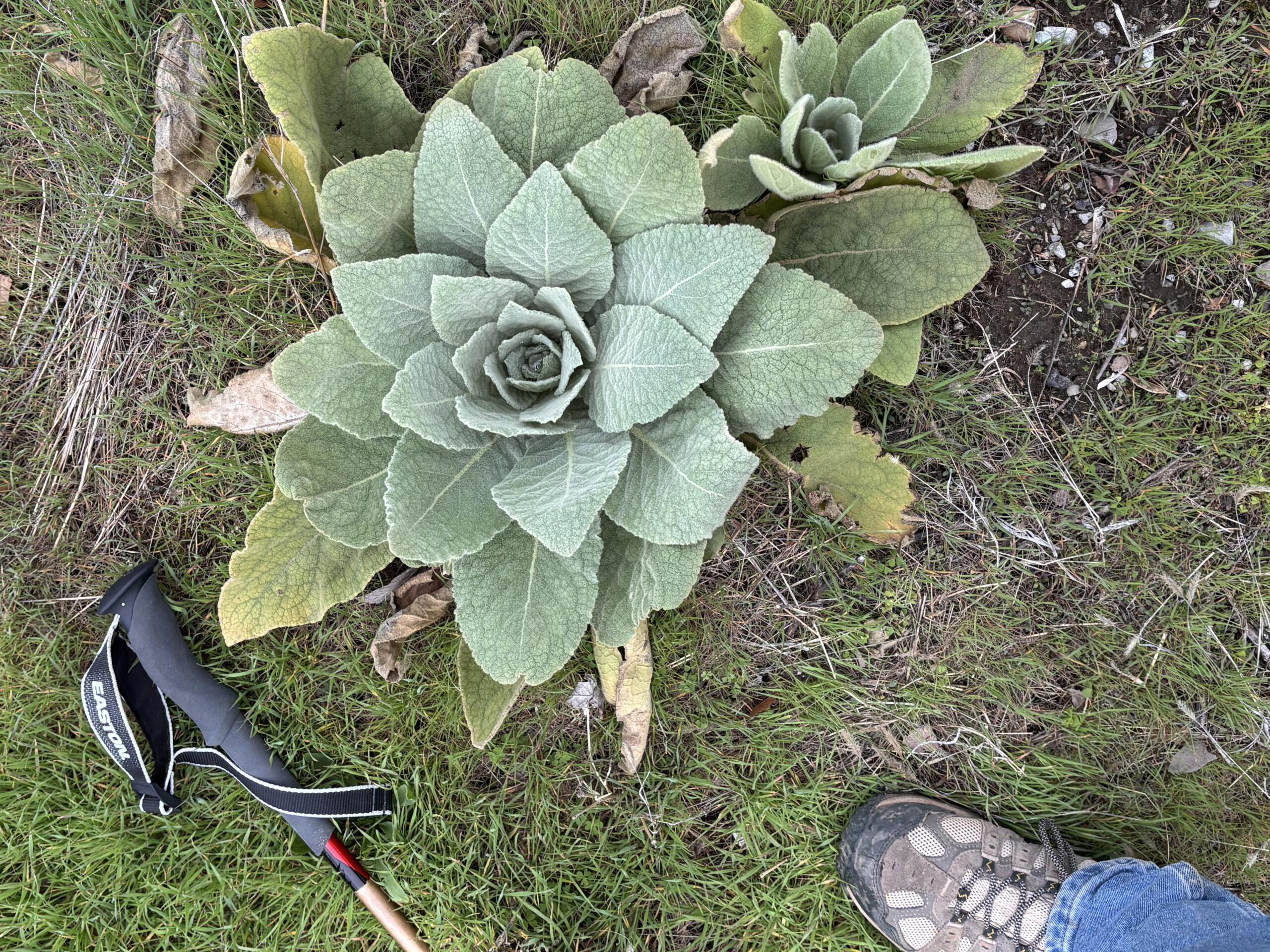
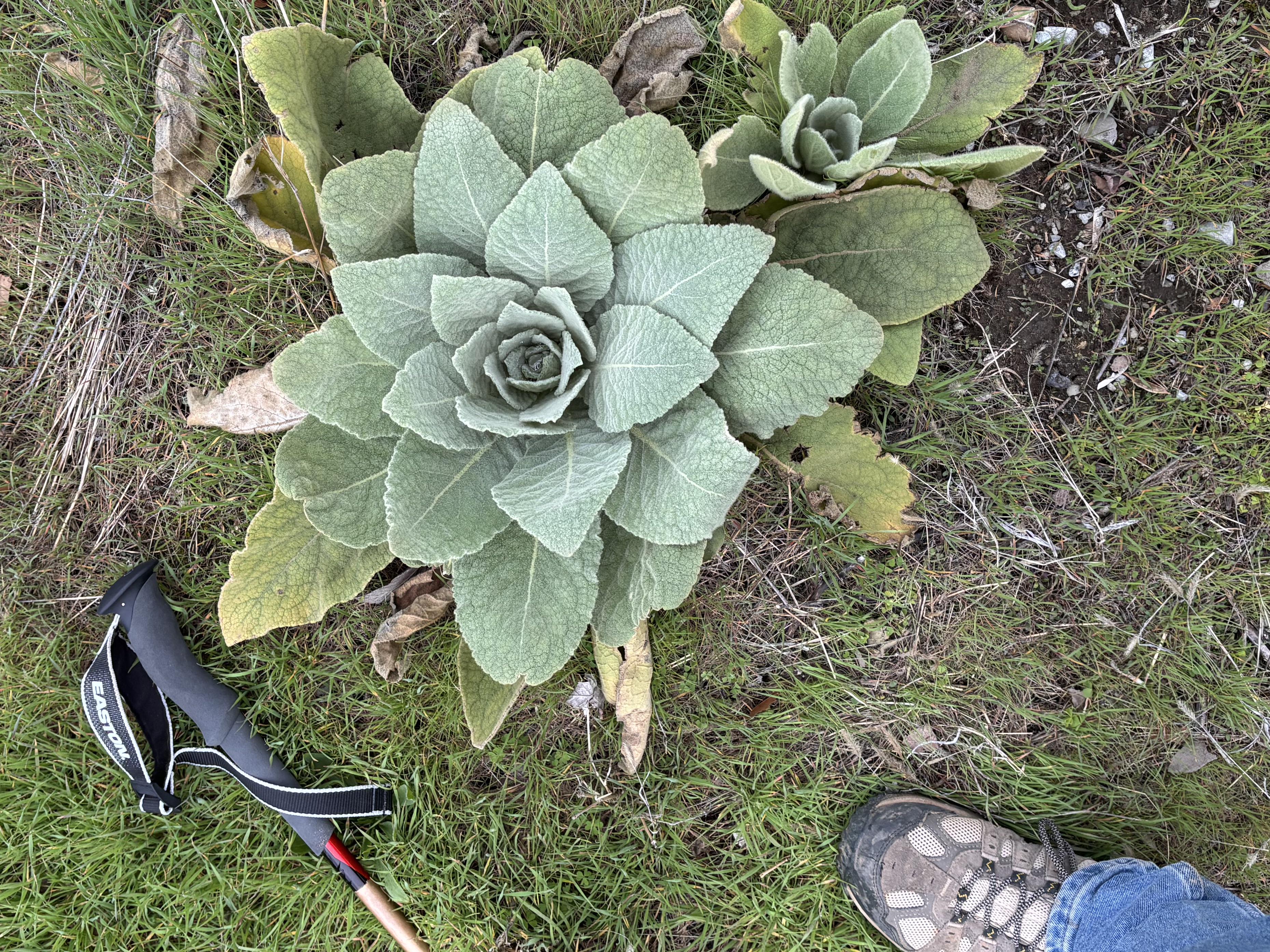
Ive went to my book even google lense. I need a third opinion. From a person. Is this for sure mullein. Growing on the hillside in disturbed soil about 100 yards from a river bank. Some near it have a bolt with tons of yellow flowers. I think I’m being over cautious, but I’d rather have more opinions.
by Wishbone-Effective
4 Comments
Yes.
If you are in North America, it would be beneficial to the local ecosystem to pull up as much of it as you can, especially any with flowers. One plant can produce more than 200,000 seeds, which would be terrible near a riparian zone.
Yes, common Mullein. Huge ones at that! Common mullein is fairly recognizable because it’s leaves typically do not have a petiole (leaf stem), are extremely fuzzy on both top and bottom, get extremely big, grow in a rosette pattern, and have huge flower stalks sometimes reaching over 6 ft with small yellow flowers. It has two main lookalikes, Lambs ear and Foxglove. I can tell you for certain that isn’t lambs ear. Lambs ear is a mint plant meaning it splits into multiple stalks at that stage and has much smaller leaves with a totally different shape. Foxglove is trickier and is also deadly toxic so it’s really important to distinguish. Foxglove have eaves that are mostly or only hairy only on the bottom, typically grow taller, have non-yellow flowers, have very defined sharp ridges on the edge of each leaf, and have a very defined petiole meaning each leaf will look very separated from the stem. What you have is certainly not Foxglove as it is very heavily furred all around, massive, rosette, and lacks a defined petiole. This stuff is very easy to spot if you know the plants well, but if you plan on picking it you have to be able to distinguish foxglove and Mullein on sight. Without a single doubt though that is common Mullein
Yep. And a billion seeds too.