
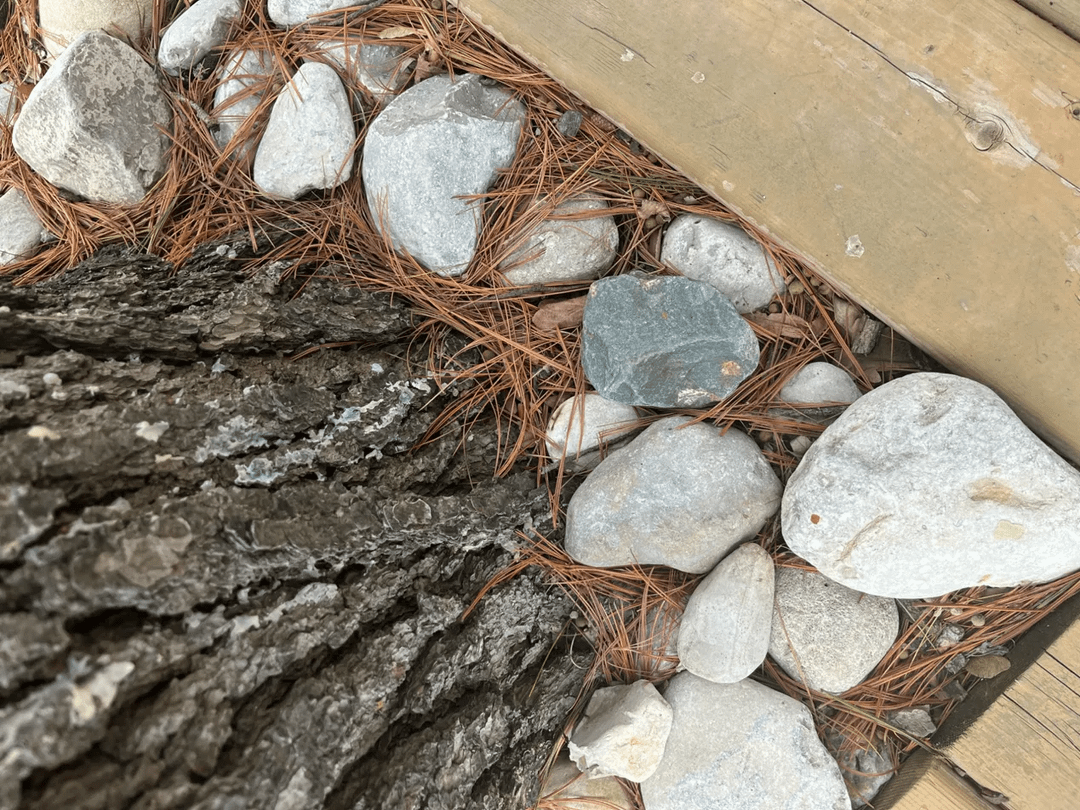
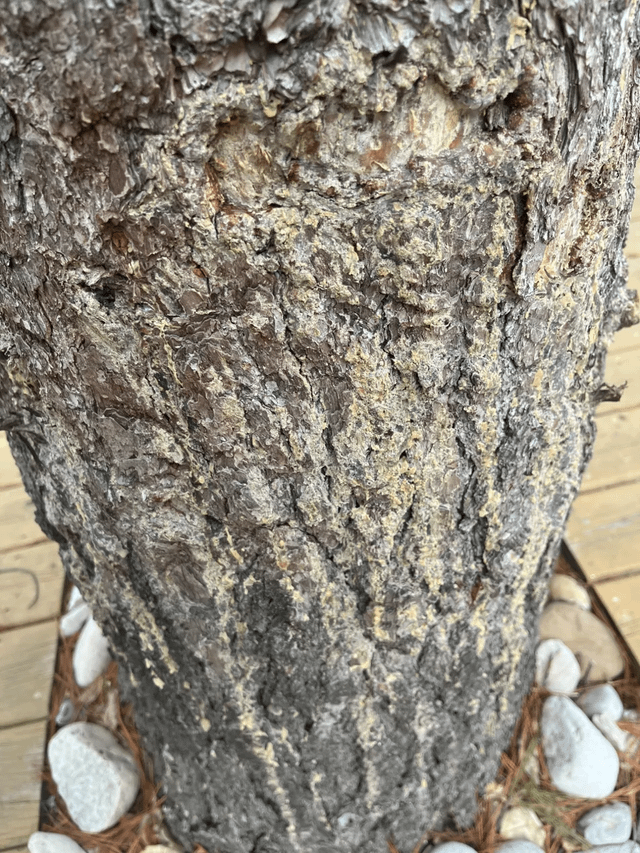
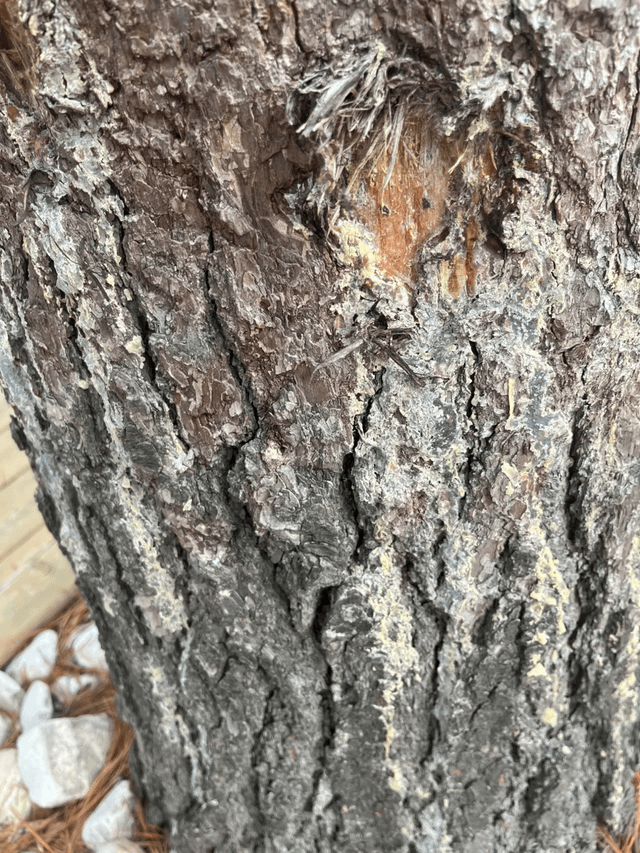
Hi everyone. I live in Burlington Ontario and have a stand of six Eastern White Pines in my yard that border my neighbour's trees as well.
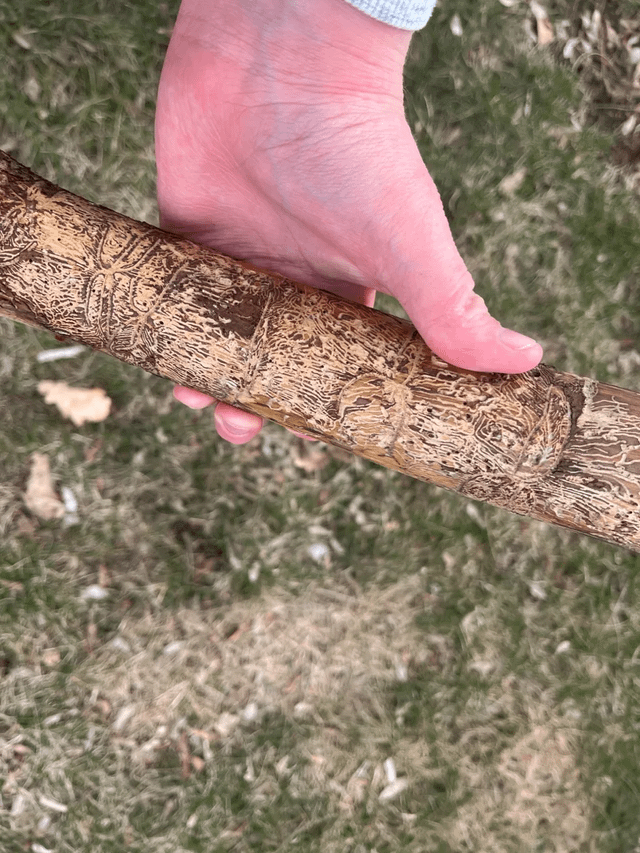
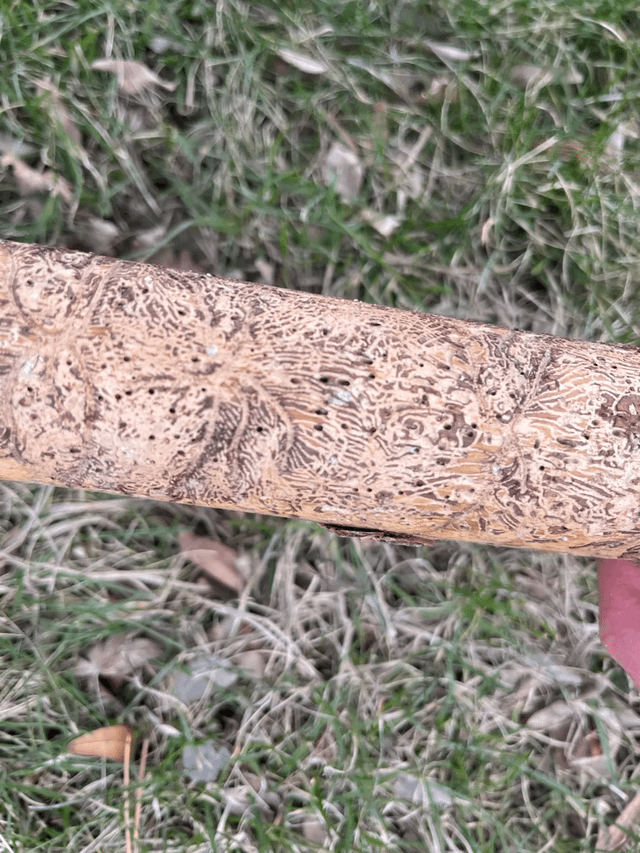
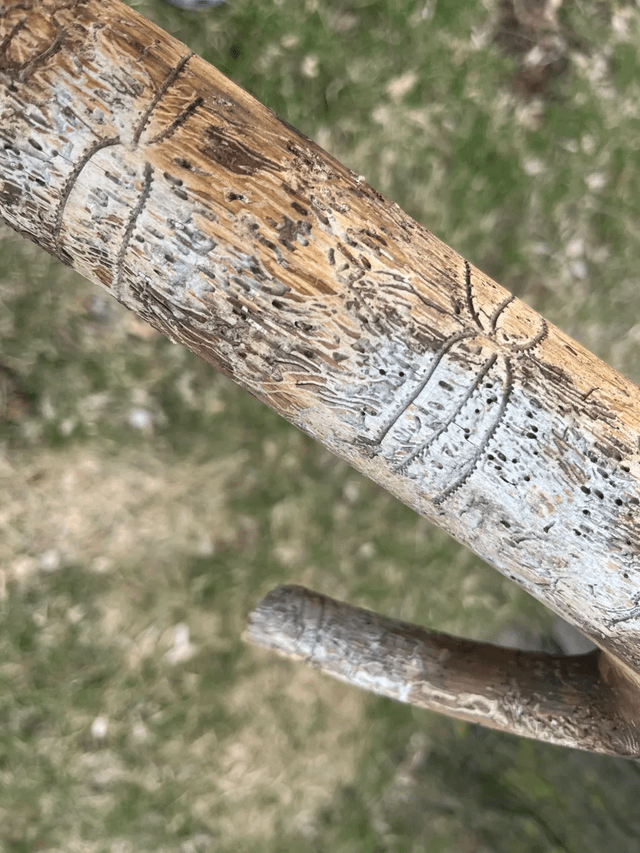
A branch fell recently and when I peeled the bark back I found extensive gallery patterns underneath. After researching I believe this is Ips pini (Ips Pine Engraver Beetle) damage.
Here is what I am observing:
- Heavy gallery patterns covering the entire branch under the bark
- Pin sized exit holes throughout
- Bark was already coming off before I peeled it
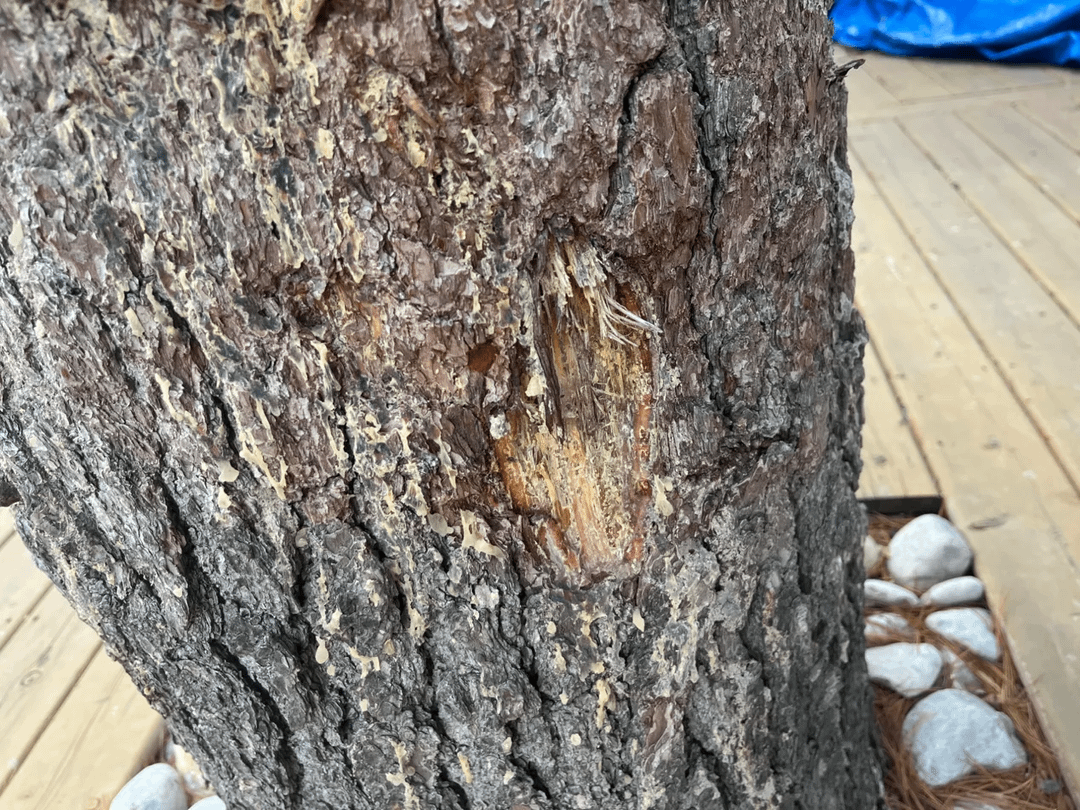
- Base wound on the main trunk at ground level
- Red needles dropping in spring
- Multiple smaller branches also falling
- Six trees total, bordering neighbour's trees
- The tree faces the front of my home and the fall zone includes my bedroom
- A professional looked at it in winter and said it was already a problem
I am autistic and my family thinks I am overreacting. I want an honest professional opinion on whether this is serious.
I have photos of the gallery patterns, the base wound, and the trunk. Happy to share more if needed.
Thank you
by Full_Neat817
2 Comments
Those are the galleries of boring beetles.
I think your overall assessment is very reasonable and valid.
I would recommend that you have an arborist come to evaluate on-site for appropriate planning, consultation to manage your trees.
Often when a tree is heavily stressed or in poor health, it does not have the “defensive” resources to fight off infestations of pests and disease. It is possible that just this tree specimen is vulnerable, “sick” enough that the boring insects were able to colonize it.
It is also possible that some of your other specimens are robust enough to fight off infestation from this pest. But, I am slightly skeptical.
This host tree, most probably poses risks for future limb drop, and at best:
This tree is now host to a pest that will spread to other trees in your community. You have a duty to help reduce the spread of disease in our biosphere.
I appreciate all the effort you put into composing a thorough and effective post. Next time, including pictures of the upper canopy, “crown” of the tree would help for diagnosis.
Reach out via email to Jiri Hulcr at the UF Forest Entomology Lab. I used to work there. His lab is arguably the best in North America at researching and IDing bark and ambrosia beetles.
https://entnemdept.ufl.edu/people-directory/jiri-hulcr/
You are right to be concerned and you are doing the right thing by being proactive before it turns into a larger infestation. This would be especially concerning if it is happening to a tree that was not already stressed by other factors (extreme heat, drought, flooding, etc).
Ips pini is already widely distributed in Canada, so I don’t think that this would be a major new discovery in your area.