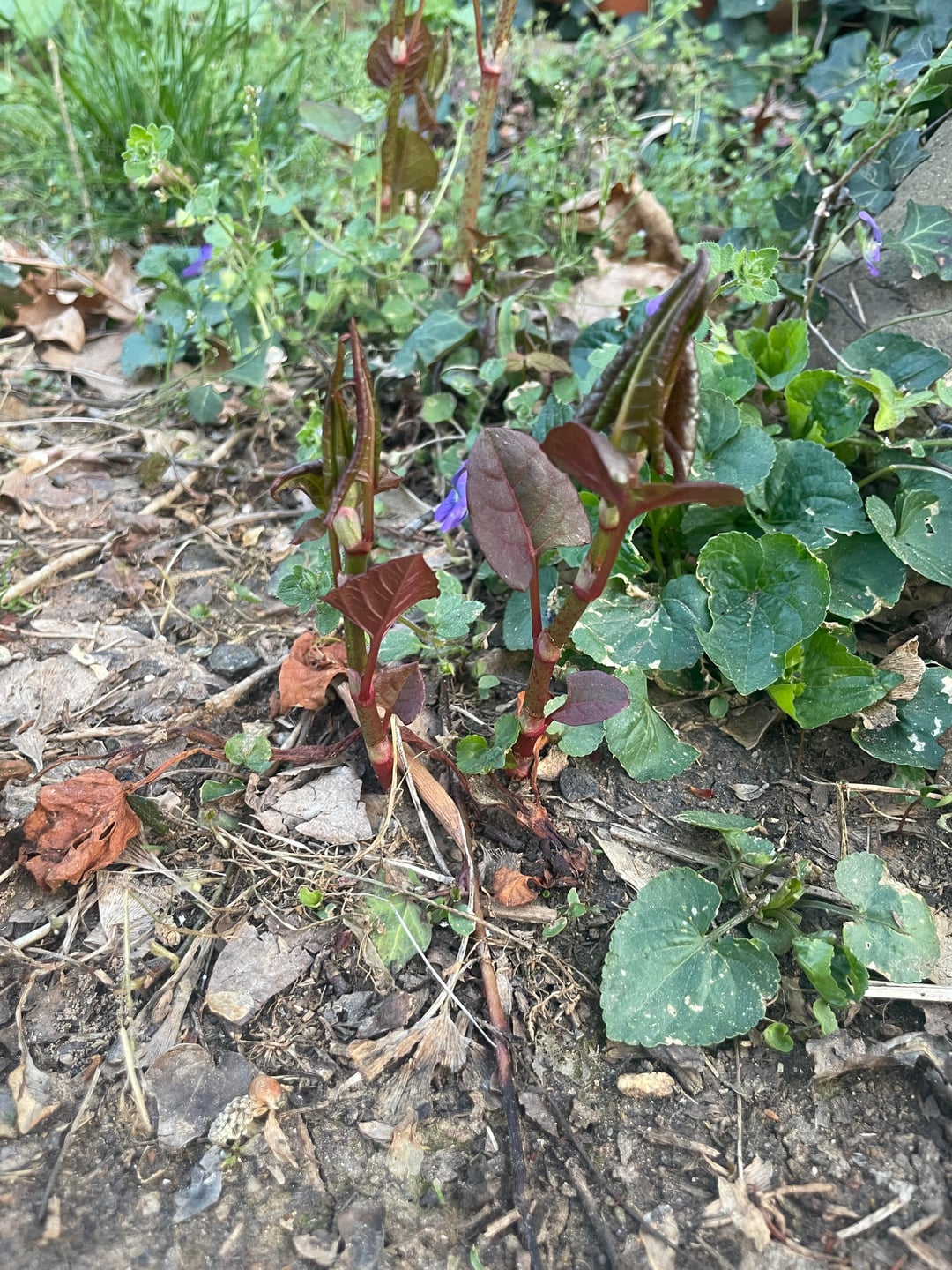
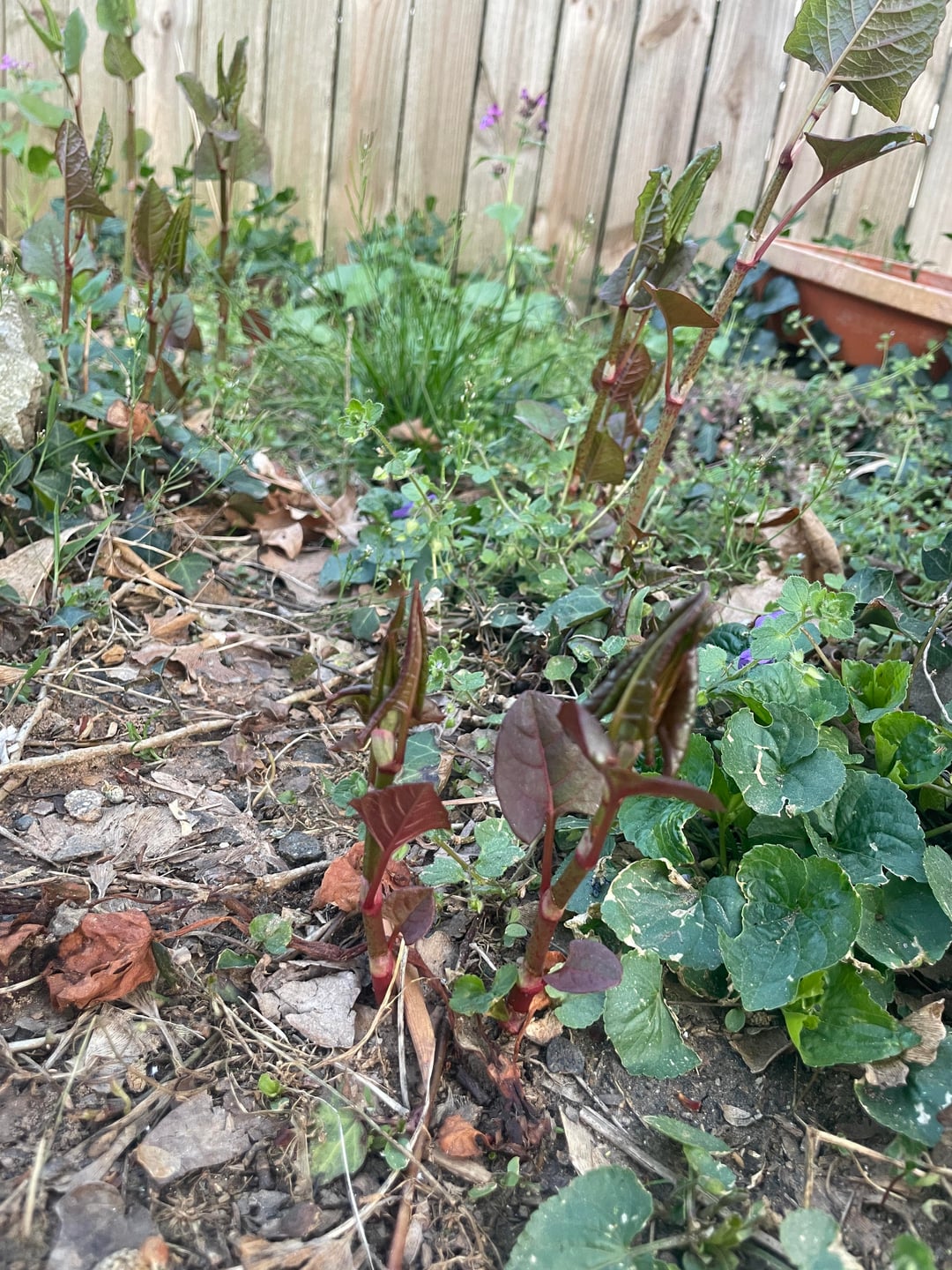
It’s that time of year again, folks! Japanese knot weed
O_G_Doug
Knotweed (Reynoutria sp.)
Manual removal is very difficult and often not effective at getting rid of a population (though it can keep the population from getting any bigger). Also can be spread by small root fragments, so digging it out can be risky. Herbicide is the best option for eradication.
Final_Tutor_7929
It took me 3years. Light maintenance at this point. Cardboard is your friend
gcousins
Kill it with fire!
PandaMomentum
Oh man. Buckle up. Find yourself a local invasive species group or visit r/invasiveplants with your pics. Knotweed is like Godzilla and we are tiny little beings. It is thought to be a single giant clone & spreads vegetatively from people chopping it down or digging up roots — the seeds are typically infertile. It can live dormant for 20 years or more. It is adapted to survive volcanic eruptions.
You need Mothra. In this case that means glyphosate injection. And you will need a support group because it will keep coming back.
A_Lountvink
The most reliable treatment option is to inject each stem with ~2 milliliters of herbicide when they start flowering later in the year. I had a 3000-4000 square foot thicket that needed treatment last year and used ~53% glyphosate solution injected near the base of each stem. 90+% of the treated stems died within a couple weeks. It didn’t kill them entirely, as there’s still quite a few new sprouts coming up from the bits of root that survived, but it has allowed some of the native spring flowers to pop back up towards the edge of the thicket, along with an old daffodil. If you do use this option, expect it to take at least 3 years to have it mostly gone and do yearly checks to ensure there’s no stragglers or fresh seed sprouts.
Admirable-Reveal-412
Be vigilant and as everyone else has said you will need to use herbicide- I have been successful with direct spraying the leaves to kill it and have not had to use the injection method. We do not have a big problem with it on our property and want to keep it that way!
sotiredwontquit
You are going to get a lot of well-meaning comments from people who think this plant is like any other highly invasive plant. It isn’t. And unless they’ve fought and won a multi-year battle with it, they really don’t understand what you’re up against.
It evolved on the slopes of volcanoes to survive being buried under 30 feet of solidified lava. You can’t smother it. You simply cannot. Mowing it is the worst thing you can do. Every piece of it bigger than 1/4” will root and grow a new damn plant. Digging it out is technically possible… with a backhoe. Its roots go down 10 feet and extend out 65 feet. That’s not a typo.
You need to follow the science on this one. There are many peer-reviewed studies on *effective* eradication. Meaning eradication within a reasonable timeline at a reasonable expense.

8 Comments
It’s that time of year again, folks! Japanese knot weed
Knotweed (Reynoutria sp.)
Manual removal is very difficult and often not effective at getting rid of a population (though it can keep the population from getting any bigger). Also can be spread by small root fragments, so digging it out can be risky. Herbicide is the best option for eradication.
It took me 3years. Light maintenance at this point. Cardboard is your friend
Kill it with fire!
Oh man. Buckle up. Find yourself a local invasive species group or visit r/invasiveplants with your pics. Knotweed is like Godzilla and we are tiny little beings. It is thought to be a single giant clone & spreads vegetatively from people chopping it down or digging up roots — the seeds are typically infertile. It can live dormant for 20 years or more. It is adapted to survive volcanic eruptions.
You need Mothra. In this case that means glyphosate injection. And you will need a support group because it will keep coming back.
The most reliable treatment option is to inject each stem with ~2 milliliters of herbicide when they start flowering later in the year. I had a 3000-4000 square foot thicket that needed treatment last year and used ~53% glyphosate solution injected near the base of each stem. 90+% of the treated stems died within a couple weeks. It didn’t kill them entirely, as there’s still quite a few new sprouts coming up from the bits of root that survived, but it has allowed some of the native spring flowers to pop back up towards the edge of the thicket, along with an old daffodil. If you do use this option, expect it to take at least 3 years to have it mostly gone and do yearly checks to ensure there’s no stragglers or fresh seed sprouts.
Be vigilant and as everyone else has said you will need to use herbicide- I have been successful with direct spraying the leaves to kill it and have not had to use the injection method. We do not have a big problem with it on our property and want to keep it that way!
You are going to get a lot of well-meaning comments from people who think this plant is like any other highly invasive plant. It isn’t. And unless they’ve fought and won a multi-year battle with it, they really don’t understand what you’re up against.
It evolved on the slopes of volcanoes to survive being buried under 30 feet of solidified lava. You can’t smother it. You simply cannot. Mowing it is the worst thing you can do. Every piece of it bigger than 1/4” will root and grow a new damn plant. Digging it out is technically possible… with a backhoe. Its roots go down 10 feet and extend out 65 feet. That’s not a typo.
You need to follow the science on this one. There are many peer-reviewed studies on *effective* eradication. Meaning eradication within a reasonable timeline at a reasonable expense.
Here’s one such study:
https://link.springer.com/article/10.1007/s10530-018-1684-5
And here it is summarized in a readable format:
https://extension.psu.edu/japanese-knotweed
Good luck.