
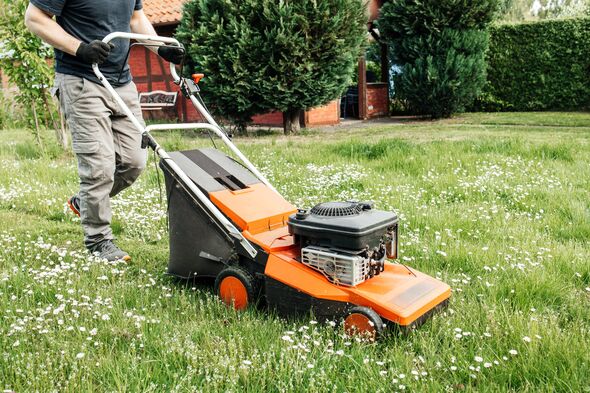
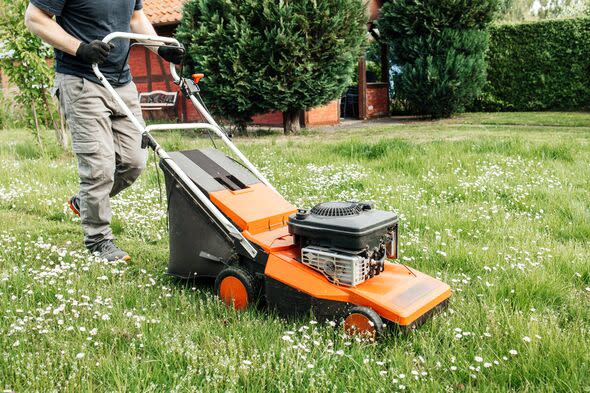
A man mows the grass with an electric lawn mower. Hardworking owner takes care of his lawn.
Lawns are beginning to grow again as temperatures rise, and it’s all too easy for gardeners to postpone grass care in favor of enjoying the sunshine.
However, Joe, founder of Joe’s Lawn Care, has warned that spring is a critical period for lawn maintenance, and neglecting it now will result in thin, patchy grass come summer.
He said: “You may have gotten too comfortable and become tempted by the idea of neglecting your spring lawn care chores entirely. Don’t let this happen. Seriously. You’ll only live to regret it.” At this time of year, lawns commonly become matted and mossy after sustaining considerable damage during the winter months when grass receives inadequate sunlight.
Many gardeners simply apply fertilizer and perhaps remove moss, but most lawn problems stem from soil compaction, which impacts how much water the grass receives.
Without proper spring care, lawns will struggle to stay hydrated during hotter summer months, potentially leading to a patchy, yellowing appearance.
To maintain a lush, green lawn, concentrate on three straightforward tasks over the coming weeks, which will give your grass the resilience it needs to remain healthy for the rest of the year, reports the Express.
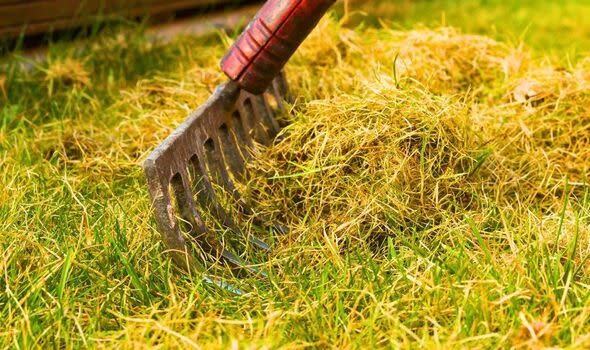
Aerating is simply poking holes in a lawn to loosen up the soil (Image: Getty)
How to care for a lawn in spring
Be sure to rake your lawn
Throughout winter, lawns tend to accumulate decaying foliage, which grass grows over and eventually forms a dense layer called thatch. Thatch accumulates above the soil and typically prevents water from reaching the roots, while also suffocating the grass and hindering its growth. Using a rake on your lawn is one of the most essential gardening tasks you can tackle in spring, as it removes thatch buildup along with any moss that may be lingering on the grass.
Joe said: “Raking. That should always be the first spring lawn chore on the list. The problem is, no one does this because they don’t think they need to.”
Simply use a rake firmly across your lawn and collect any organic material that comes up from the grass. Be sure to bin or compost the decaying foliage, otherwise it will just turn into thatch again.
Create holes in the grass
Many gardeners focus solely on their grass, but during winter, the accumulation of rain and icy weather can really compact the soil.
This causes the soil to harden and restricts how much air, water, and sunlight can reach the grass roots, making it difficult for the grass to grow.
It’s crucial for lawn roots to develop before summer arrives, as deeper roots can retain more water, helping the grass stay hydrated and green for longer periods.
Fortunately, it’s quite simple to break up the soil through a process called aeration, which involves using a pitchfork to poke numerous holes in the ground.
Joe said: “The solution is lawn aeration, which is basically where you stab holes all over your lawn to help the soil beneath it breathe.”
Now is the perfect time to seed the lawn
Most folks are relishing the opportunity to spend more time outside now that the sun is shining, but frequently walking on the grass in spring can lead to it becoming worn and sparse.
Taking the initiative to seed your lawn can help bolster any weak spots, enhancing its appearance and fortifying the turf to better withstand foot traffic.
If the grass has ample time to take root in the spring, it will be robust enough to endure the hotter, drier conditions of summer, ensuring it remains healthy throughout the season.
This is why raking and aerating your lawn is crucial: it creates an optimal surface for seeds to take hold and boosts the chances of successful grass growth.
Typically, the best time to seed lawns is in April, when the soil has warmed up. By dedicating some time to these three simple maintenance tasks, you’ll be rewarded with a thicker, greener, and more resilient lawn.
]]>
Comments are closed.