SERIES 37 | Episode 07
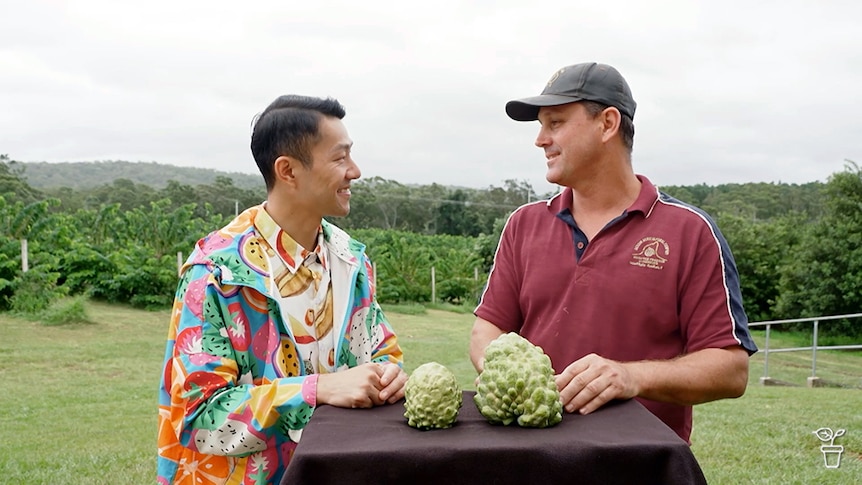
Guest Presenter Thanh the Fruit Nerd delves into the weird and wonderful custard apple.
Guest presenter Thanh is at Queensland’s Glasshouse Mountains, an hour north of Brisbane. It’s a fertile region known for its coffee, tea, macadamias and pineapples. But this visit focuses on a lesser-known subtropical treasure: the custard apple.
Farmer Daniel Jackson, who purchased his property a decade ago with his wife Angela, has become an unlikely champion of the fruit despite starting with no agricultural background. A former electrician, Daniel originally set out to buy a macadamia farm, but when this property came up for auction with custard apple trees already established, he seized the opportunity.
Daniel now grows several varieties, each suited to different growers and markets. Larger, export quality fruit often comes from the ‘KJ’ variety, which he recommends for anyone wanting reliable, substantial yields. For backyard growers who enjoy hands on horticulture, varieties such as ‘Hilary White’ or ‘Pinks Mammoth’ are excellent choices, offering exceptional flavour.
Custard apples thrive in subtropical climates and won’t fruit below about 4°C, though small pockets of production exist in cooler regions like the South Australia–Victoria border and north of Perth. Backyard growers in Sydney can succeed too, provided trees are planted in a sunny, protected, north facing position. Managing the tree involves regular and intensive pruning three times a year: a major autumn prune to control height, a spring prune to raise the “skirt” and reduce pest issues and a summer tidy up to remove water shoots and keep the canopy open. Custard apples don’t need heavy fertilising. Daniel recommends compost and small, occasional applications of chicken manure to maintain soil health without overstimulating growth.
On his farm, Daniel is also trialling new cultivars, including an eye catching red variety still years from commercial release. It is self-pollinating and offers a milder sweetness, which may appeal to broader tastes.
For consumers, choosing a ripe custard apple involves watching for colour lightening, smoothing of the fruit’s segmented carpels and even subtle stretch marks. They should be ripened at room temperature for several days and never refrigerated below 8°C to avoid chill injury.
Despite the hard physical labour and long days, Daniel finds deep satisfaction in growing this unique fruit and hopes more Australians will discover this delightful fruit.
Featured PlantCUSTARD APPLEAnnona cherimola × squamosaFeatured Species GREEN LACEWINGMallada sp.MEALYBUG LADYBIRDCryptolaemus montrouzieri
Filmed on Jinibara Country | Glass House Mountains, Qld

Comments are closed.