
Hey everyone, I'm back and in the absence of funds right this moment I'm trying to sort of scout ahead and get a plan going.
So full disclosure, I'm on the Front Range which I understand is…not great for gardening. However I am stubborn so I'm trying anyway and maybe I'll end up with a bunch of dead plants and tears but I'm gonna try. Specifically, I'm in…somewhere between zone 5b and 6a but it's also been unseasonably warm. Anyway. Before I start my seeds (next paycheck when I can afford seed starting stuff) I decided to try to get a game plan going.
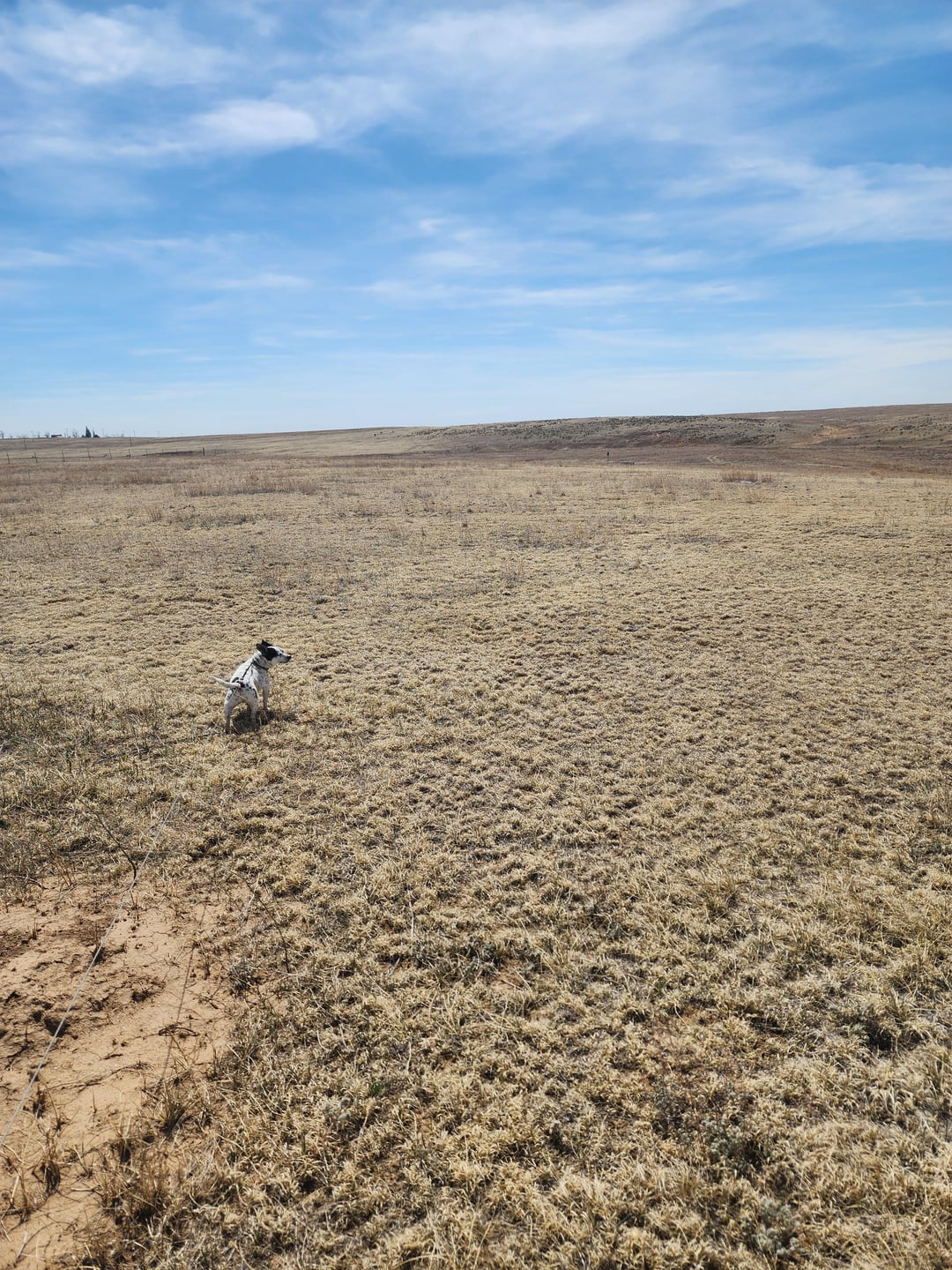
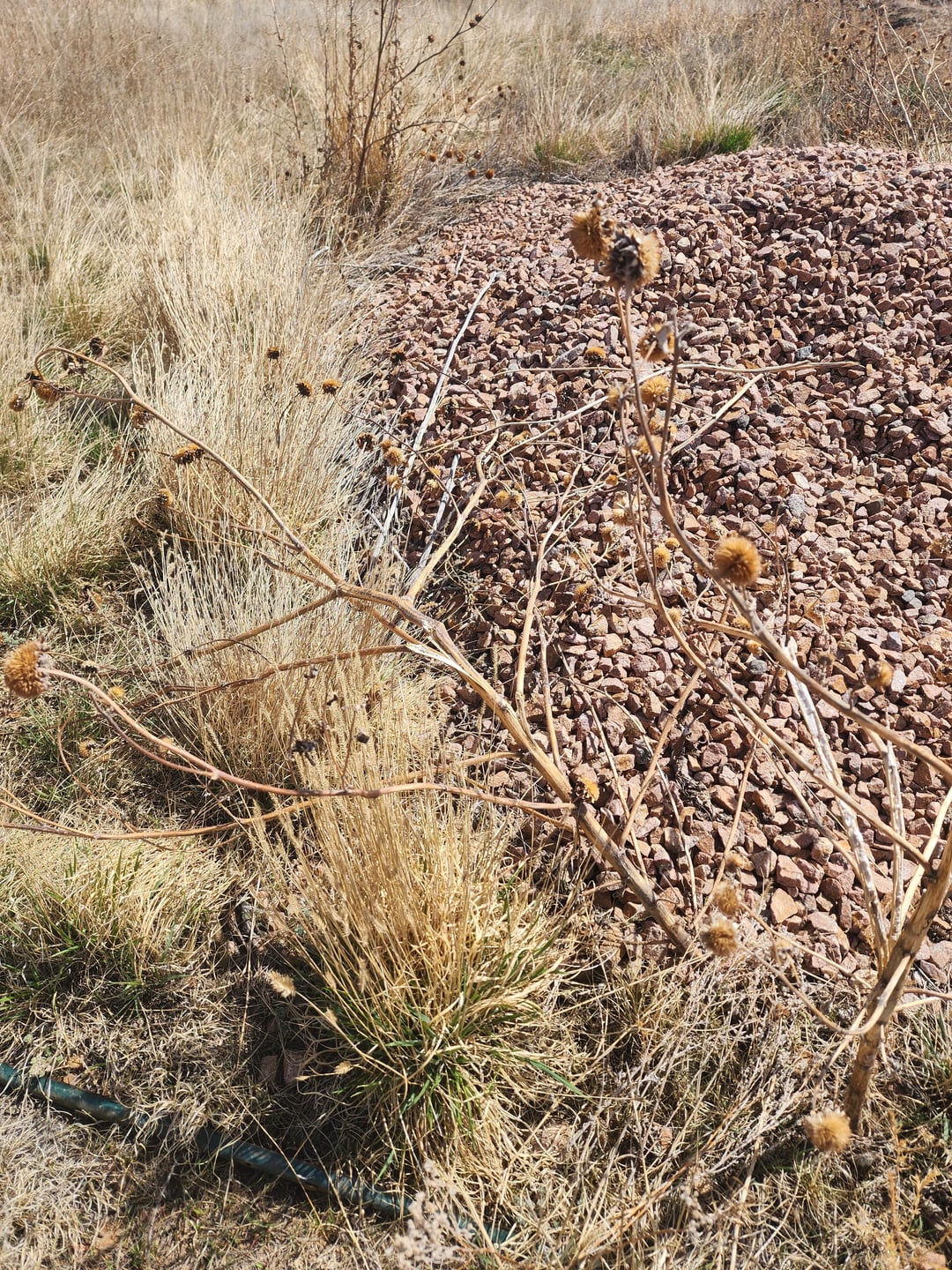
First picture is what the land I'm living on looks like. (Featuring cameo from my dog :3) The person that owns the land has a junk pile that has some broken wood pieces on it and since husband and I have only one car I have lots of cardboard from ordering things for delivery. Outside of that though we're pretty low on browns since. Well, as you can see there are no trees. And mowing all this would be an exercise in futility so no lawn clippings either. Idk what plant it is but we do have that stick looking shrub thing in the second picture everywhere. Relatively everywhere.
As for soil, if I'm close to the house (forgive me for not taking a picture, it's not my house so I don't wanna just go posting identifying pics) the soil actually seems decent? I took a very basic hoe and chopped down a bit and it wasn't too hard, and the soil was a darker brown and felt kind of damp even though it hasn't rained or snowed. Kinda hopeful about it tbh. The spot in particular I checked is north facing and other than a structure casting a shadow in the early morning it gets sun pretty much all day. I did also check further out where I was originally thinking of putting it, where it gets full sun from sunrise to sunset, but that soil is extremely dry and dusty, easy to hoe into but doesn't seem very lively. Further out into the fields, I do occasionally see some green and it's not so dusty because there's grasses. But thats between a whole lot of brown lol.
I'm wondering if I could potentially get away with in ground gardening. Obviously I'd get a couple bags of compost (forgive me, I do not have the patience to wait until next year in order to make my own compost first haha). I'd love to try the no till method but I'm not sure I have enough wood around for it, or at least not for more than say one bed. I don't have a pickup and husband's gone with the car multiple days at a time for work; I looked around Marketplace for free wood and even if husband were free to go get it, all the ads have the caveat that you have to take everything. And that definitely wouldn't fit in our little sedan in almost all cases lol.
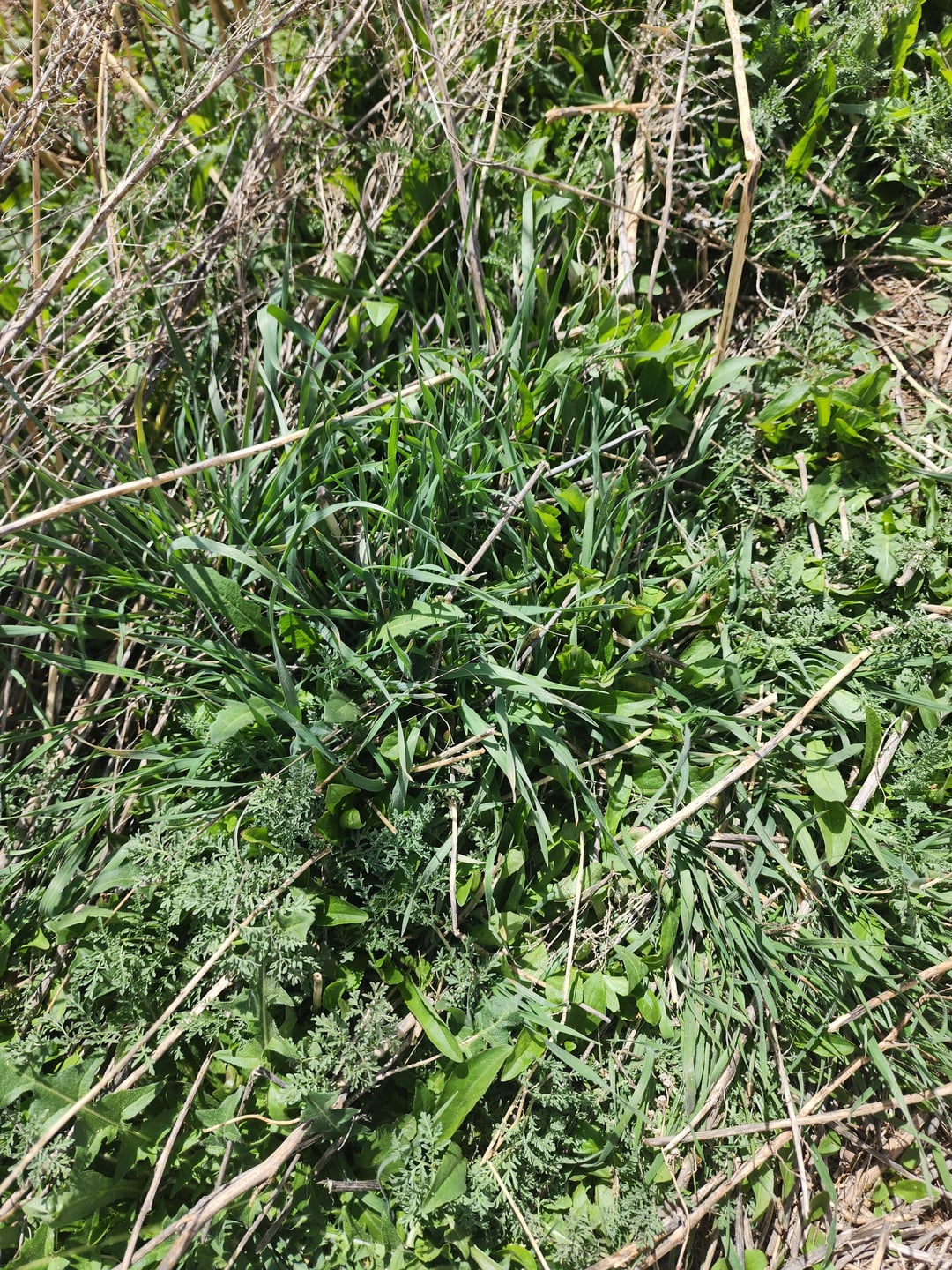
And I am aware that I would have better luck with raised beds. However, I'd go broke before finishing filling them, even if I could build them affordably (and with the cost of wood that is a pipe dream). I do have one raised bed my friend used to use that's already full of soil that I plan to put a little fresh soil and compost into and putting maybe some flowers in instead of veggies. It's small though and I want to plant More Things than that haha. And the fact that there are some green things starting to grow gives me some hope for in ground. (Idk what those plants are but they're growing away lol.)
(Apologies for not having a soil test, I can't afford to get one right this moment due to husband's work pulling shenanigans. >.< But that's another topic.)
What do you guys think? Is it worth trying to grow in the ground? I thought about throwing some lettuce seeds out there in the spot I was looking at just to see what happens but then I thought that sounded a little silly lol. Plus no compost on hand to give them their best shot.
by Laura_Writes
11 Comments
Well not familiar with gardening in your area but I don’t see why you can’t just till up some ground, mix in compost and start planting! I’ve seen cherry tomatoes grow in sidewalk cracks so it’s definitely possible. Location wise if you got good sun (6+ hours) in a couple spots I would go for wherever is most convenient to water.
The Front Range in Colorado? These pictures sure look like it. That little shrub thing is a wild sunflower, they grow all over.
If I am correct and it’s the front range of Colorado, then yes you can grow there. You are going to have a lot better luck if you can till once first. If you do till, water the area really well a day or 2 first. Do not add compost.
You will add compost to the hole when you plant instead. At least 1/3 of the dirt. If you are planting something from seed, scratch in some compost to the top inch and then plant the seeds. You will need some hay or straw over the top for moisture. It gets hot and windy so daily or twice daily water will matter especially for seeds. If you can set up an automatic watering system to run at 4-5 am, that will help.
Lots of hail storms in the area so be prepared for disagreement, I lost a lot when I lived there.
The good news is that there are lots of horse people around and many of them will bring you their horse poop so they don’t have to pay to get rid of it. Put this down thick every autumn.
My soil was like yours at the start and black when we moved. My garden was about an acre and a half and I sold the extra. It’s totally doable but start small.
You’ve got great possibilities. Would also include a patch or border of wildflowers for beneficial insects.
Scattered an unorganized thoughts here: If you could clear the debris out of the area you’d like to use, that’s a pretty great area actually. Wide open to the sun’s ideal. Breaking up the soil in the area would be the slowest part. Cleaning up debris would be the first step. If there are any small farms/bigger gardeners in the area, that’s also a wide open enough area that… maybe if you’re lucky, you could ask someone to bring out a tiller or cultivator just to break up the ground and save yourself some pain getting set up. Garden friends tend to be pretty great friends, I’ve found.
Any kind of cheap composts – wood chip or the most basic mulch you could find, cotton burr (sometimes you can still catch bags of it $5 or less), something like that, would help improve the soil over time. It usually takes a couple years to truly see benefits from stuff that breaks down slow like that, though. Or, since you’re out in prairie and field… got any neighbors with livestock? It’s dirty work for a couple days, but you could start a manure tea out of the way in buckets or manure/organic scraps/hay/etc compost pile to apply later on.
On cost of wood being terrible- consider scrap brick, cement/cinder blocks, old junk wood from ranch buildings or fenceposts, scrap from anybody renovating anythin’ out there, wood shipping pallets from local businesses if you need edging. Just about anything that people will get rid of, that might be old and worn down, can often be nicely repurposed. Sometimes places will just give away their pallets, or sell them for like $2 per, too. But in a wide open area like that, you don’t really need much in the way of edging and raised beds could be a later thing if you want ’em, it’s fine. A few rows spaced apart will give you ssso much space to work with, once the hard part of the ground being broken up is done.
So you’re right where I’m at. Yes you can definitely grow out there. I highly suggest finding a horse owner that feeds organic hay and grab some of their manure and start a good compost pile. You can easily get the manure for free if you can haul it. Just make sure the horse feed is 100% organic. So you’ve got that done. Next, you have bunnies and field mice you will have to deal with. Get a small net or fence around the area you want to grow. Next, you’ll have to do all your starts indoors. You need to get them big enough that the mice will leave them alone. But you should start indoors anyways because our season is short so why not extend it as much as possible. For seed you’re going to want to look at local gardening groups. Many will give seeds to new gardeners for free. Our libraries also allow for seed checkout. For irrigation, depending on the size you can get away with a hose and sprinkler for now. Once you have some cash, set up a drip tape system to save water.
You’re probably within an hour of my farm so just message me if you want to know how I farm out here.
Yes it is almost always. Before any thing else get the soil tested at your local agricultural station. It’s usually free or very cheap.
Yes, just grow things in the ground!
I’m confused. Why would no-till methods require you to get wood? Are you thinking of raised beds or hugelbeds? Neither of those is necessary to no-till methods. At all. Not even related, as far as I know.
I started a garden in absolutely bare desert and here are my tips based on my experience.
Do you have a water source? That’s essential. Do you have a source for compost, at least the first year? That’s close to essential. Do you have a source for natural mulch materials? That will reduce the need for weeding from day one, and improve your soil dramatically by the end of the first growing season.
In-ground beds are better than raised beds in a dry climate, and they’re much cheaper, too. I actually made my beds slightly lowered, with the paths slightly raised, so that I could water them well with either the hose from the well pump or from water diverted from a nearby stream/canal. This worked really well for me.
I had no organic materials onsite initially so I bought several sacks of dried animal dung and buried them the first spring. I suspect that burying uncomposted manure caused a bit of a “salts” buildup and that composted manure really would be better. By the second year I had compost but I saw salts coming up from those beds every winter for a few years.
I used whatever I could for mulch, and the beds I kept continuously mulched improved dramatically. The soil got dark and rich, and it got soft and fluffy though I didn’t dig it other than to pull weeds or make a little hole for planting. I pull the mulch away when sowing seeds, and as the seeds come up I push the mulch back in around the seedlings. The first year, I had a lot of wood chips and chunks left from construction. Looked like garbage but did the job. After that, I went and cut weeds from a nearby riverside before the weeds went to seed, and kept bringing that as mulch for the next couple of years. And eventually my own land was producing enough material that I could mulch with my own chop-and-drop materials.
The first season, some of the unmulched beds had very disappointing results: the beans I planted grew to a hand-width high, and each plant produced one or two miserable beans dangling on the ground! Pathetic. But with compost and continuous mulch, that bed did great the next year.
Raised beds will be your friend here.
Front Range Friend!!!
So here’s the deal. Without raised beds, the soil we have (at least where I am) is not usually a quick fix. It’s going to take time, but it doesn’t have to be expensive! You just have to be willing to trade instant gratification (sexy raised beds) for decidedly unsexy patience.
Here are some options!
1 – The Impatient Isabelle: You can till the soil, compost, and mulch. The pros to this are the fact that you essentially can insta-garden, but heavy tilling can damage the soil’s structure depending on the soil type, and while it will get rid of most actively growing weeds, it does not get rid of weed seeds, which now have new access to lovely light, water, and air and will germinate accordingly. However, if the soil is so hard you can’t scratch the surface, this might be the only option anyway. Tillers can be rented at Home Depot or Lowe’s pretty easily and fairly cheaply if you get a smaller one. Hopefully you only have to do this once, but if your soil is powdery crap, which it looks to be, you’ll need to add compost, which costs money. Be aware that the reason the soil underneath those weeds is nice and moist is BECAUSE of those weeds. They form a dense mat, keeping the water from evaporating into the air and holding moisture in the soil with their roots. You need to try to achieve the same, with either plants or mulch.
2 – The Sensible Sally: You can do a no-till/lasagna cardboard/compost/woodchip situation. This has the pros of protecting the soil structure while increasing the soil’s fertility/water retention and killing most weeds and weed seeds without having to pull them. However, this is requires a little patience as you wait for the cardboard to break down and kill the weeds underneath, BUT you can cut holes in the card board and plant if you want. The only caveat to this is that those three steps need to happen simultaneously, which like the Impatient Isabelle, usually includes a delivery of compost and wood chips, which costs money. You’ll have to decide whether that’s in your budget. Definitely check out Chip Drop (free wood chips!) and see if they go to your area, but where I live there are three different free woodchip piles you can get stuff from, though you have to haul it yourself. I use construction heavy trash bags or 5 gallon buckets to haul it in my Subaru.
3 – The Barnyard Bessie – find someone with horses/cows/goats/rabbits/llamas/alpaca, or someone on Facebook marketplace with said creatures. It might be a haul-your-own situation, but it could also be a ‘please let me bring you my poop so it’s out of my barn’ situation. Lay it down thick and till it in. This is the absolute LEAST sexy of all the options because it smells and you can’t garden until next year when it’s broken down, but remember what we said about patience, because the next year will be a delight.
4 – The Patient Pam: If you can’t get animal manure, don’t want to buy compost, don’t like cardboard, and you’re willing to wait, you can try the cover crop method. Till the soil in spring, then plant buckwheat. It will grow, provide a pretty sea of flowers for bees, and then when it starts to set seed, mow it and leave the clippings where they fall. It will be sad and dead now, but that’s okay. Then, late summer/early fall, very thickly plant a second cover crop. A good mix here is field peas/winter rye. This mix fixes nitrogen and creates dense biomass as it grows, loosens the soil, retains water, and even its dead carcass will protect the soil over winter. Then, 4 weeks before you want to plant in the spring, mow anything that survived (the winter rye probably will have, but not the peas) and till it under. Voila! Nice, mostly loose soil full of plant matter, beneficial microbes, and insects. Well, not exactly ‘voila’, as you had to wait a year, but good things come to those who wait. Or so I’m told. This is going to be your cheapest option and one that integrally changes your soil structure for the better, but is the one requiring the most patience.
Whatever you do, your biggest challenge growing here is going to be water retention, and your best friend to combat that is going to be mulch. Bare dirt is dead dirt, especially in winter. Wood chips, straw, leaf litter, grass clippings, pine needles, whatever, just use something.
And the person that mentioned the critters and the fence? They are not wrong. 😑
If you are afraid of dead plants and heartbreak, just remember that container gardening is a perfectly acceptable option while you get your garden up and running. Maybe focus on that while you save up for your bigger ticket items, like a gargantuan delivery of compost. Tomatoes are just as happy in a big pot as they are in the ground. Rome wasn’t built in a day and neither is a garden.
I would till then cardboard the area you want to plant in. Just trying to clear and area and kill some weeds. Then plant what you can and compost as time goes on just adding to the plants as you can. See what works this year and what doesn’t. In the summer in Texas you need a shade cloth. I don’t know if you will need this year but if you notice the summer burns up your crop then shade cloth would help. Preparing the garden area before winter is what helps me to start strong for next year. Once I’m done for the year I cover with cardboard then mulch. You could also do a cover crop instead. Take what you learn from this year and it will only get better!
You can get some free seeds here:
https://www.freeheirloomseeds.org/