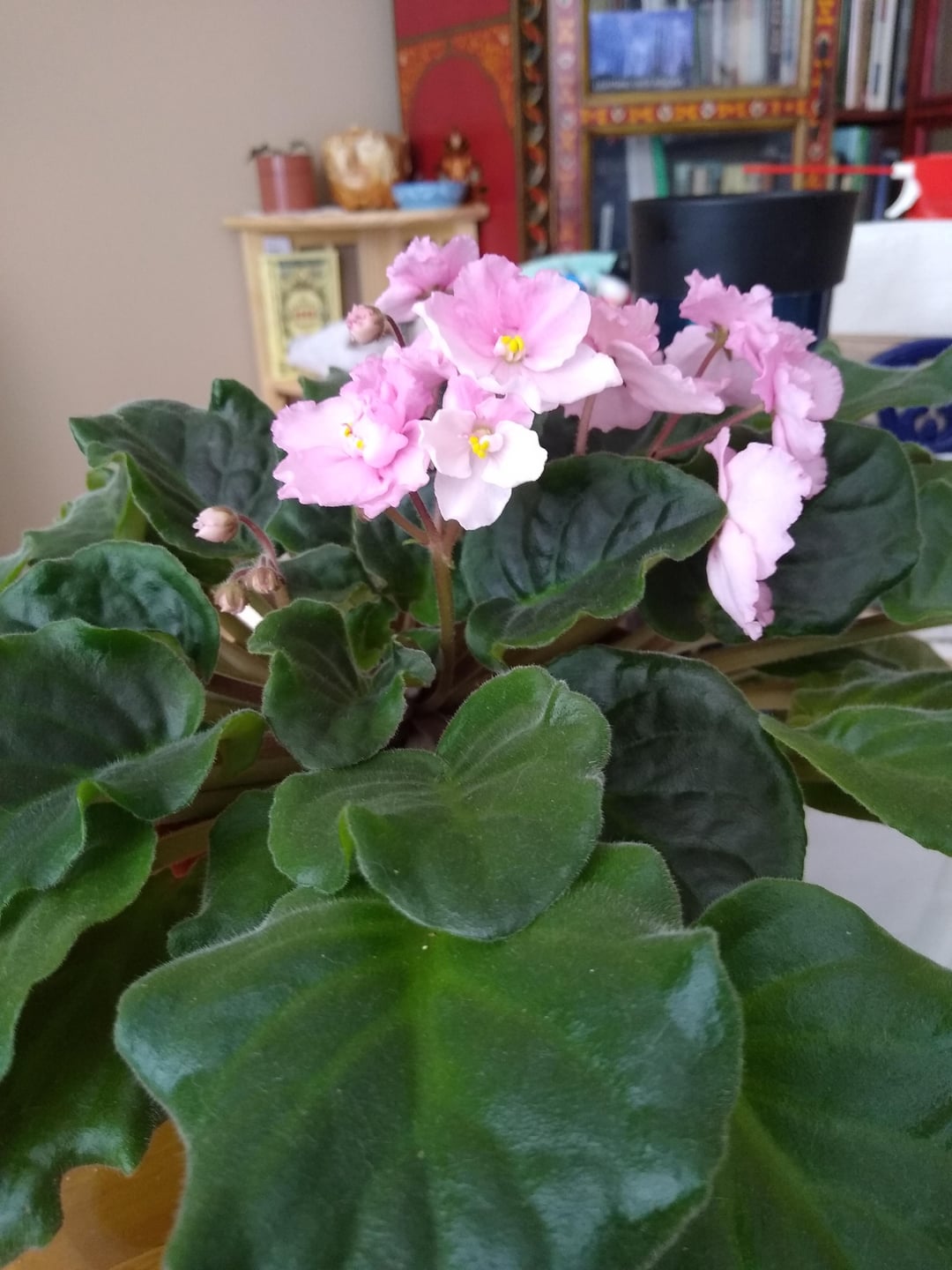
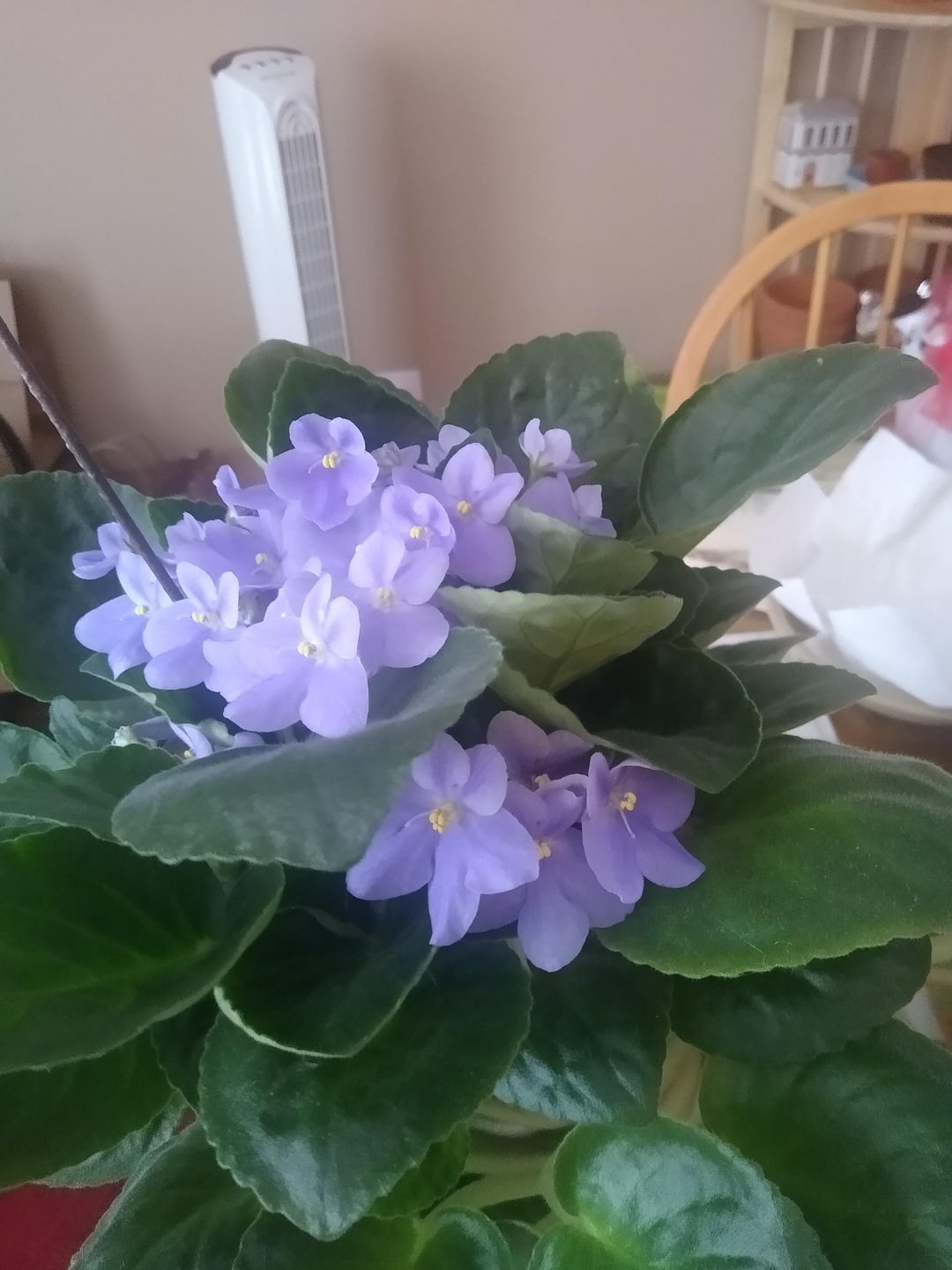
My pink African Violet is developing flowers with white petals. I hope you can see the petals. Why do violets do this? My purple violet used to have white flowers with purple streaks and now the flowers are all purple.
From my experience, violets will have kind of a final form. The first bloom or two might not look like how they’re going to look in the end.
I started most of my violets from a single leaf and I’ve watched it happen to a few of them so far
I’m not sure if this is what is happening to yours or not but it’s pretty regardless 🥰
Plantaehaulic
It can be quite a shock when your spectacular, multi-colored African violet suddenly decides to bloom in a single, solid color. This phenomenon is actually very common and is usually tied to the plant’s genetics or its immediate environment.
Many bi-color or “fantasy” (speckled) African violets highly complex hybrids. Their DNA is a bit like a patchwork quilt; it isn’t always stable. The plant may “sport,” which is a genetic mutation where it reverts to a more dominant, stable ancestor—usually a solid purple, blue, or pink. African violets are famously sensitive to their surroundings, and temperature is the biggest “volume knob” for color intensity. High temperatures often cause bi-colors to lose their white edges or streaks, resulting in solid-colored blooms. If the room cools down, the next “flush” of flowers may regain their bi-color or streaks.
If the plant isn’t getting enough light, its low energy may prioritize simple pigment production over complex patterns. If you havent repot for a long time. The
acidity of your soil can change how pigments are expressed. African violets prefer a pH between 5.8 and 6.2. If the soil becomes too acidic or alkaline over time (due to peat moss breakdown or water minerals), the chemical “recipe” for the flower color shift.
DISCLAIMER: AFRICAN VIOLET GROWTH & TROUBLESHOOTING ADVICE
The information provided is based on my personal experience and general gardening best practices for the care and cultivation of African Violets (Saintpaulia) While I strive to provide accurate and helpful guidance for troubleshooting common issues—such as root rot, “neck” development, lighting, and soil requirements—please understand that plant health is influenced by many environmental factors beyond my control (including local humidity, water quality, and specific cultivar sensitivities).
This advice is for educational purposes only. I cannot guarantee specific results, and I am not responsible for the loss or damage of any plants resulting from the application of these suggestions. Always use caution when applying fertilizers, treatments, or performing “surgery” on your plants.

2 Comments
From my experience, violets will have kind of a final form. The first bloom or two might not look like how they’re going to look in the end.
I started most of my violets from a single leaf and I’ve watched it happen to a few of them so far
I’m not sure if this is what is happening to yours or not but it’s pretty regardless 🥰
It can be quite a shock when your spectacular, multi-colored African violet suddenly decides to bloom in a single, solid color. This phenomenon is actually very common and is usually tied to the plant’s genetics or its immediate environment.
Many bi-color or “fantasy” (speckled) African violets highly complex hybrids. Their DNA is a bit like a patchwork quilt; it isn’t always stable. The plant may “sport,” which is a genetic mutation where it reverts to a more dominant, stable ancestor—usually a solid purple, blue, or pink. African violets are famously sensitive to their surroundings, and temperature is the biggest “volume knob” for color intensity. High temperatures often cause bi-colors to lose their white edges or streaks, resulting in solid-colored blooms. If the room cools down, the next “flush” of flowers may regain their bi-color or streaks.
If the plant isn’t getting enough light, its low energy may prioritize simple pigment production over complex patterns. If you havent repot for a long time. The
acidity of your soil can change how pigments are expressed. African violets prefer a pH between 5.8 and 6.2. If the soil becomes too acidic or alkaline over time (due to peat moss breakdown or water minerals), the chemical “recipe” for the flower color shift.
DISCLAIMER: AFRICAN VIOLET GROWTH & TROUBLESHOOTING ADVICE
The information provided is based on my personal experience and general gardening best practices for the care and cultivation of African Violets (Saintpaulia) While I strive to provide accurate and helpful guidance for troubleshooting common issues—such as root rot, “neck” development, lighting, and soil requirements—please understand that plant health is influenced by many environmental factors beyond my control (including local humidity, water quality, and specific cultivar sensitivities).
This advice is for educational purposes only. I cannot guarantee specific results, and I am not responsible for the loss or damage of any plants resulting from the application of these suggestions. Always use caution when applying fertilizers, treatments, or performing “surgery” on your plants.