
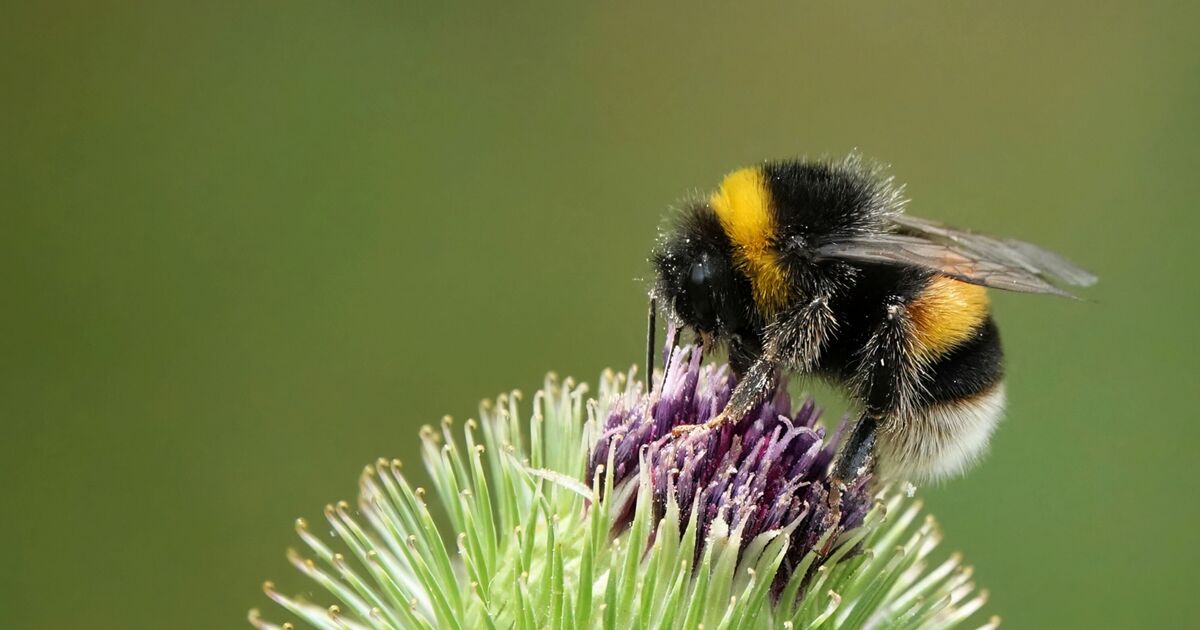
You may already have seen bumblebees or solitary bees in your garden – here’s how to help them (Image: Getty)
By late March, it’s safe to say spring is finally here. On milder days, I have already noticed bumblebees and solitary bees moving through my garden, which has been a welcome sight. However, food can still be limited this early in the season. One of the easiest ways to help is to create a bee-friendly area filled with nectar and pollen-rich blooms, and any size will help. A small border, a few pots, or even a dedicated windowbox can have a big impact.
Choose the spot
Sunny, warm spots are a big draw for pollinators, rather than just flowers alone, so pick your planting area carefully. Ideally, a south or west-facing position works well, with walls, fences or hedges offering protection from the wind. Planting in groups rather than dotting your plants around will make it easier for bees to spot and make the journey much more worth the energy. If you have chosen to grow in containers, position them closer together, creating an inviting spot for them.
Why wildflowers work so well
Wildflowers are firm favourites with pollinators, and whatever size patch you can accommodate will be a great support for a wide range of insects. Some good plants to look for in wildflower seed mixes will include oxeye daisies, cornflowers, field scabious, red clover, and bird’s-foot trefoil. They, together, offer colour for months, and plenty of pollen and nectar.
If you’re planning to sow a patch or a container soon, first, make sure your chosen area is clear of grass and weeds, and that the soil’s surface has been raked to a fine tilth. Then, you can scatter the seeds thinly, firming them in gently, and making sure the soil is lightly moist while the seedlings are settling in. I grew a wildflower patch in my garden, which you can see on my YouTube channel, @daviddomoney.
Read more: These delightful plants are among the UK’s favourite summer flowers
Read more: 6 important steps to get your lawn ready for spring now
Plants for pots, windowboxes, and balconies
Containers need plants that flower well and keep going. In late March, primroses and pulmonaria can still offer useful early forage. As the season moves on, catmint and salvias come into their own and will flower for weeks in pots and containers.
Herbs are another excellent choice for smaller spaces. Rosemary and thyme are both rich in nectar and useful in the kitchen as well, for double the benefits. For later in the year, sedum is also worth adding, feeding pollinators when many other plants are starting to fade.
Borders and beds
In borders, the aim is to keep something in flower for as long as possible. Hellebores are brilliant early on. Then, through late spring and summer, foxgloves, borage, and hardy geraniums all prove very popular with bees. Later still, verbena bonariensis brings height and movement, while asters help carry the display into autumn. If you have room for shrubs, buddleja, hebe, and ceanothus are all worth considering, depending on your soil and the space available.
Other ways to help pollinators
Open-centred flowers are usually the best choice, as they make nectar and pollen easier to reach. Bees are especially drawn to shades of blue, purple, white, and yellow, so repeating those colours can help pull a planting scheme together. Single flowers are often more useful than very double ones too. Some dahlias and roses, for example, are far easier for pollinators to use when the centre is open. A shallow dish of water with a few stones added will also give insects somewhere safe to drink.
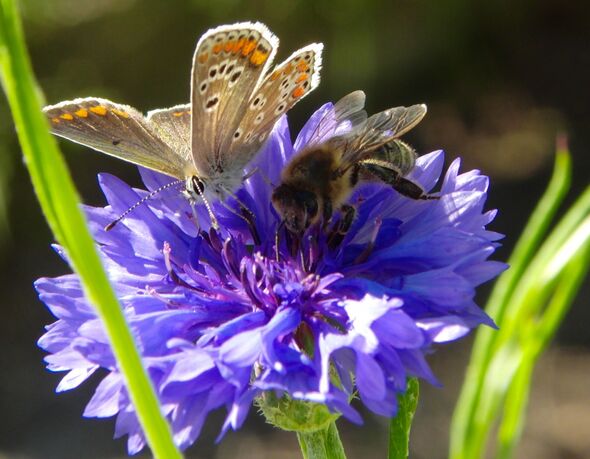
Butterfly and bee sharing a flower (Image: Getty)Focus Plant – Ribes sanguineum (flowering currant)
Ribes sanguinium (flowering currant), is a great shrub for March gardens, bringing some lovely and welcome colour. It has pendant-like clusters of pink, cerise, or white flowers, which hang delicately along the stems, and is a welcome addition for bees too.
If you would like to add one to your garden, March is a great month to do so, as the soil is still moist, and the shrub has time to settle before summer kicks in. They do well in a sunny or lightly shaded position, with reasonably well-draining soil. Before planting, add some peat-free garden compost or well-rotted organic matter, and once the plant is in place, mulch around the base to conserve moisture.
Care is nice and simple. Just water newly planted shrubs if the weather turns drier during their first growing season, and make sure the area around the base is kept clear of weeds. Once the plant is more established, flowering currants are reliable and have few care requirements.
When it comes to choosing varieties, consider flower colour and overall size first. ‘King Edward VII’ is a classic, with showy pink-red flowers. Alternatively, ‘White Icicle’ has a fresh look, with elegant white blooms for a brighter look. If you’re working with less space, ‘Brocklebankii’ stays more compact and has interesting golden foliage.
Fun fact: The name ‘sanguineum’ actually means ‘blood-red’, a nod to the rich colour found in a wide variety of flowering currants.
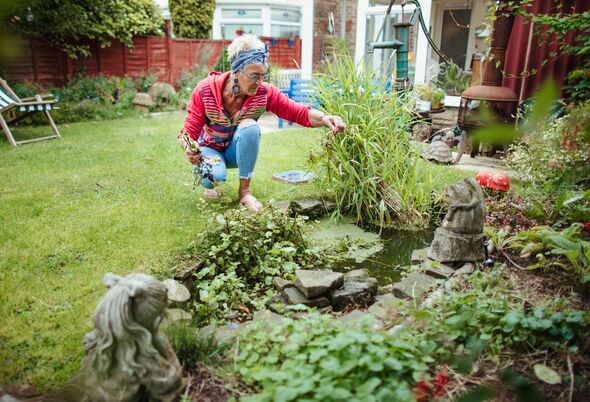
It’s a good time of year to clear your pond and check the pump (Image: Getty)Top 5 Gardening Jobs
1. If your soil is workable and warming up nicely, it’s a good time to sow beetroot and Swiss chard outdoors. Make sure you choose a sunny spot, and that you’ve raked the soil to a fine tilth first. Each can be sown thinly in short rows and watered gently, and the area needs to be kept free of weeds.
2. Sturdy seedlings can begin to be hardened off now by positioning them in a sheltered outdoor spot during the day, and brought back inside at night. This gently lets the plants adjust to cooler air and brighter light, and over a couple of weeks, it makes a real difference.
3. Clematis and honeysuckle are really starting to come into growth now, so make sure their supports are ready by tightening any wires, checking that the trellis is firm, and that old ties are still secure. The young shoots are quite vulnerable to wind damage, so guiding them early makes sure plants stay tidy and healthy.
4. It’s a great time to repot rootbound houseplants, to give them more space to thrive. Slide them out of their current containers and move them into a pot one size bigger, refreshing the compost too.
5. Check the intake on your pond pump for leaves, duckweed, and other debris, to ensure water is flowing well and the system is working properly. This keeps your pond looking fresh and makes the conditions healthier for the life it supports.
Facebook – https://www.facebook.com/DavidDomoneyTV
Instagram – https://www.instagram.com/daviddomoney/
Pinterest – https://www.pinterest.co.uk/daviddomoney/overview/
TikTok – https://www.tiktok.com/@daviddomoney
Did you know?
Camellia flowers can look especially well-polished after rain, as their blooms are thick and waxy, meaning they shrug off spring showers better than softer-petalled blooms. You can learn more about growing your own camellia on my YouTube channel, @daviddomoney.
Oak galls, which are little growths which form on oak trees by gall wasps, were once used to make ink. The tannins within them react with iron salts to create iron gall ink. This was a dark, durable writing ink used for historic manuscripts.
Early beekeeping in Britain relied on straw skeps, which were traditional woven hives used for centuries. The big 19th-century turning point came with movable-frame hives, which made it far easier to inspect colonies and harvest honey with less disruption.
English bluebells face pressure when competing with vigorous Spanish bluebells, which spread and hybridise with them. In gardens near native populations, Spanish bluebells are widely treated as invasive.
Comments are closed.