
What a lovely gardening week!
Mostly dry, sometimes sunny, warm enough (though maybe just a bit too breezy at times).
There is a bit of a rhythm at this time of year.
Outside it goes something like this: cutting back the last of last year’s perennials, deadheading the first bulbs, removing the first perennial weeds as they appear and the first annual weeds before they set seed, feeding shrubs which have been pruned then mulching.
Certificate in Practical Horticulture assessment (Image: Norfolk School of Gardening)
In the greenhouses we are checking on the overwintered cuttings and plants, weeding where necessary, removing dead material, topping up the compost, sowing more seeds, pricking out more seedlings, potting them on as they grow…
So much is happening right now and it’s easy to feel overwhelmed, but we try to keep up a steady pace and get done what we can, without going completely mad!
This is a great time of year to give some thought to what could be added to the beds or moved around to ensure interest and colour throughout the year.
Planting for Year-Round Colour & Interest is always a popular course, and everyone left with lots of ideas of changes to make to, as well as a few plants to acquire.
Of course they don’t all have to be bought at great expense.
Lots of plants can be propagated for practically nothing.
Certificate in Practical Horticulture assessment (Image: Norfolk School of Gardening)
Seeds sown now will mostly provide flowers from early summer onwards, and cuttings can be taken which may provide structure and colour as early as the autumn.
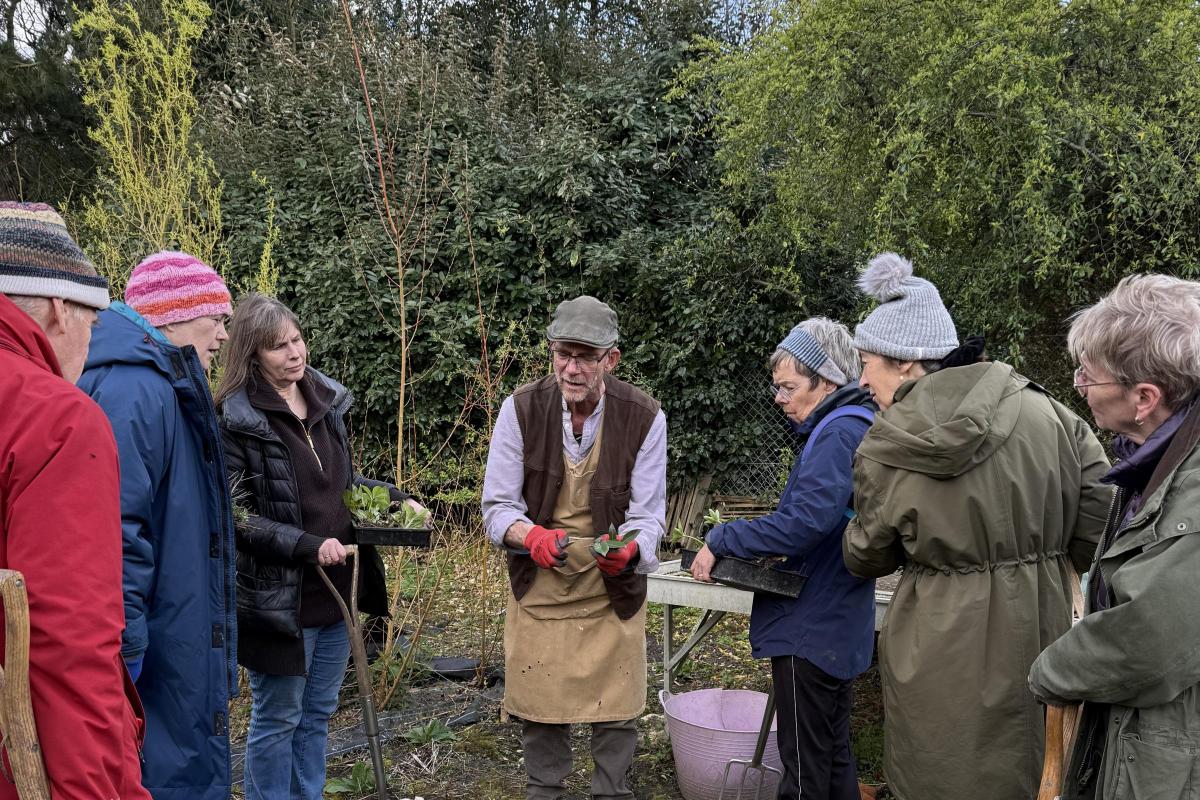
We had the first of our propagation workshops this week – Plants for Free – and all the participants took home cuttings as well as plants they had lifted and divided.
Both of these courses run again later in the year.
The tulips we planted last autumn in egg boxes are well out of the ground and the first ones are just coming into flower.
I love cutting flowers and foliage to arrange in vases and pots around the house, and it’s great to be able to start creating little posies from early February onwards.
Sarah Hammond from English Peonies inspired a class this week to go and create their own cutting gardens, looking at how to do so as sustainably as possible.
This course runs again next month if you would like to join us.
We were very happy to have a dry day for the Certificate in Practical Horticulture assessment.
The day went really well and the students were very calm as they demonstrated the skills and knowledge they had acquired over the past ten weeks.
Next term’s course is fully booked and we can’t wait to welcome the new cohort for what is always a great course.
tulips planted in egg trays (Image: Norfolk School of Gardening)
There are some excellent courses coming up which still have spaces.
Let us know if you’d like to join one of these:
· Advanced Practical Gardening – 15th April
· Sustainable Cutting Garden – 22nd April
· Border Design – 16th & 23rd April
· Basic Bricklaying – 30th April
· Gardening Under Glass – 6th May
Leucojum aestivum (Image: Norfolk School of Gardening)
Plant of the Week
Leucojum aestivum, or the snowflake, is much larger than its relation, the snowdrop.
It’s easy to grow and multiplies freely in most gardens, provided the soil is moist enough.
It’s been known to withstand flooding and standing water, so it’s an ideal choice for bog gardens and pond-side plantings.
It is a tall plant, reaching up to 50cm with wide white bell-shaped flowers with green markings and strappy dark green leaves.
Grow Leucojum aestivum in moist soil in sun to partial shade.
Allow to self-seed naturally and let the foliage die down fully after flowering before cutting back.
Contact us via www.norfolkschoolofgardening.co.uk or follow us on Instagram or Facebook.
Comments are closed.