
Lighter nights may be a small change but they make a ‘world of difference’ to gardeners…
That’s it – we’re past the equinox, which means we are officially in spring. Daffodils and tulips are painting the flower beds with colour, magnolias are in full bloom and, most importantly to me anyway, the evenings are really drawing out now.
It was way past six the other day when I took a look out the window and noticed it wasn’t pitch black. It is a small change, but it makes a world of difference to the soul.
 Take extra care when handling delicate young shoots
Lighter evenings can only mean one thing – more time in the garden. Spring doesn’t only bring lighter evenings, it also means warmer days, and we’ve definitely had a few of those recently. The sunshine and warmth are amazing, and I don’t know about you, but it really lifts my mood after the long, cold, wet winter we have endured.
There is something about that first bit of vitamin D that makes you want to get outside and get your hands dirty.
As the weather improves, so do the gardening jobs, and one in particular is cutting the lawn. Now, I’m not a massive fan of mowing, and I’m not really one for those pristine, bowling green stripes that some people obsess over.
Jamie prefers a bit of moss in his lawn
In fact, our back lawn is probably 40% moss, which I quite like. It’s soft underfoot, stays green in a drought and is much better for the local wildlife than a sterile patch of grass. Anyway, regarding the lawn, I finally gave ours its first cut this weekend.
It probably sounds silly me giving advice on mowing, but there are a couple of pointers you may want to follow to keep your grass healthy for the summer ahead.
Try to do it at the end of a nice, warm, sunny day. The main reason is so the sun can dry the grass as much as possible. You really don’t want to be cutting a wet lawn – not only because it clogs the mower and makes a mess, but it tends to rip the grass out by the roots rather than giving it a clean cut.
Another thing to think about is height. Don’t try to cut the grass really low to start with. I put my mower on the highest setting and just nipped the tops off to gently wake the grass up without causing physical shock that can stunt its growth for the rest of the season.
You can gradually get to your preferred height over the next few weeks as the grass gets stronger. And lastly, keep an eye on the weather forecast.
Don’t mow your lawn when we are due a frost, as it can damage the blades of grass right where the fresh cuts are, turning the tips an unsightly brown.
With the lawn sorted, my attention at the weekend has turned to the seedlings I started a few weeks ago. If you’ve been following along with my series on growing your own veg, you might notice your little green shoots are starting to change.
When a seed first sprouts, it produces two smooth, simple-looking leaves. These are called the cotyledons (or seed leaves). The time to start pricking out – which is just a gardener’s way of saying moving them to their own pots – is when the true leaves appear.
These are the second set of leaves that grow from the centre, and they actually look like the plant they are going to become.
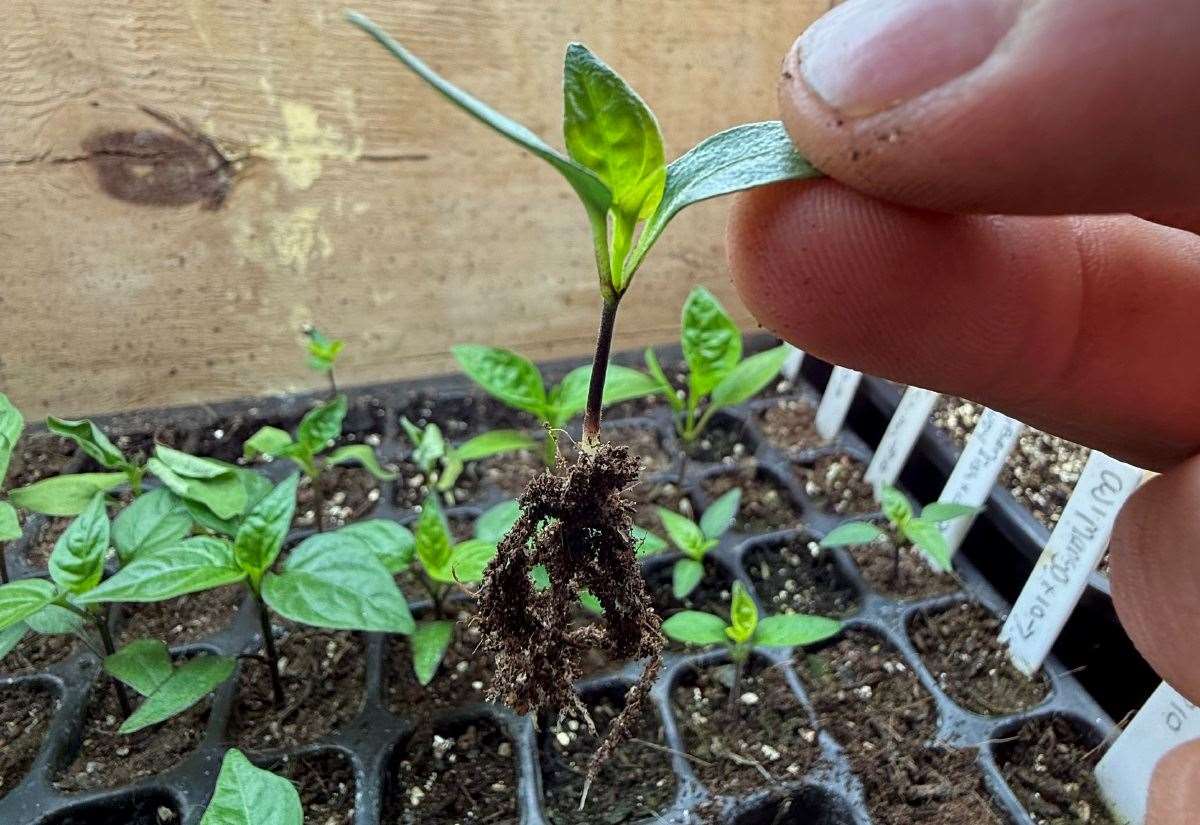
Once those true leaves are showing, the plant is ready for more space to develop its root system. It can feel a bit nerve-racking handling something so delicate, but the golden rule is never handle them by the stem. If you crush the stem, the plant is a goner, but if you accidentally tear a tiny bit of a leaf, it will usually recover.
I use a dibber though an old pencil, a lolly stick, or even the handle of a teaspoon works just as well, to gently prize the roots out from the bottom. Hold the seedling by a leaf, ease it out, and pop it into its own pot of fresh, peat-free compost.
I like to bury them slightly deeper than they were before, right up to the base of those first leaves, to give them a nice sturdy start and prevent them from becoming leggy.
Once they are in their new pots, keep them in a bright spot, but try to avoid the scorching midday sun. Over the next few weeks, as they get bigger and the weather continues to warm up, we will start the process of hardening off – gradually introducing them to the outside world so they don’t get a shock when they finally move into the allotment soil.
But for now, just keep them watered and enjoy watching those true leaves grow. Let me know how your garden is doing or if your seeds have germinated.
Email me on jamieslittleallotment@gmail.com
Comments are closed.