
– Advertisement –
Please Support Local Advertisers
548
IPSWICH — As the winter chill begins to lift from the coastline, a specific, frantic energy hits town the moment the thermometer ticks past 50 degrees.
It’s known as the “Spring Itch” — that irresistible urge to clear away dead leaves, stick hands in the dirt, and transform winter-worn yards into something vibrant.
But as any veteran coastal gardener knows, a Massachusetts spring is a fickle friend. Navigating the “danger zone” of late frosts while trying to maximize the growing season can feel like a high-stakes guessing game.
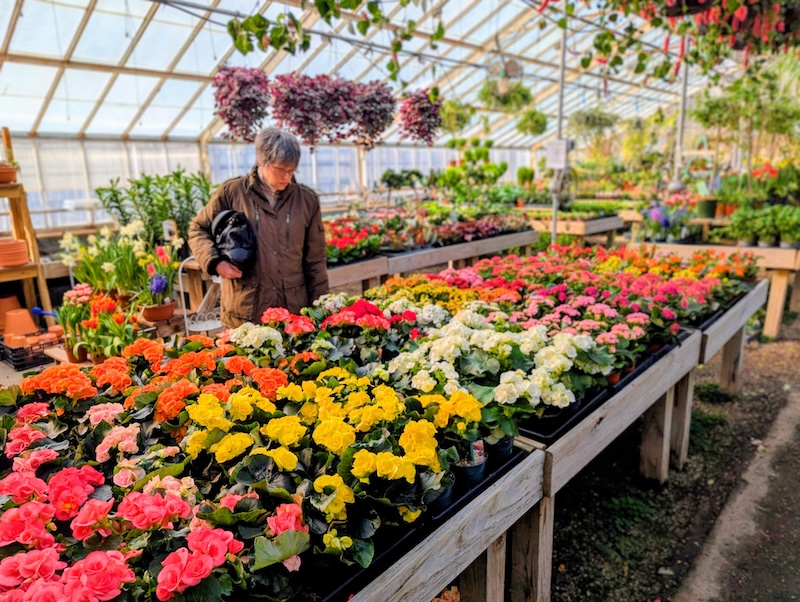
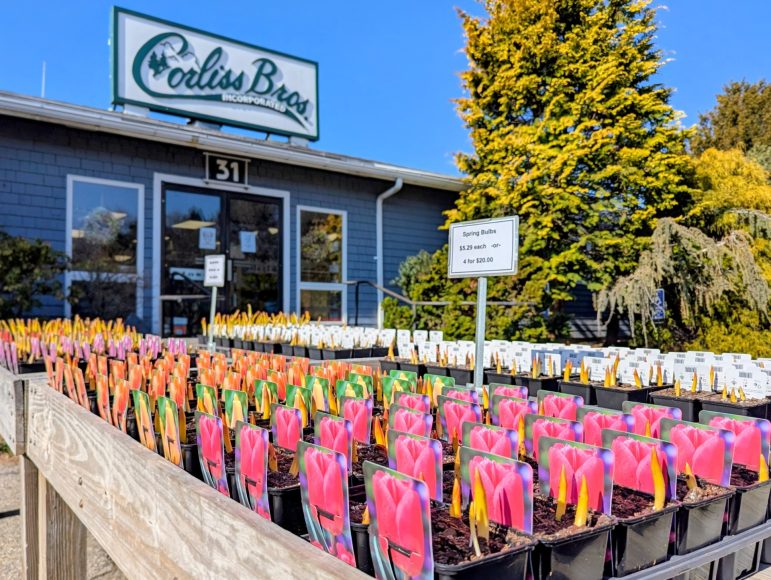
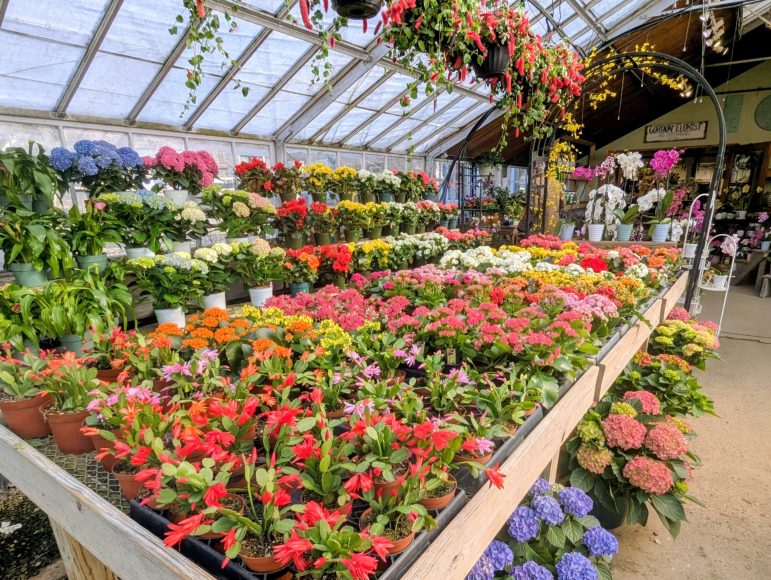
To help you move from mud season to masterpiece, the Local News toured the town’s four horticultural hubs: Corliss Brothers Garden Center & Nursery, Gordon Florist & Greenhouses, Marini Farm, and Wolf Hill Garden Center.
These local experts are the keepers of our specific micro-climate’s secrets. While big-box stores might sell petunias raised in southern heat, our local nurseries provide advice tailored to our sandy, salt-kissed soil.
Timing the tussle with Mother Nature
The primary challenge for Ipswich gardeners is identifying the true safe date for planting.
David Gordon, owner of Gordon Florist, notes that we are usually frost-free after the first full moon in May. In 45 years, Gordon said, he has seen frost only once after that May moon.
This sentiment was echoed by Steve Calef at Corliss Brothers. “Mother Nature has its own mind,” he said. “We usually say there is at least one false start to the weather in New England.”
 Melanie Simard photo
For those eager to start, the experts suggest a tiered approach:
· Trees and shrubs: Hunter Jay at Wolf Hill says these are generally safe once the ground has thawed. Avoid a “prolonged deep freeze” — four to five days of consecutive below-freezing temperatures — which can kill new root systems.
· Cold crops: Mike Marini of Marini Farm recommends direct-seeding hardy vegetables like carrots and peas now. Jackie Panek at Wolf Hill adds that cabbage, kale, and lettuce can also handle the current chill.
· Early color: For immediate curb appeal, Gordon suggests “finished bowls” or hanging baskets of pansies and ranunculus. These “first responders” handle light frost well, though they should be brought inside if temperatures dip toward a hard freeze.
· The “wait” list: Heat-lovers such as tomatoes and basil should stay indoors. Marini warns that planting these too early is the most common mistake local gardeners make.
Prepping the foundation
Before the first seedling hits the ground, focus on preparation:
· Test the soil: Marini’s top recommendation is a professional soil test to identify nutrient deficiencies before you plant.
· Clean with caution: Panek warns against over-cleaning too early. Many beneficial insects and native bees hunker down in fall leaf litter, so waiting until spring is established protects these pollinators.
· Feed the beds: Jay suggests a top dressing of compost to revitalize soil. For weed suppression, use a mix of bark mulch and compost.
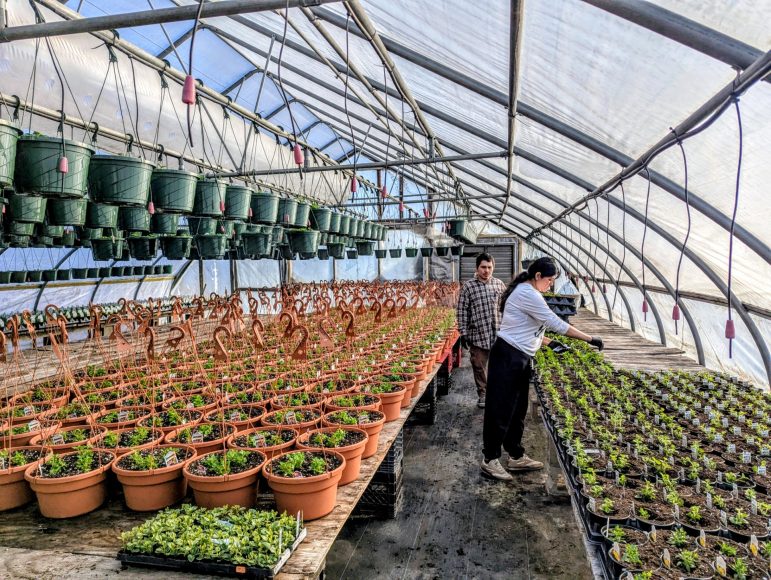
· Warm the seeds: If starting seeds indoors, Marini suggests using a heating pad under seedlings to maintain a consistent 68 to 70 degrees.
 Melanie Simard photoIpswich-proof selections
Our coastal environment demands plants that can handle salt air and sandy soil. For “Ipswich-proof” options, Calef recommends bayberry and Gro-Low sumac, while Jay points to grasses and Rosa rugosa (beach roses).
For early color, look for witch-hazel or choke cherry, which bloom while the soil is still cold.
Regarding deer, the consensus is that nothing is truly “deer-proof.” However, Jay recommends plants they often overlook, such as azaleas, mountain laurel, andromeda, and viburnum.
Calef notes that summer and fall bloomers are strategic choices, as they can handle “winter pruning” by hungry deer and still flower later in the year.
 Melanie Simard photoNew for 2026
Local centers are introducing several unique varieties this season. Wolf Hill is highlighting “storm proof” hydrangeas, featuring stronger branching to support massive blooms, and the “ghost” series of Japanese maples.
At Marini Farm, look for greenhouse cucumbers starting in May — a new project for the farm this year.
As you prepare your garden, the overarching advice remains the same: stay patient and support the experts in your backyard.
“When you buy from big-box stores, they aren’t answering questions for this area,” Gordon said. “Getting those local tips is what really helps.”
As for those eager to get out in their gardens, Gordon advises: “Take a breath [and] enjoy what is out now.”
The Local News is a 501(c)(3) nonprofit organization. We can only operate with your assistance.
Comments are closed.