
The new exhibition at the Ashmolean Museum in Oxford, called In Bloom: How Plants Changed Our World, is a rather special mix of the wonderful, the weird and the downright wacky. The wonderful can be found in the sumptuous paintings of tulips and roses, poppies and orchids. They are entrancing — and essential to this kind of show — but there are other enticing curiosities too.
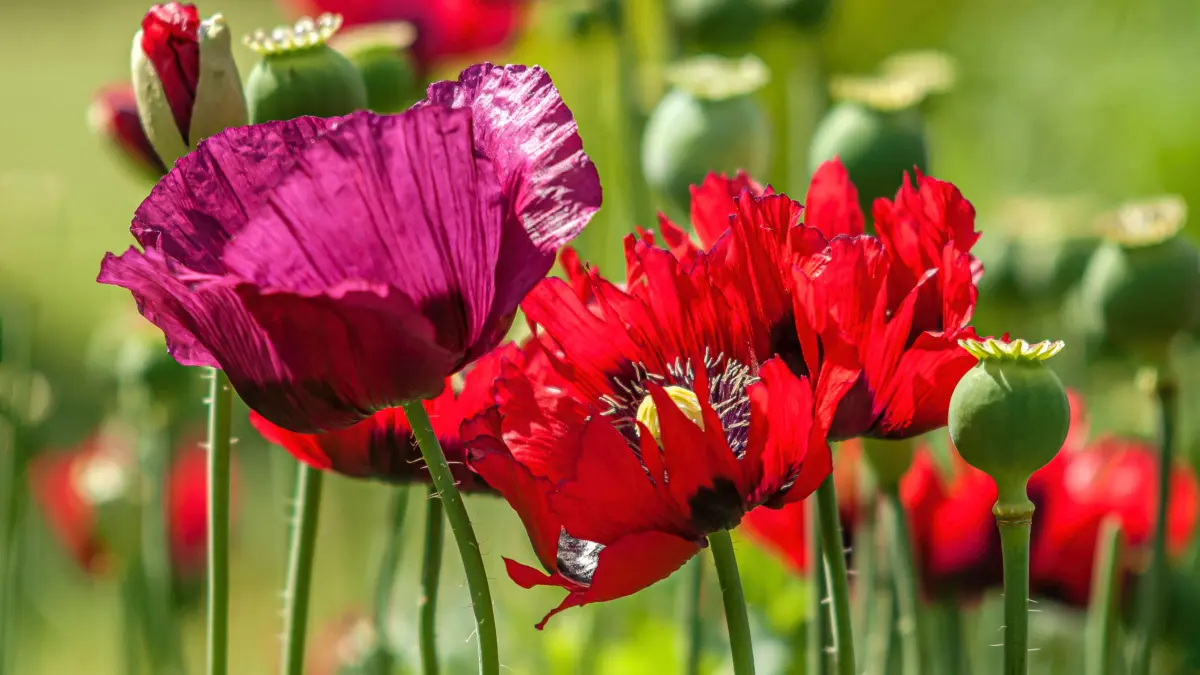
Do you know what opium smells like? Like many gardeners in Britain, the opium poppy (Papaver somniferum) arrived in my garden as a volunteer and self-seeded to the point of embarrassing. Opium (and indeed the painkiller morphine) comes from the latex that oozes from its unripe seed pods, though opium dens and wars are the stuff of history, not my veg and flowerbeds.
I’d never even thought about what an opium den smelt like but now, halfway through the exhibit, when it really gets going and concentrates on how plants have inspired manias (tulip) and war (opium), was my chance. “I find it rather sensual,” admitted the co-curator Shailendra Bhandare, somewhat bashfully, as he bent over the 3D printed “scent trumpet” and took a lungful.
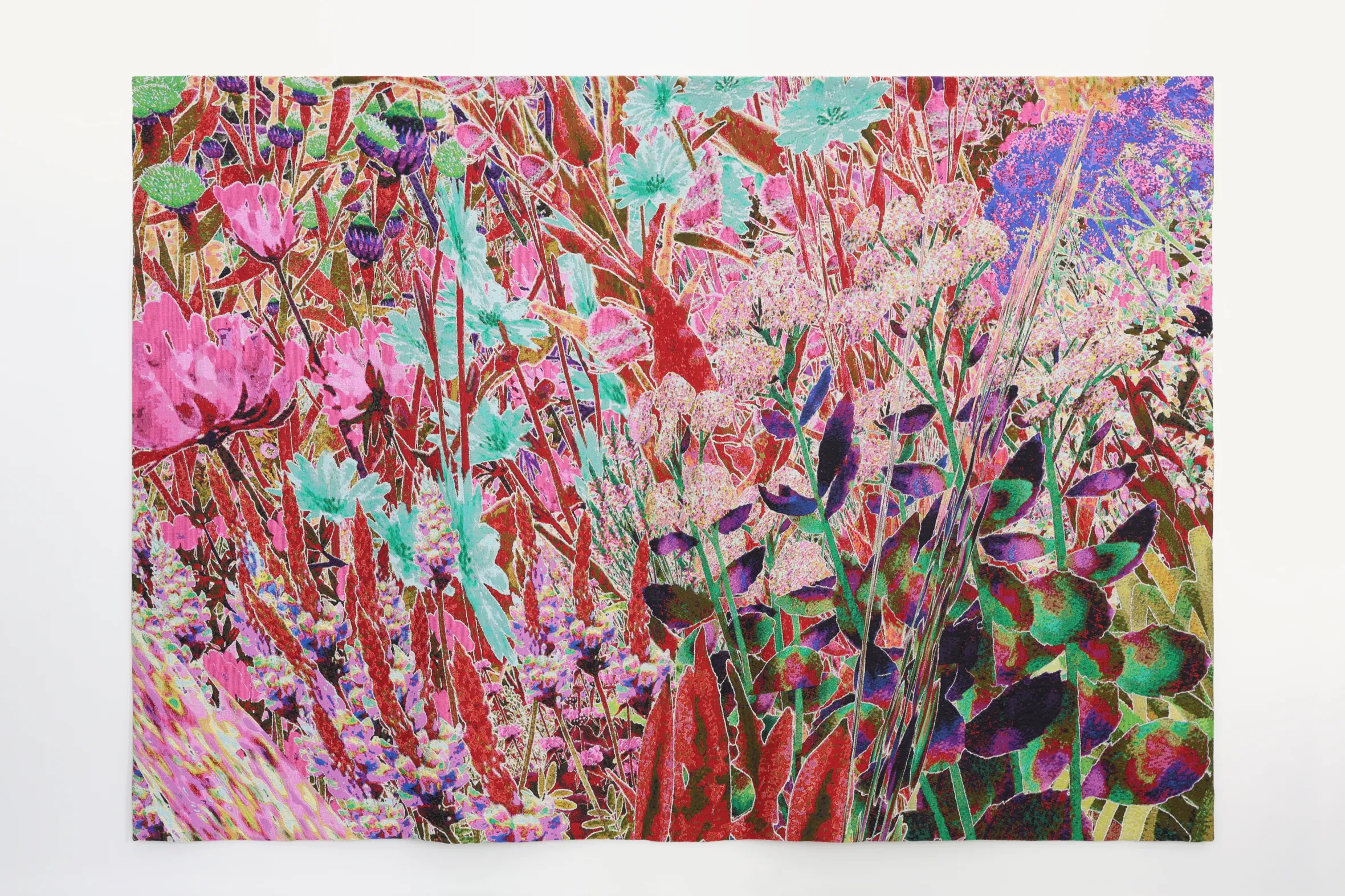 Woven tapestry, by Alexandra Daisy Ginsberg Alexandra Daisy Ginsberg
Who could resist? The label helpfully provides “scent notes”, which are “bitter, warm, burning chestnuts, earthy, marshmallow, hint of caramel”. To me, it smelt earthy, and though I don’t know about sensual, it certainly was intoxicating.
Scent is one of the fundamental joys of gardening and it is ingenious to have that acknowledged here. You can also smell the damask rose and green and black tea. None of these plants is considered native to Britain but all have affected our lives (imagine life without a cup of tea) and that is part of the overall story being told.
The exhibition begins in Oxford with John Tradescant the Elder (1570-1638) and his son (the Younger) who were gardeners, naturalists and collectors. It traces how a network of the rich, the scientific, the artistic and the adventurous began to transform our understanding of plants. This is a huge topic and it gets a broad brush approach. The 100 artworks stretch from the eccentric, including some bonkers flower teaching models, to the sublimely beautiful. A still life of broken and fraying tulips by Simon Verelst (1644-1721) feels so real that it almost pops out of the frame.
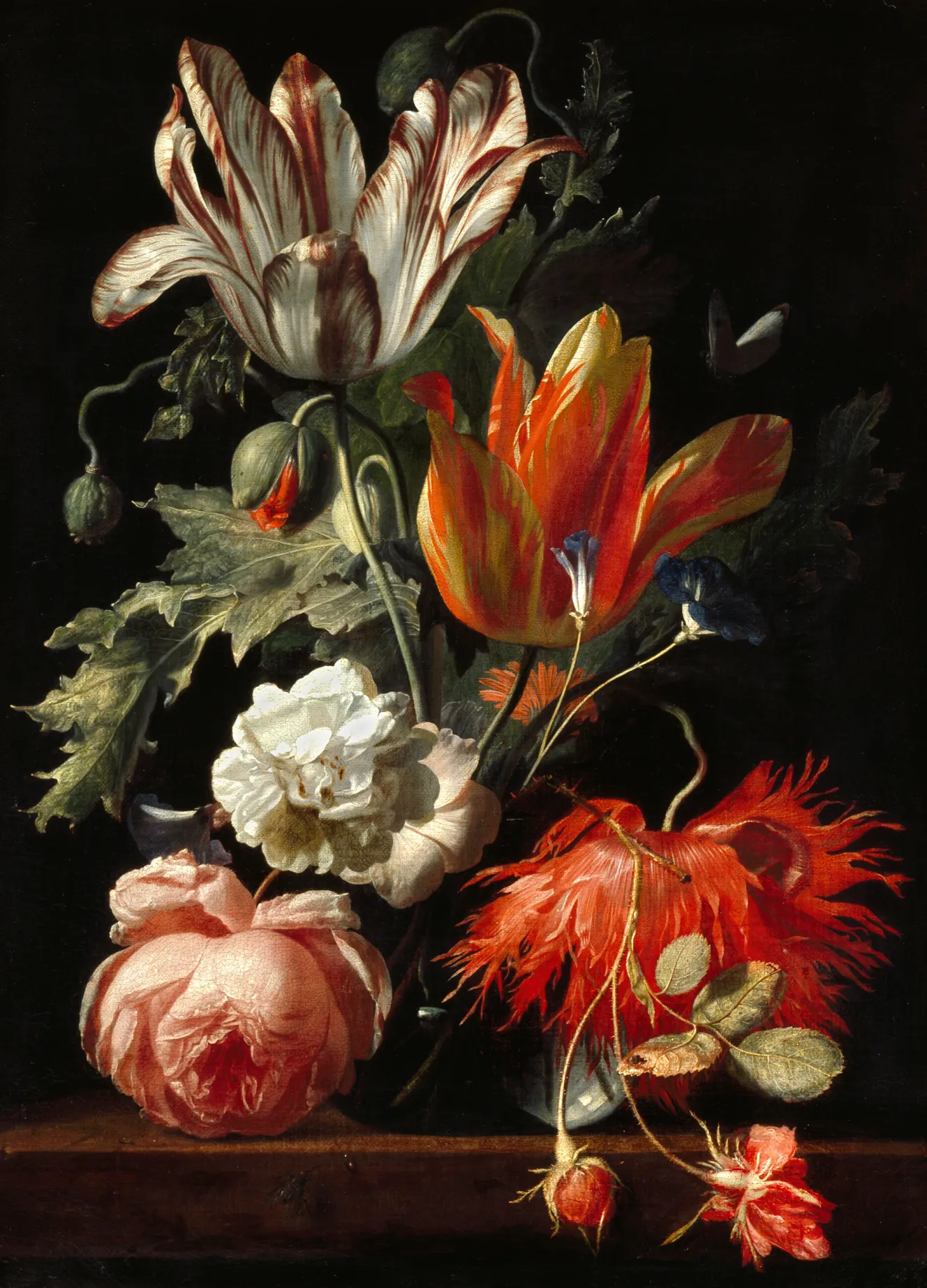 A Vase of Flowers, by Simon Verelst, c 1669-1675Ashmolean Museum, University of Oxford
As a whole, the exhibition is trying to cover too much ground, and I would have liked more specific examples (and smells) of plants that have changed our lives, but it has oomph and originality. I would happily go back. It’s four stars from me.
In Bloom is at the Ashmolean until Aug 16; £16.20, ashmolean.org
More gardening-related exhibitions to book
Handpicked: Painting Flowers from 1900 to Today, Kettle’s Yard, Cambridge
This exhibition is a must-see for me, featuring works by more than 40 artists, including Henri Rousseau, Vanessa Bell, David Bomberg, Tirzah Garwood, Louise Bourgeois, Chris Ofili and Jennifer Packer. Kettle’s Yard is both a house museum and gallery and freshly picked flowers have always been part of the story here. The show was inspired by two paintings on permanent display: Winifred Nicholson’s Cyclamen and Primula (1923) and Christopher Wood’s Flowers (1930).
Apr 25-Sep 6, free, kettlesyard.cam.ac.uk
Henry Moore: Monumental Nature, Kew Gardens, London
This promises to be incredible in the largest sense of the word. It is the biggest ever presentation of outdoor works by Henry Moore. There will be 30 of his large sculptures placed throughout the gardens while, inside the Shirley Sherwood Gallery of Botanical Art, more than 90 of his smaller models and sketchbooks, as well as some sculpture, will be on display.
May 9-Jan 31, 2027, included with garden entry (£24), kew.org
Gardener’s question
Q. The petals of my daffodils in flowerbeds are being eaten this year. The ones planted in pots appear not to have been affected. Could we be suffering from hungry slugs and snails?
Diana Loch
A. Bullseye. If it’s any comfort, you aren’t alone. I was at Hever Castle in Kent last week for its daffodil celebration and Johnny Walkers, the horticulturalist and daffodil guru, pointed out several plants with nibbled petals, identifying the culprit as young slugs. And so the annual slug battle begins. Pots are always a good way to delay their arrival and also, as a limited area, make it easy to check on intruders. RHS trials about various methods to deter slugs and snails (eggshells, grit etc) have not provided much hope. Ferrous phosphate pellets can be used (sparingly) but night patrols to remove them are the only surefire way to win in the long term. I find those beanie hats with built-in head torches very handy, if supremely unfashionable.
Send your garden queries to gardenquestions@thetimes.co.uk
Comments are closed.