
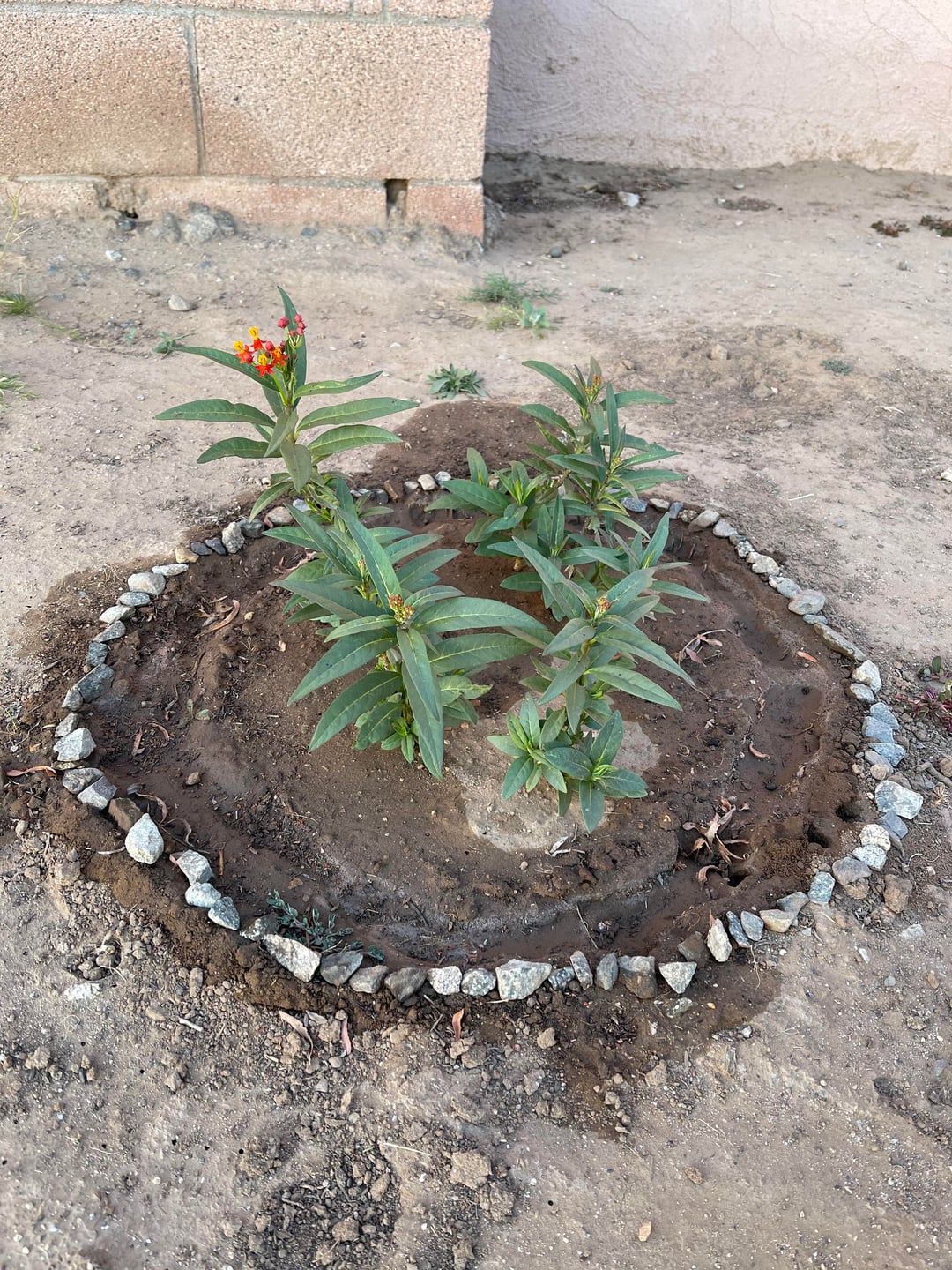
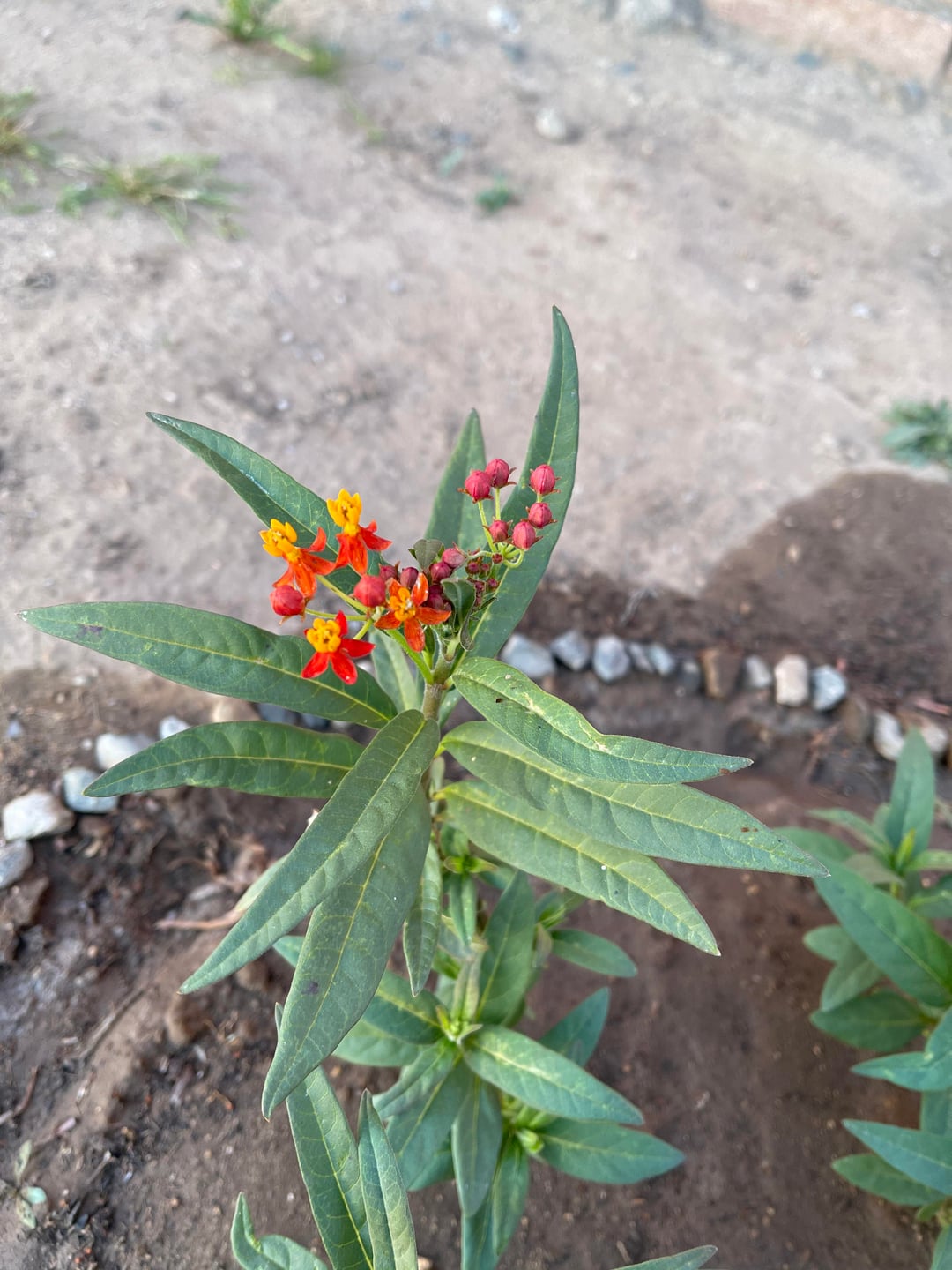
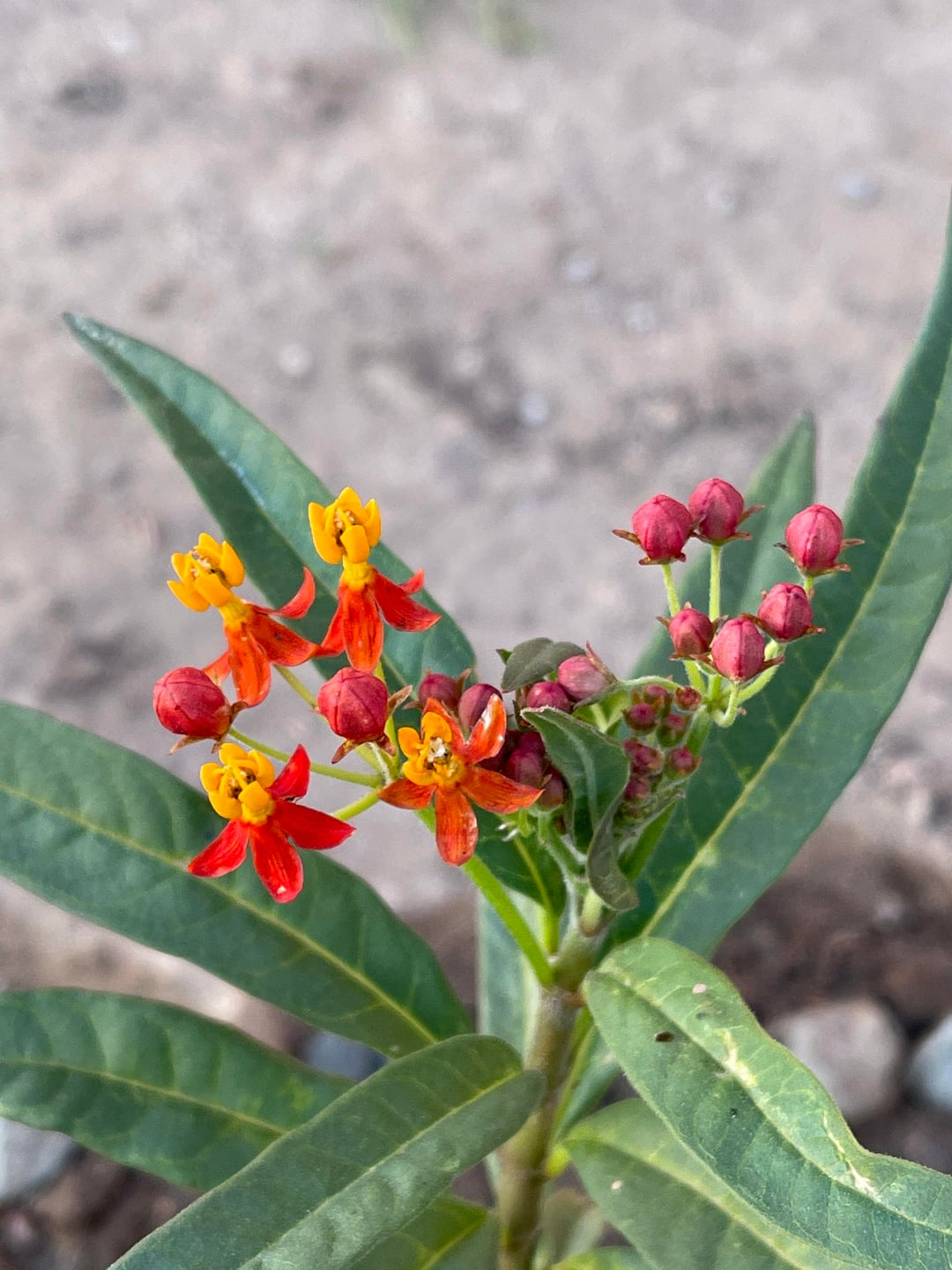
Southern CA. I bought a 6-pack of milkweed seedlings at my local nursery 2 months ago. It had a handwritten label that simply said milkweed. Yesterday I was talking to one of my neighbors who mentioned not to plant tropical milkweed as they harbor parasites.
So, what type of milkweed did I actually plant?
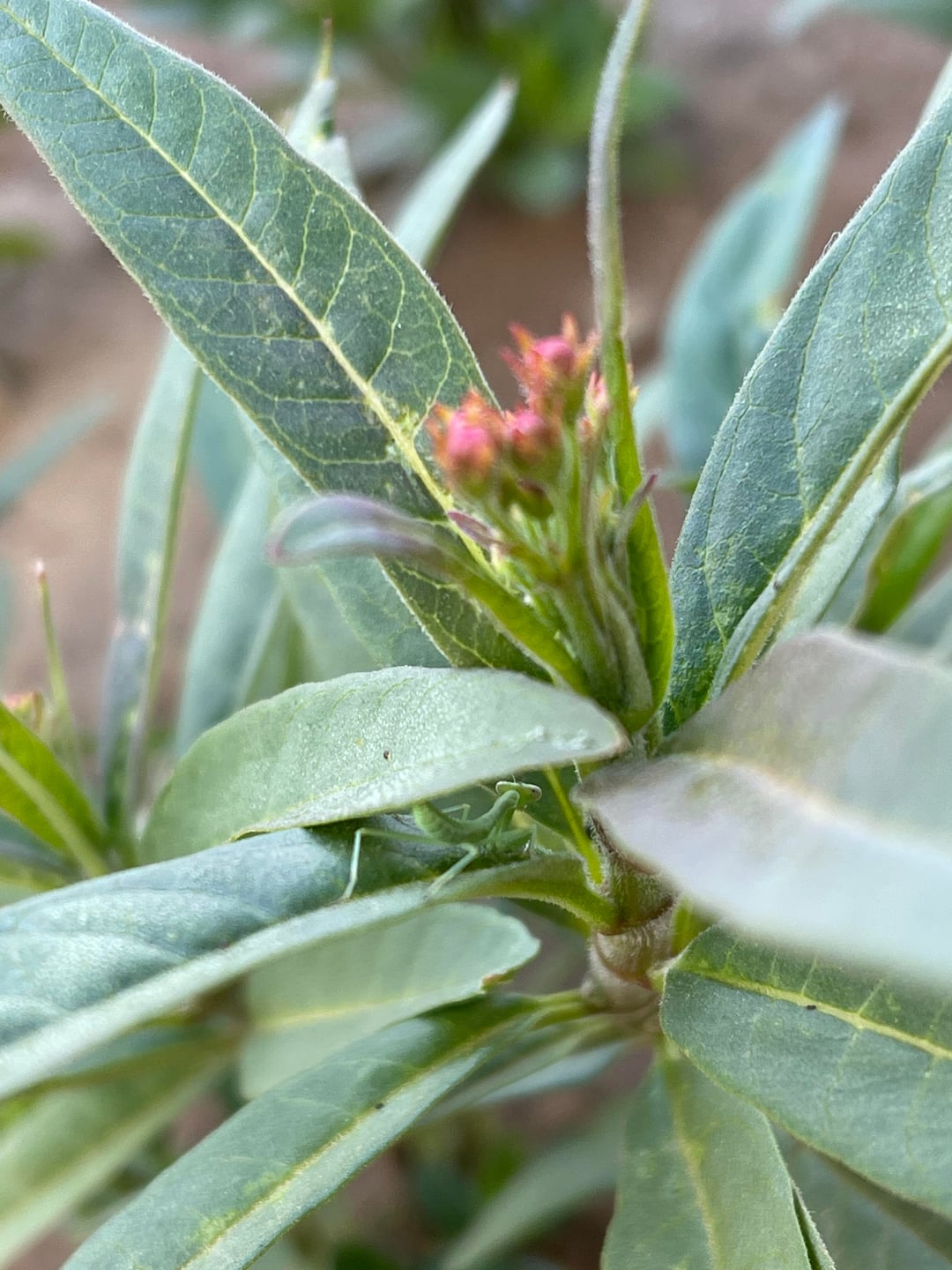
Bonus: there are 3 tiny praying mantis scattered on the milkweed (last picture). Will they eat monarch caterpillars? Should I move them to other plants?
Update: Identified! Thank you for everybody’s input, and I really appreciate the resources you guys shared. I’ll be ripping them out this weekend, which is a shame as it took two months (too long for my impatient ass) to bloom. I guess I shouldn’t put too much faith in my local nursery to sell me the correct plants; I picked the 6-pack up from the “native” section lol. I’m a bit miffed about this mix-up though, because now hundreds of people are mistakenly planting tropical milkweed, adding to the confusion for monarch butterflies. I’ll try to talk to the owner of the nursery this weekend as well. Wish me luck!!
by parissf
11 Comments
It’s tropical.
ETA: Rehome the mantids then rip up the plant.
Just FYI, the problem with tropical milkweed isn’t parasites. (Or maybe that’s another problem they have that I was unaware of!)
The main issue is that monarchs follow the different milkweed species as they bloom, and they all bloom at slightly different times of the year. That’s how monarchs “know” how to migrate. They just leave each place when the flowers stop blooming. So if you plant tropical milkweed in an area where it isn’t native, it will bloom earlier or later than the native milkweeds, and the monarchs will end up leaving the area too soon or too late. Then when they migrate to the next location, there won’t be any milkweed blooming there because they mistimed their arrival, and they’ll starve to death.
Bingo – it looks like tropical milkweed
It’s REALLY hard to tell until they bloom.
Praying mantis will eat anything they can catch. They’ll even try to fight you, which is super cute since they don’t really harm humans
This is tropical. We have narrow leaf milkweed and a couple of other species in Southern California, the flowers are whitish. I would recommend looking at the Theodore Payne Foundation, they sell seeds for native milkweed.
Be careful what you wish for. Milkweed can spread aggressively from windblown seeds and rhizomes. Once they get going they are hard to control and your neighbors may not appreciate them sprouting up everywhere.
It looks very much like tropical milkweed, A curvassica. If the genus and species aren’t clearly labeled and you know the species is native to your region, don’t buy it. Look around for native plant sale groups that might be having spring sales or swaps.
Cross post in r/monarchbutterfly cause there was a recent post specifically about tropical milkweed
There is considerable mis-information on the internets and elsewhere regarding this. While “native” milkweed is preferred, there is FUD regarding tropical milkweed. See:
Tropical Milkweed Doesn’t Deserve the Bad Rap | Bug Squad https://share.google/JJA9p74O2HveuOxkr
Also see:
monarch butterfly population increases 64 percent | World Wildlife Fund https://share.google/XYTLWl5rzCKXxRuhJ
Be cautious of Chinese mantids. They’re massive non native predators and in my experience they specifically target pollinators. I have watched them numerous times hunt by sitting on flowers and waiting for pollinators to land. I kill them on sight honestly. I don’t know how to tell them apart from the native ones at the juvenile stage but it’s really obvious as adults. And the oothecas are easy to distinguish from native based on the shape.
Tropical for sure
Nature is amazing some times. Love the little friend in the last picture!! Can you spot the praying mantis?