
While one of the most exciting parts of spring is watching perennials and bulbs push forth and for flower buds to swell in anticipation of opening, it is also a season for cutbacks. These cutbacks are not related to the economy, but rather to the botany of a plant though, oddly enough, the process involves saving energy so it can be invested where it is needed. And with gas at four dollars a gallon, I will take energy savings wherever I can get it.
Some shrubs and subshrubs, like yellow-twig dogwoods and Russian sage, are invigorated by getting a sharp crewcut first thing in the season. This process of coppicing or stooling plants often terrifies even experienced gardeners, who cannot help but panic about what might happen if the plant, cut back hard to about six inches above the ground, does not put forward new growth. But plants, just like non-balding gardeners after a haircut, do push forward new growth and the results of this late winter/early spring cutbacks are well worth the effort.
 Willows are well-suited to being cut back hard, and varieties such as ‘Hakura-Nishiki’ will reward the gardener with larger, variegated pink and white leaves.
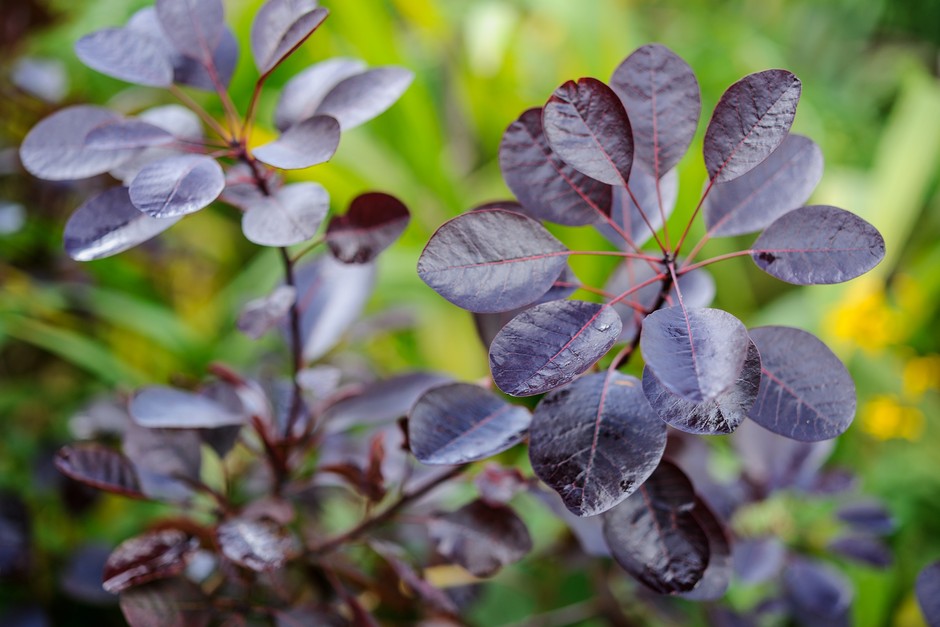
The result of this process is the pushing forth of new woody growth. The vigor of the growth comes from the energy that the plant has collected from the sun during the previous season and has been storing underground in its roots. Once the old twiggy growth has been cut off, that energy is now directed toward the production of new branches. In the case of yellow twig dogwoods, for example, the growth is more heavily colored, pliable and fresh, not dissimilar to the results of a fresh cut from my local barber. Oftentimes, such as with plants like smokebush, the leaves also will come back larger than the species usually produces, an evolutionary mechanism (often prized by gardeners) that allows the plant to reap greater benefit from the sun as it builds up stores of energy for the next year.
The key to this process is to do the work before the plant starts sending its energy into the old wood. Late winter, early spring, or right before plants buds begin to swell on old wood, is an ideal time to make these cuts, usually taking the plants down to 6 to 18 inches above the ground, depending on the species.
Last year, I went to a lecture at Hollister House Garden by Bill Cullina, who talked about this approach to rejuvenating old shrubs. The two women next to me— both revered Berkshire gardeners—closed their eyes as if they were attending a beheading when the slides showed a rosemary leaf willow cut to the nubs. Their gasp was only countered by their ahs at the vision of the next slide. The shrub, with its narrow silver leaves, now had a beautiful, dense rounded form that complemented the plantings surrounding it. They both left the event swearing they were going to take this approach to a number of things in their gardens, but I could tell from the tones in which they spoke that they were fearful of not having the same results.
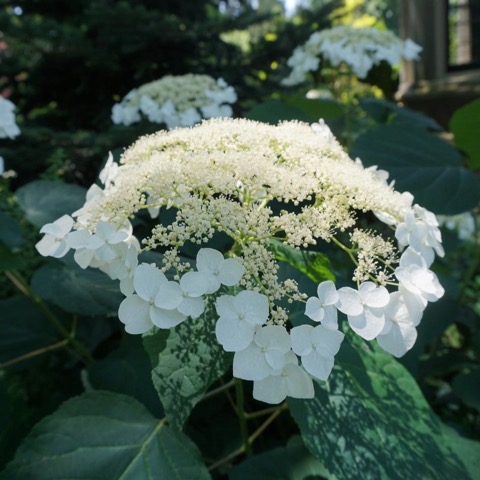 Some plants, such as our native smooth hydrangea, bloom on new wood and can be cut back every few years to maintain form and habit. ‘Haas-Halo’ has white, lace-cap florets.
Across from the property of one of these gardeners is the home of another friend who has a scraggly hedge of dappled willow in need of rejuvenation. I sent my friend an article on coppicing and stooling and even a You Tube video on the process but saw him several weeks later and could tell he was unsure of his ability to take this task on.
As I worked this morning, cutting back Russian sage and bush clover to promote new growth, I thought about my friends—both novice and experienced—and about how fear was holding them back. And then I realized that the perennials pushing forth their new growth could provide them with some comfort. If these other plants that receded below ground during the winter could come back, why would the same not be true for their hydrangeas and smokebushes?
I hope they find the faith to move forward and to see the results of their work as what it is—just a quotidian miracle that takes place in gardens large and small. And, hopefully, I will not be left seeing them in the months ahead and thinking “oh ye of little faith.”
____________________________________
A gardener grows through observation, experimentation, and learning from the failures, triumphs, and hard work of oneself and others. In this sense, all gardeners are self-taught, while at the same time intrinsically connected to a tradition and a community that finds satisfaction through working the soil and sharing their experiences with one another. This column explores those relationships and how we learn about the world around us from plants and our fellow gardeners.
Comments are closed.