
If you garden in Maine, you may already know the satisfaction of planting something that thrives in our rocky soil and unpredictable seasons. But what if your garden could do more – restoring habitat, supporting pollinators and helping rebuild ecosystems across the state?
That’s the idea behind the Wild Seed Project, a nonprofit working to reconnect people with native plants and the landscapes they support.
Founded in 2014 by Heather McCargo, the organization grew from a simple belief: growing native plants from seed shouldn’t be limited to professional horticulturists.
With more than 40 years of experience in wild plant propagation, conservation and ecological design, McCargo had spent much of her career in a field that often treated native seed sowing as a highly specialized skill. She believed otherwise. With clear guidance and a little patience, she knew gardeners could grow native plants at home; not just in labs or greenhouses, but on back porches, balconies and city stoops.
McCargo saw an enormous opportunity. If home gardeners learned how to grow native species, they could restore habitat and biodiversity in their own yards, creating a powerful collective impact across the region.
The need is urgent. As climate change accelerates and development expands, native plant populations are declining. Yet these plants, along with the food webs and wildlife they support, have sustained ecosystems for thousands of years.
The Wild Seed Project believes everyday people can help reverse that trend. The organization works to build awareness of the vital importance of native plants while providing practical tools for people to grow them. Through workshops, seed-sharing programs and educational resources, they help gardeners, farmers, municipalities, land trusts and community groups repopulate landscapes with species that expand wildlife habitat, support biodiversity and strengthen climate resilience.
Their mission is to inspire people to increase the presence of native plants grown from wild seed and to create landscapes that safeguard wildlife habitat while helping ecosystems adapt to a changing climate.
The organization’s work is grounded in several core values: community, care, humility and responsibility. The Wild Seed Project connects people with the ecosystems around them, shares knowledge openly and encourages accessible, collective action to repair human relationships with the natural world.
Today, the project shares more than 3 million native seeds with the community each year. For the past eight years, volunteers across Maine have hand-collected those seeds from wild plant populations throughout the state.
At the same time, staff and volunteers are seeing troubling trends.
Each year, the organization finds that populations of native plants are continuing to shrink. To help address that challenge and expand access to seeds from northeastern native species, the Wild Seed Project is developing a first-of-its-kind Native Seed Center at Cape Elizabeth Land Trust’s Turkey Hill Farm.
The Native Seed Center will serve as a hub for conservation work and expand the organization’s efforts to collect, grow and distribute native seeds throughout the region.
From the beginning, the Wild Seed Project has been supported by its members, whose contributions help sustain the ongoing work of restoring biodiversity and building climate resilience from the ground up.
For gardeners curious about getting started, the organization’s website, wildseedproject.net, offers extensive information on how to “go native,” including guidance on collecting, sowing and growing beneficial native plants.
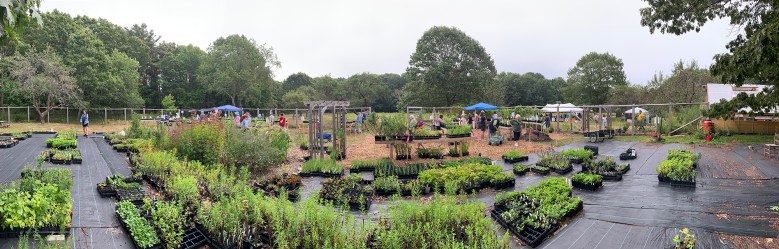
Wild Seed Project also hosts educational demonstrations and events throughout the year, including its annual Native Plant Sale each fall. The sale features seed-grown plants available at the organization’s nursery in Cape Elizabeth and has become an increasingly popular resource for gardeners hoping to make their landscapes more ecologically supportive.
Local garden centers selling native plants or seeds
Androscoggin County:
Gammon Landscape Nursery | 2832 Turner Rd., Auburn
A full-service garden center serving the Lewiston Auburn area with a wide range of trees, shrubs and perennials. While not exclusively native, they carry many species suitable for local landscapes and offer gardening advice and landscape design services.
Androscoggin Soil & Water Conservation District Plant Sale
Annual plant sale offering bare-root trees and shrubs, native wildflower and grass seed mixes and other plants sourced from Maine growers. Pick-up locations will be at Open Heart Farm at 304 Sopers Mill Rd, Auburn and the Mailly Waterfront Park at 1 Main St, Bowdoinham. Order until April 28 at androscogginswcd.org/plant-sale.
Kennebec County:
Fieldstone Gardens | 55 Quaker Ln., Vassalboro
Retail and mail-order perennial nursery offering more than 1,000 varieties, including plants for native woodland gardens.
Paradis Nursery & Garden Center | 3675 Middle Rd., Sidney
Traditional nursery carrying trees, shrubs and perennials, including native species.

Comments are closed.