
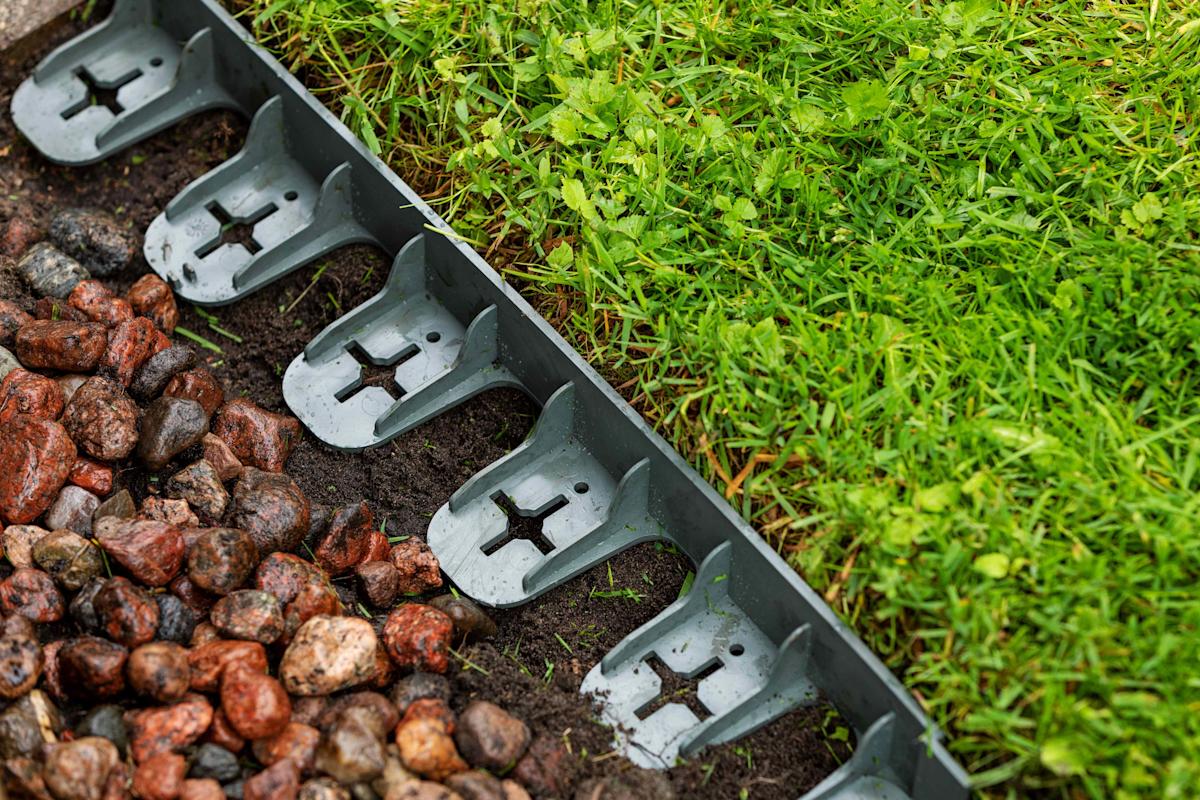
Key Points
Skipping plastic edging helps create a healthier, more sustainable garden with fewer long-term maintenance issues.
Plastic edging breaks down over time, contributing to microplastic buildup and harming soil health.
Plastic is prone to warping, cracking, and fading, making your garden look uneven and poorly maintained.
When you’re designing a garden, edging is often used to define the space. There are many different materials you can choose from for these borders, including wood, metal, rubber, stone, or even plastic.
“Consider cost, ease of installation, sustainability, and style,” says Rhonda Fleming Hayes, author of Garden for Life. However, this is where plastic edging falls short—it’s a more affordable option, but it’s not the best over the long term.
Here, we spoke to gardening experts about the many drawbacks of using plastic edging in your garden.
Meet Our Expert
Rhonda Fleming Hayes, author of Garden for Life
Charlie Nardozzi, author of The Continuous Vegetable Garden
Noelle Johnson, landscape consultant and author of The Water-Smart Garden
Related: 6 Reasons Why Landscape Fabric Is Such a Bad Idea—and What to Use Instead
Microplastics in the Soil
Plastic breaks down over time and remains in the soil; large pieces are laborious to remove, and microplastics can be nearly impossible due to their size and pervasiveness.
“These pieces don’t decompose, contributing to microplastic buildup over time,” says Noelle Johnson, landscape consultant and author of The Water-Smart Garden. “Long-term impacts of microplastics are still being studied, but they aren’t conducive to building healthy, living soil.”
Not Stable in Cold Climates
In the winter months, frost heaving can occur when the soil swells upward due to freezing temperatures. This will cause plastic edging to migrate from its original placement. It can become a risk to mowers or passersby. “This makes it a tripping hazard and requires you to reset it annually,” says Charlie Nardozzi, author of The Continuous Vegetable Garden.
Cracks and Lifts When It’s Hot
It’s not just cold temperatures that you have to think about; plastic can crack in the heat, too. “It tends to warp and lift out of the ground over time and therefore needs replacing sooner,” says Fleming Hayes.
Nardozzi notes that plastic edging will break down after one to three years due to UV light. In the meantime, cracking can cause perennial weed roots and lawn grasses to grow through the plastic.
Hard to Set
Plastic is flexible, which is often a good thing—but it’s challenging when you need to place it within specific parameters. “It can be hard to work with when you want precise straight lines in your design, as it can twist,” says Fleming Hayes.
Not Aesthetically Pleasing
Over time, plastic edging can become pale and brittle. “The color fades and warps as mulch settles or soil shifts,” says Johnson. Despite all your hard work, the plastic could make the garden look poorly kept. “Instead of creating a clean, defined line, it can make a garden look uneven and poorly maintained,” she adds.
Not as Functional
One of the biggest drawbacks? Plastic isn’t as durable as other materials, and so it won’t create a strong enough barrier. “Grass, weeds, and even ground covers can easily grow over or around it, which defeats its purpose,” says Johnson. “It often ends up being more of a visual border, rather than a functional one that separates spaces.”
Prevents Water From Draining
Placing plastic below your garden bed can lead to water buildup and stagnation. “It may trap water in planting areas or prevent it from draining properly, leading to uneven irrigation or pooling,” says Johnson.
It may also interfere with natural water movement, she adds—so consider your region, especially in areas with limited rainfall. “In arid climates where efficient water use is critical, this can create unnecessary problems,” she says.
Read the original article on Martha Stewart
Comments are closed.