
Breadcrumb Trail Links
Home Living
Houseplants are often avoided because it is assumed they require extra attention. Not so. Ottawa gardener Judith Cox offers selections that are easy to care for.
Author of the article:
Judith Cox • Special to Postmedia Network
Published Mar 25, 2026 • 4 minute read
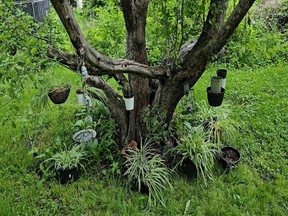 Spider plants hanging in an old apple tree for the summer. Photo by Natasha Dilkie Article content
Reviews and recommendations are unbiased and products are independently selected. Postmedia may earn an affiliate commission from purchases made through links on this page.
Houseplants seem to be making a comeback. We are starting to see them being featured on gardening shows and at horticultural events. Houseplants are often avoided because it is assumed that they require a lot of extra work and attention. That is not necessarily the case. Let me offer several selections that are very easy to care for and will add a lot of joy to your home.
Advertisement 2
This advertisement has not loaded yet, but your article continues below.
Article content
Overall, houseplants need potting soil, regular watering, bright, indirect light and fertilizing with an all-purpose, liquid houseplant food during the growing season. So, feed your plants about once a month from March through to September. One problem people have with growing houseplants is that they have animals or children who like to taste things. Be sure to check that your houseplant is not poisonous and all will be well.
Article content
Article content
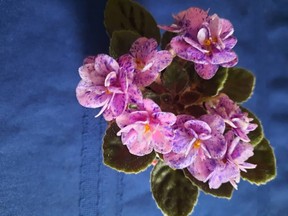 African violets. Photo by Andrea Knight
My main issue with houseplants is that I have cats. They are curious, and for years I did not leave any of my plants exposed. When I discovered scented geraniums (pelaregoriums), especially the citrus-scented ones, I can now have plants in my living room! Scented geraniums have various leaf shapes and growing habits, and some have small delicate flowers. Cats do not like the scent, and if they nibble the leaf has a strong taste, while not being poisonous. I use the leaves as decorations on baked goods, and they make good jelly.

Shopping Essentials
Article content
Advertisement 3
This advertisement has not loaded yet, but your article continues below.
Article content
Some people find that their homes are somewhat cool and dark. Why not take a tip from the Victorians and get a parlour palm (Chamaedorea elegans)? This elegant plant does well in subdued light and needs water only when the soil is completely dry. While the parlour palm does not like drafts, this highly adaptable plant goes from low-light situations to bright indirect light and is a nice large plant that you can grow almost anywhere in your home. It likes to vine and takes well to pruning as well as being easy to propagate from cuttings.
The intriguingly named ZZPlant (Zamioculcas zamiifolia) is great for those who find themselves often unavailable to water. It is drought-tolerant and has lovely glossy leaves. You can enjoy this plant in a darker corner of your home. In addition, the snake plant (Sansevieria/Dracaena trifasciata) is a great houseplant that is also able to withstand low-light conditions.
Advertisement 4
This advertisement has not loaded yet, but your article continues below.
Article content
The pothos (Epipremnum aureum) with its variations of foliage, is another plant that seems to be comfortable anywhere.
Jade plants (Crassula ovata) are very beautiful and forgiving plants. They like lots of light but if you put them outside for the summer, avoid full sun or their leaves will turn red and the plant will wither. They have fleshy leaves, and they require water only about every two weeks. Do not overwater your jade and check by putting your finger into the soil to be sure it is dry before watering. You can pinch and remove just above a leaf node to get a bushier plant. Jades are long-lived, and if you have a happy plant, it might even flower for you.
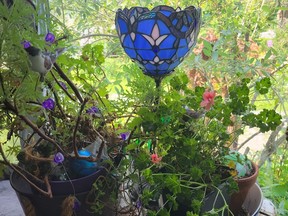 A collection of scented geraniums. Photo by Judith Cox
The spider plant (Chlorophytum comosum) is an old-fashioned houseplant that could be a great addition to your collection. It often lives vicariously, hanging in a carefully crafted macramé creation as it merrily cascades while adding little versions of itself over time. The humble spider plant does well with the average household temperature and humidity and does not like to be overfed. Water it regularly and do not let the soil dry completely. This plant can be easily propagated by planting the little plantlets that have roots. In June, you can hang your spider plants in a tree, and as long as they are in the shade, they can be outside for the summer. Be sure to check them carefully when you bring them back inside, as insects seem to like them too.
Advertisement 5
This advertisement has not loaded yet, but your article continues below.
Article content
The African violet (Saintpaulia ionantha) is a lovely flowering houseplant. It is generally a compact plant with thick, green, heart-shaped leaves and single or double petaled flowers which peek just above the leaves. African violets thrive indoors with bright, indirect light (10–14 hours daily) and a slightly acidic well-draining soil mix. There are African violet soil mixes readily available along with a specialized fertilizer. Water your plants from the bottom once they have dried out and be careful not to get water on the leaves. Beware! When you start to grow these plants, you may find yourself wanting more of them. If you need to find a place of understanding I suggest you check out the Ottawa African Violet Society https://www.oavs.org/.
Once you have assessed your home in terms of light, temperature and possible plant consumption, head out to your local nursery and see what you can find. Growing plants in your home is a wonderful experience.
Judith Cox is a volunteer with Master Gardeners of Ottawa-Carleton.
Article content
Share this article in your social network
Comments are closed.