
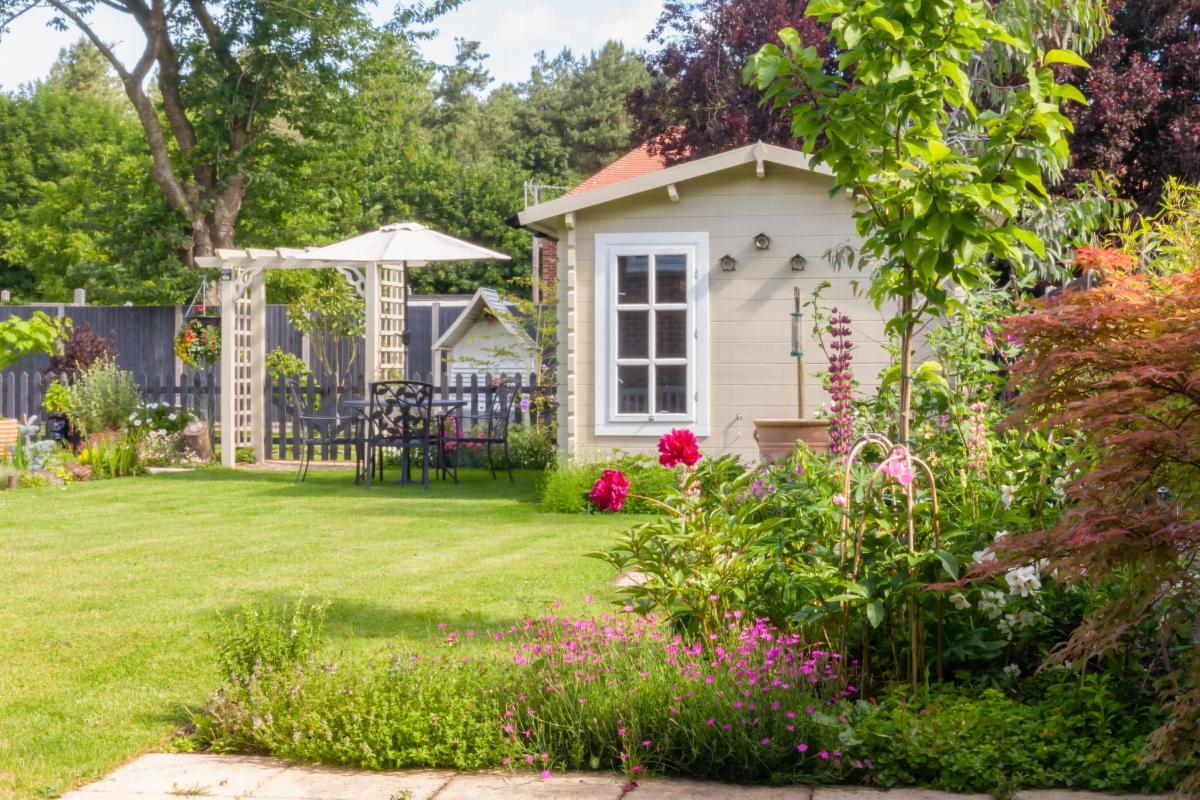
Brits are being urged to check restrictions before adding certain structures to their gardens and being warned of potential large fines.
With spring arriving and the weather getting better, many Brits will be out in their gardens more in the coming weeks and months.
Some homeowners may be looking to spruce up their garden by adding a new structure to it.
However, you need to be aware of restrictions and permissions to ensure it doesn’t break regulations, which experts say can result in a fine of up to £20,000 in some cases.
Some garden buildings have restrictions and permissions to ensure the structure doesn’t violate regulations (Image: Getty Images)
What is the difference between planning permission and building regulations?
Christopher Murphy MBE, founder of Dunster House, a garden building specialist, has explained some of the restrictions and regulations to help homeowners avoid costly mistakes in their garden.
He has explained the difference between planning permission and building regulations, and how they affect garden additions.
Mr Murphy said: “Planning permission determines what you can build and where you can build it.
“It considers factors such as size, height, location on the plot and impact on neighbours or the surrounding area.
“Building regulations instead relate to how the structure is built and its intended use.
“These regulations ensure garden buildings meet safety standards, including structural integrity, fire safety and, where relevant, electrical compliance.”
Most garden buildings will fall under ‘permitted development’, meaning formal planning permission is not required, but some criteria need to be met to determine this.
These include:
The final structure must not have more than one storey
The overall height of a garden building must not exceed 2.5m
The building must not be placed in front of the house’s main front wall facing the road
The combined area of extensions and outbuildings must not exceed 50% of the total garden area surrounding the house as it was originally built
The building cannot be used as a separate home, bedroom, or independent living space with facilities such as a bathroom and kitchen
Properties in protected or historically significant areas are subject to tighter planning controls and permitted development rights
When are building regulations needed in the UK?
As explained on the Gov.uk website, building regulations approval covers the construction and extension of buildings.
You may also need building regulations approval for many alteration projects, including replacing a fuse box and connected electrics, replacing doors and windows, adding extra radiators, and more.
It advises checking with a building control body if you cannot decide if you need approval.
However, expert Mr Murphy has warned that even if a garden building falls under permitted development and planning permission isn’t needed, building regulations may still apply.
He notes that larger garden buildings over 30m² will usually require full building regulations approval, meaning they must meet structural, insulation, fire safety and other technical standards and may require an inspection.
The expert added: “If the building will contain electrical fittings, such as plug sockets and lighting, these must comply with Part P of the building regulations, which requires any electrical work in a garden building to be installed safely by a qualified professional and properly certified to prevent fire and electric shock risks.
“Homeowners planning to use a garden room as a bedroom or self-contained accommodation should be aware that this significantly changes the regulatory requirements and will typically trigger both planning permission and building regulations approval.”
UK homeowners warned of £20,000 fines over garden additions
Mr Murphy has warned Brits of the risks of non-compliance, which can lead to hefty five-figure fines in some cases.
He said: “Homeowners who take a risk on a garden building without proper consideration could have the unauthorised structure investigated by the local authorities.
“If it is found to be in breach of planning rules or fails to meet the above criteria, councils can issue enforcement notices requiring alterations or even complete removal. In more serious cases, fines can reach up to £20,000.
“Beyond a fine, non-compliant structures can also create complications when selling a property.
“Buyers and solicitors may request proof of approval; failure can result in sale delays, price renegotiations, retrospective planning applications, or even the collapse of the sale.”
He urges homeowners to take the following steps to avoid this:
Check that the intended garden building or room meets the ‘permitted development’ criteria
Confirm whether your property is in a designated area or is listed
Review height limits carefully, particularly if building near a boundary
Seek professional advice regarding building regulations where size, use or electrics are involved
He concluded: “If unsure, homeowners should contact their local planning authority before starting any work.
“With proper research and planning, most garden buildings can be installed without issue, adding extra valuable space to a property.”
Are you planning to add any new garden furniture or structures to your space this year? Let us know in the comments.
Comments are closed.