
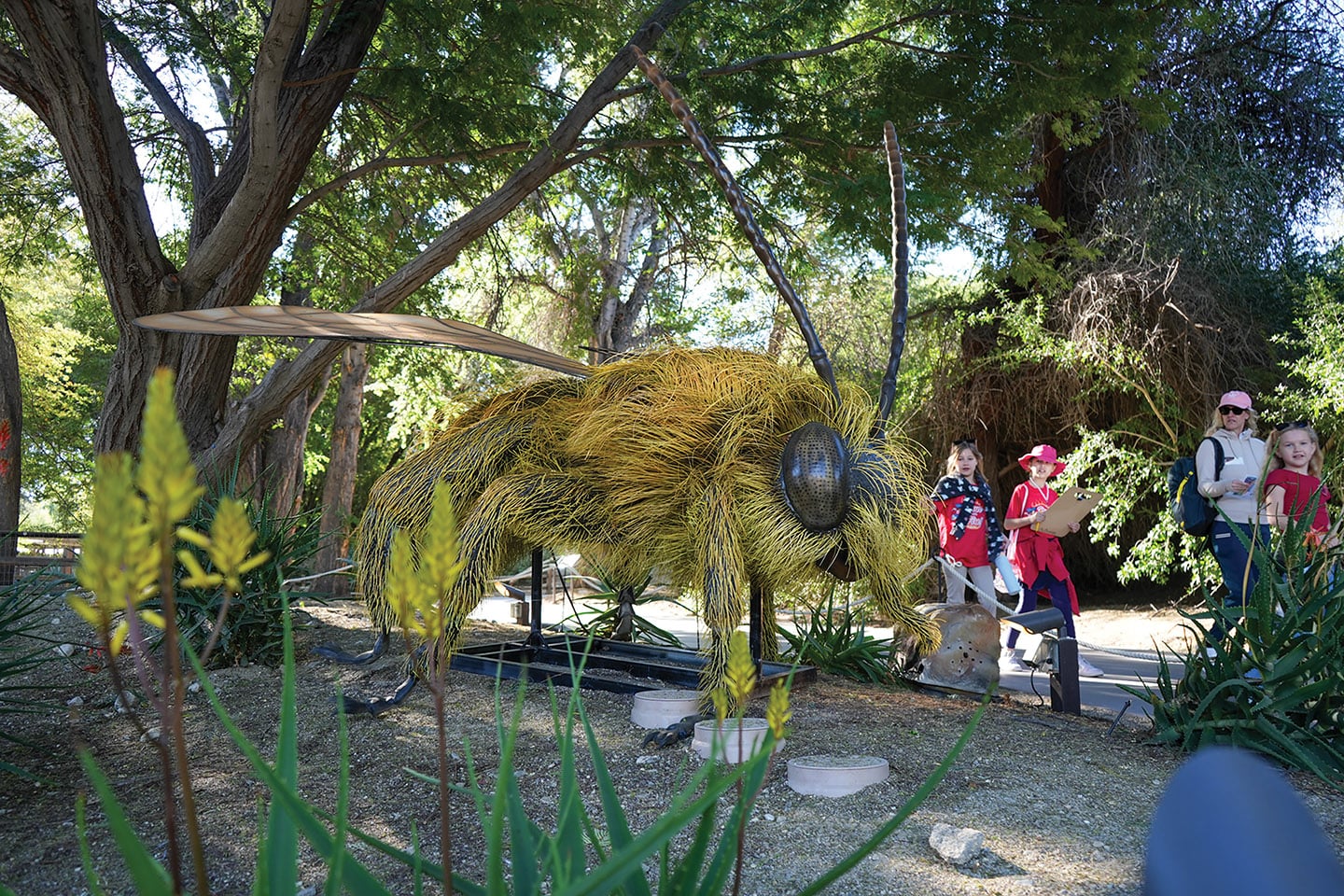
“These aren’t everyone’s favorite creatures, but it’s important to shine a light on how valuable they are to our environment,” says Kait Hilliard, the zoo’s vice president of marketing and communications. One-third of the food we eat depends on pollinators, from apples and berries to coffee.
Guests can wander the grounds to admire the installations or join a themed mission as part of a team: Bloomkeeper, Leafbound, or Shadowcraft. Track down your squad’s assigned species — such as the ruby-throated hummingbird, the rosy maple moth, or a parasitic wasp — then solve riddles to learn about their pollinating “superpowers.” On a playground, a spiderweb climbing structure and other interactive elements invite further exploration. Along the way, visitors learn simple steps to protect pollinators.
“One of the threats we are communicating about is the effect certain chemical pesticides have on pollinators,” says Anna Young, vice president of learning and impact. Even the rosy maple moth and parasitic wasp play a role. Your fruits and veggies depend on them.
Comments are closed.