
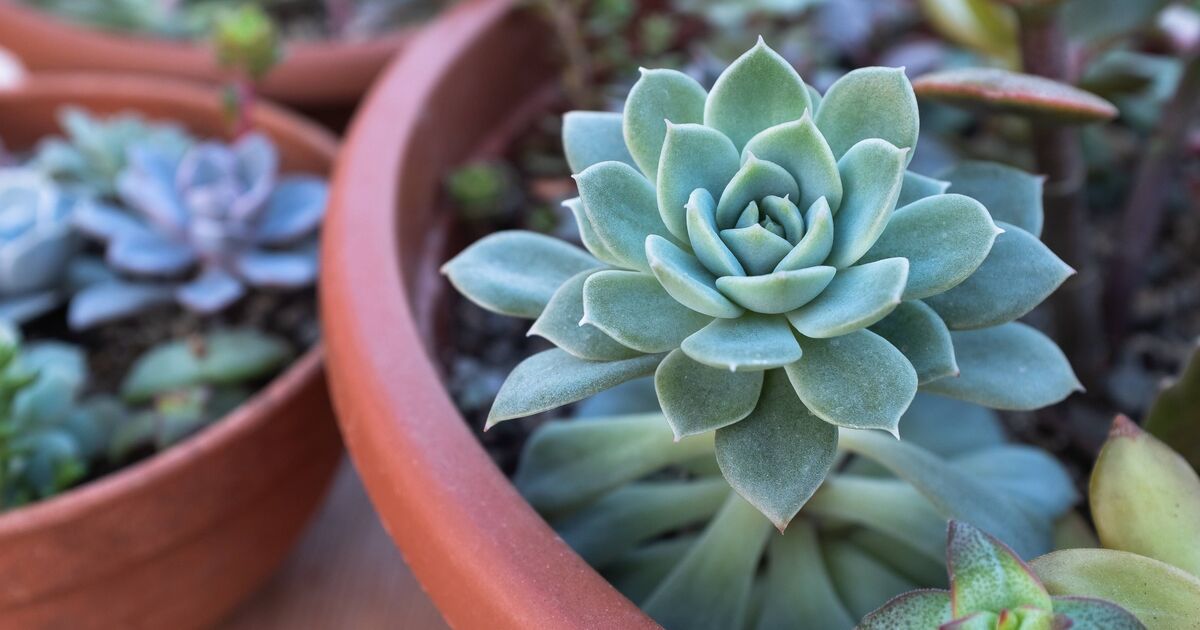
Succulent plants in pots. Echeveria, sedums and crassulas. Succulents for poster, calendar, post, screensaver, wallpaper, postcard, banner, cover, website. High quality photography (Image: undefined via Getty Images)
Gardening can be an absorbing and satisfying pastime, but there are some tasks that even the most enthusiastic gardener won’t relish. Topping the list of disagreeable jobs is almost certainly weeding. Alan Titchmarsh recently revealed a simple, chemical-free way to kill weeds using nothing more than a garden hoe and a warm day, harnessing the same sunlight that helps them grow. However, there is a way to reduce the need for weeding dramatically — if not eliminate it entirely — by turning it into a once-a-year task.
With growing awareness of the need to avoid saturating gardens with chemicals, many are steering clear of weedkillers, not least because of the risks they pose to pollinating insects. Instead, planting effective ground cover can make flower beds far less inviting to unwanted weeds. There is a wide range of ground cover plants available. Some thrive in bright sunshine, while others prefer shade. What they all have in common is their ability to form a dense carpet that prevents perennial weeds from becoming established. While some ground cover plants — such as ivy, periwinkle and hostas — can be a little uninspiring, Garden News expert Graham Rice has highlighted several attractive options that will crowd out invasive weeds while adding visual interest.
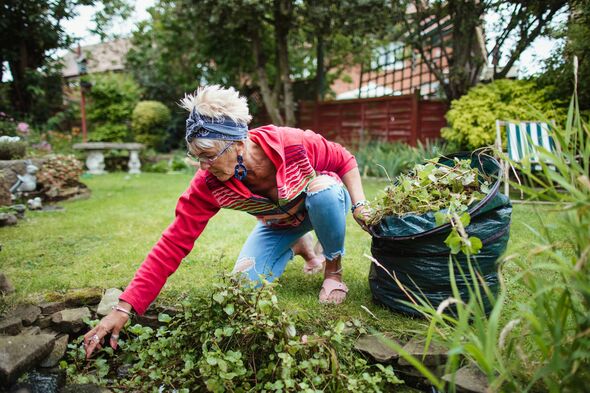
Planting effective ground cover can make flower beds far less inviting to unwanted weeds (Image: undefined via Getty Images)
Hellebores are perennials, often with bold evergreen leaves, some featuring marbled or silvery patterns for added appeal. They bloom in winter and early spring, when little else is in flower, producing blooms in shades of green, white, pink and ruby.
They flourish on woodland edges and thrive in dappled shade, although some varieties will also tolerate more sun while others prefer deeper shade. Low-maintenance and long-lasting, they also provide vital nectar for early pollinators.
Hardy geraniums deliver a welcome burst of colour throughout summer. Some varieties, such as Brookside, display large, bowl-shaped blue flowers from as early as May.
They are suited to sun or dappled shade and will grow in most soils, provided they are not waterlogged. Another variety, Little David, features compact foliage and produces magenta-pink flowers from June to September that are particularly attractive to bees.
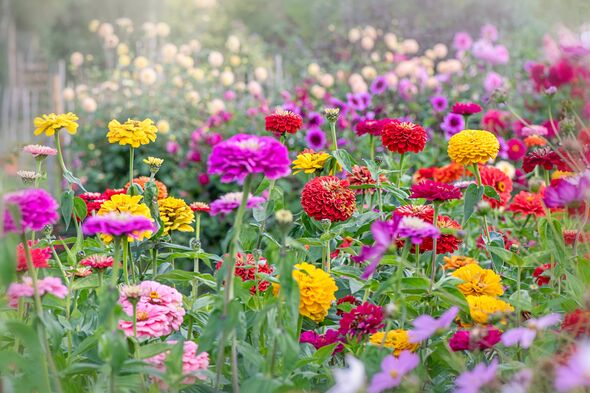
A vibrant garden filled with an array of colorful flowers (Image: undefined via Getty Images)
There are dozens of heuchera varieties, all prized for their colourful foliage, ranging from bright green to deep purple. They perform best in partial or dappled shade, as strong summer sun can scorch the leaves — especially on paler varieties.
From late spring to autumn, these hardy plants produce wonderfully fragrant blooms with a distinctive clove-like scent. Most will flower repeatedly if deadheaded.
They come in a range of colours — not just pink — and take their name from the flowers’ ragged edges, which resemble cuts made with dressmaker’s pinking shears.
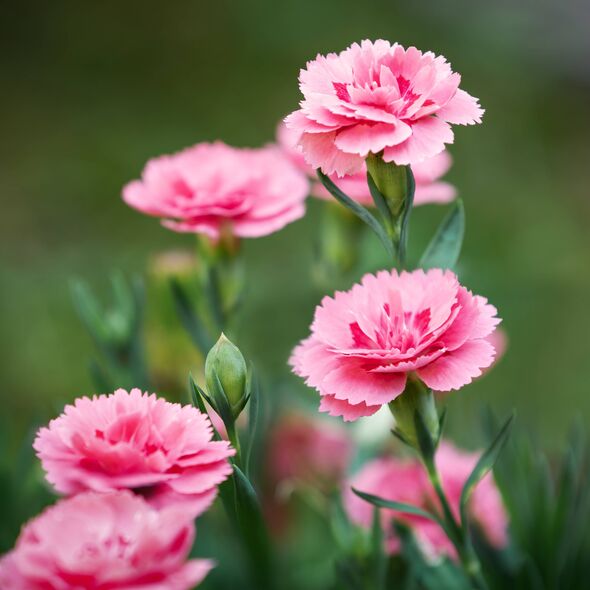
Lush bush of bicolor light and dark pink Dianthus caryophyllus of Caryophyllaceae,also called carnation Doris,growing in garden,on sunny day. Selective focus ,close-up, square photo. (Image: undefined via Getty Images)
Ground-covering sedums are remarkably resilient, tolerating both drought and frost. They thrive even in shallow, poor soil, requiring little watering and minimal feeding.
They form a dense carpet of succulent, often evergreen foliage, along with masses of colourful, star-shaped flowers throughout the summer.
It’s worth noting that while ground cover plants suppress weeds, they can also inhibit the growth of plants you actually want.
Ivy, for example, will certainly deter weeds but may also crowd out primroses, anemones and spring bulbs. As Graham Rice explains: “The trick is to choose strong-growing bulb varieties, plant them in clumps, and plant bulbs and ground cover at the same time.
“That way, by the time the ground cover forms a dense carpet, the bulbs will already be well established and able to push through the foliage.”
Before planting, however, there is one final weeding job to tackle — the ground must be thoroughly cleared to give your new plants the best possible start.
Comments are closed.