
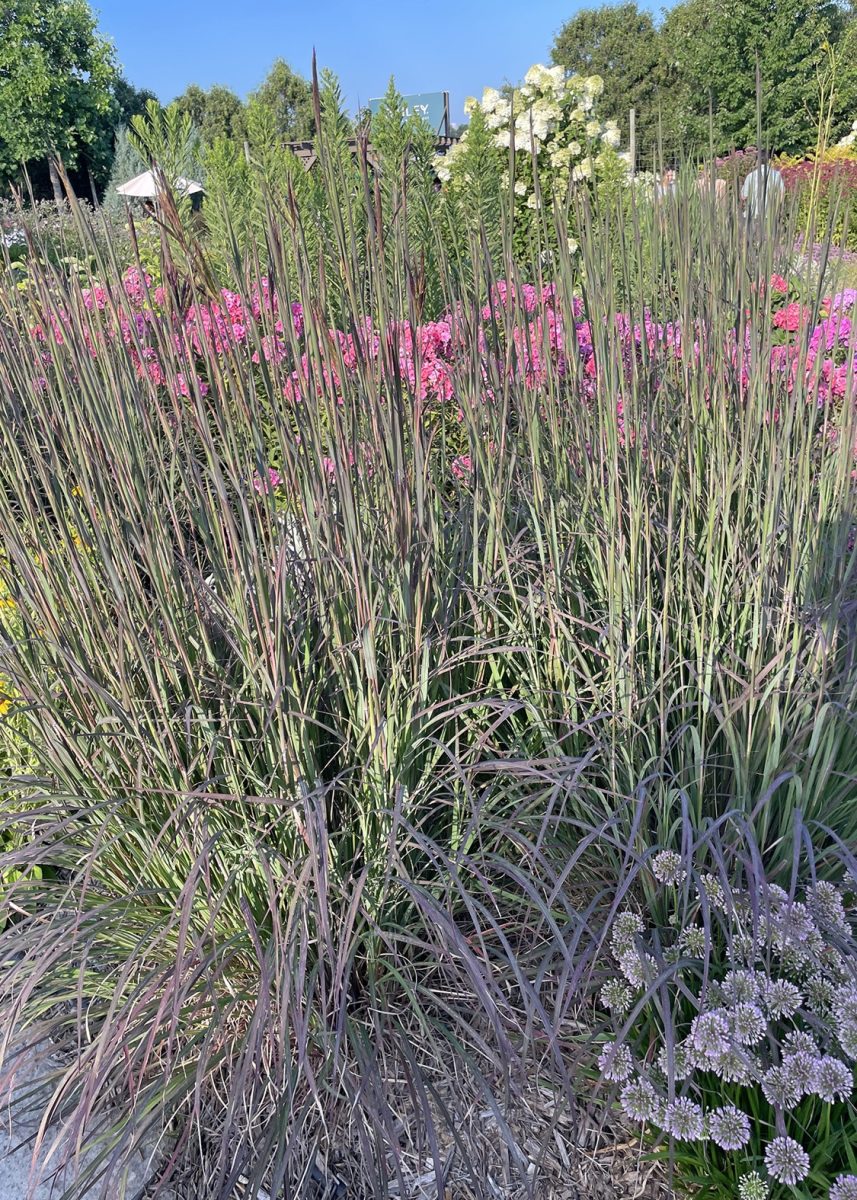
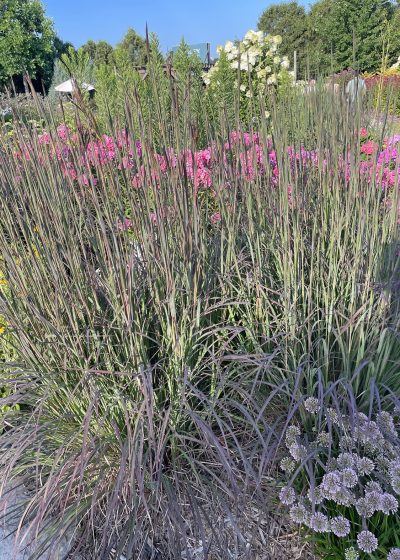
 “A thing of beauty is a joy forever’: Perhaps Keats knew something about Blackhawks big bluesteam, the Perennial Plant of the Year. surrounded by garden phlox, Agastache, coreopsis and panicle hydrangea. Photographs by Melinda Myers.
Spring arrived in the Northern Hemisphere at 10:46 a.m. Friday, March 20, which means it’s time to deep-clean the garden to welcome the new season.
When creating a new garden or looking for new additions, check out the Perennial Plants of the Year (PPOY). Selected by members of the Perennial Plant Association, winners must be suited to a wide range of climate conditions, low maintenance and provide multiple seasons of interest.
The 2026 PPOY is Blackhawks big bluestem (Andropogon gerardii “Blackhawks”), a cultivar of one of the dominant grasses of the North American tallgrass prairies. Its smaller stature makes it easier for most gardeners to include in home landscapes. It grows 5 feet tall and 2 feet wide as opposed to the species that can grow up to 8 feet tall and readily self-seed, dominating a garden, serving as a host plant for many skippers, a kind of butterfly, and providing food and shelter for songbirds.
Combine Blackhawks big bluestem grass with other early and late season perennials in natural and cottage-style gardens. Watch as the foliage emerges dark green in the spring, then develops red tips in summer and ends the season with deep purple leaves and stems. Its three-parted flower tops the plant in late summer, providing additional texture and motion in the garden.
Grow Blackhawks in full sun with well-drained soil. It is hardy in zones 3 to 9 – our area embraces zones 6b, 7a and 7b – and drought tolerant once established. In addition, Blackhawks big bluestem has no major pests or disease problems. (Its overall excellent performance made it one of the top-rated ornamental grasses in the Chicago Botanic Garden’s Evaluation Study of Hardy Ornamental Grasses.) Just cut it back to the ground in late winter or early spring and watch as new growth emerges.
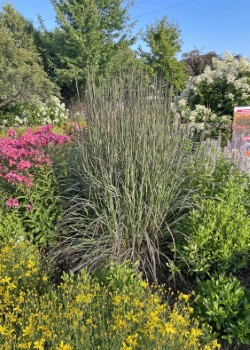 More Blackhawks big bluestem.
This grass combines nicely with past winning perennials. The Arkansas bluestar (Amsonia hubrichtii), a 2011 winner, is still popular thanks to its fine foliage that turns amber in the fall. This, along with its light blue, star-shaped flowers that appear in late spring to early summer, provides season-long beauty. It is hardy in zones 4 to 9, drought tolerant once established and the deer tend to leave it be.
Little bluestem (Schizachyrium scoparium) was selected as the 2022 Perennial Plant of the Year. This North American native grass adds beauty, texture and motion to the landscape. Grow the species or one of the cultivars – like Jazz, The Blues, Standing Ovation or Blue Heaven – that is best suited to your growing region.
Calamint (Calamintha nepeta nepeta), the 2021 winner, is a long-blooming, drought-tolerant perennial. Its small white flowers cover the plant summer through fall, attracting bees and other pollinators while deer tend to leave it alone. It works well with ornamental and native grasses and other perennials in meadow, natural or more formal gardens.
For those shadier spots in your landscape consider Aralia “Sun King.” It grows best in full to part shade where the bold foliage combines nicely with other shade-loving perennials. A bit of sun increases the yellow in the leaves while they are more chartreuse colored in shadier spots.
Variegated Solomon’s Seal (Polygonatum odoratum var. pluriflorum “Variegatum”) is another shade-tolerant PPOY. The upright arching stems, subtle leaf variegation and yellow fall color make it a welcome addition to any shade garden. Its fragrant white flowers appear in late spring and dangle from the stems and are followed by bluish-black berries in fall.
Consider one or more of the Perennial Plants of the Year as you create your 2026 plant list. Then watch for future winners suited to your garden design.
Melinda Myers has written more than 20 gardening books, including “The Midwest Gardener’s Handbook, Second Edition” and “Small Space Gardening.” She hosts “The Great Courses’” “How to Grow Anything” instant video and DVD series and the nationally-syndicated “Melinda’s Garden Moment” TV and radio program. Myers is a columnist and contributing editor for Birds & Blooms magazine. For more, visit here. https://www.melindamyers.com/
Comments are closed.