

Is your lawn looking more moss than grass before your first spring mow? Welcome to the club. It’s a frustratingly common problem in UK gardens, where damp, compacted soil gives moss the upper hand over winter.
The good news? It’s easier to fix than you might think. There’s still time to tackle it and get your lawn looking healthy before warmer weather arrives.
The first step is getting rid of that pesky moss so the grass underneath has room to grow – and horticulturalist Monty Don has offered a brilliant tip on doing this as quickly and efficiently as possible.
What causes moss in your lawn?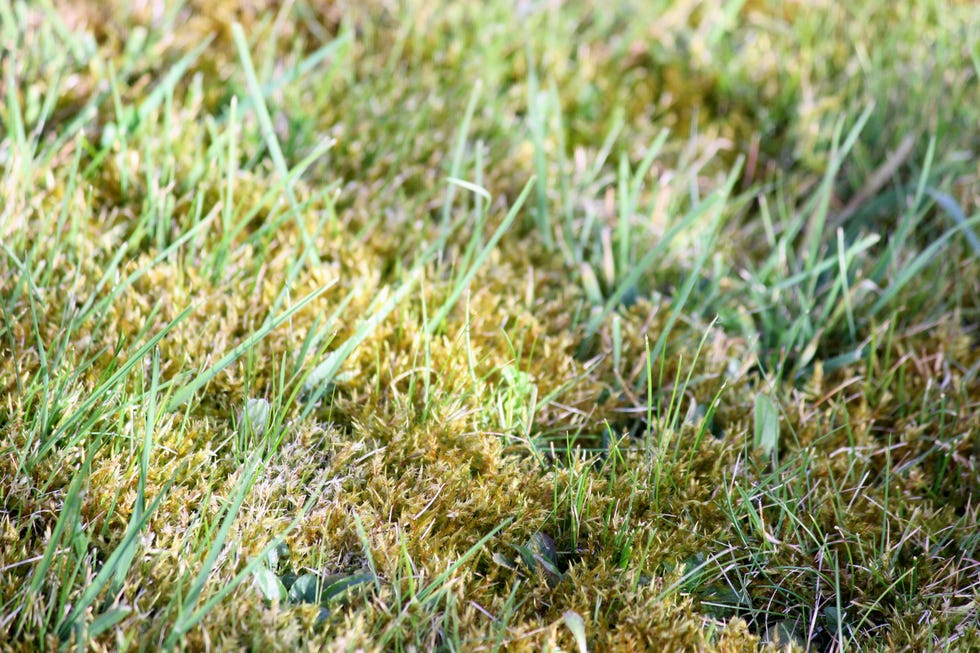

mtreasure//Getty Images
Moss loves dark, cold and damp conditions, so it naturally thrives in the winter months. Grass, on the other hand, struggles to grow in the cold, allowing moss to become a more dominant fixture.
While moss does have its uses as food and habitats for insects, like woodlice and beetles, as well as soaking up water during damp spells, aesthetically, most gardeners prefer a clean layer of freshly cut grass. Keeping moss is also a no-go as it competes with the grass, blocking light and restricting air flow.
The beginning of spring signals the time to ditch the moss and begin pruning our gardens in preparation for time spent outside during the summer.
Monty writes in the advice section of his website that moss is an unfortunate symptom of ‘poor drainage’. He explains: “The best grass likes very well-drained soil. Moss, for example, is always a symptom of poor drainage, made worse by shade.”
He continues: “Unfortunately, even the best-prepared soil becomes compacted by matted roots, rain and, especially, normal family use. “
cjp//Getty Images
Monty Don’s trick to remove moss from your lawn fast
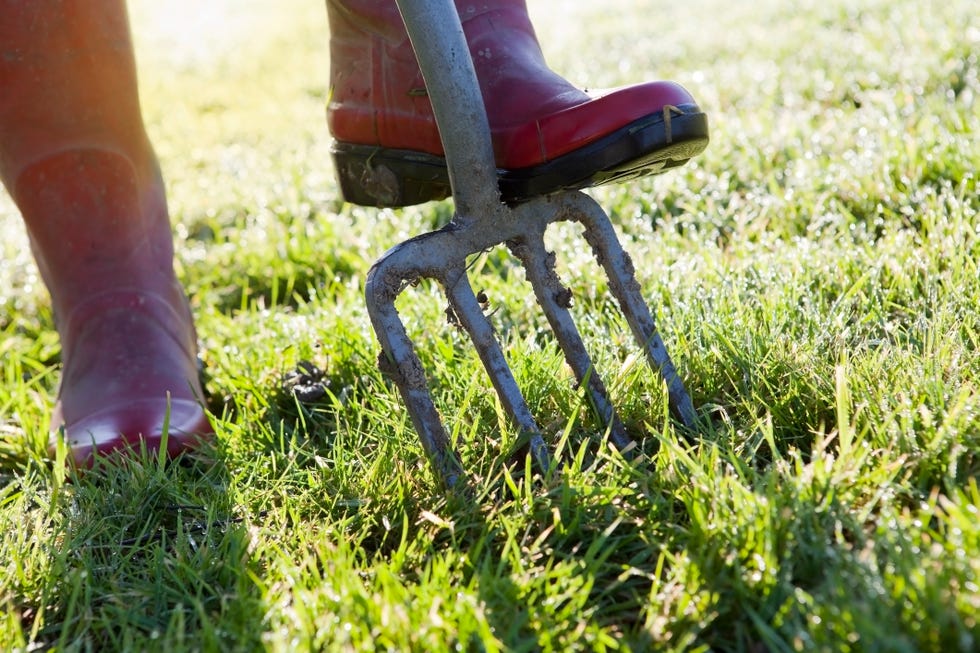
So what’s the solution? Monty suggests “sticking a fork in the ground and wiggling it about”, repeating the motion every 15cm.
This process is known as aeration, and the gardening guru suggests doing this at least once a year. Getting rid of moss gives your grass a much better chance to grow.
Monty goes on to advise that gardeners should mix up equal portions of sieved topsoil, sharp sand and sieved leaf mould or compost (sharp or silver sand alone will do if you can’t get all of these).
This mixture should then be applied to the lawn with the holes from the fork freshly dug to ‘feed’ the soil. Monty says this will ‘help drainage and feed the grass’.
A final step is to go over the lawn with a wire rake. Monty explains: “This will get at all the overwintering thatch and moss and let light and water get to the soil and to the roots of the grass.”
Gardening essentials Acqua Garden Rose Plant ‘Madame Alfred Carriere’ Full Plants in 5 Litre Pots
 IGstudio Ceramics Stoneware Ceramic Plant Markers and Labels Set
 Filberts of Dorset Gardeners Hand Salve
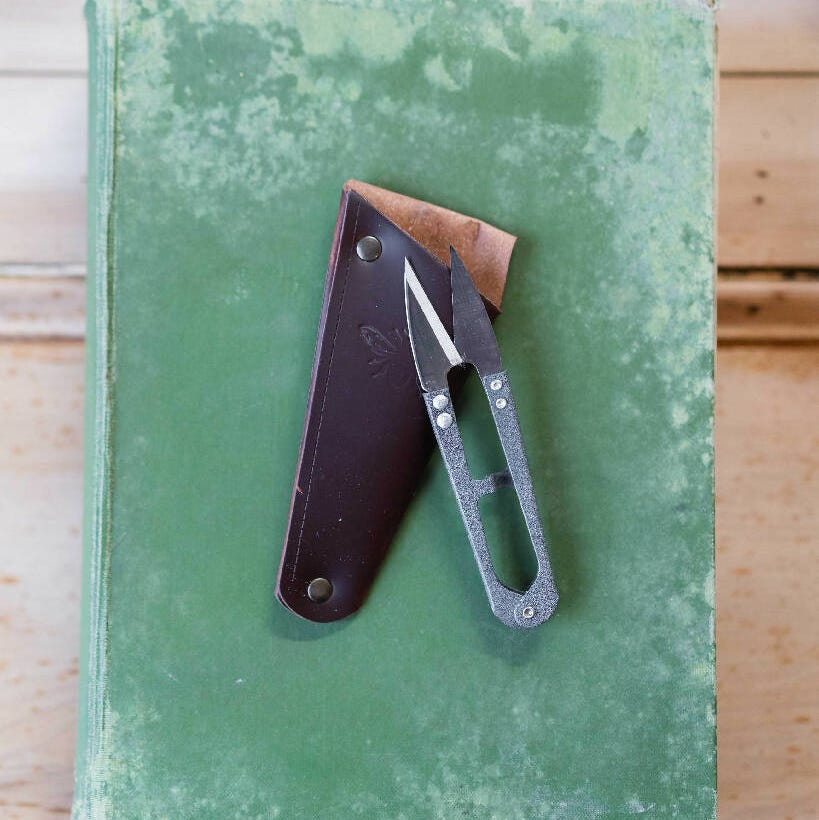 Squirrel Garden Snips in Leather Pouch
 Recycled Leather Seed OrganiserCredit: Country Living Marketplace
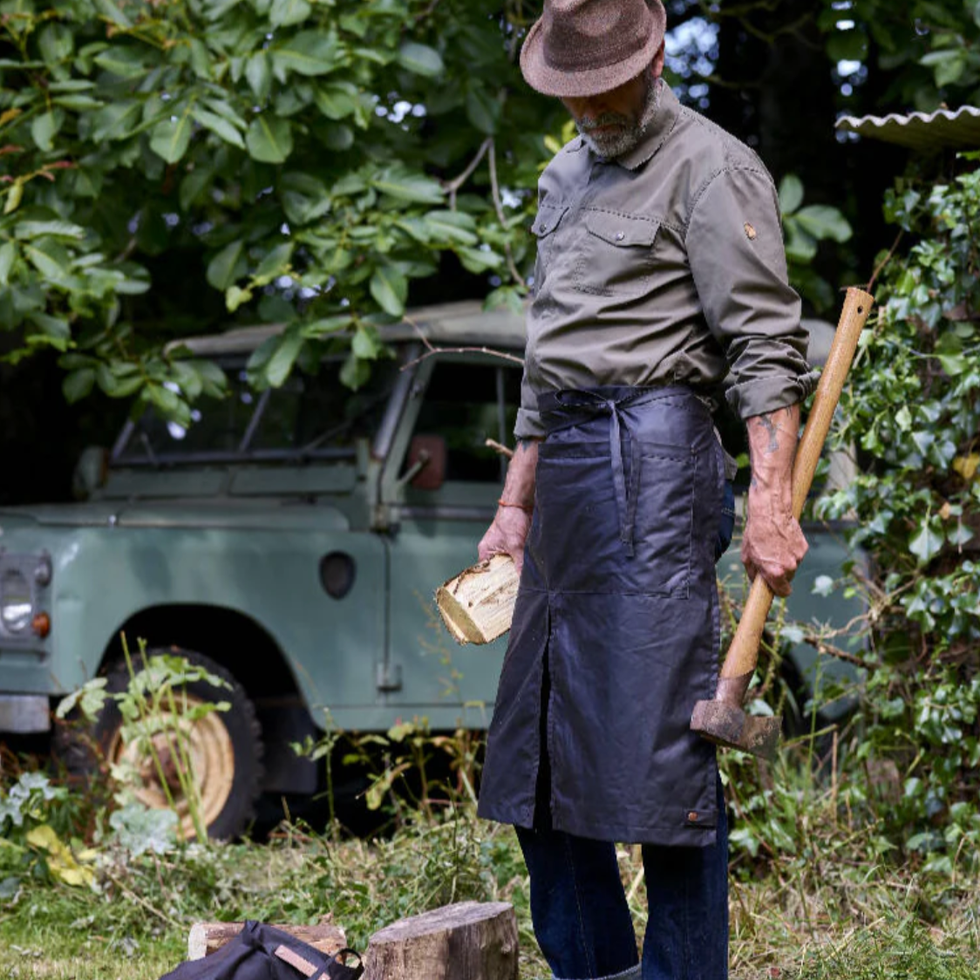 Split Waist ApronCredit: Country Living Marketplace
Comments are closed.