
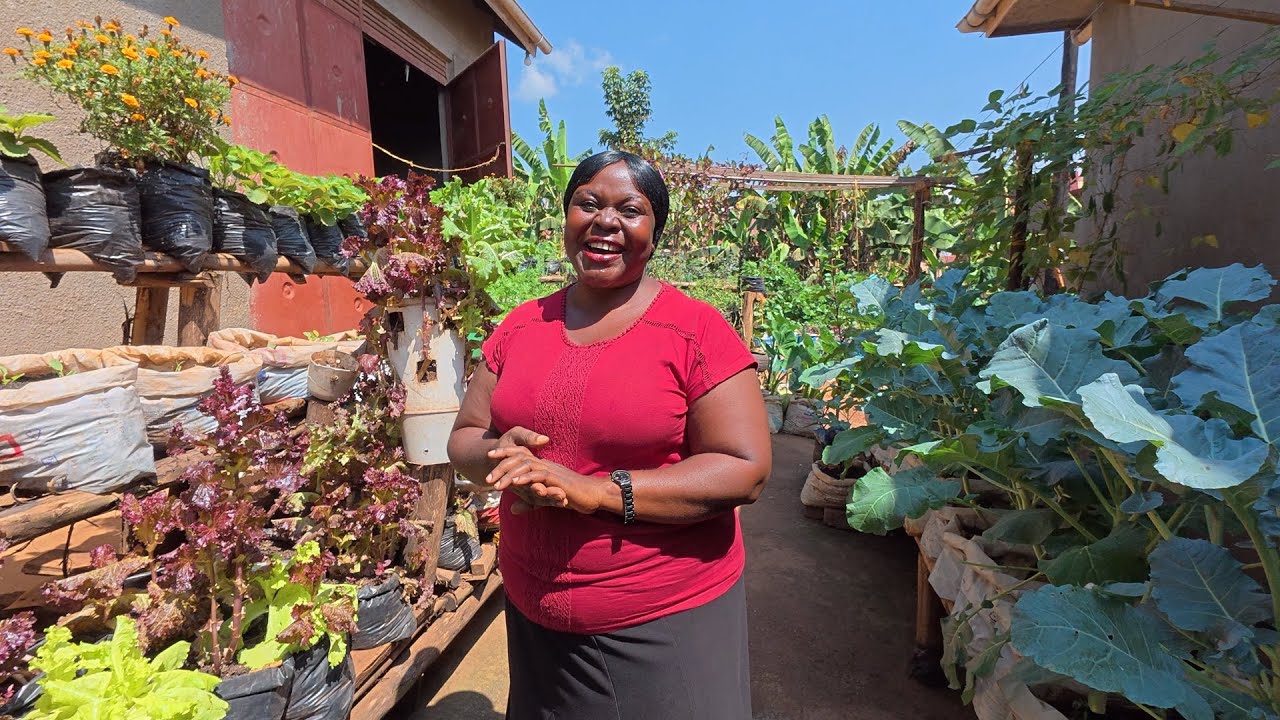
No Land, No Problem: This Ugandan Woman Feeds a Village With Just Her Tiny Backyard Garden
She doesn’t own acres of land but that didn’t stop her. In this inspiring interview, meet @FarmforProfitUganda22 a Ugandan woman who’s turning her tiny backyard into a powerful source of food for her village. From fresh vegetables to local markets, see how she’s growing abundance in the most unlikely space and changing lives along the way. This is backyard farming like you’ve never seen it!
Check out her youtube channel here https://youtu.be/0isuOVtGYlw?si=yQ67USiZKDUALLIx
25 Comments
Hoslundia opposita, commonly known in Uganda as Kawunyira or Kamunye, is a fast-growing medicinal shrub native to tropical Africa. It’s sometimes referred to as “orange bird berry” because of its small, bright orange fruits that birds frequently feed on. This bush typically grows to a height of 1.5 to 3 meters and is characterized by aromatic, slightly fuzzy oval leaves and vibrant orange tubular flowers.
Traditionally, Hoslundia opposita is widely used for its medicinal and insecticidal properties. In many Ugandan households, the leaves are crushed and used as a natural insect repellent, particularly effective against mosquitoes. Some families burn the leaves or scatter them indoors to ward off pests. It is also boiled and consumed as a herbal remedy for malaria symptoms, fever, and respiratory conditions like coughs or asthma. The plant possesses antibacterial properties and is sometimes applied topically to treat wounds or skin infections. Additionally, in some communities, it is used in spiritual cleansing rituals, including medicinal baths.
Its effectiveness is attributed to bioactive compounds, including flavonoids and essential oils, which repel or kill insects and contribute to its healing effects. However, caution is advised in its use, especially for pregnant women or children, as the plant’s dosage and potential toxicity are not extensively studied.
When she was saying garden of eve 😂😂😂😂 please 🤦♀️
Wow, wow….what a lovely lady….may God continue to bless your efforts and your family abundantly…..
It's banana lye not apple
Quite motivating and inspirational. Good luck 🎉🎉🎉
garden of eve <3
Really productive job
Very nice😊
Your contact please
shes not making apple cider vinegar she is making lye water (hydroxide alkaline solution) with banana peels. apple cider vinegar is made from…apple cider. typically lye water is not recommended for use on plants because its so alkaline and can cause damage to them and the beneficial worms and other organisms. She might have problems down the line, especially in container gardening, where the soil becomes too alkaline for the plants.
I thoroughly enjoyed this video. Way to go Africa 🙌
Thank you for sharing
Where there is a will there is way🎉🎉🎉. Well done
Beautiful farm with a beautiful message. She is so creative and hard working with her passion. Thank you very much for this video.❤
This is great, watch from Zambia. Need to know that plant in English which repels insects and snakes. Also process of making Banana Cider vinegar.
This is great, watch from Zambia. Need to know that plant in English which repels insects and snakes. Also process of making Banana Cider vinegar.
Banana cider vinegar maybe since is made from bananas
Well done dear one. Please share number
This is an amazing stuff. I have gotten some good clues
Lovely lady ❤
Where can I get that kawunyira please? Any ideas?
Kawunyira = wild marigold, stinking Roger. Very impressive work. Thanks for showing us around and motivating me.
I've loved this video so much. It has got me interested in starting something similar 😊
Thank you for sharing this. Great insights.
AMAZING!!!!!! Great video, thank you!
No kongobaleke is a plant looks like kaama and its poisonus its not eatable