
Abstract
Urban community gardens support a great amount of biodiversity, which deliver valuable ecosystem services to the garden and the urban environment. Although research indicates that distinct management practices can support different levels of biodiversity and ecosystem services, management of garden habitat, plant selection, and overall aesthetics are largely based on gardener preferences. In this study, we conducted an online survey across 21 community gardens in Central California to better understand gardener aesthetic and management processes. We presented two selections of images representing common garden management styles to this region and ask respondents to select their preferred garden image and explain why they preferred that image in an open-ended response. We also collected sociodemographic and education background to assess if certain aesthetic and management preferences were associated with specific gardener characteristics. In the first selection of images, gardeners strongly preferred an image they described as tidy and organised (85% of respondents) stating it looked cleaner and was more cared for. They also stated that managed pathways allowed for easier movement around the garden, better access to plots, and prevented the spread of weeds. Participation in the Master Gardener program (a sustainable gardening program provided by the University of California) was correlated with this image preference. In the second selection of images, gardeners did not strongly prefer either image, and 20% of gardeners declined to indicate a preference because they found aspects of both images to be desirable, namely that they appreciated the presence of crop plants for food production, but they also wanted flowering plants that support pollination services. Such results highlight that gardeners recognise the complexity of ecological processes within the urban garden but prefer a tidy and organised garden aesthetic for multiple reasons.
Introduction
In the past decade, research in urban community gardens has focused on understanding which management practices best support ecosystem services and benefits to gardeners (Diduck et al., 2020; Hanson et al., 2021; Evans et al., 2022). These ecosystem services are myriad and include social benefits, such as the health benefit regarding biodiversity mediated benefits that enhance psychological restoration and mental health (Dean et al., 2018; Young et al., 2020) and other cultural ecosystem services such as social bonds, recreation, and connection to place and community (Fish et al., 2016; Hanson et al., 2021). Urban community gardens can also support a significant amount of biodiversity in cities that supports the resilience and ecological stability of urban environmental landscape (Speak et al., 2015; Camps-Calvet et al., 2016; Langemeyer and Gómez-Baggethun, 2018), including the protection of native or wild-growing species (Seitz et al., 2022).
Importantly, community gardens provide habitat and resources that are essential for the beneficial organisms that mediate pest-control and pollination services for cultivated plants (Marín-Gómez et al., 2022; Jha et al., 2023). These services are essential given that one of the primary benefits of urban community gardens is to provide a space for people to grow their own food, adding to the local supply of fresh fruits and vegetables and combatting food insecurity concerns in cities (Clarke and Jenerette, 2015; Diekmann et al., 2020). Although, such services are important for food production and crop protection, many urban gardeners still highlight the importance of aesthetics and edibility for plant choice (Hanson et al., 2021), and research of home gardens has found that cultivated plants selection is often related to gardener traits and values (Kendal et al., 2012). Because many urban community gardens are run as organic systems due to garden and council policies, pesticides and other chemical additives are prohibited. Thus, many gardens are reliant to ecosystem services for crop production. Because of these restrictions, it is important to understand the underlying preferences and drivers of urban gardeners on management practices that impact the delivery of ecosystem services (Zasada et al., 2020; Larson et al., 2022). Understanding the drivers that support biodiversity in gardens will also increase the potential for these management practices to be scaled up across community gardens to support landscape-level biodiversity and ecosystem service delivery (Newell et al., 2022).
There are several considerations when promoting biodiversity-friendly management practices in urban community gardens. Plot-level vegetation diversity is largely determined by individual community gardeners and their aesthetic and food production desires (Lin et al., 2015; Philpott et al., 2020). However, gardeners are only in charge of small spatial areas (with plot often only a few meters squared); thus, crop selection and biodiversity levels can be variable across the community garden. This is not necessarily a problem as the overall garden-level biodiversity may still be high if the gardeners select different types of plants or employ different structures that allow for vegetative complexity (Borysiak et al., 2017). Management practices such as conventional versus organic pesticide use can impact biodiversity, and these decisions often depend on the overarching policies of the community garden (Barratt et al., 2015; Delahay et al., 2023). Changes occur not only spatially, but also temporally because gardener turnover can affect both plot-level and garden-level biodiversity. As new gardeners take over plots, the preferences, management practices, and vegetation composition and structure change over time.
What is needed is a greater understanding of how gardener preferences for different management practices are related to personal experience and knowledge. Differences in practices and planting choices may be related to previous work in the field of agricultural, accessing different learning resources, or learning from friends and family (e.g., Lautenschlager and Smith, 2007; Kiesling and Manning, 2010; Grebitus, 2021; Mabon et al., 2023). Understanding gardeners’ backgrounds and if they actively consider biodiversity-oriented management practices to support the delivery of ecosystem services can help researchers and policy makers shape opportunities and programs that support gardeners to manage their plots in a way that enhances both biodiversity and benefits to gardeners.
In this study, we investigate the aesthetic and management preferences of urban community gardeners in Central California using a visual evaluation process with mixed-methods analysis to better understand garden management choices. We utilize two different selections of images along with an open-ended query asking respondents to explain why they prefer a specific image to understand their thought processes around preference. We hypothesize that gardeners with more gardening experience or formal training with ecological knowledge will value biodiverse and vegetatively complex gardens more because such gardens will support pollination and pest control services valuable for food production in urban gardens. We present gardeners’ preferences regarding the images presented and the main themes regarding the preference selection. We then discuss the potential implications for developing future scientific-practitioner partnerships that seek to balance gardeners’ goals and ecosystem service delivery in community gardens.
MethodsSurvey backgroundRegional description
We conducted our study across 21 community urban gardens in three counties in the California central coast, namely in Monterey (36.2400° N, 121.3100° W), Santa Clara (37.3600° N, 121.9700° W), and Santa Cruz counties (37.0300° N, 122.0100° W). This is a biophysically complex region with a history as being the USA’s “salad bowl,” producing much of the nation’s fruits and vegetables. The area has experienced land use and socioeconomic transition with rapid urban population growth and a highly diverse socio-demographic profile (Dietzel et al., 2005), This includes the recent growth in the technological industry and increasing compact urban development to support technology employment; this shift has contributed to high levels of socioeconomic disparity and food insecurity (Brown and Getz, 2011). Thus, this region has been a focus of a socio-ecological study in urban community gardens for more than a decade (e.g., (Otoshi et al., 2015; Egerer et al., 2018b; Lin and Egerer, 2020; Philpott et al., 2020; Jha et al., 2023). The 21 gardens are located within varied landscapes with community gardens found in urban, agricultural, and natural settings.
Gardener-based image preference and open-ended responses
The online survey was developed to better understand the aesthetic and management preferences for urban community gardeners across the 21 community gardens in the California Central Coast where the research team has conducted research since 2013 (Jha et al., 2023). The gardens were originally selected for their variation in management and landscape surroundings. All gardens are community gardens where vegetables, fruit trees, and ornamental plants are grown. The gardens are managed either collectively by groups of volunteer or paid managers, with individuals maintaining their own plots or allotments. Gardens range in size from 444 m2 to 15,400 m2, and have been cultivated for between 5 and 54 years. Each garden was separated from other garden sites by at least 2 km and up to 90 km.
Survey-based tools can be useful to capture rapid knowledge of broad and geographically distributed populations such as the communities represented across urban community gardens (Khanal et al., 2020). The survey specifically used a visual evaluation method (Kang and Liu, 2022), where gardeners were presented with two image selections and asked which garden image they preferred and why they preferred the image using an open-ended response box. This provided an opportunity to capture a more wholistic understanding of the gardener’s perception of the space through physical, biological, and social characteristics of the environment (Kang and Liu, 2022).
We used the UCSC Qualtrics platform to implement the electronic survey and capture responses. The survey was only available in English and required respondents to complete the survey online. We recruited participants via emails sent to garden managers of 21 community gardens, who then distributed the surveys to their gardeners through a survey link; we also asked a UC Cooperative Extension Urban Agriculture and Food Systems Advisor to distribute this online survey via email to members of the University of California Agriculture and Natural Resources (UC ANR) Master Gardener certificate-based program because many Master Gardeners also participate in community gardening. As the survey targeted the Central Coast region, most of the survey respondents reported living in Monterrey, Santa Clara, and Santa Cruz Counties, and therefore have experience of community gardening within the same region, although under different garden rules and policies, cultural diversity, and surrounding landscapes.
In the beginning of the survey, participants were asked to confirm that they were indeed gardeners and thus eligible to take the survey. The survey took approximately 10–15 min to complete but there was no time limitation. The survey was open from June 5 – August 1, 2023, and in that time we received 159 responses. A quality control process was conducted to remove incomplete surveys leading to a total of 153 responses.
Image preference questions
Two image selection questions were presented to respondents in which gardeners were asked if they preferred one of the images and to explain why they preferred their selection. There were no prompts provided to guide them in the selection, and respondents were able to give multiple answers as to why they preferred a specific image. The question has been reproduced in Figure 1.

Garden images for image set 1 and 2: Respondents were presented with a picture of gardens (A & B in image set 1, C and D in image set 2) and asked: Which garden to you prefer and why? There was no information provided regarding assumptions on the differences between the images.
Additionally, the survey asked respondents a series of questions regarding their socio-demographic background, education, and gardening experience. To better understand how gardeners learned and continue to learn about gardening, we asked if gardeners have been involved in formal education and post graduate learning around biology, ecology, and agriculture including university degrees as well as being part of the Master Gardener program at UC ANR.
Analysis
We adopted a mixed-methods approach in the analysis to gather a more complete picture of respondent evaluations and preferences of garden images. Mixed-methods approached have been used in a number of urban landscape evaluations to assess user preferences for areas such as streetscapes and transport pathways (Lesan and Gjerde, 2020; Resch et al., 2020).
Statistical analysis for image preference
We performed two sets of analyses at the individual gardener level to better understand which gardener characteristics were related to specific image preferences. Such analysis provided us an understanding of what gardener characteristics may be driving certain management patterns and aesthetic preferences of gardens. Specifically, we examined the sociodemographic and background variables that were collected from each respondent and included them as explanatory variables. These included: age, gender, additional language spoken beyond English (yes or no), having a degree in biology, environmental studies or other related degree (yes or no), whether they consult other sources of knowledge to learn about gardening (yes or no), having an agricultural background (yes or no), years of gardening experience, and if they are a Master Gardener (yes or no). The Master Gardener program exists across the United States and several international locations as a service in which local cooperative extension educators disseminate information (McAleer, 2005). This is an important form of education for urban gardeners in the Central Coast, and many of the Master Gardeners in our survey participated in the UC ANR Master Gardener program.1
We used the glmulti package and function (Calcagno and de Mazancourt, 2010) in R Studio (R Core Team, 2013) to run generalised linear models to understand the drivers of preference of image selection for each set of images. We used a logit model for binomial data because of the binary responses (yes/no) for many of the explanatory variables (Coull and Agresti, 2000). All linear models were also checked for collinearity between continuous terms with VIF to ensure all scores were below 2 using the car package in R (Fox and Weisberg, 2018).
Open-response text analysis
We coded open-ended responses to analyse and interpret explanations of gardener selected preferences for Image Set 1 and Image Set 2. Open-ended responses were analysed using a hybrid inductive+deductive approach (Proudfoot, 2023), where the inductive coded content analysis was conducted across all the responses to each question by one researcher [BL], which were then inductively synthesised by the authorship team through a secondary process of reflexive thematic analysis (Terry and Hayfield, 2020). Each of the responses was then assigned codes to label the data in categories of explanation for preference. We were also guided by our experience in the approach to coding through the summarised process by MacCallum et al. (2019), p. 145 where coding is referred to by the systemic labelling of qualitative data by linking of words, phrases or images to distinct tags or codes. Coding allows a data set (such as an open text survey question) to be broken down into manageable parts to assist with analysis and interpretation (MacCallum et al., 2019). Given the relatively small dataset (153 total respondents across two sets of images), it was not necessary to use any computer software to organise or manage the data.
Related codes fell quite logically under major themes for each set of images. In presenting the results of the coded data, we illustrate each code with example participant quotes, most of which were pointed and directly related to the code. All other demographic variables including gender, age, and years of gardening experience were used as predictor variables. All quotes are unattributed due to confidentiality requirements with human ethics processes.
Results
Female gardeners made up the majority of the responses (73% female), males represented 26% of responses, and non-binary participants represented 1% of responses. The average age of gardeners was 60-years-old, and gardeners reported 31 years of gardening experience on average. The majority of gardeners did not have a formal degree in science (no = 81%; yes = 19%). Only 17% of gardeners reported a background in agriculture. Gardeners who participate in the UC ANR Master Gardener program made up 40% of responses, with 60% of gardeners not participating in this or any other Master Gardener program.
Themes from open-ended responses
We categorized gardener responses into 20 different themes for the first set of images and 10 different themes for the second set of images (Table 1) and describe in Figure 2 the frequency at which these themes were mentioned when gardeners explained their image preference for each set of images. Themes were largely grouped into the codes mentioned within Table 1 with unique responses labelled as “other.” The various unique responses are provided in Table 1.
Themes for the image setsSET 1Image AImage BHabitat for beneficialsFewer weedsNo chemicalsMulchNaturalManaged and cared forNative beesTidy, OrganisedPollinatorsClear path to moveNo mulchSoil health and moistureSeed savingAestheticSelf-sowingFlowers and BeneficialsOther: irrigation, mycorrhizae in soil, more growing room, has more potential for imagination, aestheticsHealthy PlantsFewer PestsRaised bedsOther: frost protection, better space management, more native plants, reduce erosion, crop diversity, plant in soil, compost, do not like palms in other picture, more room to growSET 2Image CImage DFlowers attract beneficialsFood productionNatural, wild, nativeWell managed, organised (raised beds)BiodiversityMix of edible and non-edibleThe other image is too edible focusedOther: healthy plants, looks more productive, seems more diverseBetter maintenance, pathsAppears more drought tolerantOther: more relaxing
Themes developed through the analysis of the open-ended responses on gardener image preference.
The themes for each image are listed, with the unique responses labelled under ‘other’ as a category.
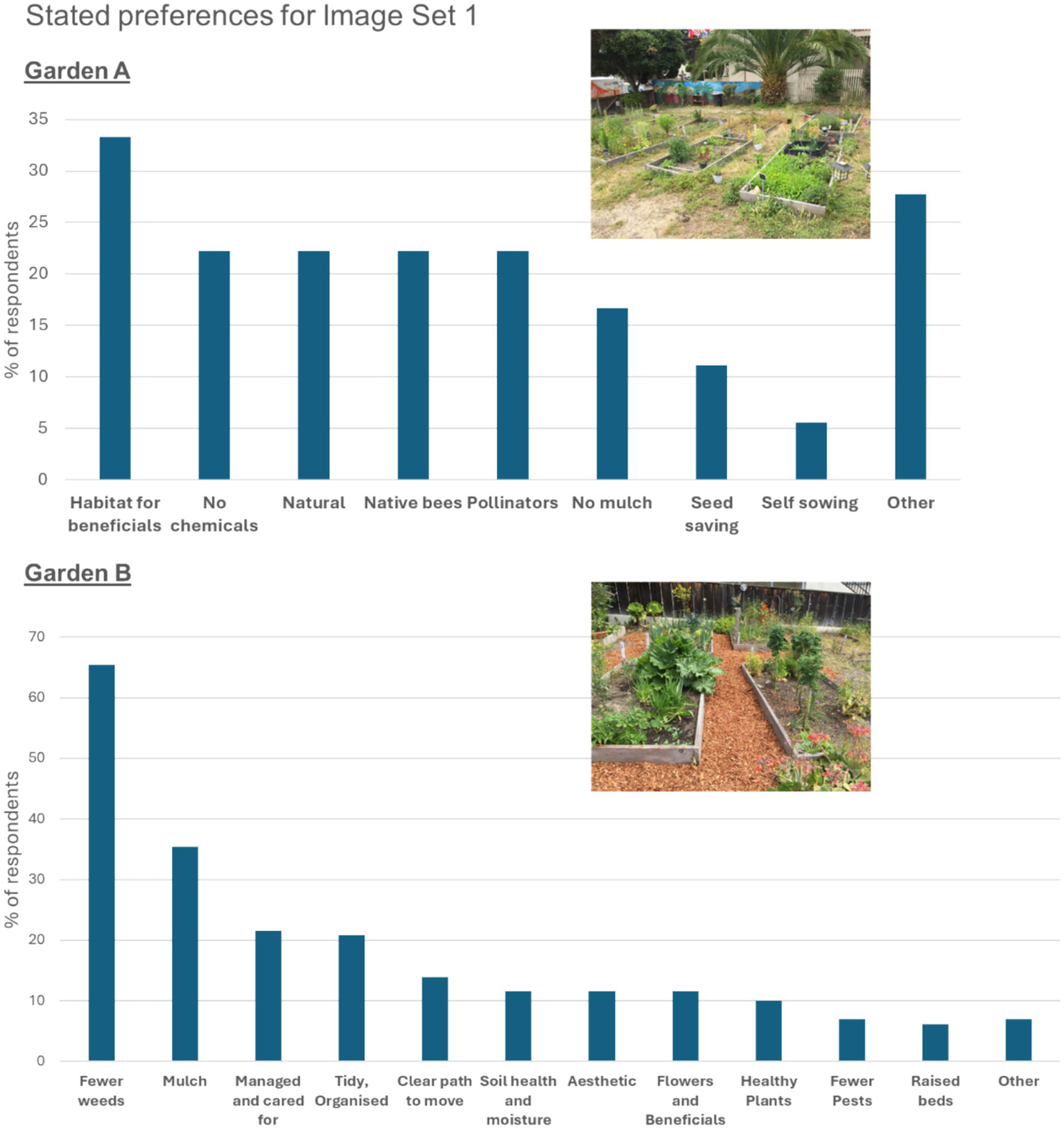
Image set 1: percentage of respondents who mentioned each of the stated reasons for preferring garden A and garden B. Coded responses from the gardeners were delineated for each gardener, and the number of responses under each code were summed and presented in Table 1 and the figures. Respondents were able to provide multiple reasons for why they preferred a specific garden.
Image set 1: garden A and B
In the first set of images, we found that the majority of respondents indicated that they preferred image A (n = 130) and only 12% of gardeners said that they preferred image B (n = 18), while 85% of gardeners preferred the tidy garden (n = 130). 3% of gardeners did not answer this question. Of all of the sociodemographic and gardening experience factors examined, only participation in the Master Gardener program was associated with preference for image A (see Table 2, SE = 1.328, z-value = 2.051, p-value = 0.04). None of the other factors (age, gender, additional language, degree, additional learning, agricultural background, and years gardening) were associated with garden image preference.
EstimateStandard Errorz-valuep-valueIntercept1.721.530.0110.991Age−0.0270.029−0.9190.358Gender1.310.8061.6210.105Additional language0.3140.8620.3650.715Degree0.7630.8610.8870.375Additional learning−1.591.53−0.0100.992Agriculture background−0.6890.779−0.8840.377Years gardening0.0060.0200.2810.779Master Gardener1.330.6482.0510.040*
Results from the general linear model for image set 1 examining the sociodemographic and garden experience of gardens in their preference of garden A versus B.
Signif. codes: ‘*’ 0.05.
In their open-responses, gardeners that preferred image A stated at a high frequency that this type of garden supported biodiversity by providing habitats that support beneficial insects and other animals (“Habitat that supports beneficials” = 33%, see Figure 2). Gardeners also recognised that plots that were more natural (“No chemicals” = 22%) could protect and support pollinators (“Native bees” = 22%; “Pollinator” = 22%). Some unique responses for garden A that were placed in the ‘other category’ were reasons such as the ability to have more mycorrhizae in soil, more growing room, and things like aesthetics or more potential for imagination.
For example, gardeners who selected garden A said:
“I prefer A because I know herbicides are not likely being used and the garden is messy enough that it provides good insect habitat-although I like the aesthetic of B″ (Non-binary, Age 65, 55 years gardening)
“While it is messy, it looks to have more plants for pollinators, more access to bare ground for native bees, less use of fertilizers and pesticides that disrupt mycorrhizae action in the soil.” (Female, Age 65, 20 years gardening)
Gardeners who selected garden B stated that they thought the more structured garden would have fewer weeds (“Fewer weeds” = 65%), and many related this to the use of mulch in the garden (“Mulch” = 36%). They also thought that aesthetically, the garden looked like it was better managed and cared for (“Managed and cared for” = 22%) with clean paths that would be easier for movement (“Clear path to move” = 14%). This was associated with the raised beds that helped the garden look tidy and organised (Tidy, organised” = 21%; “Raised beds” = 6%). Some also mentioned that they thought the garden looked like it had healthy plants and soil. In the “other” category, the gardeners said that the design and management of the garden would provide better frost protection, reduce erosion, provide better space management, and possibly support more native plants or better crop diversity.
Some example and representative statements from those who said that they preferred the tidy gardens were:
“B is my preference and I prefer this because it is kept weed free, it has ornamentals to attract pollinators, and it is lush with vegetables. It also has paths covered with bark for walking ease.” (Female, Age 83, 60 years gardening)
“Garden B – because the mulched walkways give a neater appearance with fewer weeds.” (Male, Age 69, 30 years gardening)
Image set 2: garden C and D
In the second set of images, we saw that the preferences across the two images were more equal with 43% saying they preferred Garden C (n = 65), 39% saying they preferred Garden D (n = 60), and 18% of people saying that they liked both or did not have a preference (n = 27). Further, we found that the only explanatory variable of significance was that of gender with male respondents indicating a preference for the image of Garden D (Table 3; SE = 0.475, Z-value = 2.889, p-value = 0.004).
EstimateStandard Errorz-valuep-valueIntercept−1.4121.500−0.9410.347Age−0.0030.021−0.1440.885Gender1.3730.4752.8890.004**Additional language−0.0590.559−0.1050.917Degree−0.4000.545−0.7340.463Additional learning−0.3171.043−0.3040.761Agricultural background−0.2590.589−0.4400.660Years gardening0.0120.0140.8970.370Master Gardener−0.6150.449−1.3710.170
Results from the general linear model for Image Set 2 examining the sociodemographic and garden experience of gardens in their preference of garden C versus garden D.
Signif. codes: ‘**’ 0.01.
Of the gardeners who preferred a specific image, there was greater ambiguity in the way people spoke about their preferences. This is punctuated by the fact that many people said they were not able to make a choice between the two options.
For garden C, respondents who preferred this garden said that they appreciated the flowers and how the flowers attracted the bees, butterflies, and birds to the gardens (“Flowers attract beneficials,” 71%). They also appreciated the natural and wild aesthetics (“Nature, wild, native, = 31%), and they described feeling that there were more native plants that might support higher levels of biodiversity (“Biodiversity” = 22%). Some gardeners also thought that there was better maintenance (11%), that it might be more drought tolerant (8%). In the other category, one person mentioned that the garden was more relaxing (Figure 3).
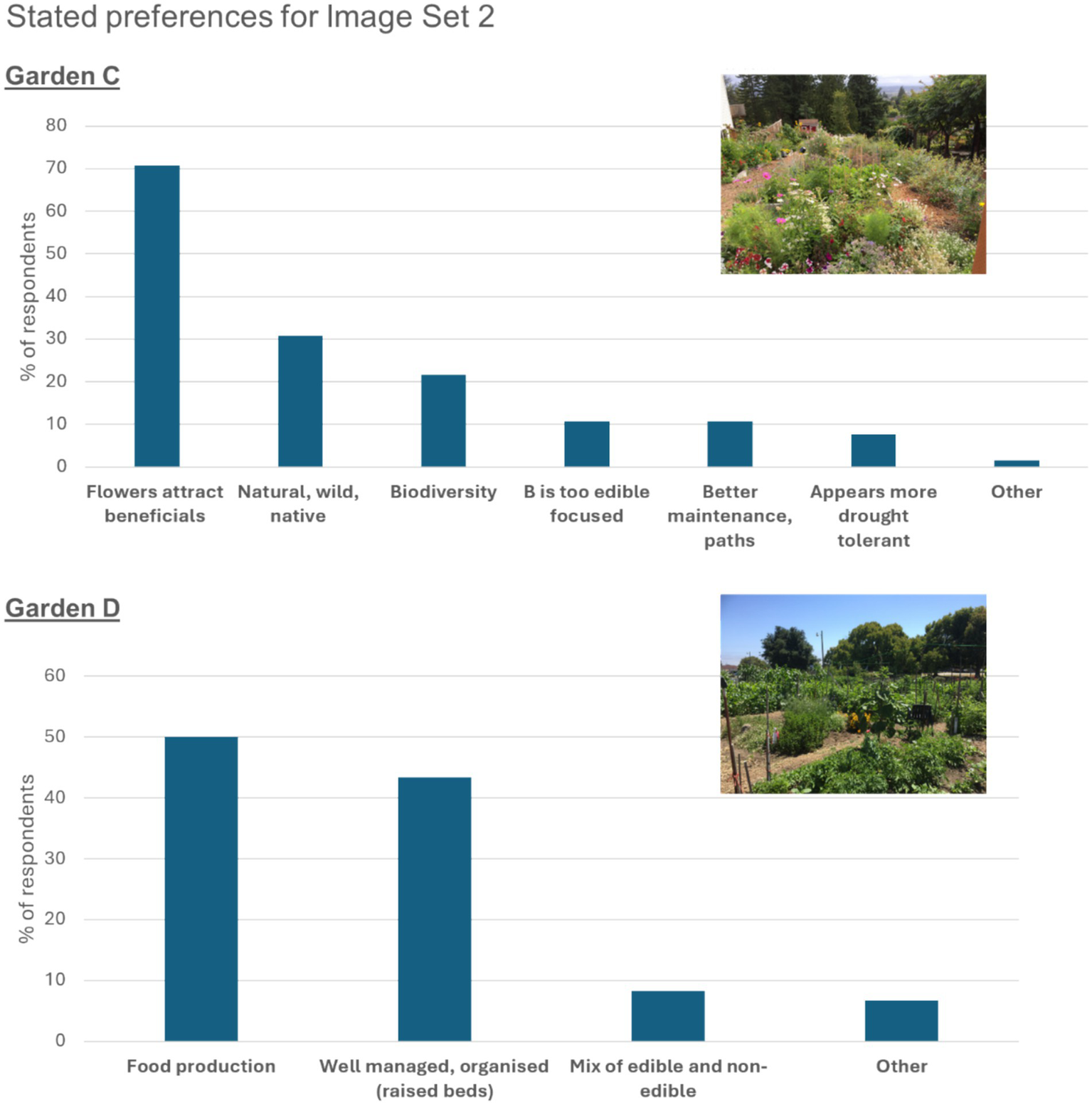
Percentage of respondents who mentioned each of the stated reasons for preferring garden C and garden D. Coded responses from the gardeners were delineated for each gardener, and the number of responses under each code were summed and presented in the figures. Respondents were able to provide multiple reasons for why they preferred a specific garden.
Some example and representative statements from those who said that they preferred the floral gardens were:
“Garden C looks more inviting and with lots of different plants – probably reseeds and definitely attracts more beneficials.” (Female, Age 56, 50 years gardening)
“Garden C- but this is a very hard question as C is more of a natural meadow and B is a vegetable garden. Garden C has lots of plants for bees and butterflies and is also very attractive.” (Female, Age 70, 60 years gardening)
For garden D, the top reason respondents stated for choosing this garden was for food production, meaning gardeners could identify the plants that were being shown in the image (“Food production” = 50%). They thought there was a good mix of edible and non-edible plants (8%), and they thought that the garden seemed well-maintained and managed with the raised garden beds (43%). A small subset of gardeners chose the ‘other’ category (4%) for their preference explanation, stating that plants looked healthier, that they seemed more productive, and that it was more diverse.
Some example and representative statements from those who said that they preferred the food productive gardens were:
“D-Crops are contained in the boxed areas and not overgrown onto the walk areas. C looks like a flower garden and D looks like a crop garden.” (Male, Age 66, 55 years gardening)
“Garden D. It has more vegetables and looks more organized.” (Female, Age 38, 2 years gardening)
Of the gardeners that could not make a choice between the two images, they noted that they liked aspects of both gardens and ideally wanted flowers for pollination and crops that were very productive.
Some example and representative statements from those who said that they could not choose between the two images were:
“These gardens have 2 different functions. Garden C looks like a great pollinator garden with diverse plants, D looks like a vegetable garden. I prefer a mix of both.” (Female, Age 42, 10 years gardening)
“I don’t prefer either – like choosing your favorite child. There are 2 different types of gardens, flower garden vs. vegetable garden. Both look inviting to garden in.” (Female, Age 61, 30 years gardening)
Discussion
In this study, we demonstrate that a key set of gardener demographic- and experience-based characteristics, including gender and formal training, were correlated with preferences for garden design aesthetics and management. First, we showed that individuals with Master Gardener training were more likely to prefer an image representing a “tidy, organised” garden, which included raised beds and mulched pathways. The gardeners stated that they preferred this image because it looked well-managed and cared for, with mulched pathways allowing for easy movement and reduced spread of weeds and pests. Second, we showed that gender was significantly associated with preference in the second selection of images with male gardeners tending to prefer garden D. Respondents stated that the garden supported high levels of food production and looked to be well-managed and organised.
In the first selection of images, the preference balance was skewed toward garden B, the garden respondents identified as tidy and organised (85% of respondents), with many fewer respondents preferring garden A. The preference for “tidy” management in urban gardens and yards has been identified in previous research. Neat and tidy gardens are often perceived as safe and associated with care, and are also the predominant cultural norm by house-holders in Western countries (Nassauer et al., 2009; Samus et al., 2023). On the other hand, vegetatively complex or “messy” urban green spaces have often been perceived as unmanaged and unsafe and are often associated with lack of care (Turo and Gardiner, 2019; Muir, 2021). However, aesthetic management may affect the delivery of pest control and pollination services (Lindemann-Matthies and Marty, 2013; Egerer and Philpott, 2022). Studies from residential gardens have shown that gardens with a more formally managed and neater garden appearance are associated with reduced biodiversity (Delahay et al., 2023), while vegetatively complex private gardens can better support habitats for wildlife and natural enemies (Lerman et al., 2023). Patterns in community gardens are more variable. For example, community gardens where mulch is used along pathways can help control weeds or maintain soil moisture (Chalker-Scott, 2007; Lin et al., 2018), but mulch has also been shown to negatively impact the abundance and species richness of bees (Quistberg et al., 2016) and ladybeetles (Egerer et al., 2017). At the same time, mulch can support spider (Riechert and Bishop, 1990) and parasitoid richness (Burks and Philpott, 2017).
We were surprised to find a significant correlation of Master Gardening experience with a preference for garden B because the program focuses on training in sustainable ecological processes to support beneficial insects and animals for pollination and pest management services. However, it is possible that Master Gardeners were prioritizing the potential benefits of weed suppression and water storage, which can be higher in gardens with more mulching (Chalker-Scott, 2007; Lin et al., 2018) rather than the benefits of supporting natural enemy and pollinator populations in more natural habitat. Past work has indicated that water availability and weed suppression are indeed top concerns of the urban gardeners in this region (Egerer et al., 2018a; Lin and Egerer, 2020). Preference for ‘tidy’ gardens may also result from variation in gardener experience, even with Master Gardener training. Interestingly, past research in Virginia has found that Master Gardeners can exhibit substantial variation in their level of familiarity with integrated pest management, with some unfamiliar with the term or with different perceptions of its role in agricultural practices (Frank and Blevins-Wycoff, 2024). Similarly with biodiversity and pollination services, another study of Master Gardeners in Florida showed that they perceived themselves to be fairly knowledgeable about plant-pollinator relationships, yet their tested knowledge was variable. This suggests that a more diverse knowledge or a systems-based approach to agroecological management may provide better support for gardeners (Kalaman et al., 2020).
In the second selection of images, there was a more balanced distribution of preferences, with about 40% preferring each image, and 20% of respondents who could not or did not want to make a preference decision. Many of the respondents in the third category noted that there were aspects of both images that were favourable. Based on their open-responses, respondents identifies garden C as a more floral plant based garden that could support biodiversity and pollinators, while garden D was considered to be a primarily food production-based garden, and they would like to see a garden that had both flowers for pollination and crops for food production. Although 80% of the respondents chose one of the two images, many of these respondents expressed that they appreciate aspects of both images in a garden.
There were fewer reasons provided regarding preference in the second selection of images, with respondents largely stating that they preferred the garden D for the food production potential. In the analysis, gender was correlated to image selection with male respondents showing greater preference for garden D. This result is interesting considering that most of our respondents were female gardeners (73%), which is representative of the gender ratios of urban community gardeners in this region (Philpott et al., 2020). Previous research in these gardens has also found that male gardeners report cultivating a significantly higher proportion of food crops within their plots, while female gardeners planted a higher proportion of ornamental plants (Philpott et al., 2020). Where floral plants are cultivated for their aesthetic value, they are often preferred by higher income individuals who may have less need for growing their own food (Philpott et al., 2023). These results contrast with urban gardening communities in developing nations, where women are generally in charge of providing sustenance for the family and use the opportunity of participating in community gardens to bring more food into the household (Wooten, 2003; Yiridoe and Anchirinah, 2005; Ngome and Foeken, 2012) or increase fresh vegetable consumption (da Cunha et al., 2020). In these studies, gardener decisions may depend on food security and nutritional availability of produce that is accessible. Thus, the larger socio-economic context may be relevant.
Studies have found that the largest amount of space in urban community gardens is devoted to crop plants for food production (Pourais et al., 2015; Gregory et al., 2016). Although greater floral density may lead to a higher pollen deposition rates (Jha et al., 2023) or fruit weight (Cohen et al., 2021), other needs may supersede the desire to utilise space for floral plants or increase vegetative complexity to support natural enemies. The results of this study show that there are many reasons for aesthetic and management choices within a garden plot, which impact on biodiversity and ecosystem delivery. These results resonate with previous research in private gardens, where garden management and design are based on multiple aesthetic values, but competing priorities can lead to a gap in value to action behaviour (Elliot Noe et al., 2021). In a study of Dutch gardeners, while many expressed sustainability and environmental ideals, there was a cognitive dissonance with the way they managed and maintained their gardens, because while gardeners understood the value of biodiversity, many managed their gardens based on aesthetic tidiness, non-native plant selection, and design that allowed for outdoor leisure (Beumer, 2018). In another study of gardeners in New Zealand, researchers found that while having information and knowledge in biodiversity friendly gardening impacted plant choice of gardeners, time and normative beliefs from friends and family were also important in their decision making, leading to gardens that were not as biodiversity friendly as would be expected by information and education alone (Samus et al., 2023). In other words, these past studies similarly found that plant and management decisions arise from multiple competing values that sometimes support and sometimes undermine garden systems that support biodiversity.
What is difficult for gardeners is to find a balance in which they can produce large amounts of food, while still maintaining vegetative complexity or sufficient floral resources to exist within the agroecological system. One option, as presented above, it to provide a more system-based educational approach for urban community gardens to shows how biodiversity can lead to greater food production levels. For example, while plants with high floral density and abundance may not provide food, they may indirectly benefit the gardeners by increasing pollination and pest control services to protect food production in other crop plants, especially if the plants are native to the area or have many flowers units per plant (Fukase and Simons, 2016; Marquardt et al., 2021). The promotion and support of ecologically complex community gardens may require strengthened scientist-practitioner relationships that allow for studies to be co-designed and co-produced to work in the context of the community garden but bring in scientific knowledge of plant-species relationships and ecosystem delivery to test and guide management practices that allow for aesthetic values as well as food production. Other processes, such as the development of whole garden vegetation complexity and biodiversity design, such as utilising the edges of the garden for shrubs and bushes or lining the pathways with floral or natural enemy supporting plants, could allow gardeners to plant their plots based on their values, while overall garden management supports ecosystem service delivery. Such practices still require research and experimentation that could be enabled by partnerships between scientist and practitioners.
Limitations
There were certain limitations to the research that would be assisted by similar future research occurring in different regions of the world. Only 21 community gardens were surveyed, and the gardens surveyed were based on previous relationships with gardens as well as gardens which had a manager that was able to help distribute the survey. These types of gardens are often supported and sponsored by a government institution which helps pay for a manager and allows for reasonable tenure over the land. There are many community gardens that are run directly by communities, but are not part of a council database. We were unable to distribute the surveys to these smaller and less well-established gardens. Additionally, although we were able to reach a group of gardeners that had more education into sustainable gardening (the University of California Master Gardeners), these gardeners did not distribute the survey further to each of their own community gardens, which would have increased the number of gardens that were included in the study.
The survey was also only available in English and gardeners were asked to complete the survey online. This meant that many of the gardeners were probably not able to participate in the survey. The community gardens of this region are culturally diverse, with many gardens occupied by communities from Latin America, Asia, South Asia, and Eastern Europe and with gardeners who do speak English. Additionally, the garden population age range is primarily an older generation (average age of 60 years old) who may not have access to technology to fill out the survey or did not want to engage with an electronic survey (Remillard et al., 2014). The recruitment approach and format of this survey design could have yielded different results with alternative recruitment efforts in-person and accessibility featuring language translation or the collection of group responses.
Conclusion
Our research shows that preferences for urban garden aesthetics can vary quite broadly depending on the gender and experiences of the gardeners that are involved. We see that Master Gardeners tend to prefer gardens that are tidy and organised, highlighting their value of greater ease in mobility, greater weed-suppression, and the perception of greater maintenance of the garden. This goes against our original hypothesis that those gardeners with more formal university education around biology, ecology, and environmental studies would support a natural, vegetatively diverse garden aesthetic because such gardens better support beneficial insects that provide ecosystem services. This may point to a gap in understanding regarding ecosystem design and its impact on the general insect and animal community, or there may be other motivations for things such as weed suppression, ease of mobility, or water conservation, that reduce the priority of agroecological management for pollinator or natural enemy biodiversity, but this requires additional research to better understand. We also document that when considering gardens with more flowers or more crops, male gardeners tend to support gardens that had greater crop plant coverage and more diverse crops rather than floral ornamental plants. This may be associated with a higher need or responsibility for bringing food into the household. Overall, gardeners recognised the need for flowers in providing the pollinators for their crops, and thus many supported a combination of both crop and ornamental cultivation in their gardens. Greater support through scientific-practitioner relationships should be utilised to provide suggestions for increasing biodiversity while ensuring food production.
StatementsEthics statement
The studies involving humans were approved by IRB #: HS-FY2023-218 from the University of California Institutional Review Board in April 2023. The studies were conducted in accordance with the local legislation and institutional requirements. The participants provided their written informed consent to participate in this study.
Author contributions
BL: Methodology, Writing – review & editing, Formal analysis, Data curation, Investigation, Conceptualization, Writing – original draft, Funding acquisition. PB: Resources, Project administration, Conceptualization, Writing – review & editing, Investigation. HL: Writing – review & editing, Methodology, Funding acquisition, Investigation, Conceptualization. SJ: Funding acquisition, Conceptualization, Investigation, Methodology, Writing – review & editing. EG: Methodology, Conceptualization, Investigation, Writing – review & editing, Data curation. SP: Project administration, Funding acquisition, Writing – review & editing, Formal analysis, Data curation, Methodology, Investigation, Conceptualization.
Funding
The author(s) declare that financial support was received for the research and/or publication of this article. This work was supported by the National Institute of Food and Agriculture, United States Department of Agriculture [grant 2020-67020-31158 to SP, SJ, HL, and BL] and the Environmental Studies Department at the University of California, Santa Cruz.
Acknowledgments
We thank the community gardeners for their time and survey responses. We also thank the garden organizations and individuals that disseminated our research survey: Aptos Community Garden, City of San Jose Parks and Recreation, City of Santa Cruz Parks and Recreation, Live Oak Green Grange Community Garden, MEarth, Mesa Verde Gardens, Mid-County Senior Center, Middlebury Institute of International Studies, Pacific Grove Community Garden, Lucy Diekmann from UC ANR.
Conflict of interest
The authors declare that the research was conducted in the absence of any commercial or financial relationships that could be construed as a potential conflict of interest.
The author(s) declared that they were an editorial board member of Frontiers, at the time of submission. This had no impact on the peer review process and the final decision.
Generative AI statement
The authors declare that no Gen AI was used in the creation of this manuscript.
Any alternative text (alt text) provided alongside figures in this article has been generated by Frontiers with the support of artificial intelligence and reasonable efforts have been made to ensure accuracy, including review by the authors wherever possible. If you identify any issues, please contact us.
Publisher’s note
All claims expressed in this article are solely those of the authors and do not necessarily represent those of their affiliated organizations, or those of the publisher, the editors and the reviewers. Any product that may be evaluated in this article, or claim that may be made by its manufacturer, is not guaranteed or endorsed by the publisher.
References
BarrattB. I.DickinsonK. J.FreemanC.PorterS.JohnstoneP. D.WingJ.et al. (2015). Biodiversity of coleoptera and other invertebrates in urban gardens: a case study in a New Zealand city. Insect Conserv. Divers.8, 428–437. doi: 10.1111/icad.12120
BeumerC. (2018). Show me your garden and I will tell you how sustainable you are: Dutch citizens’ perspectives on conserving biodiversity and promoting a sustainable urban living environment through domestic gardening. Urban For. Urban Green.30, 260–279. doi: 10.1016/j.ufug.2017.09.010
BorysiakJ.MizgajskiA.SpeakA. (2017). Floral biodiversity of allotment gardens and its contribution to urban green infrastructure. Urban Ecosyst.20, 323–335. doi: 10.1007/s11252-016-0595-4
BrownS.GetzC. (2011). “Farmworker food insecurity and the production of hunger in California” in Cultivating food justice: Race, class, and sustainability, eds. Alkon, A. H. and Agyeman, J. MIT Press: Cambridge Massachusetts. 121–146.
BurksJ. M.PhilpottS. M. (2017). Local and landscape drivers of parasitoid abundance, richness, and composition in urban gardens. Environ. Entomol.46, 201–209. doi: 10.1093/ee/nvw175,
CalcagnoV.de MazancourtC. (2010). Glmulti: an R package for easy automated model selection with (generalized) linear models. J. Stat. Softw.34, 1–29. doi: 10.18637/jss.v034.i12
Camps-CalvetM.LangemeyerJ.Calvet-MirL.Gómez-BaggethunE. (2016). Ecosystem services provided by urban gardens in Barcelona, Spain: insights for policy and planning. Environ. Sci. Pol.62, 14–23. doi: 10.1016/j.envsci.2016.01.007
Chalker-ScottL. (2007). Impact of mulches on landscape plants and the environment—a review. J. Environ. Hortic.25, 239–249. doi: 10.24266/0738-2898-25.4.239
ClarkeL. W.JeneretteG. D. (2015). Biodiversity and direct ecosystem service regulation in the community gardens of Los Angeles, CA. Landsc. Ecol.30, 637–653. doi: 10.1007/s10980-014-0143-7
CohenH.PhilpottS. M.LiereH.LinB. B.JhaS. (2021). The relationship between pollinator community and pollination services is mediated by floral abundance in urban landscapes. Urban Ecosyst.24, 275–290. doi: 10.1007/s11252-020-01024-z
CoullB. A.AgrestiA. (2000). Random effects modeling of multiple binomial responses using the multivariate binomial logit-normal distribution. Biometrics56, 73–80. doi: 10.1111/j.0006-341X.2000.00073.x,
da CunhaM. A.ParaguassúL. A. A.AssisJ. G.d. A.SilvaA. B.d. P. C.CardosoR.d. C. V. (2020). Urban gardening and neglected and underutilized species in Salvador, Bahia, Brazil. J. Ethnobiol. Ethnomed.16, 1–16. doi: 10.1186/s13002-020-00421-0
DeanJ. H.ShanahanD. F.BushR.GastonK. J.LinB. B.BarberE.et al. (2018). Is nature relatedness associated with better mental and physical health?Int. J. Environ. Res. Public Health15:1371. doi: 10.3390/ijerph15071371,
DelahayR. J.ShermanD.SoyalanB.GastonK. (2023). Biodiversity in residential gardens: a review of the evidence base. Biodivers. Conserv.32, 4155–4179. doi: 10.1007/s10531-023-02694-9
DiduckA. P.RaymondC. M.RodelaR.MoquinR.BoerchersM. (2020). Pathways of learning about biodiversity and sustainability in private urban gardens. J. Environ. Plan. Manag.63, 1056–1076. doi: 10.1080/09640568.2019.1633288
DiekmannL. O.GrayL. C.BakerG. A. (2020). Growing ‘good food’: urban gardens, culturally acceptable produce and food security. Renew. Agric. Food Syst.35, 169–181. doi: 10.1017/S1742170518000388
DietzelC.HeroldM.HemphillJ. J.ClarkeK. C. (2005). Spatio-temporal dynamics in California’s Central Valley: empirical links to urban theory. Int. J. Geogr. Inf. Sci.19, 175–195. doi: 10.1080/13658810410001713407
EgererM. H.BichierP.PhilpottS. M. (2017). Landscape and local habitat correlates of lady beetle abundance and species richness in urban agriculture. Ann. Entomol. Soc. Am.110, 97–103. doi: 10.1093/aesa/saw063
EgererM. H.LinB. B.PhilpottS. M. (2018a). Water use behavior, learning, and adaptation to future change in urban gardens. Front. Sustain. Food Syst.2:71. doi: 10.3389/fsufs.2018.00071
EgererM.PhilpottS. M. (2022). ‘Tidy’and ‘messy’management alters natural enemy communities and pest control in urban agroecosystems. PLoS One17:e0274122. doi: 10.1371/journal.pone.0274122,
EgererM. H.PhilpottS. M.BichierP.JhaS.LiereH.LinB. B. (2018b). Gardener well-being along social and biophysical landscape gradients. Sustainability10:96. doi: 10.3390/su10010096
Elliot NoeE. E.ClarksonB. D.StolteO. E. E. (2021). The” desire to have it al”: multiple priorities for urban gardens reduces space for native nature. Ecology and Society26:43. doi: 10.5751/ES-12515-260243
EvansD. L.FalagánN.HardmanC.KourmpetliS.LiuL.MeadB.et al. (2022). Ecosystem service delivery by urban agriculture and green infrastructure–a systematic review. Ecosystem Serv.54:101405. doi: 10.1016/j.ecoser.2022.101405
FishR.ChurchA.WinterM. (2016). Conceptualising cultural ecosystem services: a novel framework for research and critical engagement. Ecosystem Serv.21, 208–217. doi: 10.1016/j.ecoser.2016.09.002
FoxJ.WeisbergS. (2018). An R companion to applied regression. Thousand Oaks, CA: Sage publications.
FrankD. L.Blevins-WycoffS. (2024). Identifying integrated pest management resource needs among Virginia master gardeners. J. Integr. Pest Manag.15:pmae022. doi: 10.1093/jipm/pmae022
FukaseJ.SimonsA. (2016). Increased pollinator activity in urban gardens with more native flora. Appl. Ecol. Environ. Res.14, 297–310. doi: 10.15666/aeer/1401_297310
GrebitusC. (2021). Small-scale urban agriculture: drivers of growing produce at home and in community gardens in Detroit. PLoS One16:e0256913. doi: 10.1371/journal.pone.0256913,
GregoryM. M.LeslieT. W.DrinkwaterL. E. (2016). Agroecological and social characteristics of New York city community gardens: contributions to urban food security, ecosystem services, and environmental education. Urban Ecosyst.19, 763–794. doi: 10.1007/s11252-015-0505-1
HansonH. I.EckbergE.WidenbergM.OlssonJ. A. (2021). Gardens’ contribution to people and urban green space. Urban For. Urban Green.63:127198. doi: 10.1016/j.ufug.2021.127198
JhaS.EgererM.BichierP.CohenH.LiereH.LinB.et al. (2023). Multiple ecosystem service synergies and landscape mediation of biodiversity within urban agroecosystems. Ecol. Lett.26, 369–383. doi: 10.1111/ele.14146,
KalamanH.KnoxG. W.WilsonS. B.WilberW. (2020). A master gardener survey: promoting pollinator-friendly plants through education and outreach. HortTechnology30, 163–167. doi: 10.21273/HORTTECH04460-19
KangN.LiuC. (2022). Towards landscape visual quality evaluation: methodologies, technologies, and recommendations. Ecol. Indic.142:109174. doi: 10.1016/j.ecolind.2022.109174
KendalD.WilliamsK. J.WilliamsN. S. (2012). Plant traits link people’s plant preferences to the composition of their gardens. Landsc. Urban Plann.105, 34–42. doi: 10.1016/j.landurbplan.2011.11.023
KhanalA.TegegneF.GoetzS.LiL.HanY.TubeneS.et al (2020). Small and minority farmers’ knowledge and resource sharing networks, and farm sales: Findings from communities in tennessee, maryland, and delaware. J. Agric. Food Syst. Community Dev.9, 149–162. doi: 10.5304/jafscd.2020.093.012
KieslingF. M.ManningC. M. (2010). How green is your thumb? Environmental gardening identity and ecological gardening practices. J. Environ. Psychol.30, 315–327. doi: 10.1016/j.jenvp.2010.02.004
LangemeyerJ.Gómez-BaggethunE. (2018). “Urban biodiversity and ecosystem services” in Urban Biodiversity – From Research to Practice. eds. OssolaA.NiemeläJ., Oxon and New York: Routledge. 36–53.
LarsonK. L.LermanS. B.NelsonK. C.NarangoD. L.WheelerM. M.GroffmanP. M.et al. (2022). Examining the potential to expand wildlife-supporting residential yards and gardens. Landsc. Urban Plann.222:104396. doi: 10.1016/j.landurbplan.2022.104396
LautenschlagerL.SmithC. (2007). Beliefs, knowledge, and values held by inner-city youth about gardening, nutrition, and cooking. Agric. Hum. Values24, 245–258. doi: 10.1007/s10460-006-9051-z
LermanS. B.LarsonK. L.NarangoD. L.GoddardM. A.MarraP. P. (2023). Humanity for habitat: residential yards as an opportunity for biodiversity conservation. Bioscience73, 671–689. doi: 10.1093/biosci/biad085
LesanM.GjerdeM. (2020). A mixed methods approach to understanding streetscape preferences in a multicultural setting. Methodol. Innov.13:2059799120937233. doi: 10.1177/2059799120937233
LinB. B.EgererM. H. (2020). Global social and environmental change drives the management and delivery of ecosystem services from urban gardens: a case study from central coast, California. Glob. Environ. Chang.60:102006. doi: 10.1016/j.gloenvcha.2019.102006
LinB. B.EgererM. H.LiereH.JhaS.PhilpottS. M. (2018). Soil management is key to maintaining soil moisture in urban gardens facing changing climatic conditions. Sci. Rep.8:17565. doi: 10.1038/s41598-018-35731-7,
LinB. B.PhilpottS. M.JhaS. (2015). The future of urban agriculture and biodiversity-ecosystem services: challenges and next steps. Basic Appl. Ecol.16, 189–201. doi: 10.1016/j.baae.2015.01.005
Lindemann-MatthiesP.MartyT. (2013). Does ecological gardening increase species richness and aesthetic quality of a garden?Biol. Conserv.159, 37–44. doi: 10.1016/j.biocon.2012.12.011
MabonL.ShihW.-Y.JouS.-C. (2023). Integration of knowledge systems in urban farming initiatives: insight from Taipei Garden City. Sustain. Sci.18, 857–875. doi: 10.1007/s11625-022-01196-x,
MacCallumD.BabbC.CurtisC. (2019). Doing research in urban and regional planning: Lessons in practical methods. New York, NY: Routledge.
Marín-GómezO. H.FloresC. R.del Coro ArizmendiM. (2022). Assessing ecological interactions in urban areas using citizen science data: insights from hummingbird–plant meta-networks in a tropical megacity. Urban For. Urban Green.74:127658. doi: 10.1016/j.ufug.2022.127658
MarquardtM.KienbaumL.KretschmerL. A.PenellA.SchweikertK.RuttenspergerU.et al. (2021). Evaluation of the importance of ornamental plants for pollinators in urban and suburban areas in Stuttgart, Germany. Urban Ecosyst.24, 811–825. doi: 10.1007/s11252-020-01085-0
McAleerP. (2005). A national survey of master gardener volunteer programs. Coop. State Res. Educ. Ext. Serv., Natl. Inst. Food Agr. Washington, DC.
MuirC. G. (2021). Biodiversity and amenity in urban parks and greenspaces. Coventry, England: University of Warwick.
NassauerJ. I.WangZ.DayrellE. (2009). What will the neighbors think? Cultural norms and ecological design. Landsc. Urban Plann.92, 282–292. doi: 10.1016/j.landurbplan.2009.05.010
NewellJ. P.FosterA.BorgmanM.MeerowS. (2022). Ecosystem services of urban agriculture and prospects for scaling up production: a study of Detroit. Cities125:103664. doi: 10.1016/j.cities.2022.103664
NgomeI.FoekenD. (2012). My garden is a great help: gender and urban gardening in Buea, Cameroon. GeoJournal77, 103–118. doi: 10.1007/s10708-010-9389-z
OtoshiM. D.BichierP.PhilpottS. M. (2015). Local and landscape correlates of spider activity density and species richness in urban gardens. Environ. Entomol.44, 1043–1051. doi: 10.1093/ee/nvv098,
PhilpottS. M.BichierP.PerezG.JhaS.LiereH.LinB. B. (2023). Land tenure security and luxury support plant species and trait diversity in urban community gardens. Front. Sustain. Food Syst.7:1195737. doi: 10.3389/fsufs.2023.1195737
PhilpottS. M.EgererM. H.BichierP.CohenH.CohenR.LiereH.et al. (2020). Gardener demographics, experience, and motivations drive differences in plant species richness and composition in urban gardens. Ecol. Soc.25:8. doi: 10.5751/ES-11666-250408
PouraisJ.DucheminE.AubryC. (2015). Products from urban collective gardens: food for thought or for consumption? Insights from Paris and Montreal. J. Agric. Food Syst. Community Dev.5, 175–199. doi: 10.5304/jafscd.2015.052.005
ProudfootK. (2023). Inductive/deductive hybrid thematic analysis in mixed methods research. J. Mixed Methods Res.17, 308–326. doi: 10.1177/15586898221126816
QuistbergR. D.BichierP.PhilpottS. M. (2016). Landscape and local correlates of bee abundance and species richness in urban gardens. Environ. Entomol.45, 592–601. doi: 10.1093/ee/nvw025,
R Core Team. (2013). R: a language and environment for statistical computing. R Foundation for Statistical Computing, Vienna. Available online at: http://www.R-project.org/
RemillardM. L.MazorK. M.CutronaS. L.GurwitzJ. H.TjiaJ. (2014). Systematic review of the use of online questionnaires of older adults. J. Am. Geriatr. Soc.62, 696–705. doi: 10.1111/jgs.12747,
ReschB.PuetzI.BluemkeM.KyriakouK.MikschJ. (2020). An interdisciplinary mixed-methods approach to analyzing urban spaces: the case of urban walkability and bikeability. Int. J. Environ. Res. Public Health17:6994. doi: 10.3390/ijerph17196994,
RiechertS. E.BishopL. (1990). Prey control by an assemblage of generalist predators: spiders in garden test systems. Ecology71, 1441–1450. doi: 10.2307/1938281
SamusA.FreemanC.DickinsonK. J.van HeezikY. (2023). An examination of the factors influencing engagement in gardening practices that support biodiversity using the theory of planned behavior. Biol. Conserv.286:110252. doi: 10.1016/j.biocon.2023.110252
SeitzB.BuchholzS.KowarikI.HerrmannJ.NeuerburgL.WendlerJ.et al. (2022). Land sharing between cultivated and wild plants: urban gardens as hotspots for plant diversity in cities. Urban Ecosyst.25, 927–939. doi: 10.1007/s11252-021-01198-0
SpeakA.MizgajskiA.BorysiakJ. (2015). Allotment gardens and parks: provision of ecosystem services with an emphasis on biodiversity. Urban For. Urban Green.14, 772–781. doi: 10.1016/j.ufug.2015.07.007
TerryG.HayfieldN. (2020). “Reflexive thematic analysis” in Handbook of qualitative research in education. eds. WardM.DelamontS. (Cheltenham, UK, and Northampton, MA: Edward Elgar Publishing), 430–441.
TuroK. J.GardinerM. M. (2019). From potential to practical: conserving bees in urban public green spaces. Front. Ecol. Environ.17, 167–175. doi: 10.1002/fee.2015
WootenS. (2003). Women, men, and market gardens: gender relations and income generation in rural Mali. Hum. Organ.62, 166–177. doi: 10.17730/humo.62.2.b5gew5paf8qer3q0
YiridoeE. K.AnchirinahV. M. (2005). Garden production systems and food security in Ghana: characteristics of traditional knowledge and management systems. Renew. Agric. Food Syst.20, 168–180. doi: 10.1079/RAF2005112
YoungC.HofmannM.FreyD.MorettiM.BauerN. (2020). Psychological restoration in urban gardens related to garden type, biodiversity and garden-related stress. Landsc. Urban Plan.198:103777. doi: 10.1016/j.landurbplan.2020.103777
ZasadaI.WeltinM.ZollF.BenningerS. L. (2020). Home gardening practice in Pune (India), the role of communities, urban environment and the contribution to urban sustainability. Urban Ecosyst.23, 403–417. doi: 10.1007/s11252-019-00921-2
Summary
Keywords
ecological management, biodiversity ecosystem services, human behaviour, motivations, local management, integrated pest management
Citation
Lin BB, Bichier P, Liere H, Jha S, Gonzalez E and Philpott SM (2025) Urban gardener preferences and values can affect the aesthetics, management, and vegetation complexity of community gardens. Front. Sustain. Food Syst. 9:1713684. doi: 10.3389/fsufs.2025.1713684
Received
26 September 2025
Revised
11 November 2025
Accepted
12 November 2025
Published
08 December 2025
Volume
9 – 2025
Edited by
Pablo Torres-Lima, Metropolitan Autonomous University, Mexico
Reviewed by
Ferdous Farhana Huq, University of Guelph, Canada
Dara Gaeva, National Research University Higher School of Economics, Russia
Updates

Check for updates
Copyright
© 2025 Lin, Bichier, Liere, Jha, Gonzalez and Philpott.
This is an open-access article distributed under the terms of the Creative Commons Attribution License (CC BY). The use, distribution or reproduction in other forums is permitted, provided the original author(s) and the copyright owner(s) are credited and that the original publication in this journal is cited, in accordance with accepted academic practice. No use, distribution or reproduction is permitted which does not comply with these terms.
*Correspondence: Brenda B. Lin, Brenda.Lin@csiro.au
Disclaimer
All claims expressed in this article are solely those of the authors and do not necessarily represent those of their affiliated organizations, or those of the publisher, the editors and the reviewers. Any product that may be evaluated in this article or claim that may be made by its manufacturer is not guaranteed or endorsed by the publisher.
Comments are closed.