

Submitted By: Sherrie McCleary – Penn State Master Gardener of Franklin County
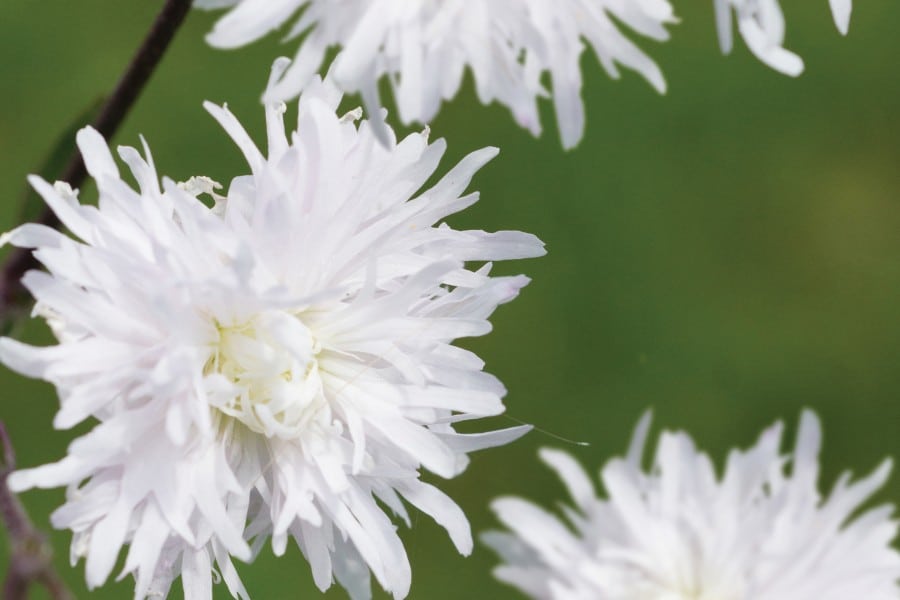
Lychnis Petis Henri
When thinking of spring, robins usually come to mind. Meet Ragged Robin, a new addition for your spring garden. Lychnis flos-cuculi ‘Petit Henri’, commonly known as Ragged Robin, is an easy-care bushy perennial that blooms from spring until summer. Masses of long-lasting double white flowers with narrow petals create a ragged effect. The stems and base petals are dark maroon, creating an interesting and beautiful contrast. A pollinator favorite, it exudes a sweet sugary fragrance that attracts butterflies, hummingbirds, and bees. At a height and width of 12 to 14 inches, it does well in a sun to part sun location with average to well-drained soil. It is also deer, pest, and disease resistant. Fun Fact: A large group of robins arriving in the spring is called a “round” of robins. We hope you’ll come “round” to our annual Plant Sale on May 16 and check out this Ragged Robin!
Monarda Midnight Oil
During this time of the year, many gardeners are burning the midnight oil, studying seed catalogs and gardening magazines, and planning this season’s garden display. If you are looking for some extra fuel, Monarda bradburiana ‘Midnight Oil’ may be a choice for you. Sometimes referred to as eastern beebalm, this clump-forming perennial has striking, glossy, deep burgundy foliage and light pink flowers with magenta speckles. As an added bonus, it forms ornamental, dark purple spotted seed heads in late summer into fall. Growing to 24 inches tall, this monarda thrives in full sun to partial shade and is both drought-tolerant and disease-resistant. ‘Midnight Oil’ is also known to be a pollinator magnet, due to high nectar production and early flower availability to bees, hummingbirds, and butterflies. Its fall buffet of seed heads also provides food for birds. ‘Midnight Oil’, with its multi-seasonal beauty, will light up your garden, and you can find it at our annual Plant Sale on May 16.
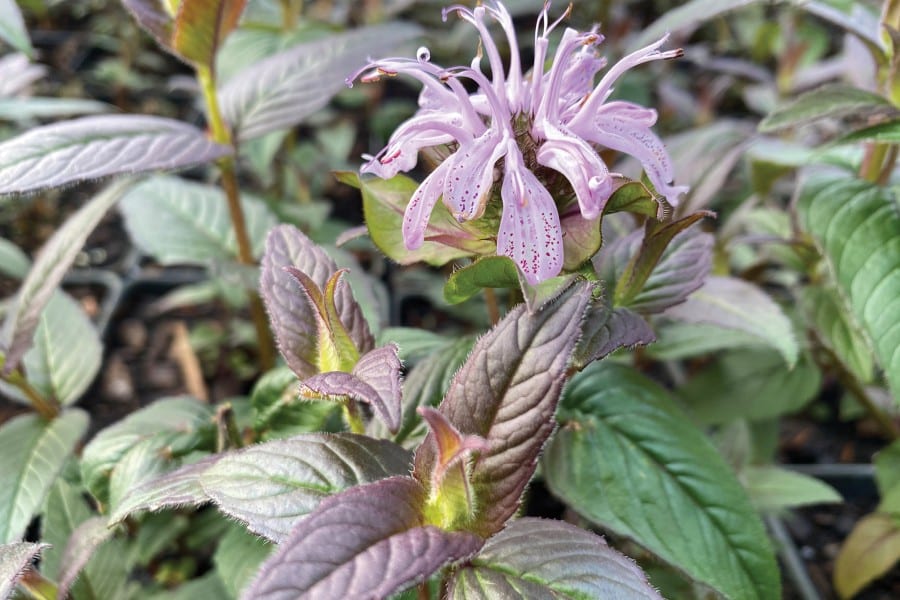 Monarda bradburiana ‘Midnight Oil’ showcases deep burgundy foliage and soft pink, speckled blooms that attract pollinators. Photo Credit: Creek Hill Nursery

Comments are closed.