
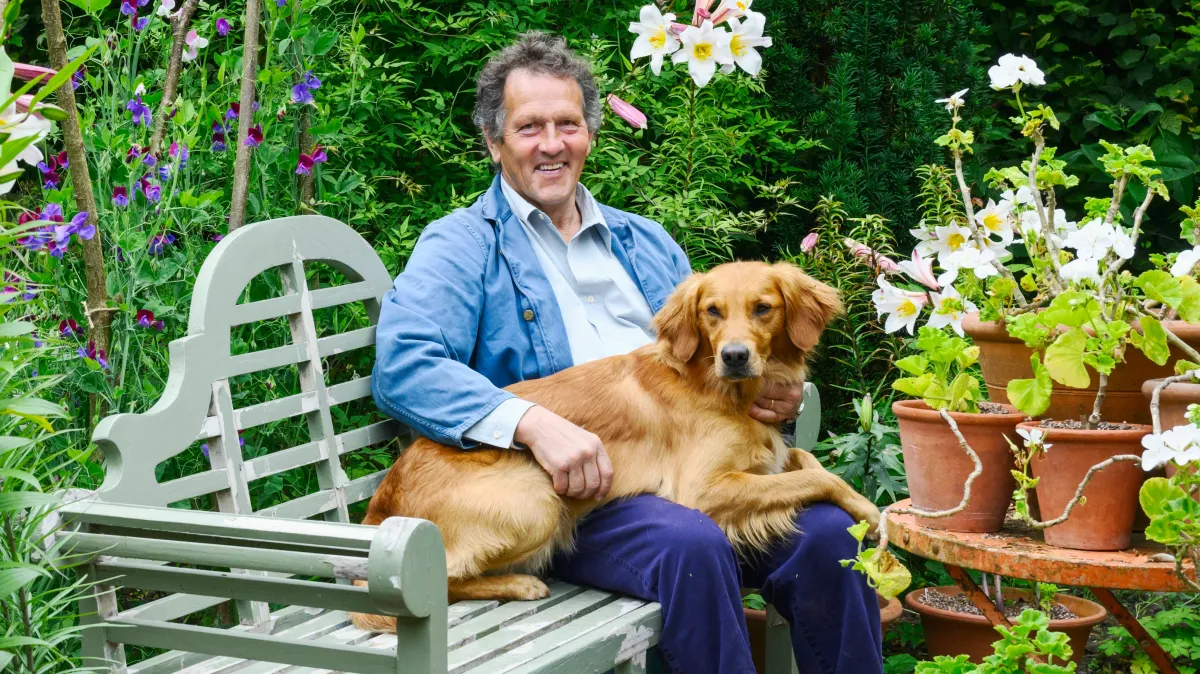
Monty Don has been called the nation’s gardener, but he has by now acquired a more godly status. Being transported, every Friday night on BBC2, to his lush garden at Longmeadow in Herefordshire is like accessing a very British heaven, in which a craggy being in a neckerchief eternally rests on a border spade; Ned, his dog, who of course has royal connections, assisting.
The arrival of Gardeners’ World in spring is called by some “Planty Christmas”. Some lady viewers can get excited by its lead presenter’s commitment to high-waist cords, but what Don offers us in troubled times is the opposite, a green anti-anxiety pill. Part church, part clinic, a session with Don is a soothing fantasy that is nostalgic even as it is being created, much like our British gardens.
So it is a jolt to meet Don at 70 and realise he is just as much nettle as dock leaf. He is spikier and more provocative on the page and in person, than on screen. In a deft foreword to his new book, British Gardens, which is the basis of a live tour over the next month, he digs into class and colonialism.
In our discussion he goes deeper, rubbishing the “rewilding” evangelists — “it’s bollocks” — critiquing the male dominance of TV gardeners, and despairing of political action on climate change. I chat to him via video in his book-lined study, but he still gets his hands dirty.
For example, he is cutting when it comes to our attitude to climate change, which he calls a “crisis”. “Of course the planet doesn’t need saving,” he says. “The planet’s fine. The planet doesn’t give a damn. The real thing is saving not just us, but the lifestyle that we want and have got used to.”
At the point in our conversation that we get the most serious, Ned bounds into frame and into Don’s arms: I swear Ned turns to the camera and smiles. Don could be a 6ft 3in inaccessible patrician, after his austere boarding school childhood. But he has always done his own thing: he started wearing the Victorian cords with braces when he was 19, as they were the “uncoolest clothes… nobody else was wearing them”.
He has well-documented rebounds, such as the collapse of his jewellery business leading to bankruptcy and unemployment, and his periods of depression that he calls “great spans of muddy time”.
It means we feel about Don as we feel about our gardens: fiercely protective. He is in some ways the Kevin McCloud of horticulture, a Cambridge-educated presenter with a flair for scarves who has been the face of a show for decades. Yet Don has more soul.
There is, he writes in his book, “no nation more passionate about gardening than the British”. He speculates that may be precisely because our island is so nature-depleted by being the earliest to industrialise; the garden may be a “nostalgic expression of loss”.
“Because we industrialised so early and fundamentally became an urban society, the dream of the countryside was just that, a dream. Our gardens are a manifestation of that dream. That’s a generalisation and simplistic, but it has an element of truth.”
Yet Don has strong views on the new fashion for “rewilding”. The problem is, says Don, long before Britain was intensively urbanised, it was farmed. “It is particularly true of the rewilding movement, this hankering after an Arcadian ideal,” he says. “It has always been a myth.”
But aren’t, I say, the rewilders trying to get back to an era when Britain was more forested? Shakespeare’s plays show people constantly interacting with the forest. “It’s all bollocks,” he says, and it is nice to hear it in his mellifluous RP. “It was never like that, not really.”
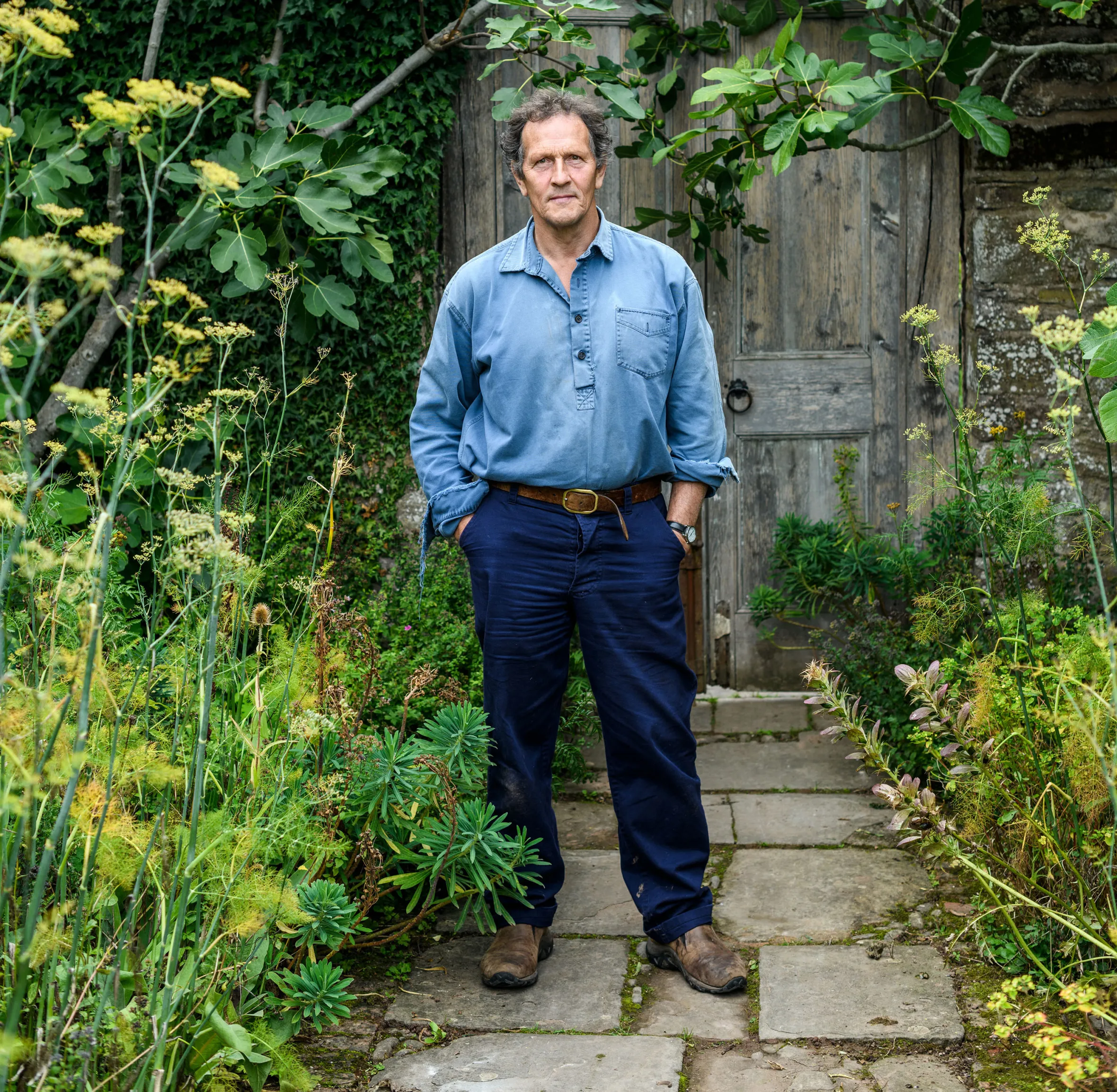 “I had a new knee in November, which was the first major refit”Jason Ingram/Eyevine
Don cites Oliver Rackham, the British woodland historian, “who made the point that more trees have been cut down with axes than chainsaws”, that even ancient forests were managed by humans.
“This idea that there was this wonderful wild, pure state of trees and woodlands everywhere, and everybody was happy and Bambi was running around, just never was true,” Don says. “And if you think about it for five minutes, it’s not true because we farmed. Stone Age man cleared trees to make ground.
“I was president of the Soil Association, I’m completely bound into an organic, sustainable form of living with the natural world. But this idea that there is a pure state that has only been sullied by man, it’s complete nonsense. Therefore, to try and replicate that in your garden is a charade. Now, if it’s a fantasy, a game you want to play, that’s fine.”
There is so much he has to say about Britishness and gardens it is a wonder he has not written this book sooner. Yet this 30th book is the work of a lifetime of visiting gardens at home and abroad. A few things make Britain unique: one is that for us the process of gardening is as important as the product, at every level of wealth. Gardening, he writes, is “the great leveller in a decidedly unlevel society”.
In another country the BBC show would be called “A World of Gardens”. Yet the British understood, centuries before the science caught up with us, that, spiritually and physically, gardening “is inherently good for you”. Don himself looks and sounds a couple of decades younger. He tries to eat home-grown food. “I’m not anti-drinking, but I haven’t drunk for six months. I had a new knee in November, which was the first major refit.”
Second, the British love to display a profusion of international plants and especially flowers, and this is a legacy of our colonial-era botanical trophy-hunting. Should the average gardener be more aware of this? Don’s stance is nuanced. “The danger is that you get this revisionism, that you start to feel guilty about what happened 150 years ago, which you had no control over. I’ve always thought that’s a cul-de-sac,” he says.
“However, there is no question that our gardens are full of trophies gathered as part of our colonial expansion. You can cast whatever moral judgment you want on that. I don’t necessarily think that’s the pertinent point. I think the pertinent point is that these aren’t plants that just magically popped up in our gardens. They were plants that we sent people out to take from other countries without their permission. We just went and took them because we were the rulers.”
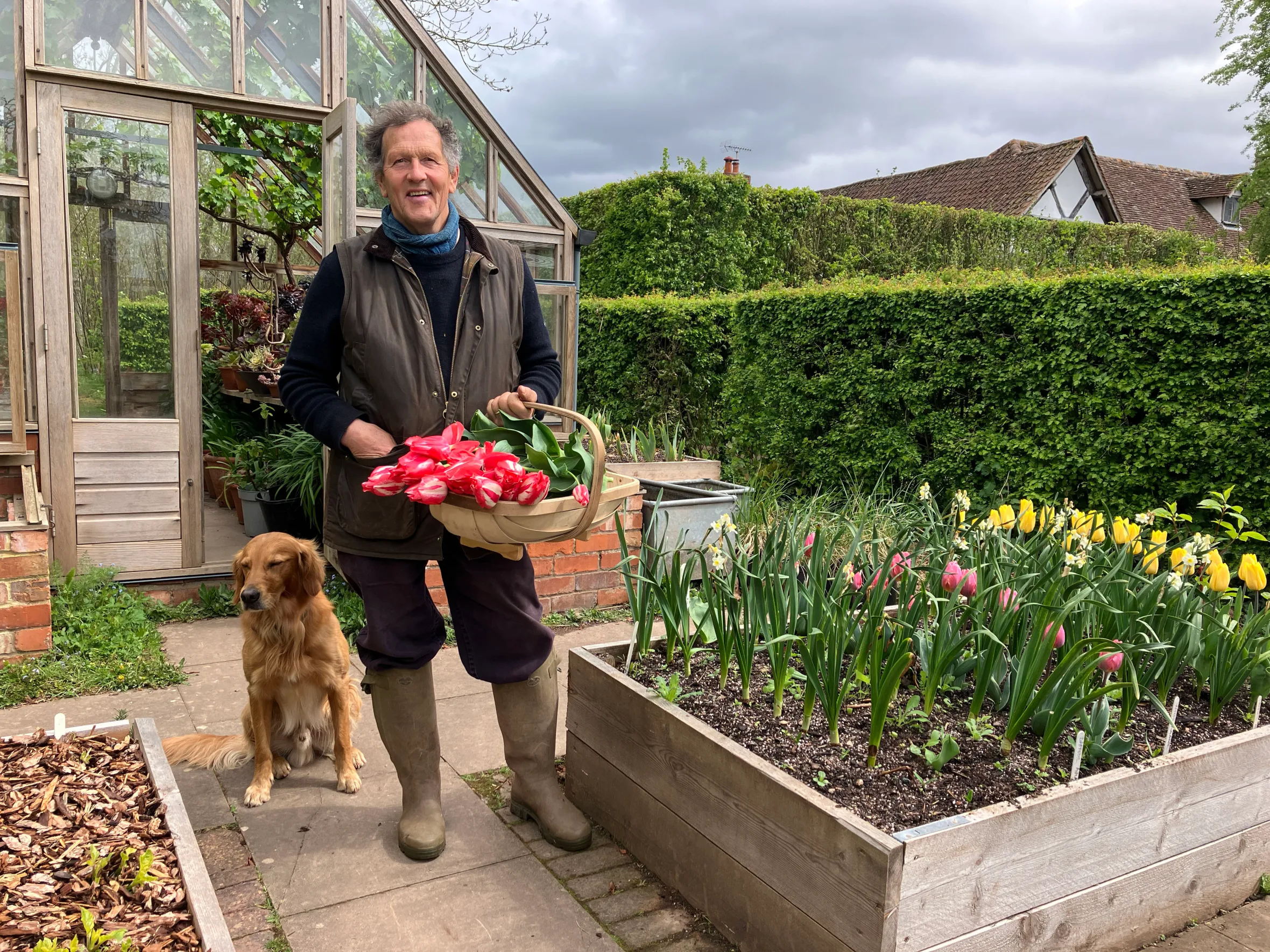 “Gardeners are right at the front of the prow of the ship when it comes to climate change”BBC Studios
It also just happened that Britain has weather that means we can grow plants from almost anywhere, making us “horticultural billionaires”. “The final element of British gardens is that we have the best climate in the world,” he says. “I know we complain about the weather all the time… but we simply don’t know we’re born when it comes to bad weather.”
Should gardeners mobilise more against climate change? “I think it’s underselling them to say that they don’t,” he says. “Gardeners are right at the front of the prow of the ship when it comes to climate change. They are seeing it daily.”
He is typical in noting the plants’ cycles changing at Longmeadow. The effect of climate change is, so far, unpredictable instability, he says, “anyone who thinks they’ve got the answers simply hasn’t understood the questions”.
Does he feel neutral about it? Some people think climate change will create different opportunities for farming in the UK. “No… I would say this is a deadly serious problem and we’re not facing up to it. And governments, for reasons that we all know, just can’t cope with it. It is too big a problem, it doesn’t win you votes and it’s ‘park it, push it down the line’,” he says.
“Having said that, it’s unnecessarily melodramatic to say it doesn’t have advantages. As a grower, yes, there are things I can grow now that I couldn’t grow before.”
He considers himself an amateur gardener and professional writer and broadcaster. “I’m being literal about that. I earn no money from gardening.” Don once said that the BBC should think “ten times” before appointing another middle-aged man to his role: the lead presenter on Gardeners’ World has been male since its inception in 1968.
“It was a given, probably right up to my appointment, that somehow a proper gardener was a man and a middle-aged man at that,” he says. “Yet the evidence is that more women garden than men. When I was getting going as an adult, writing about gardens, the leading gardeners, certainly the leading gardening writers, were women. The BBC, and I think terrestrial television, has to adapt and change.”
Not yet, though. Don says that the BBC has expressed a desire to renew his contract, and he reciprocates. Ned too, seems interested in the co-host job. The death of Nigel, Don’s pet and beloved Gardeners’ World star, was a grievous blow to national morale in lockdown.
“Nigel was the king,” Don says. “Nigel will never be matched in his filming ability, because he would do the same take five times. He treated it as work. He used to come to me at half seven, go outside, meet the crew and stay with them all day as part of the team. Nigel was a bit thick and not much good at anything else, but he was a complete professional.”
After Nigel came Nellie, another golden retriever, but she had an impatient intellect unsuited for TV. Ned came to Don via the unlikely source of James Middleton, brother-in-law to the Prince of Wales. Middleton had read Don’s book about Nigel and got in touch to say he had been moved by the tribute, and had a puppy Don might be interested in.
Ned is vainly gorgeous, “a trophy dog, and God, doesn’t he know it,” Don says. So far, his TV career is “shaping up well. He could come good, or he could get more bored, as filming is incredibly repetitive.”
What would happen if Don was forced to live without a garden? “I just wouldn’t, not for anything.” While he says he has “good genes”, his grandfather living to 98, does Don worry that extreme old age will deprive him of a garden? “No. I’ll drop. You’ll discover me in the cabbage patch,” he says.
He likes the idea of, one day, returning to the earth. “I’ve always had this idea that when I die, I’ll just dissolve into everything. That’s not a scary thought. That’s fine.”
Now, with four grandchildren, what does he worry about for them? “It’s an anxious world they are inheriting,” he says. “But I firmly believe that if you want to change the world, the best way is to get everybody to do something small. Big things crumble. Big things are never actually the meaningful things. The meaningful things are shifts. Things turning a little bit and then that takes you somewhere else.”
“One of the good things about getting older is that you realise that your ambitions and dreams were indulgent, by and large. And that actually what you can do might be enough.” Don says to do what you can to improve your little patch of the world “generously is probably a pretty good goal”.
Ned skitters from the room, eager for the garden, and I feel renewed.
British Gardens, by Monty Don, is published on Mar 19. Don is on tour until April 26, fane.co.uk/monty-don
Comments are closed.